14-09-2026
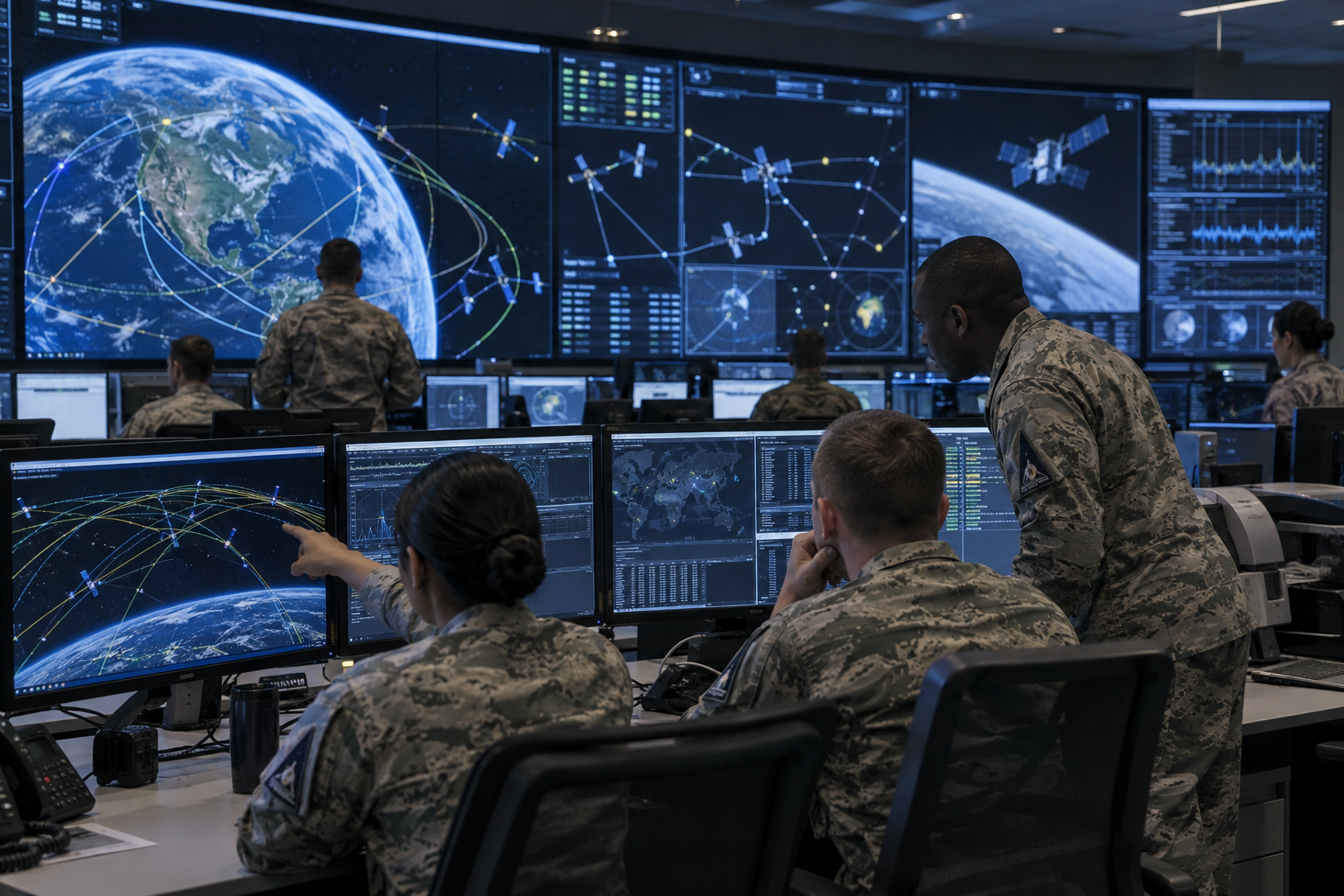
The United States Space Force has confirmed that the US has deployed weapons into orbit, describing them as “on-orbit space control weapons” designed to defend American military forces from hostile actions. According to a Space Force spokesperson, these capabilities can use both kinetic and non-kinetic methods to influence or disrupt an adversary’s ability to operate in space, and may serve offensive as well as defensive purposes.
The announcement reflects the growing importance of space as a military and strategic domain. Space-based infrastructure, particularly satellites, supports substantial portions of the global economy and provides militaries with communications, surveillance, navigation and targeting capabilities. As a result, countries are competing to develop systems that can protect their own space assets while limiting an opponent’s access to space-based services.
The United States created the Space Force in 2019 in response to what the military calls the growing threat from “strategic competitors,” particularly China and Russia. The force says both countries are developing counterspace capabilities intended to improve their military effectiveness and reduce their dependence on US space services.
The Space Force assesses that China views space as central to future conflicts, including for enabling long-range precision strikes and denying opponents access to space-derived information. It also says China is developing and operating space and counterspace systems as part of a broader military modernization effort.
Russia is described as a capable space actor despite funding problems and international isolation. The Space Force says Moscow regards space as a warfighting domain and believes that achieving space supremacy could be decisive in future conflicts. The article presents the US deployment as part of an increasingly competitive and militarized space environment.
Entities: United States Space Force, United States, China, Russia, on-orbit space control weapons • Tone: analytical • Sentiment: neutral • Intent: inform
14-09-2026
The US Space Force has confirmed for the first time that the United States has weapons deployed in orbit. A spokesperson said the systems are “on-orbit space control weapons” designed to defend US military forces from hostile actions, but provided no details about their type, location, or capabilities.
The Space Force described space control as the ability to contest and control the space domain through both kinetic and non-kinetic methods. These capabilities can be used offensively or defensively, suggesting that the systems may support activities ranging from protecting US satellites to disrupting or disabling an adversary’s space assets. The disclosure comes as Washington, Beijing, and Moscow expand their military programs in space and seek greater control over satellites and orbital infrastructure.
The United States identifies China and Russia as its primary geopolitical rivals in space. According to the Space Force, China is developing and operating space and counterspace capabilities as part of a broader military modernization strategy, while Russia considers space a battlefield and views superiority there as potentially decisive in future conflicts.
The article places the announcement within the longer history of space militarization. Since the Soviet Union launched Sputnik in 1957, the United States and Russia have explored methods for protecting, attacking, and destroying satellites. Although the 1967 Outer Space Treaty bans weapons of mass destruction in orbit, it does not prohibit all forms of conventional or cyber-related military activity in space. The United States, Russia, China, and India have consequently continued to develop ways to target rival satellites, which are essential for military communications, surveillance, and navigation.
Entities: US Space Force, United States, China, Russia, India • Tone: analytical • Sentiment: neutral • Intent: inform
14-09-2026
The United States has acknowledged for the first time that it has weapons deployed in orbit, according to a statement from the US Space Force. The disclosure confirms that Washington possesses on-orbit capabilities designed to control or contest activity in space, although the Space Force did not identify the weapons or provide operational details.
A Space Force spokesperson said the United States has “on-orbit space control weapons” capable of defending the Joint Force against hostile action by adversaries. The statement characterized space control as a broad mission involving efforts to contest and control the space domain. It said these efforts can use both kinetic and non-kinetic methods to affect an adversary’s capabilities.
The Space Force also explicitly stated that the capabilities can be used for both offensive and defensive purposes. Kinetic systems generally involve physical effects, while non-kinetic methods may disrupt or degrade space-based or space-related capabilities without physically destroying them. The article does not specify which systems are deployed, how many exist, or where they are located.
The disclosure comes amid growing strategic competition in space. Russia and China are identified as the United States’ two principal geopolitical rivals and as potential sources of threats to American interests in orbit. The statement indicates that the US military views space as an operational domain in which it must be able to defend its forces while also contesting adversary capabilities.
The announcement provides confirmation of an existing military posture rather than details of a new weapons deployment. However, the acknowledgment may intensify concerns about the militarisation of space and the potential for competition among the United States, Russia and China to escalate.
Entities: United States, US Space Force, Russia, China, Joint Force • Tone: analytical • Sentiment: negative • Intent: inform