06-10-2026
The article reports that renewed fighting between Ethiopia’s federal forces and the Tigray People’s Liberation Front (TPLF) is raising fears of a broader conflict, including a possible war involving Eritrea. Clashes began on September 23, and federal forces have since pushed back the rebel offensive and taken Mekelle, Tigray’s capital, after TPLF leaders and fighters left the city. Magnus Taylor of the International Crisis Group says the TPLF’s inability to sustain its offensive was surprising, and suggests its retreat may indicate a shift toward insurgency rather than another direct campaign against the federal government.
Taylor warns that worsening relations between Ethiopia and Eritrea could cause the conflict to spread beyond Tigray, describing wider regional escalation as a worst-case scenario. Tensions have risen for months, with Eritrea accusing landlocked Ethiopia of intending to invade and seize access to the coast. Ethiopia, in turn, has accused Eritrea of directly supporting the TPLF, alongside Sudan and Egypt; all three countries deny the allegations.
Regional diplomacy adds to the tense backdrop. The presidents of Egypt, Somalia, Sudan and Eritrea—countries described as having difficult relations with Ethiopia—met in El-Alamein, Egypt. Ethiopia and Egypt also remain in a long-running dispute over the Grand Ethiopian Renaissance Dam, which Cairo fears could affect its share of Nile waters. Before the meeting, Egyptian President Abdel Fattah al-Sisi called for cooperation and dialogue on cross-border issues, including natural resources and transboundary rivers. The leaders’ statement urged peaceful resolution of disputes, respect for international law, and non-interference in the internal affairs of Horn of Africa states.
Entities: Tigray, Ethiopia, Eritrea, Tigray People’s Liberation Front (TPLF), Mekelle • Tone: analytical • Sentiment: negative • Intent: analyze
06-10-2026
The Al Jazeera Newsfeed item introduces renewed fighting in northern Ethiopia, noting that it is occurring roughly four years after the devastating Tigray war ended. It frames the new violence as a potential regional concern rather than an isolated domestic clash: Ethiopia’s tensions with neighboring Eritrea are rising, while broader rivalries involving Egypt and Sudan add to the uncertainty. The central question is whether the conflict could spread beyond Ethiopia’s borders. Al Jazeera’s Lina-Serene is identified as the explainer, but the supplied article text does not include her detailed account, specific causes of the fighting, named groups, casualty figures, or evidence of cross-border escalation. The item is therefore a brief introduction to a video report, not a full account of developments. Its focus is on the possibility that renewed conflict could interact with existing regional tensions and widen, while leaving the likelihood and mechanisms of such a spread unresolved.
Entities: Ethiopia, Northern Ethiopia, Tigray war, Eritrea, Egypt • Tone: analytical • Sentiment: negative • Intent: inform
06-10-2026
Ethiopian Prime Minister Abiy Ahmed has begun a new five-year term amid renewed fighting in Tigray and growing regional tensions. After his swearing-in, Abiy repeated that Ethiopia would pursue access to the Red Sea, a goal that has heightened concerns in Eritrea because Ethiopia is interested in the strategically important port of Assab. A DW correspondent says Abiy’s renewed mandate gives him more political authority, but that Ethiopia’s internal conflicts and strained relations with neighboring states could make stability difficult. A recent meeting in Cairo among Egypt, Eritrea, Somalia and Sudan—without Ethiopia—illustrated its regional isolation.
Analyst Abdurahman Sayed argues that Eritrea faces a risk of being drawn into the Tigray war. He links the danger to Ethiopia’s campaign to secure Assab and notes that the port overlooks the Bab el-Mandeb Strait. Ethiopia has severed diplomatic ties with Eritrea and Egypt. Meanwhile, Ethiopian forces reportedly took Mekelle, Tigray’s capital, and pro-government media said troops were moving toward the Eritrean border as Tigray People’s Liberation Front (TPLF) forces retreated near Adigrat. Sayed warns that fighting could spread across the border, while suggesting Ethiopia might use unsubstantiated claims of Eritrean involvement to justify an attack.
The article also highlights calls for renewed diplomacy and the importance of Ethiopia’s trade route through Djibouti. Conflict in Afar could threaten that route, which the TPLF has sought to control in past fighting. Analyst Jalale Getachew Birru says regional diplomacy has become more complicated, including as Djibouti tries to maintain neutrality. Both Ethiopia and Djibouti have economic reasons to keep trade flowing, but shortages and hyperinflation could increase pressure on Abiy’s government. Djibouti’s strategic location and its hosting of several countries’ military bases may give international actors leverage. The article concludes that disruption of Ethiopia’s trade route could prompt stronger international pressure to end the conflict.
Entities: Abiy Ahmed, Ethiopia, Tigray conflict, Eritrea, Port of Assab • Tone: analytical • Sentiment: negative • Intent: analyze
06-10-2026
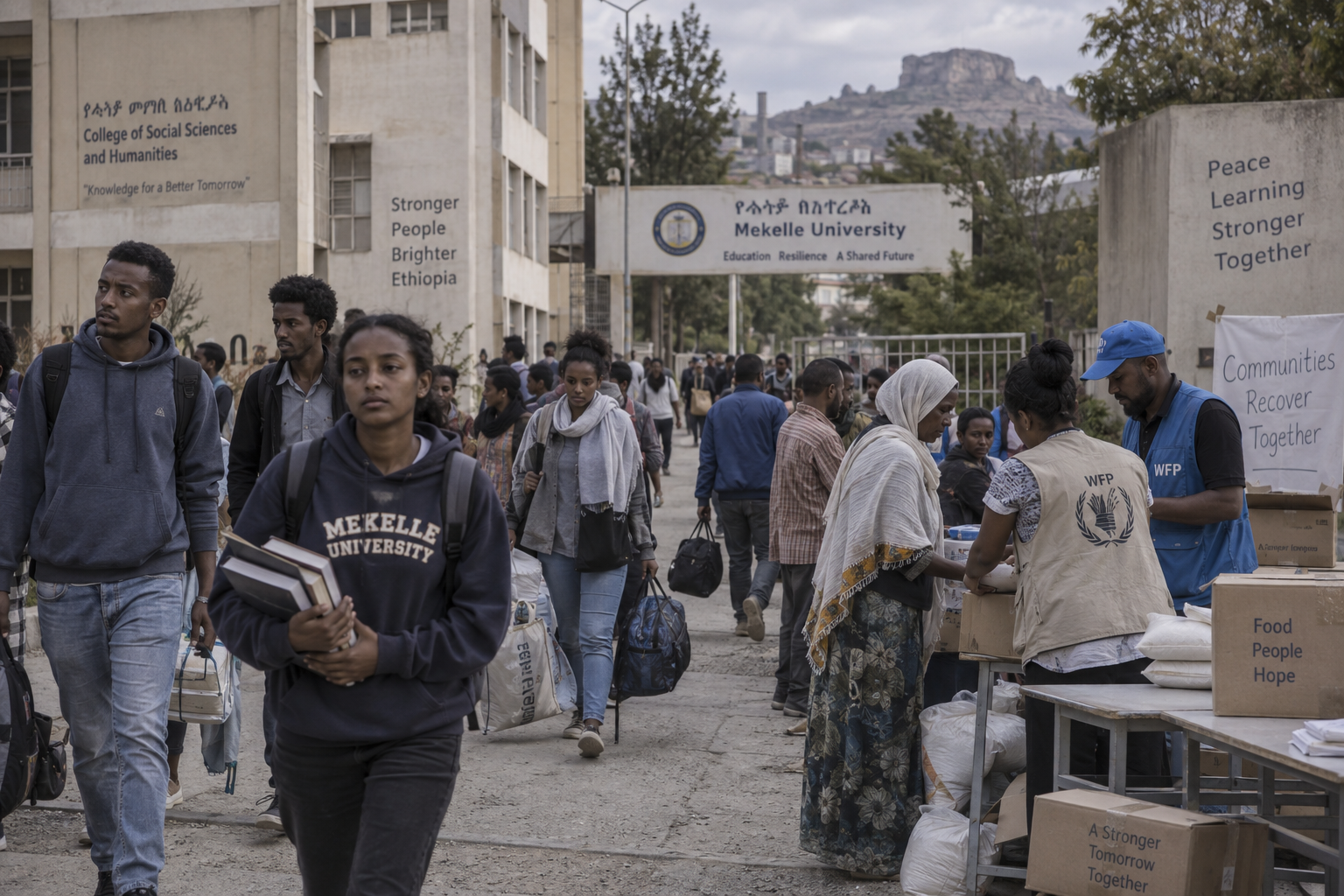
A France 24 video report says that ongoing fighting in Ethiopia’s Tigray region has displaced students from their homes and disrupted their education. Around 5,000 students who requested relocation are beginning the academic year elsewhere. Some of the students say they left because they faced forced conscription at home, which would have required them to fight for a cause they did not believe in. The report is presented by France 24, with Tom Canetti credited as the reporter. The supplied article text does not provide further details about where the students have been relocated, who is responsible for the alleged conscription, or the wider circumstances of the fighting. It also contains no direct student quotations beyond the brief account in the description. The central issue is the intersection of conflict, displacement, education, and pressure on young people to join armed forces. The report informs viewers about students’ stated reasons for fleeing and the effect of the conflict on their schooling, while the limited available text leaves many aspects of their circumstances unspecified.
Entities: Tigray, Ethiopia, France 24, Tom Canetti, Tigray students • Tone: neutral • Sentiment: negative • Intent: inform
06-10-2026
The article reports that armed groups in Ethiopia’s Tigray region are allegedly forcibly recruiting men and boys, including children as young as 15, as renewed fighting threatens to undo the November 2022 Pretoria peace agreement. The latest clashes between Ethiopia’s federal government and the Tigray People’s Liberation Front (TPLF) began on 23 September, after months of escalating tensions and a TPLF attack that the group said was in response to federal drone strikes.
Witnesses told the Guardian that TPLF forces have rounded up people from streets and public transport areas, with men and boys aged 15 to 65 among those targeted. Several people described refusing to join or fearing conscription; one witness said parents’ medical certificates did not protect their children. Others said people with money were bribing officers to avoid recruitment. The article also reports that Eritrean forces and Amhara militias, previously aligned against the TPLF during the 2020–22 war, are now fighting alongside it.
The conflict has restricted people’s ability to flee and obtain basic necessities. Ethiopian Airlines suspended flights after Tigrayan forces seized Mekelle’s airport, which Ethiopian forces later retook. The region has faced a siege, frozen bank accounts, a daily cash withdrawal limit of 2,000 birr, rising food prices, and interrupted phone and internet communications. Residents described anxiety, isolation, and difficulty accessing medicine or money from relatives outside the region.
The report also notes accusations that the Ethiopian government has conducted indiscriminate drone strikes and reports of opposition attacks approaching Addis Ababa. It recalls the enormous toll of the earlier conflict—estimated by the British government at 300,000 to 800,000 civilian deaths—and cites UN findings that Ethiopian, Eritrean, and Amhara forces committed grave atrocities, while Tigrayan forces have also faced atrocity allegations.
Entities: Tigray, Tigray People’s Liberation Front (TPLF), Ethiopian federal government, Eritrean Defence Forces, Amhara militias • Tone: urgent • Sentiment: negative • Intent: inform