06-10-2026
Israel was prepared to shoot down FlyDubai Flight 1073 if it appeared to pose an imminent threat, even though more than 150 Israelis were aboard, according to two Israeli sources with direct knowledge of the response. The Dubai-to-Tel Aviv flight was approaching Israel when the co-pilot allegedly attacked the captain and tried to crash the aircraft. The plane plunged about 14,000 feet, and Israeli Air Force attempts to contact the cockpit received no response. Israel activated a pre-established response process, established a command center, scrambled fighter jets and closed its airspace.
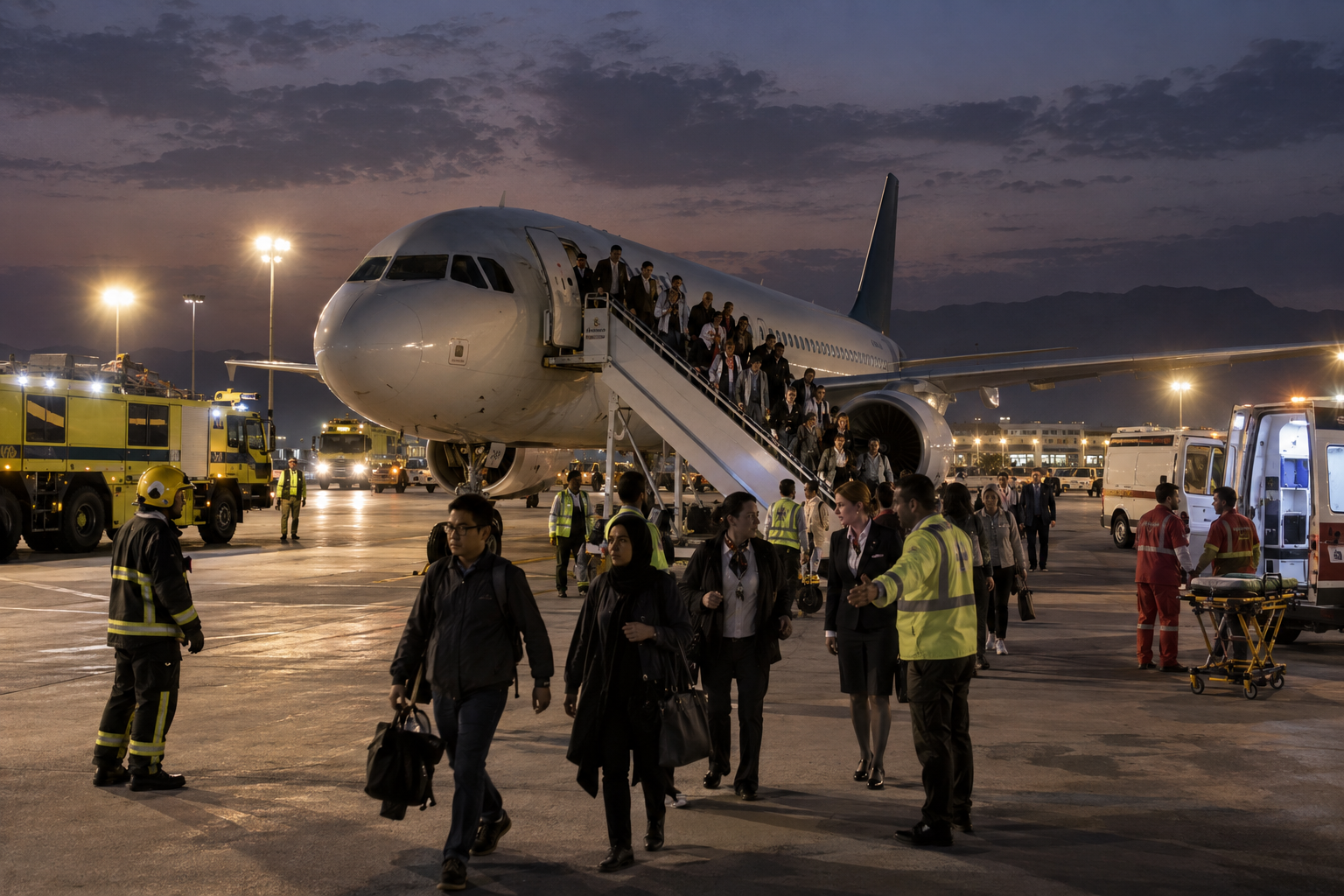
The jets were recalled after Israeli authorities learned the aircraft had turned toward Saudi Arabia, roughly 400 miles away, where Saudi jets were also scrambled. The captain resisted the co-pilot long enough to unlock the cockpit. Israeli passengers and FlyDubai staff subdued the co-pilot, while two off-duty pilots aboard the plane helped regain control. The flight made an emergency landing in Tabuk, Saudi Arabia.
The sources said that if the plane had come closer, Israeli jets would have entered Jordanian airspace to inspect the aircraft and assess the cockpit and cabin. If officials concluded that the plane had been hijacked, was maintaining radio silence and had made no demands, a committee would have connected the defense minister and prime minister. Under the protocol, only the prime minister could authorize shooting down the aircraft. Israeli sources said that decision could be considered preferable to allowing a rogue plane to strike a high-value target, such as the Azrieli buildings or an airport.
An Israeli official said the co-pilot, identified by sources as Omani national Hamam al Hamami, told UAE interrogators he had planned the attack before joining FlyDubai and intended to crash the plane at Ben Gurion Airport. Israel’s early investigation indicated the attempted hijacking was likely a lone-wolf attack, though the investigation remained ongoing and other possibilities had not been ruled out.
Entities: FlyDubai Flight 1073, Benjamin Netanyahu, Hamam al Hamami, Israel, United Arab Emirates • Tone: analytical • Sentiment: negative • Intent: inform
06-10-2026
The article reviews major commercial aviation incidents since the September 11, 2001 attacks and describes how they prompted changes to airport security, cockpit protection, and pilot procedures. It opens with a reported incident involving a flydubai co-pilot who allegedly stabbed the captain with a crash axe on a flight from Dubai to Tel Aviv. The aircraft reportedly plunged 16,000 feet before the injured captain, passengers, and a stand-by crew brought it under control and landed safely. The co-pilot is being questioned, and the incident has renewed scrutiny of on-board security and pilot screening.
The timeline begins with 9/11, when al Qaeda hijackers seized four US passenger jets, killing nearly 3,000 people. The attacks led to strengthened US airport screening, an expanded air marshal programme, and reinforced cockpit doors, later required internationally by the International Civil Aviation Organization. A further US requirement for a second cockpit barrier when the door is opened in flight took effect for new aircraft in August 2026.
The article also covers Richard Reid’s failed 2001 “shoe bomber” attack, which led US passengers to be required to remove their shoes at security screening from 2006; that mandate was lifted in 2025. In 2013, a Mozambique Airlines captain deliberately brought down his aircraft in Namibia after locking the co-pilot out of the cockpit. Investigators recommended ensuring two people were always in the flight deck and developing standards to prevent authorized crew from being locked out.
Finally, the article describes the 2015 Germanwings crash, in which co-pilot Andreas Lubitz deliberately crashed the plane after locking out the captain, killing 150 people. The incident prompted a temporary European recommendation for two people, including a pilot, to remain in the cockpit, followed by tighter pilot mental-health rules, including mandatory psychological assessment. Together, the cases illustrate how serious incidents have repeatedly led aviation authorities and airlines to reconsider security and cockpit-access safeguards.
Entities: flydubai, Tel Aviv, Dubai, September 11 attacks, al Qaeda • Tone: analytical • Sentiment: negative • Intent: inform
06-10-2026
Israeli dentist Dr Shota Musaev has described how he treated flydubai Captain Smit Machchhar after the captain was stabbed during a flight from Dubai to Tel Aviv on September 30. Musaev said he spent about 45 minutes pressing T-shirts and ice against deep wounds to Machchhar’s head and hand while trying to keep him conscious. He urged the captain not to sleep, reassured him that he would return to his family, and monitored his pulse and the colour of his lips. When Machchhar’s pulse weakened, Musaev raised his feet; when his lips turned blue, he called for the plane to land quickly. He avoided giving medication or moving the captain because he feared that could worsen the bleeding.
The UAE Attorney General, Hamad Al Shamsi, said an investigation was continuing into what authorities described as an attempted terrorist attack. The co-pilot allegedly used an emergency crash axe to attack the captain and tried to take control of the aircraft. Passengers restrained the co-pilot, while two reserve pilots and a passenger went into the cockpit to steady the plane. Other passengers watched the cabin for possible further threats. The aircraft landed safely in Tabuk, Saudi Arabia, where Musaev handed Machchhar over to medical staff.
Musaev and his wife, Sigalit, later experienced severe distress, including disrupted sleep and weight loss. He credited the captain and passengers with helping save lives, praising the woman who first raised the alarm and those who supplied T-shirts for the first aid. Musaev said he had simply controlled the bleeding and stabilised Machchhar’s pulse, while describing everyone aboard as a hero.
Entities: Dr Shota Musaev, Captain Smit Machchhar, Sigalit Musaev, Hamad Al Shamsi, flydubai • Tone: emotional • Sentiment: negative • Intent: inform
06-10-2026
The article reports that Israel came close to intercepting and potentially shooting down a Flydubai passenger aircraft after an alleged attack in the cockpit caused the plane to plunge approximately 14,000 feet. Citing two Israeli sources with direct knowledge, CBS News said Israel activated its established procedures for a possible 9/11-style threat: authorities tried unsuccessfully to contact the cockpit, convened a committee, opened a command centre, scrambled fighter jets and closed Israeli airspace. The jets were recalled after the aircraft turned toward Saudi Arabia, about 400 miles from Israel. Saudi Arabia also sent fighter aircraft into the air in response.
According to the reported Israeli protocol, if the plane had continued toward Israel, Israeli jets might have entered Jordanian airspace to intercept it and visually assess the situation. If officials had concluded that the aircraft was hijacked, remained unresponsive and continued toward Israel without making demands, the issue would have been referred to the defence minister and prime minister. The protocol permits the aircraft to be shot down, but the final decision rests with the prime minister.
Israeli officials told CBS that the suspected attacker was identified by sources as Omani national Hamam al Hamami. He allegedly told UAE investigators that he had planned the attack before joining Flydubai and intended to crash the aircraft at Ben Gurion Airport. An Israeli official said he had previously travelled to Israel. An early assessment pointed toward a possible lone-wolf attack, but the investigation was continuing and other explanations remained under consideration.
The flight, travelling from Dubai to Tel Aviv, was approaching Israel on September 30 when the co-pilot allegedly stabbed the captain and tried to crash the aircraft. The plane diverted to Saudi Arabia and made an emergency landing in Tabuk. Passengers, crew members and two off-duty pilots reportedly helped overpower the attacker and regain control.
Entities: Flydubai, Israel, Saudi Arabia, Jordanian airspace, Dubai–Tel Aviv flight • Tone: urgent • Sentiment: negative • Intent: inform
06-10-2026
The article reports differing public assessments by US President Donald Trump and Vice President JD Vance regarding a thwarted incident aboard a flydubai flight. Trump said he personally believed Iran was responsible, but offered no evidence for the claim. Vance said US intelligence agencies were examining the matter and that he had not seen conclusive evidence linking Tehran to it. He said he was leaving further assessment to CIA Director John Ratcliffe and intelligence officials, and did not want to pre-empt any formal announcement.
Vance also addressed concerns about foreign pilots operating in the United States, arguing that authorities should carefully assess people entering the country and their suitability to fly aircraft. He invoked the September 11 attacks in support of his remarks. Vance further said the suspect in the flydubai incident had previously raised concerns and that the US was reviewing procedures intended to keep people considered flight risks from operating aircraft.
The incident occurred on September 30 aboard a flydubai flight from Dubai to Tel Aviv carrying 170 passengers. According to the article, the UAE is leading an international investigation. The co-pilot allegedly stabbed the pilot, Smit Machchhar, and tried to take control of the aircraft; crew members and passengers thwarted the attempt. The article does not report a confirmed finding about responsibility or establish a connection to Iran, underscoring the gap between Trump's personal assertion and Vance's stated assessment of the available evidence.
Entities: Donald Trump, JD Vance, John Ratcliffe, Smit Machchhar, Iran • Tone: analytical • Sentiment: neutral • Intent: inform