06-10-2026
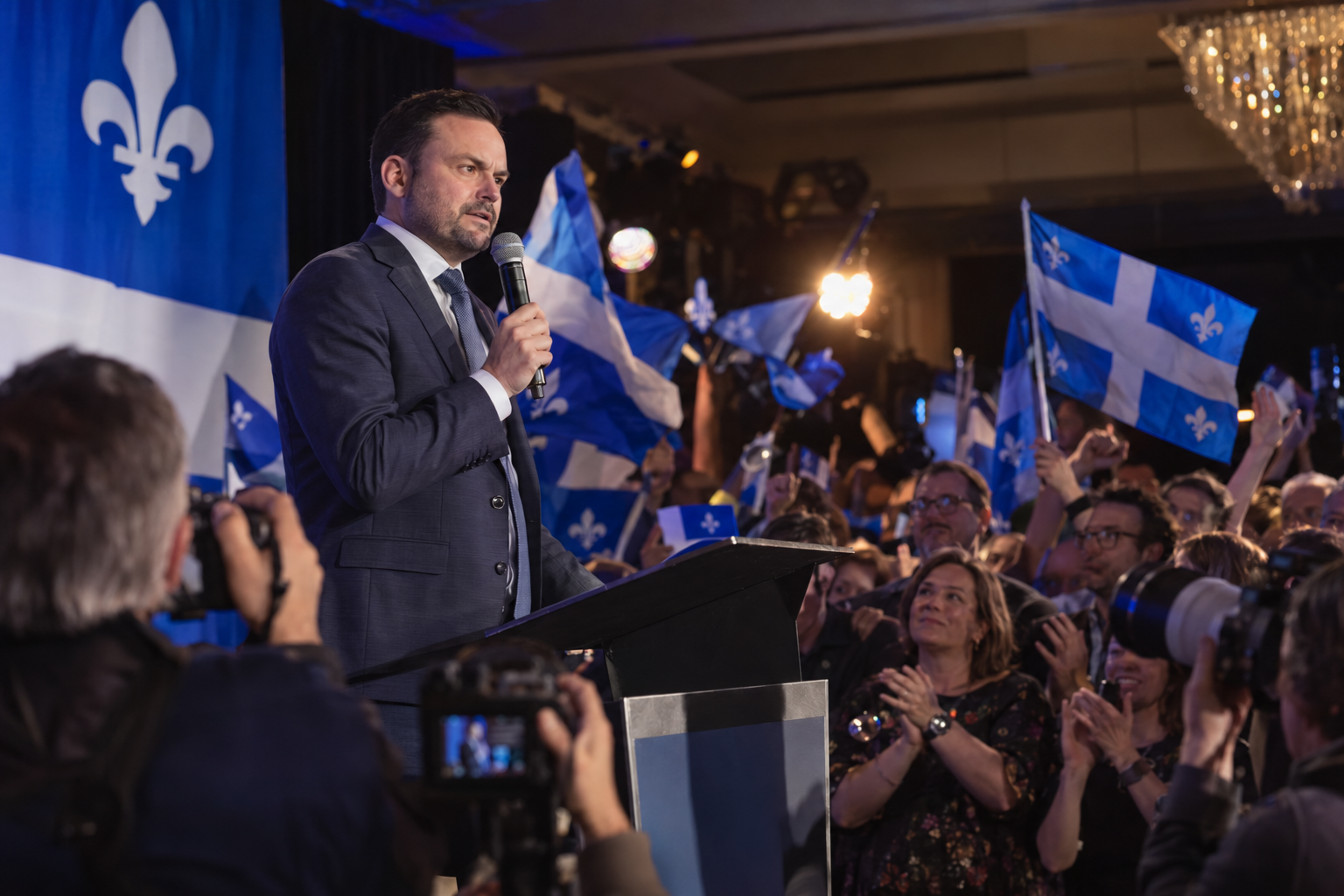
The article reports that Quebec’s Parti Quebecois has won the provincial election, returning to power for the first time since 2014. Party leader Paul St-Pierre Plamondon has promised that a future referendum on independence from Canada will be held, bringing the separatist cause back into focus. The headline characterizes the result as reviving the push for independence. The available article text provides no vote totals, details about the campaign, timing or conditions for a referendum, or reactions from other parties and the Canadian government. It is a brief election report rather than a detailed account of what the result may mean for Quebec’s political future.
Entities: Quebec, Canada, Paul St-Pierre Plamondon, Parti Quebecois, Quebec provincial election • Tone: neutral • Sentiment: neutral • Intent: inform
06-10-2026
The Parti Québécois (PQ), a party that supports Quebec independence, won the most seats in the province’s October 5 election and is expected to form the next government, according to media reports. Its leader, Paul St-Pierre Plamondon, is set to become premier. The outcome ends eight years of government by the Coalition Avenir Québec, a Quebec nationalist party that opposes independence, and marks a substantial recovery for the PQ, which won only three seats in 2022.
During the campaign, St-Pierre Plamondon promised to hold a third referendum on Quebec leaving Canada during his first term. He said he would wait until US President Donald Trump leaves office in January 2029. It remains unclear whether the PQ secured the 64 seats required for a majority in the 127-seat National Assembly. If it did not, it would have to govern as a minority and seek opposition support for legislation and confidence votes.
The election revives questions about Canadian national unity, though political science professor Daniel Beland of McGill University cautioned that the result does not necessarily signal growing support for independence. He attributed the PQ’s victory in part to Quebec’s multiparty system, which divides support among several parties, and said backing for independence remains around 30 percent—low by historical standards.
Beland said the election nevertheless presents a national-unity challenge for Prime Minister Mark Carney, especially because an independence-related referendum is approaching in Alberta. He noted that the timing could lead the Trump administration to view Canadian unity as a significant issue. Quebec has held two previous independence referendums, in 1980 and 1995; voters rejected secession both times. The 1995 result was narrow, and no further referendum has taken place in the three decades since.
Entities: Parti Québécois (PQ), Paul St-Pierre Plamondon, Mark Carney, Donald Trump, Quebec • Tone: analytical • Sentiment: neutral • Intent: inform
06-10-2026
The sovereigntist Parti Québécois (PQ) is projected to win a minority government in Quebec’s provincial election, bringing party leader Paul St-Pierre Plamondon to power as premier for the first time since 2014. The result could create a new challenge for Prime Minister Mark Carney and Canada’s unity, particularly as Alberta is also expected to hold a separation vote. The PQ has promised a referendum on Quebec independence, but polling cited in the article shows only 30% of Quebecers support independence. St-Pierre Plamondon says a referendum would take place after US President Donald Trump leaves office, potentially in 2029 or 2030.
Beyond sovereignty, St-Pierre Plamondon has signalled he will challenge Ottawa on provincial matters. He opposes increases in immigration levels imposed by the federal government and has promised to end the monarchy’s role in Quebec, redirecting related public funds to social services. He has specifically proposed defunding the lieutenant-governor’s office and using the money to address homelessness. Such steps could face substantial legal obstacles because the monarchy is embedded in Canada’s constitution and the lieutenant-governor grants royal assent to provincial laws. St-Pierre Plamondon says he is prepared for a legal fight.
The PQ’s success is attributed partly to voter fatigue with the outgoing Coalition Avenir Québec government, whose leader, François Legault, lost support. Efforts to revive the party under outgoing premier Christine Fréchette did not prevent her from losing her seat in Trois-Rivières. The Quebec Liberal Party finished with the second-most seats, while the Quebec Conservative Party gained seats.
Carney congratulated St-Pierre Plamondon and said he looked forward to working with the new government on jobs, housing, homelessness, and support for businesses and workers affected by US tariffs. Quebec is among the provinces most affected by the tariffs, with Oxford Economics estimating a C$2bn impact.
Entities: Parti Québécois (PQ), Paul St-Pierre Plamondon, Quebec, Mark Carney, Alberta separation vote • Tone: analytical • Sentiment: neutral • Intent: inform
06-10-2026
Quebec’s Parti Québécois (PQ), led by Paul St-Pierre Plamondon, won the provincial election but fell short of a majority in the 127-seat National Assembly. With roughly 60 seats expected against the 64 required for a majority, the party will need support from opposition lawmakers to pass legislation and remain in office. The result returns the PQ to power after more than a decade, while limiting its ability to govern independently.
The PQ has promised another referendum on Quebec independence, although St-Pierre Plamondon has said he would wait until US President Donald Trump is no longer in office. He argues that independence is necessary to protect Quebec’s French-speaking identity, but also says the project is not intended to exclude people outside Quebec and that cooperation with Canada remains important. Political scientist Daniel Béland cautioned that the election should not be interpreted as a mandate for independence: he said the vote was mainly about removing the Coalition Avenir Québec (CAQ), which had governed since 2018. Support for independence remains around 30%, low by historical standards.
The CAQ, which held 79 seats before the election, suffered a major defeat; leader Christine Fréchette accepted responsibility for the result. Prime Minister Mark Carney congratulated the PQ leader and pledged cooperation between Ottawa and Quebec on jobs, housing, business and worker support amid US tariffs. Béland suggested that the PQ’s minority status could make it harder to prepare for and call a referendum.
The election comes shortly before Albertans vote on whether to hold a separation referendum. Quebec has already rejected sovereignty twice, most recently by a narrow margin in 1995. The province is about 80% French-speaking and has substantial autonomy, including its own income-tax collection, immigration policies favoring French speakers, and laws that give French priority over English.
Entities: Parti Québécois (PQ), Paul St-Pierre Plamondon, Mark Carney, Quebec, Canada • Tone: analytical • Sentiment: neutral • Intent: inform