06-10-2026
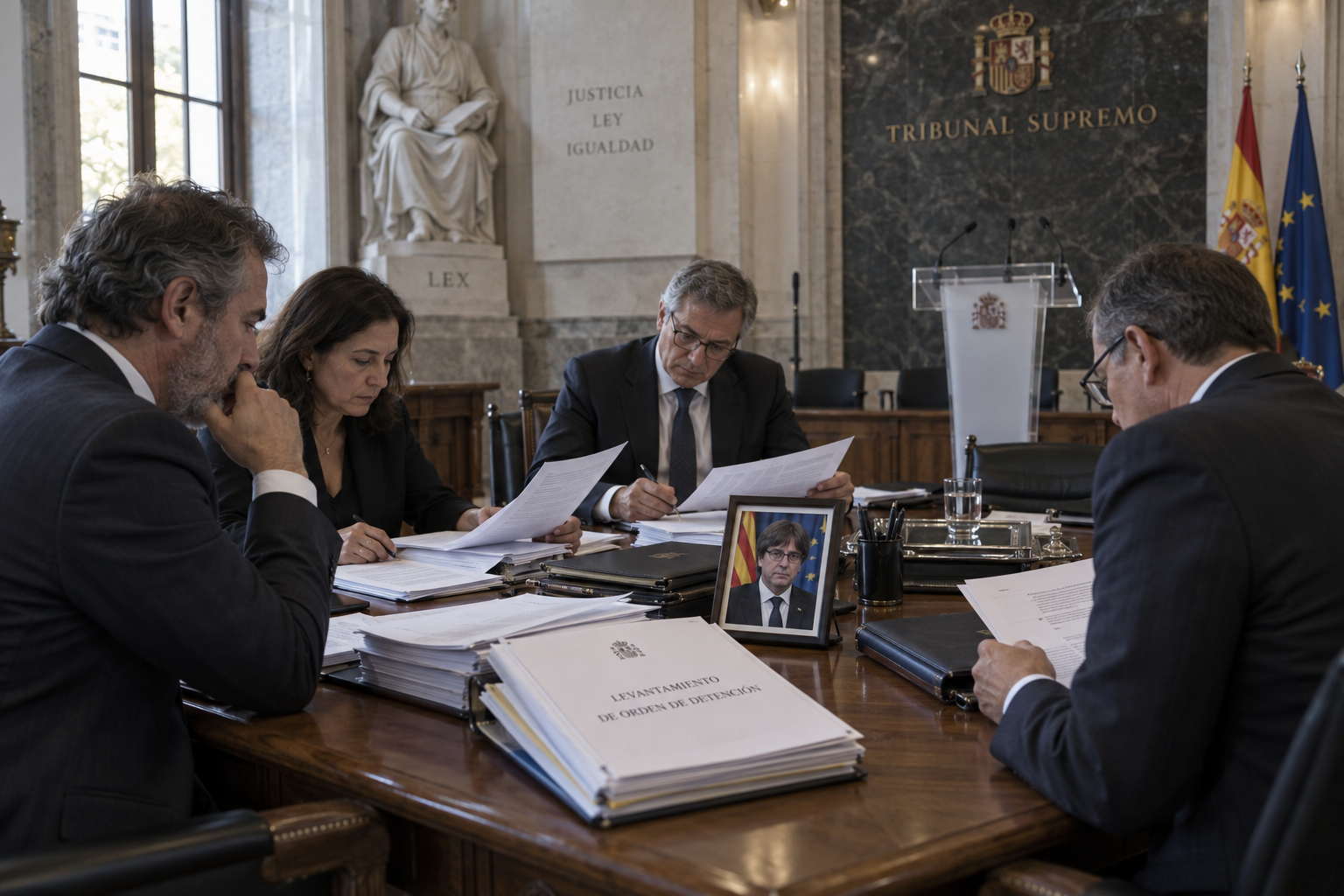
Spain’s Supreme Court has lifted the arrest warrant for Carles Puigdemont, the Catalan separatist leader who fled to Belgium in 2017 after a failed bid for Catalonia to break away from Spain. Puigdemont had been accused of embezzling public funds to hold an illegal independence referendum while serving as head of Catalonia’s regional government. The decision follows a ruling by Spain’s Constitutional Court that a 2024 amnesty law for Catalan separatists also covers embezzlement cases. Judge Pablo Llarena lifted the warrant after that ruling. Prime Minister Pedro Sanchez welcomed the development, saying it could help Catalonia look to the future and respond to the wishes of Catalan society. The amnesty law was passed by Sanchez’s government despite opposition from conservative and right-wing parties. It was intended to cover offenses connected to the secession attempt and ease tensions in Catalonia. It also helped Sanchez secure support from separatist parties and remain in power after the 2023 election produced no clear majority. Around 400 separatists have benefited from the amnesty, but Puigdemont had initially been excluded because the Supreme Court ruled that the law did not apply to people accused of embezzlement. The Constitutional Court changed that legal position after considering an appeal from one of Puigdemont’s allies. The warrant’s removal comes amid renewed political friction: Puigdemont’s Junts party withdrew its support for Sanchez last year, saying he had not fulfilled promises, including granting Puigdemont amnesty. Junts also recently voted against government housing relief measures during large protests. Sanchez responded by calling a snap election for November 29, making Puigdemont’s potential return a significant development ahead of the vote.
Entities: Carles Puigdemont, Pablo Llarena, Pedro Sanchez, Spain, Catalonia • Tone: analytical • Sentiment: neutral • Intent: inform
06-10-2026
Spanish Supreme Court judge Pablo Llarena has revoked the national arrest warrant for Carles Puigdemont, the former president of Catalonia, removing a significant legal obstacle to his return to Spain. The decision followed a Constitutional Court ruling that rejected the Supreme Court’s interpretation of the 2024 amnesty law. That law covers people prosecuted in connection with Catalonia’s independence movement, including the 2017 referendum and related events. The legal dispute centered on whether public funds used to finance the referendum could be covered by the amnesty. The Supreme Court had said they could not, arguing that those who organized the referendum obtained a personal financial benefit. But the Constitutional Court upheld an appeal by former Catalan regional minister Dolors Bassa, rejecting that approach. Llarena then lifted the warrant for Puigdemont. Puigdemont has lived abroad since leaving Spain in October 2017, after the central government invoked Article 155 of the Constitution and took direct control of Catalonia. Although the 2024 amnesty law raised the prospect of his return, the Supreme Court had initially kept the national arrest warrant in force. In August 2024, Puigdemont briefly appeared in Barcelona at an event coinciding with Salvador Illa’s investiture as regional president, then left Spain without being detained. The article says the warrant’s removal substantially changes Puigdemont’s legal situation and opens the door to his return, though it does not report that he has decided to come back. Puigdemont announced plans to make an institutional declaration at a press conference in Waterloo, Belgium, alongside former regional ministers Antoni Comín and Lluís Puig.
Entities: Carles Puigdemont, Pablo Llarena, Dolors Bassa, Salvador Illa, Antoni Comín • Tone: analytical • Sentiment: neutral • Intent: inform
06-10-2026
A Spanish judge has lifted the arrest warrant for Carles Puigdemont, the exiled former leader of Catalonia’s separatist movement, potentially allowing him to return to Spain before a general election scheduled for November. Supreme Court judge Pablo Llarena acted after Spain’s Constitutional Court supported applying the country’s 2024 amnesty law to the crime of embezzlement. Puigdemont had been accused of using public funds to organize Catalonia’s 2017 independence referendum; courts had treated the alleged conduct as embezzlement. The amnesty law was introduced to ease political tensions in Catalonia after the failed independence bid, which provoked Spain’s most serious political crisis in decades. The ruling therefore changes Puigdemont’s immediate legal position and creates the possibility of his return, though the article does not say whether or when he will travel. It also places the development in the run-up to Spain’s November general election. The report is brief and provides no further detail about the court’s reasoning, the election’s political implications, or Puigdemont’s response.
Entities: Carles Puigdemont, Pablo Llarena, Spain, Catalonia, Spanish Supreme Court • Tone: neutral • Sentiment: neutral • Intent: inform