06-10-2026
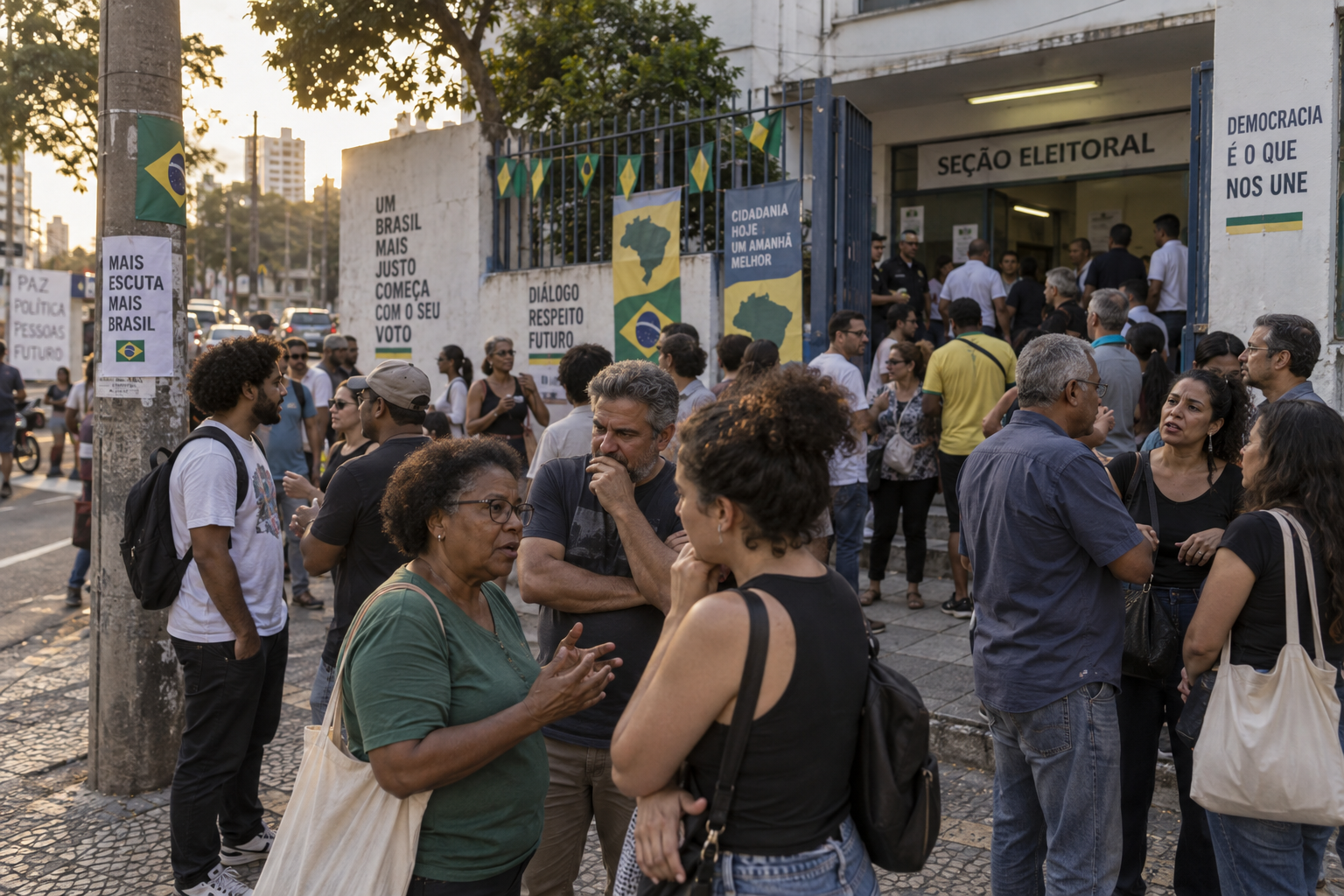
Flávio Bolsonaro has won the first round of Brazil’s presidential election, taking 47% of the vote against incumbent Luiz Inácio Lula da Silva’s 45%, according to results with almost all votes counted. Neither candidate secured a majority, so they will face each other in a run-off on 25 October. Bolsonaro’s performance exceeded expectations, and the article says the second round may favor him because several other first-round candidates were right-wing alternatives. His Liberal Party also appears set to have the strongest representation among governors, senators and federal deputies, potentially giving it substantial influence in Congress.
The contest pits Lula, 80, who is seeking a fourth term, against Flávio Bolsonaro, 45, son of former president Jair Bolsonaro. Jair Bolsonaro is serving a 27-year sentence for masterminding a failed coup after losing the 2022 election. Flávio has pledged amnesty for his father and supporters involved in the 8 January 2023 riots. Lula’s support is stronger among poorer voters, women and Catholics, particularly in the northeast; Flávio is more popular in the south, among wealthier voters and evangelical Christians. The campaign has been sharply polarised, with sovereignty, crime, corruption and the economy prominent.
The article also examines Brazil’s relationship with the United States. Lula has accused the US of seeking to influence Brazilian politics, while Washington has denied interference. Donald Trump praised Flávio’s first-round showing. A Flávio presidency could bring Brazil closer to the US and its “Shield of Americas” coalition. Campaign debate has also focused on a major financial fraud scandal involving banker Daniel Vorcaro, public insecurity and drug trafficking. Flávio proposes tougher measures against gangs, spending cuts and a public debt ceiling; Lula points to social welfare programmes and reforms targeting organised crime. Lula’s environmental record and support for oil exploration are also discussed, alongside Flávio’s economic proposals.
Entities: Flávio Bolsonaro, Luiz Inácio Lula da Silva, Jair Bolsonaro, Brazil, Liberal Party (PL) • Tone: analytical • Sentiment: neutral • Intent: inform
06-10-2026
Brazil’s recent elections have highlighted the rapid expansion of Jair Bolsonaro’s political family, following a surprise first-round victory by his eldest son Flávio in the presidential race. Flávio, a far-right senator, will face incumbent leftist president Luiz Inácio Lula da Silva in a runoff. Meanwhile, Bolsonaro relatives won positions across the country’s political system: his wife, Michelle, and son Carlos were elected senators; his son Jair Renan became a federal congressman; and his brother Renato also won a congressional seat. The article describes how Renato’s vote total surged from fewer than 10,000 in a mayoral race to 380,000, while noting that Flávio received more votes than his father had in the 2018 and 2022 elections. Some observers interpret that result as opposition to Lula rather than strong personal support for Flávio.
Michelle Bolsonaro is presented as a particularly influential figure. Though new to elected office, she was identified in a July poll as Brazil’s most powerful woman in politics. Researcher Camila Rocha says voters often like Michelle more than Jair Bolsonaro’s sons, describing her as charismatic. Michelle’s evangelical faith and history as a sign-language interpreter at church services are portrayed as assets with evangelical voters. Her campaign was also marked by a public dispute with Flávio, whom she accused of humiliating and mistreating her; he later apologized, but they did not campaign together.
The article places the family’s success in the context of Bolsonaro’s long-standing political network and the far right’s gains in congressional elections. It notes that Eduardo Bolsonaro is absent from the legislature after going into self-imposed exile in the United States, where he has lobbied in ways Lula and others regard as interference in Brazil’s elections. Rocha argues that many voters continue to view the Bolsonaros as an anti-system force, seeing the family as a means to disrupt Congress and oppose Lula.
Entities: Jair Bolsonaro, Flávio Bolsonaro, Michelle Bolsonaro, Carlos Bolsonaro, Jair Renan Valle Bolsonaro • Tone: analytical • Sentiment: neutral • Intent: analyze
06-10-2026
The supplied article content is only a headline and the beginning of the opening paragraph, so it does not provide enough information to summarize the full story or explain what happened in Brazil’s election. The headline says that former or then-President Donald Trump kept silent during Brazil’s election and suggests that his silence may have benefited his ally. The visible text identifies that ally as Flávio Bolsonaro, who was running for president of Brazil. It says Bolsonaro’s team visited the White House in May with a plan: although Bolsonaro was a presidential candidate and Trump was a political ally and family friend, Bolsonaro would not ask Trump for an endorsement. The excerpt does not reveal why the team chose that approach, whether Trump’s silence was deliberate, how the election unfolded, or what evidence supports the headline’s suggestion that silence helped Bolsonaro. It also provides no details about the candidates, campaign events, voting results, or reactions from either political camp. The byline names Terrence McCoy. “Democracy Dies in Darkness” is the publication’s slogan, and “Sign up” appears to be a website prompt rather than article content. Accordingly, this summary is limited to the claims and details visible in the supplied excerpt; a complete summary would require the rest of the article.
Entities: Donald Trump, Flávio Bolsonaro, Brazil, White House, Brazilian presidential election • Tone: analytical • Sentiment: neutral • Intent: analyze