04-09-2026
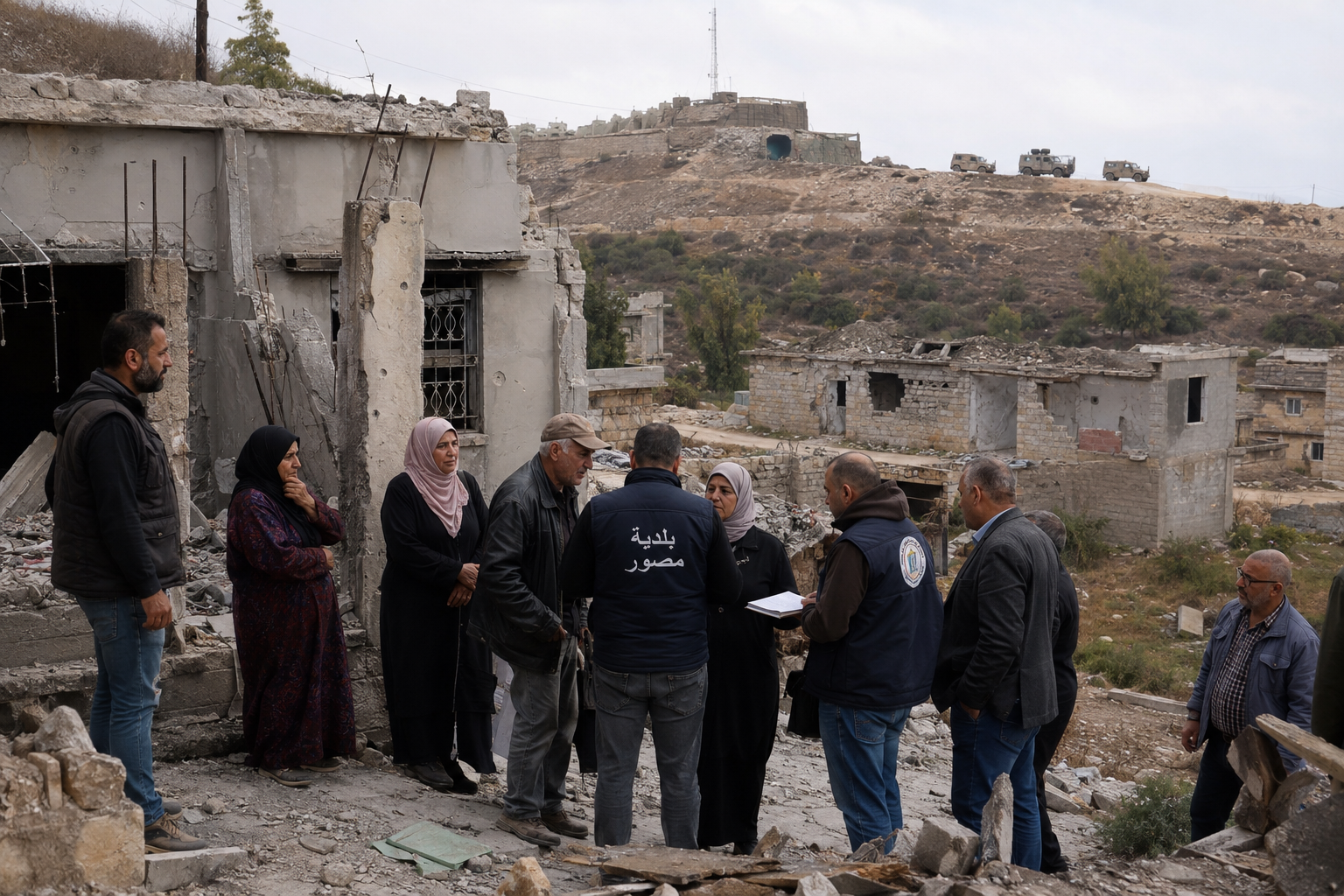
The editorial argues that Lebanon’s sovereignty is essential to the long-term interests of both Israel and Iran, even though both countries currently use Lebanon as a venue for regional competition and conflict. Israel is identified as the most visible threat because its military has moved beyond the self-defined “yellow line” in southern Lebanon, entering villages, demolishing homes and restricting residents’ access to their land. The editorial acknowledges Israel’s security concerns, including past wars with Hezbollah and rocket attacks on northern Israeli communities, but maintains that security cannot justify permanent territorial expansion, mass displacement or the destruction of civilian property. Such actions, it argues, will not preserve the ceasefire or produce lasting peace.
Iran is criticized for supporting Hezbollah and exercising influence that has weakened the Lebanese state and drawn Lebanon into repeated conflicts with Israel. Tehran’s “high-handed” conduct is illustrated by Iranian ambassador Mohammad Reza Sheibani’s refusal to leave Lebanon after Beirut declared him persona non grata. The Lebanese government’s insistence that Iran communicate through official state institutions is presented as evidence of declining Hezbollah influence and a more assertive Lebanese leadership seeking to restore national sovereignty.
The editorial contends that Lebanon cannot rebuild after years of economic decline and conflict while Israel and Iran continue undermining its institutions. Israel’s territorial encroachments and Iran’s resistance to disarming Hezbollah are described as mutually counterproductive: neither will improve Israel’s security nor preserve Iran’s regional influence. The proposed alternative is for regional powers to establish direct, mutually beneficial relationships with Beirut, following the example of the UAE and Syria. The editorial concludes that Lebanon should be treated as a sovereign country rather than a buffer zone, battlefield or bargaining chip.
Entities: Lebanon, Israel, Iran, Hezbollah, Beirut • Tone: analytical • Sentiment: negative • Intent: critique
04-09-2026
The National’s “Beyond the Headlines” podcast examines whether Hezbollah can survive if Iran is no longer able to provide its traditional financial support. The discussion follows the United States’ announcement of new sanctions on Iran, which Treasury Secretary Scott Bessent said were intended to sever Tehran’s economic lifelines until it was isolated. The sanctions are expected to affect Iran-backed organizations throughout the region, including Hezbollah in Lebanon.
According to the US State Department, Iran provided Hezbollah with approximately $700 million annually before the war. The group is now facing additional pressure after its conflict with Israel, the fall of the Assad regime in Syria, and the consequences of the US-Iran conflict. Washington has also designated Hezbollah as a terrorist organization under Iranian control as part of its broader economic-pressure campaign.
The podcast considers how the loss of Iranian financing could affect Hezbollah’s military, political, and social operations. The consequences may extend beyond the organization itself, particularly in southern Lebanon, where some communities rely on Hezbollah for employment, livelihoods, reconstruction assistance, and other forms of support following extensive destruction. A reduction in funding could therefore create broader economic and social instability in Lebanon.
Host Nada AlTaher discusses these questions with Randa Slim, director of the Middle East programme at the Stimson Centre. The episode focuses not only on Hezbollah’s ability to adapt financially, but also on what weakened funding would mean for Lebanon and for communities that have become dependent on the group’s extensive support networks.
Entities: Hezbollah, Iran, Lebanon, United States, Scott Bessent • Tone: analytical • Sentiment: negative • Intent: analyze
04-09-2026
The supplied page is a live-news entry dated September 4, 2026, focused on the continuing Iran war and its regional consequences. The headline reports that the Israeli military claims to have established “operational control” of the strategically important Ali Al Taher ridge in southern Lebanon, indicating an expansion or consolidation of Israeli military activity beyond the previously referenced “yellow line.” The page also lists several major developments: the US Vice President described the conflict with Iran as “not a war”; former US President Donald Trump welcomed reports that Syria might provide an alternative route to the Strait of Hormuz; and the European Union joined a US campaign to increase economic pressure on Iran.
The updates further report that 13 Iranian military personnel were killed in the latest round of US strikes. Israeli Defence Minister Israel Katz attributed Iran’s economic difficulties to rising fears of a popular uprising. Other listed developments include the arrival of a US aircraft carrier in Thailand after 286 days at sea, discussion of the future strategic value of Hormuz, and statements by US Treasury Secretary Scott Bessent that Iran is responding to economic pressure. Vice President JD Vance reportedly said that Trump was sending Iran a warning through an AI-generated video, while Trump described Iran as a “failing nation.”
The page also references heightened US-Iran tensions ahead of a Shanghai Cooperation Organisation summit and continuing Houthi activity extending toward the Horn of Africa. However, the supplied content contains no detailed article body, eyewitness accounts, official statements beyond the listed headlines, or independent verification of the claims. It primarily consists of the headline, live-update summaries, video captions, and website navigation elements.
Entities: Iran war, Israeli military, Israel, Lebanon, Ali Al Taher ridge • Tone: urgent • Sentiment: negative • Intent: inform
04-09-2026
Israel says its forces have seized operational control of the Ali al-Taher ridge in southern Lebanon, a strategically important highland previously held or used by Hezbollah. Israeli Defence Minister Israel Katz said troops had driven Hezbollah fighters from tunnels beneath the ridge and completed a mission to clear the underground network. The Israeli military said some Hezbollah fighters were killed and others fled, while describing the tunnels as containing command centres and weapons storage facilities built over two decades with Iranian funding and planning.
Hezbollah did not immediately confirm the loss of the position or respond to requests for comment. The group has previously pledged to resist an Israeli assault and rejected reports that Iranian personnel were stationed at the ridge. Hezbollah spokesman Youssef al-Zein also accused Israel of exaggerating the ridge’s military importance, while vowing that the group would defend it.
The ridge is located about 10 kilometres from Israel’s border, near Nabatieh and the Litani River, and overlooks the Iqlim al-Tuffah region and parts of eastern Lebanon. Its position could provide Israeli forces with routes to move on both sides of the highland. It is also close to Beaufort castle, another strategically significant site that Israel reportedly captured in recent months.
The seizure occurred despite a ceasefire announced in June. Israel has continued expanding its military presence in southern Lebanon since launching a new campaign against Hezbollah in March, and an updated Israeli map included Ali al-Taher within the country’s declared security zone. The ridge had been repeatedly targeted by Israeli strikes in recent weeks. Reuters said the status of the ridge could not be independently verified, and the report presents the Israeli account alongside Hezbollah’s lack of confirmation.
Entities: Ali al-Taher ridge, Israel, Hezbollah, Israel Katz, Southern Lebanon • Tone: analytical • Sentiment: negative • Intent: inform