04-09-2026
Germany’s far-right Alternative for Germany (AfD) is leading polls ahead of the Saxony-Anhalt state election and could become the first far-right party to head a German state government since World War II. The party is polling above 40 percent, well ahead of the conservative Christian Democratic Union (CDU), which is slightly above 20 percent. The AfD’s leading candidate, Ulrich Siegmund, is a former CDU member who has been described by Der Spiegel as “Germany’s most dangerous man.” Germany’s domestic intelligence service classifies the AfD as far-right extremist in Saxony-Anhalt.
The article profiles former CDU voter Mario Jung, who says economic concerns and support for the AfD’s hardline immigration policies have driven his decision to switch parties. The AfD’s platform calls for abolishing the right to asylum, confiscating asylum seekers’ assets, carrying out mass deportations, banning Antifa, ending public broadcasting and reversing the transition to renewable energy. It also proposes criminal penalties for people who insult German identity.
The party was founded in 2013 as a Eurosceptic movement but shifted sharply to the right after Angela Merkel’s 2015 decision to admit approximately one million refugees. Analysts attribute its strength in eastern Germany to economic stagnation, inadequate public services, depopulation and resentment toward liberal elites in Berlin. Other research suggests that concerns about immigration explain AfD support far more strongly than economic disadvantage alone.
The AfD’s possible entry into state government would challenge Germany’s political establishment and potentially damage the country’s international image. Chancellor Friedrich Merz has ruled out cooperation with both the AfD and the Left Party, although the CDU’s local-level “firewall” against cooperation with the AfD has already weakened. Further elections in Mecklenburg-Western Pomerania and Berlin will provide additional tests of the party’s momentum.
Entities: Alternative for Germany (AfD), Saxony-Anhalt, Ulrich Siegmund, Mario Jung, Christian Democratic Union (CDU) • Tone: analytical • Sentiment: negative • Intent: analyze
04-09-2026
The article examines the possibility that Germany’s far-right Alternative for Germany (AfD) could win enough support in an upcoming Saxony-Anhalt election to enter state government. Such a result would make it the first far-right party to hold state power in Germany since the Second World War and could give the AfD control over significant state resources and institutions.
The AfD is leading polls in Saxony-Anhalt with 42 per cent support, well ahead of its 28 per cent national polling level. Germany’s established parties maintain a “firewall” against cooperating with extremist parties, but experts warn that the firewall may not prevent the AfD from governing if other parties cannot form an alternative coalition.
The party’s Saxony-Anhalt platform calls for “remigration,” restrictions on immigration from selected non-EU countries, detention centres for deportees and separate classrooms for refugee children. It also proposes banning Pride flags in schools, revising history curricula to emphasize what it views as positive elements of Germany’s past, promoting a traditional family model and strengthening cultural and economic ties with Russia. Because German states have authority over education, policing, cultural policy and environmental matters, an AfD-led government could implement these priorities directly and potentially influence domestic intelligence services.
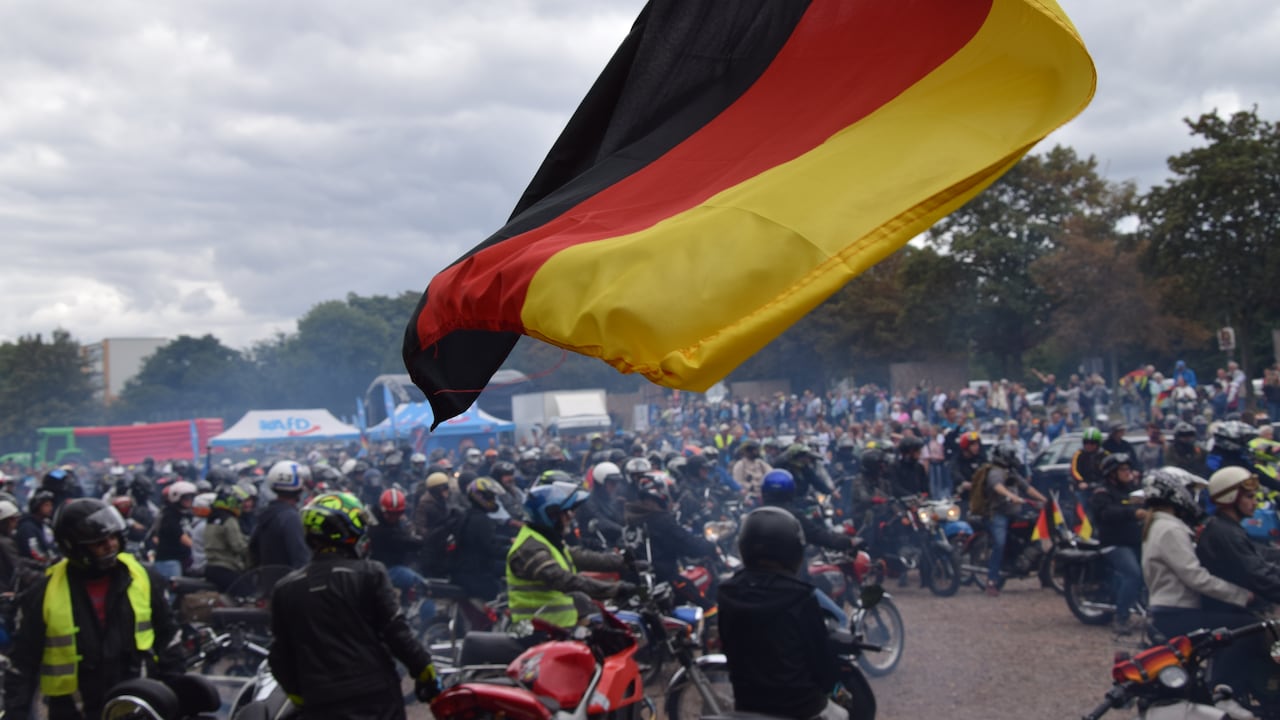
The party’s rise has generated strong support among some voters, including young people and motorcycle enthusiasts who identify with candidate Ulrich Siegmund. At the same time, counter-protesters, immigrants and LGBTQ people describe fear, racism and concern that an AfD government could undermine human rights and Germany’s postwar democratic order. Saxony-Anhalt’s AfD has been classified as right-wing extremist by the state’s Office for the Protection of the Constitution, while party members have faced criticism over Nazi-associated rhetoric and alleged links to ethnonationalist and pro-Russian movements. The article presents the election as a potentially consequential test for Germany, the European Union and the resilience of the country’s democratic safeguards.
Entities: Alternative for Germany (AfD), Saxony-Anhalt, Germany, Ulrich Siegmund, Quedlinburg • Tone: analytical • Sentiment: negative • Intent: analyze
04-09-2026
Magdeburg, the capital of Germany’s Saxony-Anhalt state, is the setting for an election that could give the Alternative for Germany (AfD) control of a German state for the first time since World War II. The AfD is polling at about 41%, substantially ahead of Chancellor Friedrich Merz’s Christian Democratic Union (CDU), at 23%. Such a result would mark a major advance for a party founded in 2013 as an anti-European Union protest movement but later transformed into a far-right political force.
Germany’s domestic intelligence service has classified the AfD’s Saxony-Anhalt branch as a “confirmed far-right extremist” organization, citing racist, antisemitic and anti-Muslim statements and an ideology of ethnopluralism. The party’s lead candidate, Ulrich Siegmund, rejects the designation and says the intelligence agency is being used politically. Siegmund has also been linked to far-right networks and attended the 2023 Potsdam meeting, where Martin Sellner presented a “remigration” plan involving the expulsion of asylum seekers, legal residents of foreign origin and some German citizens with immigrant backgrounds. A version of that proposal is part of the state AfD’s platform.
Even an electoral victory would not necessarily bring the AfD to power. It would need an absolute majority or a coalition partner, but Germany’s major parties have ruled out cooperation with it. Siegmund has likewise rejected coalition government. The article cites neighboring Thuringia, where the AfD won the most seats in 2024 but remained outside government after other parties formed a coalition.
Migration has dominated the campaign, especially after the 2024 Magdeburg Christmas market attack, in which five people were killed. Although the perpetrator was not an Islamist extremist and had expressed far-right and anti-AfD sentiments, the incident nevertheless increased public anxiety and appears to have benefited the AfD. Local reactions include support for the party’s opposition to what supporters call uncontrolled migration, alongside highly derogatory claims about Syrians.
Entities: Alternative for Germany (AfD), Saxony-Anhalt, Magdeburg, Germany's state election, Friedrich Merz • Tone: analytical • Sentiment: neutral • Intent: inform
04-09-2026
Germany’s eastern state of Saxony-Anhalt is approaching a state election in which the far-right Alternative for Germany (AfD) is expected to perform strongly, potentially becoming the clear winner. The AfD, whose state organization has been classified as right-wing extremist by Germany’s domestic intelligence agency, argues that the state has been left behind socially and economically. Its message has gained particular traction among younger voters and amid declining support for the traditionally dominant Christian Democrats (CDU) and Social Democrats (SPD).
Saxony-Anhalt does face significant economic challenges. Unemployment is above the national average, full-time median earnings are lower, and economic output per person is only about three-quarters of the German average. The state’s economy has also grown more slowly than Germany’s overall economy in recent years. Its relatively high proportion of pensioners contributes to the lower per-capita output, while many eastern German retirees depend primarily on state pensions rather than supplementary company or private pensions.
However, the article challenges the AfD’s broader portrayal of Saxony-Anhalt as being abandoned or overwhelmed by foreigners. The state has important industrial sectors, including chemicals, machinery and plant engineering, as well as retail, transport, hospitality and tourism. Its population has also grown in recent years through positive migration. Since 2016, more non-Germans have moved into the state than have left, and migration among German citizens has also produced a positive balance for six consecutive years.
Foreign nationals represented around 9% of the population at the end of 2025, well below the proportion in North Rhine-Westphalia. The claim that foreigners disproportionately live on welfare is also described as misleading, since Saxony-Anhalt has a relatively low share of foreign nationals among potential recipients of basic income support. The article concludes that although the state’s economic weaknesses are real, they do not fully support the bleak narrative promoted by extremist parties. Nevertheless, radical-party support is becoming increasingly entrenched, threatening the CDU’s mainstream position and bringing the SPD closer to the 5% threshold for parliamentary representation.
Entities: Saxony-Anhalt, Alternative for Germany (AfD), Christian Democratic Union (CDU), Social Democratic Party (SPD), Free Democratic Party (FDP) • Tone: analytical • Sentiment: neutral • Intent: analyze
04-09-2026
A representative ARD Deutschlandtrend poll finds that 56% of German voters now consider Russia a threat to Germany’s security, amid a series of suspected attacks on critical infrastructure and defense-related sites. Recent incidents include a drone attack at Leipzig Airport, an arson attack near defense contractors in Bavaria, and the discovery of explosives and pyrotechnics at substations in Brandenburg and North Rhine-Westphalia. The German government has publicly blamed Russia for the Leipzig incident and increasingly describes such activity as hybrid warfare involving sabotage, cyberattacks, espionage, propaganda and disinformation.
Concern is unevenly distributed. Nearly half of eastern Germans feel only slightly threatened or not threatened at all, while two-thirds of supporters of the far-right Alternative for Germany (AfD) assess the Russian threat as low. These groups are also more likely to oppose Germany’s military assistance to Ukraine. Nationwide, however, slightly more than half of respondents consider arms deliveries appropriate or believe they should be expanded.
The poll also shows the AfD maintaining a strong lead. If an election were held immediately, it would receive 27% of the vote, ahead of the CDU/CSU at 21%, the Greens at 15%, the SPD at 13% and the Left Party at 12%. The governing CDU/CSU-SPD coalition would no longer hold a majority. Public satisfaction with the government stands at just 15%, while only 13% approve of Chancellor Friedrich Merz’s performance.
Confidence in the CDU/CSU has declined across several policy areas, including European security, asylum, pensions, climate policy and the economy. Economic conditions remain Germans’ principal concern: 79% describe the economy as poor or very poor. Pessimism is especially pronounced among AfD supporters, while SPD and Green supporters are more likely to view the economy positively.
Entities: Russia, Germany, Friedrich Merz, Alexander Dobrindt, Leipzig Airport drone attack • Tone: analytical • Sentiment: negative • Intent: analyze
04-09-2026
Saxony-Anhalt’s state election on September 6, 2026, is attracting unusual national attention because the far-right Alternative for Germany (AfD) could potentially form Germany’s first state government led by a party officially classified as far-right. The AfD, led by candidate Ulrich Siegmund, has polled above 40% for months, giving it a strong chance of winning an absolute majority if enough smaller parties fail to cross Germany’s 5% electoral threshold.
The AfD, the Christian Democratic Union (CDU), and the Left Party are currently the only parties considered relatively certain to enter the next state parliament. The governing coalition’s other parties face serious risks. The Social Democratic Party (SPD) is polling below its previous result, while the Free Democratic Party (FDP) is near 3%. The Greens are also struggling, particularly among rural voters who oppose their climate policies and multicultural agenda. The Sahra Wagenknecht Alliance (BSW), which has performed well in several eastern German states but missed the Bundestag threshold in 2025, is polling below 5% and could be fighting for its political survival.
The election’s outcome could produce a difficult parliamentary situation. If the CDU, Left Party, and SPD all enter parliament and collectively hold more seats than the AfD, coalition formation may still be complicated because the CDU has a 2018 resolution rejecting cooperation with both the AfD and the Left Party. Political scientist Oliver Lembcke argues that the CDU should have revised this policy in response to the changing party landscape.
The Left Party has offered to support CDU Premier Sven Schulze for another term in order to prevent an AfD-led government, as it has done in minority-government arrangements in Thuringia and Saxony. Consequently, Saxony-Anhalt faces either a highly complex coalition-building process or an AfD government if the party benefits from the collapse of smaller parties and secures an outright majority.
Entities: Saxony-Anhalt, Magdeburg, Alternative for Germany (AfD), Ulrich Siegmund, Office for the Protection of the Constitution in Saxony-Anhalt • Tone: analytical • Sentiment: neutral • Intent: analyze
04-09-2026
Germany’s far-right Alternative for Germany (AfD) party is seeking a historic victory in Saxony-Anhalt, where it is polling above 40 percent ahead of the state election. Such a result could allow the party to form Germany’s first far-right state government since World War II. While Ulrich Siegmund, the AfD’s top candidate, serves as the party’s popular and highly visible public face, Hans-Thomas Tillschneider is presented as the principal ideological force behind its regional platform.
Political scientists describe the Saxony-Anhalt programme as one of the AfD’s most extreme election platforms. It advocates a strongly anti-immigration and “remigration” agenda, opposes what it calls progressive social policies concerning LGBTQ+ people and women’s rights, and rejects the urgency of addressing global warming. If the AfD governs alone, Tillschneider’s ideas could significantly shape the state’s political direction.
The article traces Tillschneider’s background from his birth in Timișoara, Romania, to his academic studies of Islam and philosophy and his research on an 18th-century Muslim jurist. Despite his German nationalist politics, he has also developed close sympathies with Russia. He visited Moscow after Russia’s full-scale invasion of Ukraine, later travelled to Kaliningrad, and supports ending sanctions against Russia. The AfD’s regional programme also calls for Ukrainian refugees to be treated like other refugees and for more Russian-language teaching in schools.
Tillschneider’s most distinctive political focus is culture. The AfD’s Saxony-Anhalt platform makes culture a central priority alongside family, children, immigration and remigration. Tillschneider has pledged to end public funding for what he labels “anti-German art” and has criticized the Bauhaus movement as an example of misguided modernity. Scholars note that this language echoes Nazi-era attacks on Bauhaus as “degenerate art,” reinforcing the article’s portrayal of the regional AfD as increasingly radical.
Entities: Hans-Thomas Tillschneider, Ulrich Siegmund, Alternative for Germany (AfD), Saxony-Anhalt, Germany • Tone: analytical • Sentiment: negative • Intent: analyze
04-09-2026
This episode of France 24’s “The World This Week” examines several major international and European political developments. It opens with Russia’s latest escalation against Ukraine, describing what Reuters called the most intense wave of air attacks on Kyiv in roughly four years. The assault reportedly involved drones, cruise missiles and ballistic missiles, killing 12 people and placing further strain on Ukraine’s air-defence capabilities. Ukraine’s foreign minister appealed to Western allies for additional Patriot interceptor missiles. The segment also discusses Ukraine’s asymmetric campaign against Russian refineries and logistics hubs, as well as reports that more than 43,000 Ukrainian drones have struck or been intercepted over Russia since June.
The programme then turns to relations between Britain and France, describing a week of diplomatic goodwill and political cooperation. President Emmanuel Macron visited London to mark the start of a 10-month loan of the Bayeux Tapestry. At the same time, Britain’s prime minister sought measures to stop migrant boats crossing the Channel. Migration also featured prominently in Birmingham, where Reform UK leader Nigel Farage met Jordan Bardella, leader of France’s National Rally. Their public alliance generated considerable attention, though the programme notes that the association was not entirely beneficial for Reform.
The final focus is Germany’s upcoming Saxony-Anhalt state election. The Alternative for Germany (AfD) was leading in opinion polls, raising the possibility that it could win a state government and make political history. Its lead candidate, Ulrich Siegmund, could become the first far-right leader of a German state since the Second World War. Der Spiegel’s description of Siegmund as “Germany’s most dangerous man” has become a campaign asset: the former perfume salesman reportedly brought copies of the magazine to rallies and signed them for supporters. The title presents this controversy as a possible public-relations gift for the AfD.
Entities: Ulrich Siegmund, Alternative for Germany (AfD), Saxony-Anhalt state election, Germany, Kyiv • Tone: analytical • Sentiment: negative • Intent: inform
04-09-2026
Germany’s far-right Alternative for Germany (AfD) is leading polls ahead of a state election in Saxony-Anhalt, raising the prospect that it could lead a German state government for the first time since World War II. The party’s candidate, 35-year-old Ulrich Siegmund, has built a highly polished, social-media-driven campaign. A former marketing professional and popular TikTok personality, Siegmund presents himself as youthful, optimistic and approachable, in contrast to the more confrontational image associated with many AfD politicians. His campaign emphasizes short, energetic messages, while the party maintains hard-line positions on immigration, including mass deportations and criticism of foreign-trained medical workers.
The article examines how the AfD’s carefully managed image is attracting voters who may not support all of its policies. Former AfD voter Hannes Kreschel attends rallies to challenge supporters about the party’s economic and nationalist positions. He argues that the AfD’s program primarily benefits the wealthy and says he abandoned the party after concluding that its vision was incompatible with an open, tolerant Germany. However, voter Alexander Winsek is considering voting for the AfD because of its promise to restrict migration. Although he rejects some of the party’s positions on NATO, the euro and Russia, he views Siegmund as a positive alternative to the party’s more pessimistic figures.
Political researcher Marcel Lewandowsky says many AfD voters still identify as pro-democracy, even while believing German democracy is failing. He argues that the party successfully presents itself as the defender of “real” democracy against an establishment that ignores ordinary citizens. The AfD’s appeal is increasingly national rather than confined to eastern Germany, where it is also polling strongly at the federal level. A victory in Saxony-Anhalt would mark a major breakthrough for a party classified as right-wing extremist by domestic intelligence authorities in several German states. The article also highlights the contradiction between the AfD’s claim to represent ordinary people and its intolerance of critics.
Entities: Alternative for Germany (AfD), Ulrich Siegmund, Saxony-Anhalt, Halle, Germany, Hannes Kreschel • Tone: analytical • Sentiment: negative • Intent: analyze