04-09-2026
Oil prices were on track for their strongest weekly performance in several weeks as fighting between the United States and Iran continued into its seventh month. Brent crude futures fell 1.66 per cent to $93.93 a barrel, while US West Texas Intermediate declined 2.1 per cent to $89.38 by 6.19pm UAE time on Friday. Despite the daily declines, Brent was up 5 per cent for the week and WTI had gained 7 per cent, its best weekly performance since July 13.
The rise in crude prices, together with a sharper increase in fuel costs, is adding to global inflation and government borrowing expenses. The article warns that these pressures are increasing concerns about a possible hard landing for the world economy. Saxo Bank’s Ole Hansen said commodities were being affected differently by rising interest rates, inflation, supply constraints and geopolitical disruption.
US diesel prices reached record highs as renewed fighting and Ukrainian attacks on Russian refineries worsened supply disruptions. European diesel inventories also remained well below seasonal levels. The conflict has intensified, with US strikes killing and injuring dozens, Iranian forces attacking vessels in the Strait of Hormuz and firing missiles at Jordan, Kuwait and Bahrain, and Israel warning that it could target Iranian military, civilian and energy infrastructure.
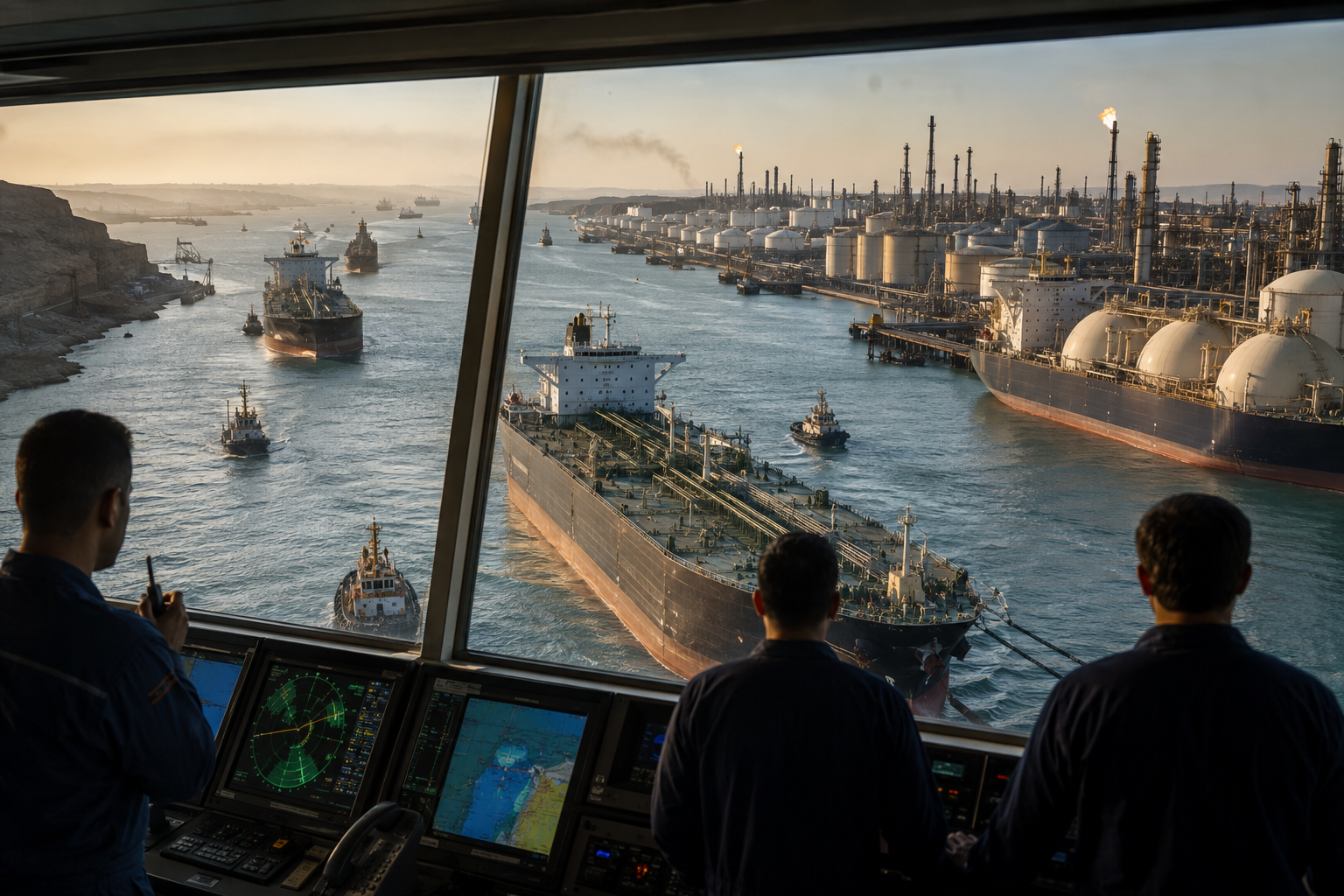
Shipping through Hormuz remains significantly reduced. Four commodity vessels crossed the strait on Thursday, compared with a 10-day average of about 15. Although Washington said regional flows had returned close to normal, analysts and tanker trackers continued to report severe disruption. Before the war, roughly one-fifth of global oil and liquefied natural gas shipments passed through the strait.
Iraq increased August oil exports, while Saudi Arabia kept its flagship crude price for Asia unchanged. Citi raised its third-quarter Brent forecast to $86 a barrel, and ANZ raised its short-term forecast to $95. Brent has risen almost 60 per cent this year.
Entities: US-Iran conflict, Brent crude, US West Texas Intermediate (WTI), Strait of Hormuz, Ole Hansen • Tone: analytical • Sentiment: negative • Intent: inform
04-09-2026
Sheikh Khaled bin Mohamed bin Zayed, Crown Prince of Abu Dhabi and Chairman of the Abu Dhabi Executive Council, has directed the Abu Dhabi National Oil Company (Adnoc) to strengthen its position as a dependable global energy provider amid growing disruption to maritime navigation in the region. He made the remarks while chairing a meeting of Adnoc’s executive committee at the company’s headquarters in Abu Dhabi.
Sheikh Khaled reviewed Adnoc’s efforts to maintain reliable energy deliveries in what state news agency Wam described as an increasingly complex global energy environment. His comments come after an Adnoc-linked vessel was attacked while transiting the Strait of Hormuz on August 14. No injuries were reported, and the incident was brought under control. The attack was described as the latest in a series involving Adnoc-linked ships. The UAE has reaffirmed its right to freedom of navigation through the strategic waterway while continuing to pursue diplomatic solutions to the prolonged Iran conflict.
The Crown Prince also examined Adnoc’s operational and financial performance, including the company’s global liquefied natural gas marketing and trading platform, which was launched in July. The platform is expected to target 47 million tonnes per annum of marketable LNG beyond 2030. According to the article, it will diversify supply options for customers and improve access to Adnoc’s expanding gas portfolio.
Sheikh Khaled said Adnoc’s integration and operational flexibility were improving its ability to serve customers. Before the meeting, he visited the company’s emergency control centre and met front-line staff and business-continuity teams. He praised their efforts to maintain safe and efficient operations under all circumstances. The meeting was attended by senior UAE officials, including Dr Sultan Al Jaber, Suhail Al Mazrouei, Ahmed Al Sayegh, Khaldoon Al Mubarak and Jassem Al Zaabi.
Entities: Sheikh Khaled bin Mohamed bin Zayed, Abu Dhabi National Oil Company (Adnoc), Abu Dhabi, Strait of Hormuz, United Arab Emirates • Tone: neutral • Sentiment: neutral • Intent: inform
04-09-2026
The article examines why refined fuels and petrochemical feedstocks are becoming more expensive and harder to obtain even as crude oil prices have not risen at the same pace. It uses Japan’s shortage of naphtha as a local example of a broader disruption affecting global industrial supply chains. Naphtha, a crude-oil-derived liquid, is a key input for polyester fibres, packaging materials and industrial solvents. The shortage became visible to consumers when Japanese snack maker Calbee changed its familiar colourful packaging to monochrome designs, reportedly because of difficulties securing naphtha supplies. Japanese media have described the resulting corporate strain as “naphtha bankruptcies.”
The disruption is widespread. A June survey by Tokyo Shoko Research found that about 80 per cent of more than 7,000 responding companies were struggling to procure oil-derived products. The article argues that Japan’s problems reflect tightening conditions across the international market rather than an isolated domestic issue.
Goldman Sachs analysts led by Yulia Zhestkova Grigsby estimated in late August that global refinery outages were 60 per cent above seasonal norms. Outages either remove refining capacity entirely or force plants to reduce production, limiting the supply of fuels and petrochemical inputs. The article identifies two principal causes: increasing geopolitical conflict and export controls imposed by China, which has the world’s largest oil-refining capacity.
The article’s introduction also reports that global refined-product exports fell 25 per cent year on year in August, with the largest losses concentrated in Russia and the Persian Gulf. The supplied excerpt establishes the causes and industrial consequences of the supply squeeze, but does not yet provide a detailed forecast of how long the price disparity or shortages will last.
Entities: David Chen, Calbee, Japan, China, Naphtha • Tone: analytical • Sentiment: negative • Intent: analyze