27-10-2026
An investigative committee in Niger state, central Nigeria, has concluded that poor detention conditions caused the deaths of 33 young men arrested on suspicion of illegal gold mining. The men died in September after being held in a crowded cell in Minna, the state capital, by the Nigeria Security and Civil Defence Corps (NSCDC), a paramilitary government agency. The committee characterized their treatment as “cruel, inhuman and degrading.”
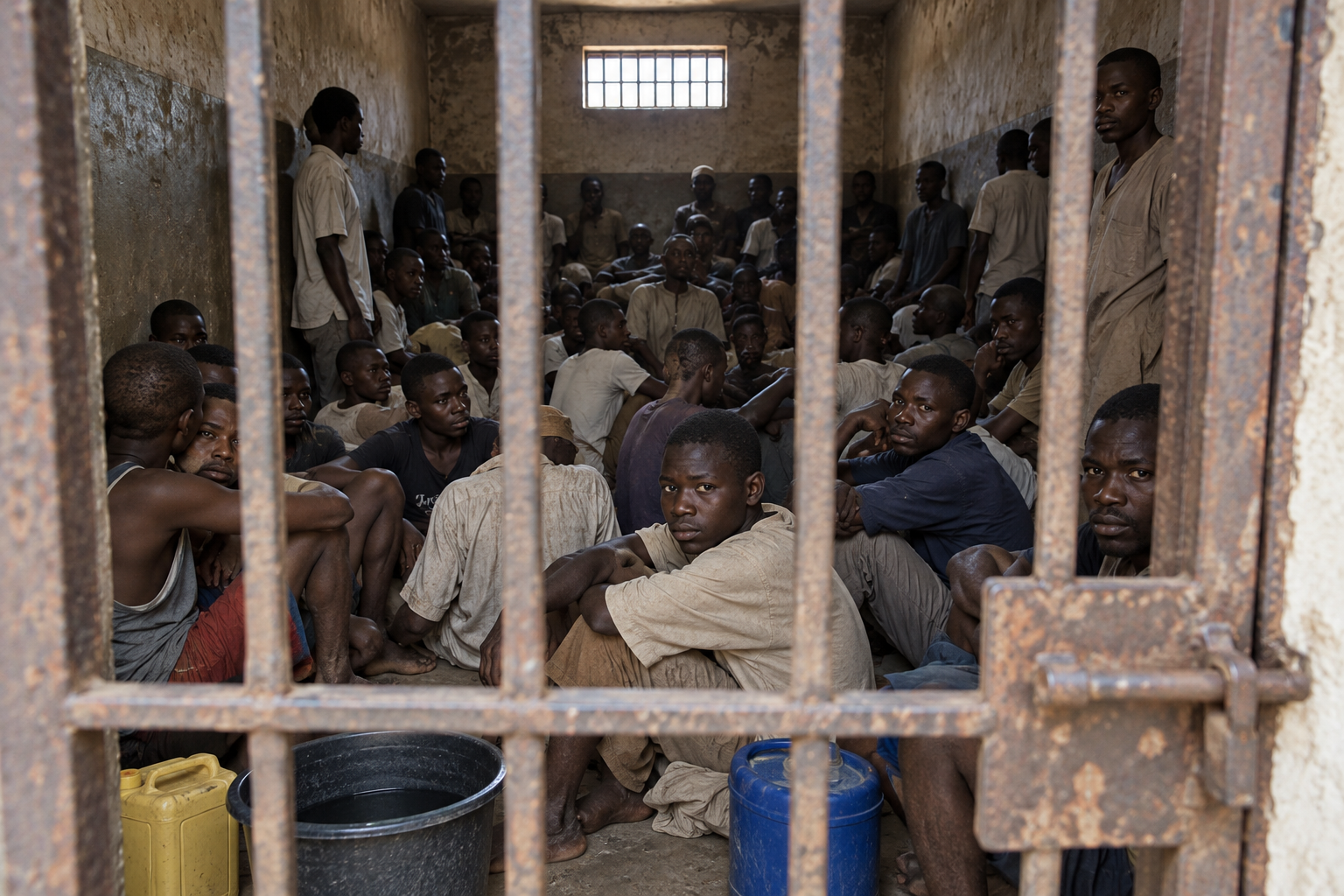
Survivors told investigators that the cell was severely overcrowded and poorly ventilated. Some also reported that a substance that stung their throats and noses was sprayed inside before the cell door was shut. They said that cries for help and banging on the door received no response from guards on duty.
Medical and forensic evidence attributed the deaths to environmental asphyxia and acute respiratory failure. Investigators said the prolonged confinement in the badly ventilated cell was compounded by heat stress and dehydration. Committee head Jonathan Kure presented the findings to the government and described the circumstances as cruel and inhuman.
The reported death toll had initially been put at 37 by Niger state authorities. However, the committee verified 33 deaths, explaining that the higher figures reported soon after the incident could not be matched with available records and identified victims. Kure said 14 of those who died were minors. The findings focus on the fatal effects of detention conditions and the lack of response to detainees’ calls for assistance.
Entities: Minna, Niger state, Nigeria, Nigeria Security and Civil Defence Corps (NSCDC), Jonathan Kure • Tone: analytical • Sentiment: negative • Intent: inform
27-10-2026
An inquiry into the deaths of 33 detainees in Minna, Nigeria, concluded that the deaths were entirely preventable. The detainees were found dead on 17 September while held by the Nigeria Security and Civil Defence Corps on suspicion of illegal mining. Investigators found that forensic and medical evidence pointed to acute respiratory failure after prolonged confinement, worsened by heat stress and dehydration. The evidence did not support initial claims that a disease outbreak caused the deaths. The mining sites involved had reportedly been licensed.
The committee found serious failures in both the operation and detention conditions. The raid lacked an approved operational order, adequate planning, and consultation with the Mining Marshals Unit. Fifty people had been held in a cell of about 20 square metres, without running water or a functioning toilet, and with inadequate food, drinking water, and ventilation. Adults and minors were detained together, and some people were held beyond lawful time limits. A medical worker had raised concerns, but officers reportedly did not respond to repeated pleas for help, including calls for water.
Committee head Jonathan Kure described the conditions as cruel, inhuman, and degrading, and said the deaths reflected systemic disregard for detention standards, supervision, and detainee welfare. Interior Minister Olubunmi Tunji-Ojo said implicated officers would be suspended and face legal action, and that the report would be sent to the attorney general. He also raised concerns that the detention hall had been cleaned before investigators arrived, potentially compromising evidence. The committee recommended compensation of 30 million naira for each bereaved family and 10 million naira for each survivor.
Entities: Minna, Nigeria, Nigeria Security and Civil Defence Corps, Olubunmi Tunji-Ojo, Jonathan Kure, Mining Marshals Unit • Tone: analytical • Sentiment: negative • Intent: inform
27-10-2026
A Nigerian government investigation found that 37 suspected illegal miners died in detention because of severe overcrowding, inadequate ventilation, heat stress, dehydration and neglect—not, as officials had initially suggested, a disease outbreak. The deaths occurred last month and included many teenagers working in artisanal gold mines. They sparked protests and renewed concern about detention conditions and the treatment of people held while awaiting trial.
Jonathan Kure, who chaired the investigating committee, called the deaths entirely preventable. The committee reviewed detention records, autopsies, hospital reports and communication logs. Its findings indicate that the detainees died from asphyxia, or acute respiratory failure, after prolonged confinement in a crowded, poorly ventilated cell. Kure said the evidence did not support claims that a disease outbreak caused the deaths. The findings also correspond with survivors’ accounts to Reuters that miners were packed into a small holding cell and their complaints about overcrowding were repeatedly ignored.
The Nigeria Security and Civil Defence Corps (NSCDC), the paramilitary agency that detained the miners as part of efforts to regulate mining, initially raised the possibility of an unspecified disease and later said the cause had not been established. NSCDC officials did not immediately respond to a request for comment. The government has suspended senior agency officials while the investigation proceeds.
The committee recommended compensation of 30 million naira (about US$22,500) for each victim’s family and 10 million naira for each of 41 survivors. It also called for a sweeping overhaul of the NSCDC’s leadership, citing systemic failures in detention standards, supervision and care for people in custody.
Entities: Nigeria, Abuja, Jonathan Kure, Nigeria Security and Civil Defence Corps (NSCDC), 37 detained suspected illegal miners • Tone: analytical • Sentiment: negative • Intent: inform