27-10-2026
The article examines the tight U.S. midterm races that could determine which party controls Congress during the final two years of Donald Trump’s presidency. All 435 House seats and 35 Senate seats are up for election. Democrats need a net gain of three seats to take the House, a goal the article says appears within reach according to polling analysis. Taking the Senate is harder: Democrats need four net seats for a 51–49 majority, which would require winning races in states Trump carried by large margins in 2024.
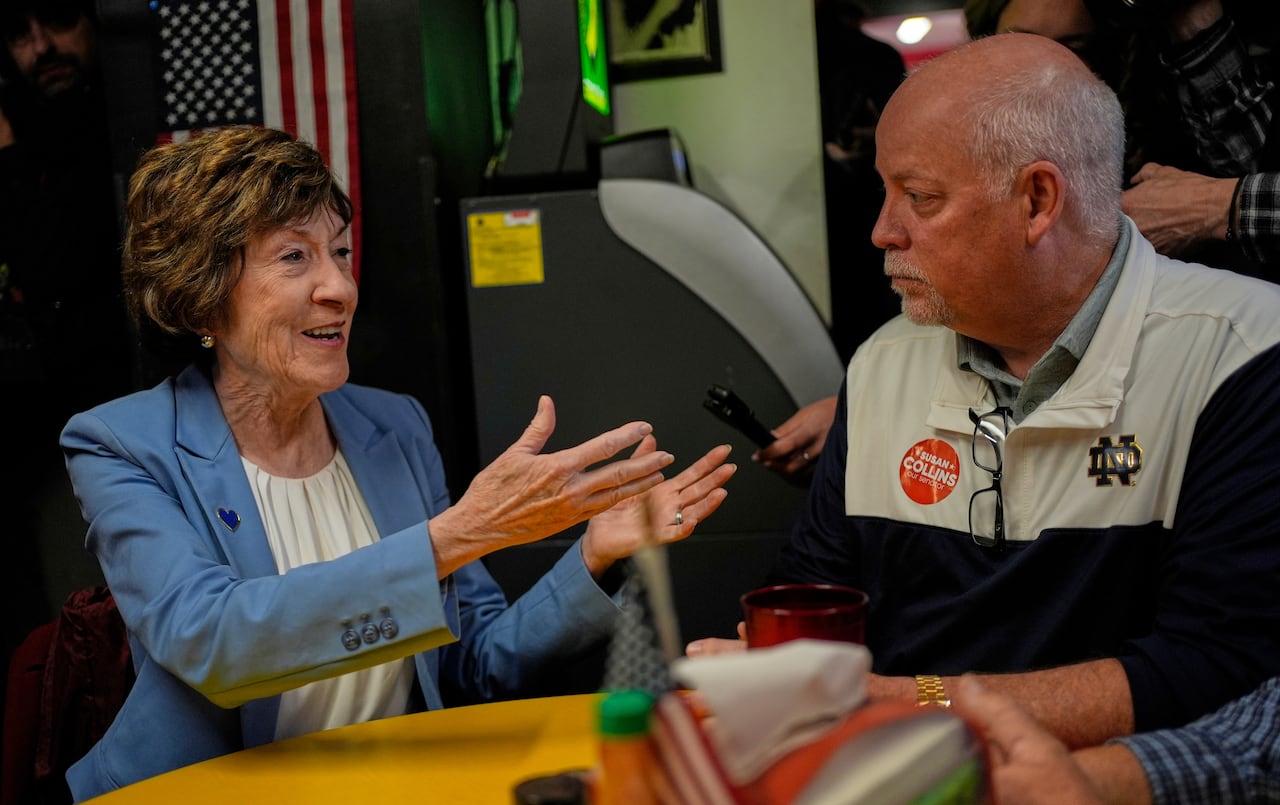
The article highlights several Senate contests. In Maine, Republican Susan Collins’s long record of winning in a Democratic-leaning state is tested by her association with Trump, whose tariffs are unpopular; Democrat Troy Jackson entered the race after the original nominee withdrew. In Michigan, Democrat Abdul El-Sayed and Republican Mike Rogers are competing for an open seat. Trump has attacked El-Sayed, while Rogers has criticized the tariff conflict with Canada. The trade dispute and its effects on the auto industry are prominent issues there.
In Ohio, appointed Republican Jon Husted faces former senator Sherrod Brown. Voters are weighing the cost of living, the Iran war, tariffs and concerns about data centres. Texas is another potential upset: Republican Ken Paxton, endorsed by Trump, faces Democrat James Talarico. Democrats have not won a Texas Senate election since 1988, but polling suggests the seat may be vulnerable. The article characterizes a Republican loss there as a major repudiation of Trump. The supplied article text ends while beginning its discussion of the Latino community’s role in Texas, so that section is incomplete.
Entities: Donald Trump, Mike Crawley, U.S. midterm elections, U.S. Congress, Democratic Party • Tone: analytical • Sentiment: neutral • Intent: inform
27-10-2026
France 24’s video report, issued on October 27, 2026, focuses on the Michigan Senate race as the US midterm elections approach. Its brief description says that the contest is dividing communities and that former President Donald Trump is escalating anti-Muslim attacks against Abdul El-Sayed, the Democratic Senate candidate in Michigan. The description notes that El-Sayed could become the first Muslim senator in US history if elected. The headline likewise emphasizes Trump’s attacks and identifies El-Sayed as a Democratic candidate.
The supplied page contains a 1:53 video, but no transcript or further reporting text is included. Consequently, it does not provide examples of the alleged attacks, responses from El-Sayed or other candidates, polling, or details about how the race is splitting communities. The summary can report only the framing and facts stated in the page description; the underlying video may contain additional information not present in the supplied content.
Entities: Donald Trump, Abdul El-Sayed, Michigan, United States, France 24 • Tone: analytical • Sentiment: negative • Intent: inform
27-10-2026
At a rally in Port Huron, Michigan, on October 25, President Donald Trump attacked Democratic Senate nominee Abdul El-Sayed using claims and rhetoric the article characterizes as Islamophobic. Trump called El-Sayed, a US-born Muslim whose family emigrated from Egypt, a “jihadist Muslim Brotherhood member” and said his election would bring jihadis into the United States. The article describes the allegation as baseless and notes that El-Sayed has repeatedly disavowed the Muslim Brotherhood. Trump contrasted him with Republican Mike Rogers, whom he praised as “apple pie,” and also questioned the loyalty of Jewish voters who support El-Sayed.
The article places the remarks in a closely contested midterm race that could help determine control of the Senate. Polls showed El-Sayed with a narrow lead over Rogers, while a mid-September New York Times/Siena poll found that only 34% of likely Michigan voters approved of Trump. Although the crowd at the rally was enthusiastic, the event took place in a conservative district as Michigan was seen as swinging back toward Democrats. The article raises the question of whether Trump’s campaigning will ultimately help or harm Republican turnout.
Trump also focused on El-Sayed’s relatives, including his half sister, Eman Abdelhadi. The article says her statement on the first anniversary of Hamas’s October 7, 2023, attack did not mention or celebrate the massacre. El-Sayed’s campaign said he disagreed with some of her political positions and rhetoric. His campaign has argued that attacks on his name and faith distract from economic concerns, while his opponents cite a 2012 letter he signed to Egypt’s then-president Mohammed Morsi.
The article also covers Trump’s remarks about Greenland and Iran, and Rogers’s efforts to distance himself from Trump’s war and tariffs. At a separate rally, El-Sayed framed attacks on his identity as a distraction from voters’ cost-of-living concerns. The supplied article ends mid-sentence while describing Rogers’s appearance on NBC’s Meet the Press.
Entities: Donald Trump, Abdul El-Sayed, Mike Rogers, Michigan Senate race, Port Huron, Michigan • Tone: analytical • Sentiment: negative • Intent: inform
27-10-2026
James Zogby argues that the Michigan US Senate race between Democrat Abdul El-Sayed and Republican Mike Rogers is among the most consequential elections in recent years. El-Sayed’s candidacy is historic: if elected, he would be the first Muslim senator, following four Arab-American men who previously served in the Senate. Zogby says Republicans and Donald Trump have sought to exploit El-Sayed’s Egyptian-American Muslim identity, including by repeating an allegation that his mother was affiliated with the Muslim Brotherhood. The article notes that El-Sayed’s parents separated when he was three and that he grew up with his father in Michigan, while characterizing the accusation as a smear. It recounts El-Sayed’s response to a heckler, in which he affirmed his commitment to the US Constitution and rejected the idea that he was running to represent Muslims rather than serving as a senator who happens to be Muslim.
Zogby also presents the race as a test of “dark money” in politics. He says outside groups spent $70 million against El-Sayed in the primary, including $31 million from pro-Israel groups, yet El-Sayed won despite being outspent 11 to 1. An estimated further $100 million may be spent against him in the general election. The author links this spending to El-Sayed’s criticism of US support for Israel’s war in Gaza and says accusations of anti-Semitism and organized opposition have cost him some Jewish-American Democratic support.
The article portrays El-Sayed’s message—redirecting money from weapons and wars toward schools, health care, and domestic needs—as increasingly resonant with Democrats and independents. It highlights his calls for money out of politics, universal health care, and an economy that better serves families. Zogby concludes that a victory could advance a progressive agenda, challenge the influence of dark money, and break political taboos; even a defeat, he argues, would leave a lasting mark on American politics.
Entities: Abdul El-Sayed, Mike Rogers, James Zogby, Donald Trump, Michigan • Tone: analytical • Sentiment: positive • Intent: persuade