27-10-2026
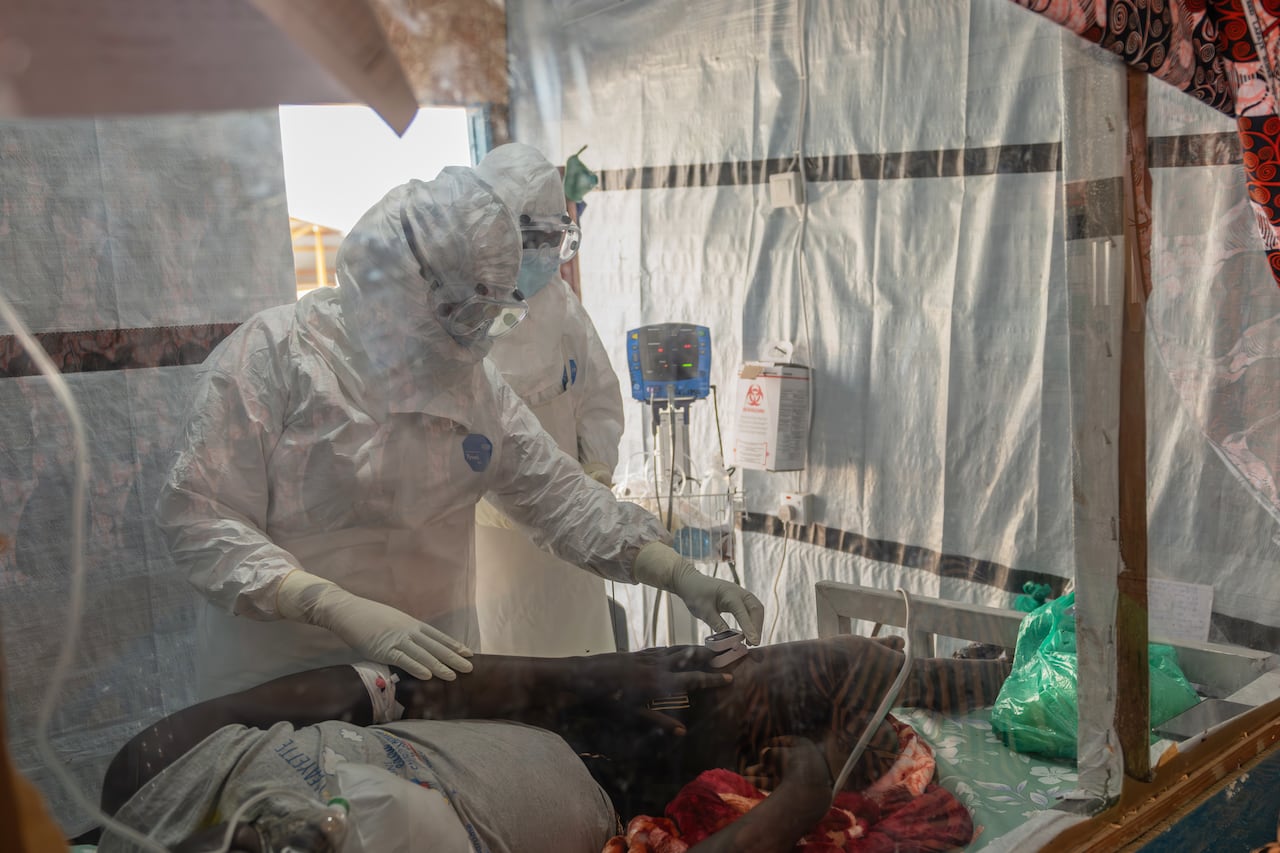
The Democratic Republic of the Congo’s Ebola outbreak has surpassed 10,000 confirmed cases, with 4,887 deaths, making it the fastest-growing and deadliest outbreak in the country’s history. Nearly half of confirmed patients have died. With infections also reported beyond the DRC, the outbreak is now the second-largest and second-deadliest on record, after the 2014–2016 West African epidemic. The current outbreak, declared on May 15, is caused by the rare Bundibugyo virus, for which no vaccine or treatment has been approved. The World Health Organization announced that the first clinical trial of an Ebola vaccine began on Friday.
Health responders face major constraints five months into the outbreak. Some treatment centres are overwhelmed, while remote and newly affected areas lack supplies and medical staff. Cases have been reported in 66 health zones across eight provinces. Teams have insufficient vehicles and struggle to persuade families to bring sick people for care or allow safe burials; at least half of those who died had not been admitted for treatment. The outbreak has also disrupted routine health services, including childhood vaccinations, and maternal deaths doubled in some provinces. Wage disputes, public mistrust and attacks on responders have further impeded the response. A nurse was killed and a colleague seriously injured while responding to a suspected case in Tshopo province, and a local politician who defended the response was fatally beaten last month.
The virus has spread across borders. Uganda ordered citizens returning from the DRC to quarantine for 21 days, although officials reported no active cases there after 20 infections and two deaths over the summer. Switzerland said a woman infected after visiting Uganda was diagnosed while in Nigeria, making Nigeria the fourth affected African country; she was later evacuated to Switzerland for treatment. Kenya reported nine confirmed cases, including two deaths. Twenty contacts of its first patient completed quarantine, while 98 others remained under monitoring. Africa CDC says at least 95 percent of cases must be among known contacts for the outbreak to be considered under control, whereas about 80 percent of new cases are currently outside monitored transmission chains.
Entities: Democratic Republic of the Congo (DRC), Bundibugyo virus, Ebola outbreak, Africa Centres for Disease Control and Prevention (Africa CDC), World Health Organization (WHO) • Tone: analytical • Sentiment: negative • Intent: inform
27-10-2026
The Ebola outbreak in the Democratic Republic of Congo (D.R.C.) has surpassed 10,000 confirmed cases, with 10,060 reported and nearly half of those infected dead, according to the country’s Ministry of Health. Declared in May, the outbreak is caused by the rare Bundibugyo strain, for which there is no approved vaccine or treatment. It is the fastest-growing Ebola outbreak in history and the deadliest in the D.R.C.’s history, spreading across 66 health zones in eight provinces and reaching more African regions than any previous Ebola outbreak. Cases have also been recorded in Uganda, Kenya and Nigeria, as well as France, where a doctor returning from the D.R.C. recovered.
Health authorities face major obstacles, including armed conflict, poor roads, attacks on responders, distrust and misinformation. Surveillance has also been weak: about 80 per cent of reported cases are outside known, monitored contacts, indicating that many transmission chains remain unidentified. Many people continue to avoid or delay seeking care, and at least half of recorded deaths occurred among people who had not entered treatment centres. Treatment facilities are overwhelmed in some areas, while health workers have protested unpaid wages and bonuses. A nurse was killed and another worker injured during a response to an Ebola alert in Tshopo province.
The outbreak is also straining an already underfunded health system and disrupting other essential services. Cholera cases continue to rise, maternal deaths have doubled in some provinces as pregnant women avoid hospitals, and routine vaccinations and children’s schooling have been interrupted. Despite the crisis, more than 2,600 patients in the D.R.C. have recovered. African health ministers are scheduled to meet virtually to strengthen the regional response. Africa CDC chief Jean Kaseya called for faster coordination, solidarity and political leadership, while WHO Director-General Tedros Adhanom Ghebreyesus said each life saved is worth celebrating, even though the outbreak is far from over.
Entities: Democratic Republic of Congo (D.R.C.), Bundibugyo virus, Ebola outbreak, Africa Centres for Disease Control and Prevention, World Health Organization • Tone: urgent • Sentiment: negative • Intent: inform
27-10-2026
The Democratic Republic of Congo (DR Congo) has reported 10,060 cases of Ebola and 4,887 deaths since the outbreak was identified in mid-May. The outbreak is caused by the Bundibugyo virus, a strain for which there is currently no approved vaccine or specific treatment. The Africa Centres for Disease Control and Prevention has called it the fastest-growing Ebola outbreak in history.
The virus has also been reported beyond DR Congo. Kenya confirmed nine infections, including two deaths, after a patient traveled from DR Congo through Uganda to Nairobi. Nigeria confirmed an infection in a Swiss woman, the wife of a Swiss diplomat, who became ill after visiting Uganda. She was evacuated to Switzerland, and authorities are investigating where she contracted the virus.
Containing the outbreak is challenging because Ebola spreads through direct contact with an infected person’s blood or other bodily fluids. Symptoms can include fever and diarrhea and, in some cases, bleeding. Early symptoms may resemble malaria, which could delay isolation and treatment. The absence of a Bundibugyo-specific vaccine or treatment adds to the difficulty of controlling transmission.
Research is underway: clinical trials of two antiviral treatment approaches have been in progress since July, and two additional trials are testing whether the Ervebo vaccine can protect against the Bundibugyo virus. Ervebo is currently approved and recommended only against Ebola virus, formerly known as Zaire ebolavirus.
Entities: Democratic Republic of Congo (DR Congo), Bundibugyo virus, Ebola outbreak, Africa Centres for Disease Control and Prevention, Kenya • Tone: analytical • Sentiment: negative • Intent: inform
27-10-2026
The Ebola outbreak first declared in the Democratic Republic of Congo in May has surpassed 10,000 reported infections, making it the fastest-spreading Ebola outbreak in history. The article says the virus may have been circulating since February or March, giving it months to spread before it was detected. The outbreak is caused by the Bundibugyo species, for which existing tests were not calibrated. Remote communities, conflict, and reduced disease-surveillance capacity may also have contributed to the delay. International support has been slower and less substantial than during the 2014–2016 West Africa outbreak, despite funding pledges that include more than $880 million from the United States.
The outbreak has spread across a wider geographic area than any previous one, reaching from Nigeria to Kenya. Nearly 5,000 people have died, including many children; children under five face especially high mortality. The article notes that the earlier West Africa outbreak still holds the record for total cases and deaths.
Response capacity has grown, with about two dozen diagnostic labs, more than 50 treatment centers, and nearly 2,000 beds. However, roughly two-thirds of deaths occur in communities rather than treatment centers, suggesting that many people are not seeking care. Symptoms can initially resemble common illnesses, while distrust, misinformation, conflict, and limited local engagement further impede response efforts. An International Rescue Committee survey found that 85% of respondents in North Kivu said distrust of community responders kept people from seeking care. About 80% of new cases are still being identified among people not previously known to health officials, and experts warn that spread may be going undetected even as daily counts appear to plateau. No vaccine or treatment is licensed for the Bundibugyo species, and potential options are not ready for use in the current response.
Entities: Democratic Republic of Congo (DRC), Bundibugyo Ebola virus, Katie Thomas-Canfield, Nahid Bhadelia, Mohamed Janabi • Tone: analytical • Sentiment: negative • Intent: inform