26-10-2026
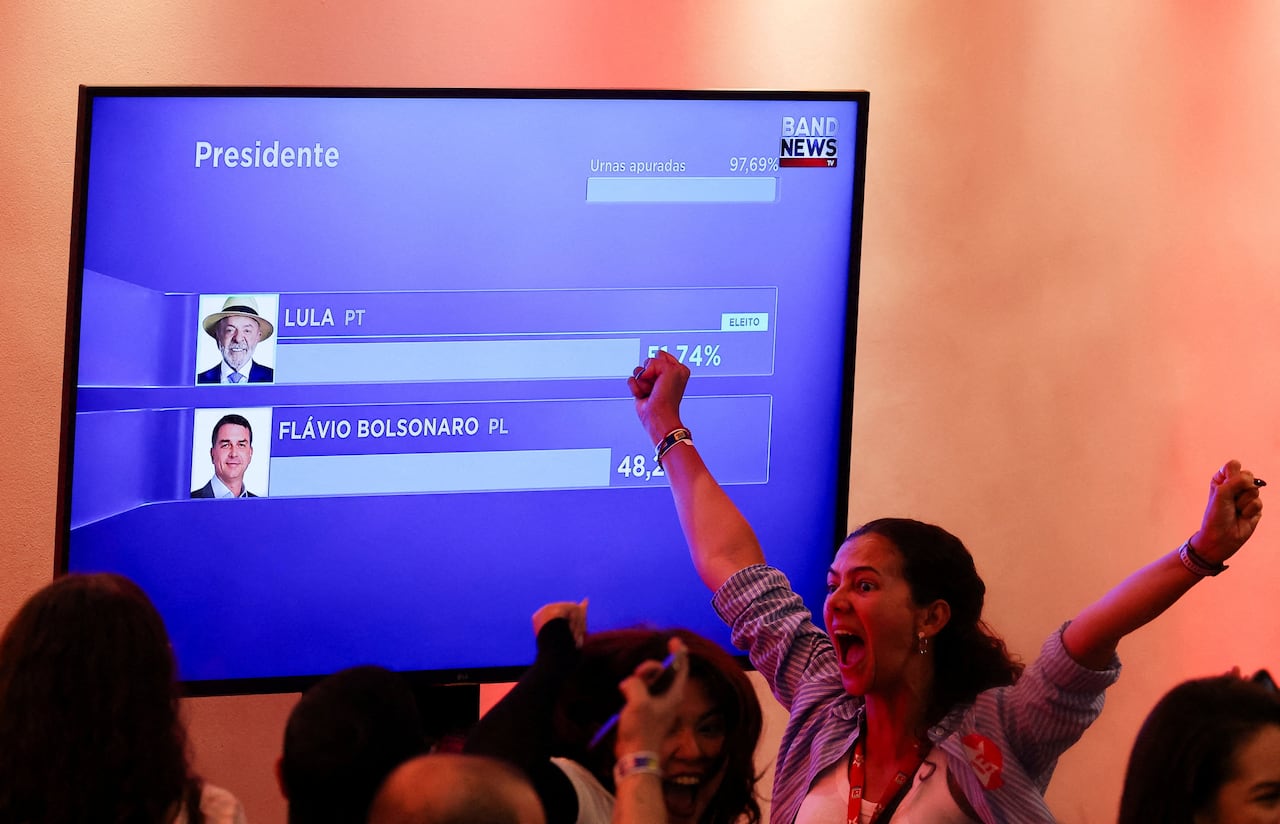
Luiz Inácio Lula da Silva has won re-election as Brazil’s president, securing 51.8 per cent of the vote against 48.2 per cent for Flávio Bolsonaro, son of former president Jair Bolsonaro. The result gives Lula a historic fourth term and reverses Flávio Bolsonaro’s advantage in the first round, when he led by more than 2.2 million votes. The election was complicated by an unprecedented Supreme Court order, issued shortly before polls were due to close, extending voting hours by two hours. Lula’s campaign had sought the extension over claims that public officials were slowing public transport and impeding voters in cities favourable to Lula; Bolsonaro’s camp also requested extra time in some rain-affected areas where he had support.
Flávio Bolsonaro has rejected the result, described the court’s decision as a “dirty trick,” and called for the election to be annulled. Legal experts quoted in the article say that although the extension was unusual, there is little apparent basis to overturn the election without evidence it impaired voters’ ability to express their will. Both campaigns had asked for polling hours to be extended in some locations. Bolsonaro’s rejection echoes his father’s refusal to accept his 2022 defeat to Lula; Jair Bolsonaro was later sentenced to 27 years in prison for plotting a coup to remain in power.
Lula’s victory interrupts a run of conservative electoral wins in Latin America and keeps Brazil on a course of resisting US pressure, including increased tariffs. Analysts attribute Lula’s comeback to higher turnout, mobilisation after his first-round loss, and his appeal to young voters with promises to improve workers’ lives. His political career has included a rise from poverty, two earlier presidential victories, imprisonment on corruption charges later overturned, and a return to power in 2022. Despite recent reductions in inflation, unemployment and poverty, living costs and crime remain concerns. Lula’s next term is expected to be difficult, as Bolsonaro’s Liberal Party is the largest force in both chambers of Congress; Lula will be 85 by the end of the term in 2030.
Entities: Luiz Inácio Lula da Silva, Flávio Bolsonaro, Jair Bolsonaro, Brazilian presidential election, Brazil Supreme Court • Tone: analytical • Sentiment: neutral • Intent: inform
26-10-2026
Brazilian President Luiz Inacio Lula da Silva won re-election with 51.8 percent of the vote, defeating Senator Flavio Bolsonaro, who received 48.2 percent. The victory gives Lula an unprecedented fourth term and reverses expectations that Brazil might join a regional shift toward conservative governments. Bolsonaro, the son of former president Jair Bolsonaro, rejected the result and said he would seek to annul the election, citing what he called an unacceptable decision to extend voting hours. The Supreme Court had extended voting by two hours after Lula complained that buses had been withdrawn in some cities, preventing people from reaching polling stations; Bolsonaro had also requested extensions in some regions because of heavy rain.
The close and contentious runoff followed a bitter campaign marked by scandals, mudslinging, and a fierce online battle. Lula’s campaign accused Meta platforms of algorithmic bias, an allegation Meta denied while acknowledging that technical errors had deactivated some of Lula’s ads. Lula said social media companies would need to be regulated. His supporters celebrated in Rio de Janeiro and Sao Paulo, while campaign organizers credited mobilization in the streets and online. The abstention rate fell from 21 percent in the first round to 19 percent.
The article places the result against Brazil’s political divisions and economic concerns. Lula’s earlier presidency was associated with lower inflation and unemployment and reduced hunger, but voters remained troubled by living costs and crime. Flavio Bolsonaro drew support by presenting himself as more moderate than his father and appealing to conservatives and voters seeking change. Lula begins his new term with nearly half the electorate having voted against him and faces a right-dominated Congress. His campaign emphasized national sovereignty amid pressure from the United States under Donald Trump. Several regional leaders congratulated Lula, including Mexico’s Claudia Sheinbaum.
Entities: Luiz Inacio Lula da Silva, Flavio Bolsonaro, Jair Bolsonaro, Brazilian presidential election and runoff, Supreme Court of Brazil • Tone: analytical • Sentiment: neutral • Intent: inform
26-10-2026
Thousands of supporters celebrated Luiz Inácio Lula da Silva’s victory in Brazil’s presidential runoff, gathering on São Paulo’s Paulista Avenue amid fireworks, car horns and chants of “Lula, Lula.” The crowds waved Brazilian flags, danced, sang and embraced, with some people visibly overcome by emotion. Celebrations continued into Monday, and similar scenes took place in other Brazilian cities.
According to the Superior Electoral Court, Lula received 51.8% of valid votes, defeating Senator Flávio Bolsonaro, who received 48.2%. The result gave Lula a fourth term and a margin of approximately 4.4 million votes. The article notes that Lula had overcome a deficit from the first round of voting to win the runoff against his right-wing challenger.
The result was not accepted by Bolsonaro, who said he would seek to have it annulled. The account therefore combines scenes of public celebration with a brief indication of a political dispute over the election’s outcome. It does not provide further details about Bolsonaro’s proposed challenge or the legal process. Its central focus is the scale and atmosphere of the celebrations, alongside the reported vote totals and the stated challenge to the result.
Entities: Luiz Inácio Lula da Silva, Flávio Bolsonaro, Brazil, São Paulo, Paulista Avenue • Tone: neutral • Sentiment: neutral • Intent: inform
26-10-2026
The article reports that Brazil’s right-wing Senator Flavio Bolsonaro called for the country’s presidential election result to be annulled after he lost to incumbent Luiz Inacio Lula da Silva. Bolsonaro described the circumstances surrounding the vote as “unprecedented,” pointing to an extension of voting by two hours. The article provides no further detail about why voting was extended, whether the extension affected the result, or what evidence Bolsonaro offered to support annulment. It also does not report a response from Lula, election authorities, or other political figures, and it gives no information about any formal legal challenge or official review. As presented, the report is a brief account of Bolsonaro’s demand and his stated objection to the circumstances of the election. It does not independently establish that the election was irregular or that the result could be overturned. The item is dated October 26, 2026, and identifies Lula as the incumbent and winner, with Bolsonaro as the losing candidate making the call for annulment. Overall, the article informs readers of a post-election dispute but offers little context beyond the two-hour voting extension cited by Bolsonaro.
Entities: Flavio Bolsonaro, Luiz Inacio Lula da Silva, Brazil, Brazilian presidential election, Election result annulment • Tone: neutral • Sentiment: neutral • Intent: inform
26-10-2026
Luiz Inácio Lula da Silva won Brazil’s 2026 presidential runoff, securing more than 51 percent of the vote against right-wing Senator Flávio Bolsonaro, who received 48 percent. The victory gives Lula an unprecedented fourth, non-consecutive presidential term and marks a striking reversal after Bolsonaro led him in the October 4 first round. Lula’s campaign spent the intervening weeks seeking to mobilize voters who had abstained and appealing to people concerned about living costs and social programmes. Higher turnout may have helped him, though the final figures were not yet available. Lula’s support was especially strong in the northeast, while Bolsonaro had larger bases in the south, southeast and centre-west.
The result was contested amid confusion over a last-minute extension of voting hours. Both campaigns had sought extra time for different reasons, and Supreme Court Justice Cristiano Zanin ordered polling places that were still open to remain open for two additional hours. Some stations had already closed, however, and voters were uncertain about where they could still cast ballots. Bolsonaro said the extension and related problems justified annulling the election and accused Zanin of misconduct. Brazil’s Federal Police are investigating alleged disruptions to public transport in five states; in Salvador, a court ordered the arrest of the transport secretary over alleged cuts to bus services. Bolsonaro is expected to challenge the result, while figures including Donald Trump Jr have criticized the extension. The dispute could deepen existing tensions between Brazil’s right wing and its judiciary, which analysts say will require political negotiation.
Lula’s win also complicates Donald Trump’s efforts to expand US influence in Latin America, where right-wing candidates have recently made electoral gains and the Bolsonaro family has enjoyed Trump’s support. The article presents the outcome as both a historic political comeback and a closely contested result whose legal and political consequences remain unsettled.
Entities: Luiz Inácio Lula da Silva, Flávio Bolsonaro, Jair Bolsonaro, Donald Trump, Donald Trump Jr • Tone: analytical • Sentiment: neutral • Intent: inform
26-10-2026
Brazilian President Luiz Inacio Lula da Silva won a historic presidential run-off against Senator Flavio Bolsonaro, reversing a first-round deficit of about 2.2 million votes. Lula received 51.79 percent of valid votes, or 64.26 million, while Bolsonaro earned 48.21 percent, or 59.83 million. Turnout rose from 78.92 percent in the first round to 80.8 percent in the run-off. Lula is the first candidate since Brazil’s return to democracy in 1985 to win a run-off after finishing second in the opening round, and he secured an unprecedented fourth term.
Entities: Luiz Inacio Lula da Silva, Flavio Bolsonaro, Jair Bolsonaro, Brazil, Sao Paulo • Tone: analytical • Sentiment: neutral • Intent: inform
26-10-2026
The report says Brazilian President Luiz Inacio Lula da Silva won an unprecedented fourth term, receiving more than 51% of the vote. After the result, Lula thanked Brazil’s youth, whom the report credits with helping him defeat right-wing Senator Flavio Bolsonaro. The article presents the youth vote as a significant factor in Lula’s victory, but offers no further detail about turnout, campaign issues, or how young voters contributed.
Flavio Bolsonaro, identified as the defeated candidate, said he would not concede defeat and would seek to annul the election result. The report does not provide his reasons, describe any legal steps already taken, or indicate what authorities might do in response. It therefore leaves the dispute over the result unresolved.
Overall, this is a brief election news item focused on two immediate developments: Lula’s reported historic win and his acknowledgment of young voters, followed by Bolsonaro’s refusal to concede and stated intention to challenge the result. The supplied article contains no additional background on the candidates, the election process, or the broader political implications. Its framing is primarily factual and concise, rather than analytical or persuasive.
Entities: Luiz Inacio Lula da Silva, Flavio Bolsonaro, Brazil, Brazilian presidential election, Brazilian youth • Tone: neutral • Sentiment: neutral • Intent: inform
26-10-2026
The article reports that videos recorded by close supporters of the candidates captured a pivotal moment in Brazil’s presidential runoff: the point when election results began shifting in favor of incumbent President Luiz Inacio Lula da Silva. As Lula’s prospects improved, he celebrated, while the mood among supporters of his rival, Flavio Bolsonaro, became more subdued. The piece presents the change in the result through scenes recorded by people close to both candidates, emphasizing the contrasting reactions as the race turned.
The supplied article text does not provide vote totals, the scale or timing of the shift, the candidates’ statements, or further details about the videos. It also does not explain the broader political context or describe how the final result was determined. Its focus is therefore narrow: it highlights the visual contrast between Lula’s celebration and the souring mood around Bolsonaro as the result began to favor Lula. The report is framed as a brief social-video item from Al Jazeera’s Newsfeed, published on 26 October 2026.
Entities: Brazil, Luiz Inacio Lula da Silva, Flavio Bolsonaro, Al Jazeera, Brazilian presidential runoff • Tone: neutral • Sentiment: neutral • Intent: inform
26-10-2026
The article reports international reactions to Luiz Inacio Lula da Silva’s victory in Brazil’s presidential run-off on October 25, 2026. Lula secured a fourth, nonconsecutive term, defeating right-wing Senator Flavio Bolsonaro. Bolsonaro called for the vote to be annulled, objecting to a two-hour extension of voting time granted by Supreme Court Justice Cristiano Zanin, although both candidates had requested additional time.
Responses highlighted divisions over the election as well as congratulations and calls for cooperation. Mexican President Claudia Sheinbaum celebrated the result as a victory for democracy and the Brazilian people. Canadian Prime Minister Mark Carney congratulated Lula and emphasized opportunities to deepen Canada-Brazil relations, including trade, environmental protection, and prosperity.
In the United States, Donald Trump Jr criticised the voting extension and argued that mainstream media would react differently if a conservative government had made the decision. By contrast, Senator Bernie Sanders praised Lula’s re-election and his support for workers and democracy. Congressman Ro Khanna described the result as a victory against extremism and urged Donald Trump to respect Brazil’s election. New York City Mayor Zohran Mamdani and California Governor Gavin Newsom’s office also expressed support for democracy and related priorities, including environmental protection and workers’ rights.
Regional leaders offered congratulations and stressed bilateral ties. Cuban President Miguel Diaz-Canel described Lula’s win as historic and associated it with peace, sovereignty, and social justice. Chilean President Jose Antonio Kast said the countries would continue working together on economic integration and organised crime. Peruvian President Keiko Fujimori highlighted cooperation and sustainable development of the shared Amazon, while Bolivian President Rodrigo Paz and Panamanian President Jose Raul Mulino emphasized friendship, stronger relations, and continued cooperation. The article presents a range of international responses, from criticism of the voting process to congratulations and commitments to work with Lula’s government.
Entities: Luiz Inacio Lula da Silva, Flavio Bolsonaro, Brazilian presidential run-off, Brazil, Supreme Court Justice Cristiano Zanin • Tone: neutral • Sentiment: neutral • Intent: inform
26-10-2026
Luiz Inácio Lula da Silva has won a fourth term as Brazil’s president, defeating right-wing challenger Flávio Bolsonaro with 51.79% of the vote to Bolsonaro’s 48.21%, a margin of 4.4 million votes. Lula’s victory is historic: he is the first Brazilian president since the return to civilian rule in 1985 to win after trailing in the first round, and the first to secure four terms. He will serve until 2030, with his new term scheduled to begin on 5 January.
The result reversed the first-round outcome on 4 October, when Bolsonaro received 47% and Lula 45%. Lula’s campaign sought to increase turnout after 33 million people abstained in the first round. The runoff saw the largest decline in abstention between rounds of a presidential election since 1989. Polling hours were extended by two hours after requests from both campaigns, which cited transport problems and heavy rain. Some polling stations had already closed and could not reopen. Supreme Court President Kassio Nunes Marques said the extension did not affect the count or electoral process.
Bolsonaro has rejected the result and called for it to be annulled, but legal experts say that is unlikely, citing the margin and constitutional election dates. Lula celebrated in São Paulo, promising that his fourth term would be his best and saying he would listen closely to Brazilians. His victory speech also emphasized democracy and Brazil’s independence from US dominance.
Lula faces a divided country, a hostile Congress, and international challenges, including tensions with US President Donald Trump. His win runs counter to recent rightward shifts in several Latin American countries. Leaders from Ecuador, the European Union, Spain, France, and South Africa congratulated him, with some describing the result as a victory for democracy, multilateralism, or progressive forces.
Entities: Luiz Inácio Lula da Silva, Flávio Bolsonaro, Jair Bolsonaro, Brazil, São Paulo • Tone: analytical • Sentiment: neutral • Intent: inform
26-10-2026
The BBC video report examines how Brazil’s left-wing President Luiz Inácio Lula da Silva secured election to a fourth term after a narrow victory over right-wing challenger Flávio Bolsonaro. The result was described as a “knife-edge vote,” emphasizing how close the contest was. BBC correspondent Ione Wells, reporting from Brasília, explains the election results and how Lula “turned it around” to win. The supplied article text does not provide vote totals, details of the campaign, or specific reasons for the change in fortunes, so those points cannot be established from this material alone. It presents the story as an explanation of the outcome rather than offering further detail about the candidates’ policies or the consequences of the result. The report is categorized under Latin America and concerns Brazil’s presidential election. In short, the item announces Lula’s return to office for a fourth term and directs viewers to a BBC correspondent’s analysis of his narrow win over Bolsonaro.
Entities: Luiz Inácio Lula da Silva (President Lula), Flávio Bolsonaro, Ione Wells, Brazil, Brasília • Tone: analytical • Sentiment: neutral • Intent: inform
26-10-2026
Luiz Inácio Lula da Silva was re-elected president of Brazil, winning 51.8 per cent of the vote and beating Flávio Bolsonaro by nearly 4.4 million votes, according to Brazil’s electoral court. The result came after a chaotic election evening: a Supreme Court justice extended voting by two hours following requests from both candidates, prompting confusion at polling places and delaying the vote tally. Bolsonaro refused to concede, called the extension unprecedented and asked for the results to be annulled, saying they were impossible to accept.
Lula thanked voters, pledged to respect Brazilians regardless of gender or religion, and denounced what he called denialism and lies. He also emphasized national sovereignty, saying Brazil would not accept being another country’s “backyard.” His victory contrasts with a broader Latin American trend of right-wing candidates aligned with U.S. President Donald Trump gaining ground. It leaves Brazil and Mexico, the region’s most populous countries, under left-of-centre leadership and places Brazil’s $2.6-trillion economy at a distance from Washington amid Trump’s increased tariffs.
The article describes celebrations among Lula’s supporters in São Paulo and Rio de Janeiro, alongside criticism from Bolsonaro voters who fear another Lula administration will hurt the economy. Cost of living and public security were major campaign issues. Bolsonaro emphasized crime and food prices, while Lula offered costly incentives to attract undecided voters. Both campaigns faced corruption-related concerns involving allies or family members; Lula’s earlier convictions were annulled after his imprisonment and a finding that the judge was biased.
Lula’s political history stretches back to his work as a union leader in the 1970s and his role in founding the Workers’ Party. After two earlier presidential terms, he was jailed in 2018, released after 580 days and later returned to the presidency by narrowly defeating Jair Bolsonaro in 2022. The article presents this election as likely the final victory of Lula’s political career.
Entities: Luiz Inácio Lula da Silva, Flávio Bolsonaro, Jair Bolsonaro, Donald Trump, Brazil • Tone: analytical • Sentiment: neutral • Intent: inform
26-10-2026
Luiz Inácio Lula da Silva has been re-elected president of Brazil, winning 51.8 per cent of the vote and defeating Flávio Bolsonaro by nearly 4.4 million votes, according to the electoral court’s count. The result keeps Latin America’s largest economy at some distance from U.S. President Donald Trump’s influence and demands, including pressure through increased tariffs, and runs counter to a regional trend of right-of-centre candidates allied with Trump winning office.
Flávio Bolsonaro rejected the result and called for the election to be annulled, citing a last-minute decision to extend voting by two hours. The extension followed requests from both campaigns: Lula raised transportation problems in São Paulo and Salvador, while Bolsonaro cited heavy rain in the south. Bolsonaro also criticized Supreme Court Justice Cristiano Zanin, a former Lula lawyer, for the ruling. It remains unclear whether Bolsonaro’s complaint meets the legal threshold for annulment; he could request a recount if he provides evidence of fraud.
At a victory rally, Lula thanked voters, pledged to respect Brazilians regardless of gender or religion, and attacked what he called denialism and lies. He also emphasized national sovereignty, saying Brazil would not accept being another country’s “backyard.” Supporters celebrated in São Paulo and Rio de Janeiro, while Bolsonaro supporters expressed concern that another Lula government would harm the economy.
The campaign focused on cost-of-living pressures and public security. Bolsonaro promised a tough approach to crime and lower food costs; Lula offered costly incentives and emphasized democratic values and his record. Both candidates faced corruption-related concerns. Lula’s earlier corruption convictions were annulled after he spent 580 days in prison, following findings that the judge who convicted him was biased. The article describes this as likely the last victory of Lula’s long political career. He is scheduled to begin his fourth, non-consecutive term on Jan. 5, 2027.
Entities: Luiz Inácio Lula da Silva, Flávio Bolsonaro, Jair Bolsonaro, Donald Trump, Brazil • Tone: analytical • Sentiment: neutral • Intent: inform
26-10-2026
Brazilian electoral authorities declared Luiz Inácio Lula da Silva the winner of the presidential runoff, giving him a fourth, non-consecutive term. With all votes counted, Lula received 51.8% and led Flávio Bolsonaro by nearly 4.4 million votes. The result followed a first round in which Bolsonaro led, and would make Lula the first Brazilian president since the end of military rule in 1985 to win after finishing second in the initial round. His next term is scheduled to begin January 5, 2027.
Flávio Bolsonaro refused to concede and sought to have the results annulled, pointing to confusion after Supreme Court Justice Cristiano Zanin extended voting by two hours. The extension followed requests from both campaigns: Lula cited transportation problems in cities favorable to him, while Bolsonaro cited heavy rain in areas where he had support. The ruling delayed vote counting, and it was unclear how many polling stations remained open. A Bolsonaro ally also highlighted that Zanin had previously been Lula’s lawyer.
Lula’s victory drew celebrations in São Paulo and Rio de Janeiro. In his remarks, he pledged to respect Brazilians regardless of gender or religion, condemned what he called denialism and lies, and emphasized national sovereignty. The article places the result in a regional context: it bucks a trend of right-of-center, Trump-aligned candidates winning in Latin America and leaves Mexico and Brazil with left-of-center leaders. Brazil’s economic size and Lula’s opposition to U.S. pressure are also emphasized.
The campaign addressed cost-of-living and security concerns, while both candidates faced corruption-related controversies involving associates or family members. The report recounts Lula’s political history, imprisonment following corruption convictions later annulled by the Supreme Court, and narrow 2022 victory over Jair Bolsonaro. It also describes Flávio Bolsonaro’s investigation in connection with money received from former banker Daniel Vorcaro. The article closes amid continuing political tensions, with Bolsonaro promising change and Lula portraying his opponent’s movement as a danger to democracy.
Entities: Luiz Inácio Lula da Silva, Flávio Bolsonaro, Jair Bolsonaro, Cristiano Zanin, Rosângela da Silva • Tone: analytical • Sentiment: neutral • Intent: inform
26-10-2026
Luiz Inácio Lula da Silva won Brazil’s 2026 presidential runoff with 51.8% of valid votes, defeating Senator Flávio Bolsonaro, who received 48.2%. The result was an historic comeback: Lula had lost the first round, and he is the first candidate since Brazil restored direct elections in 1989 to win the runoff after finishing behind in the initial vote. Lula, 80, will serve a fourth term from 2027 to 2030. Bolsonaro refused to concede and said he would seek to annul the result, raising questions about whether he would accept the constitutional process. The campaign also involved allegations of voter suppression and disputes over an extension of voting hours, though Bolsonaro’s side had itself requested an extension in parts of the country affected by heavy rain.
Investors reacted sharply to Lula’s unexpected victory. The iShares MSCI Brazil ETF fell 25% in premarket trading, trading on Brazil’s exchange was halted, and Brazilian companies listed in the United States also declined. The real dropped 10.5% against the dollar, while Brazil’s Treasury canceled two planned bond auctions and said it would monitor market conditions. Analysts attributed the sell-off to concerns about fiscal policy, state-owned companies, and the prospects for economic reform. Brazil faces high debt-servicing costs, rigid spending commitments, and a large budget deficit. Lula has pledged to expand Bolsa Família and reduce the working week without cutting pay, while analysts expect limited spending restraint and possible tax increases rather than major structural reforms.
The result also has regional and international significance. It blocks a rightward political shift in Latin America supported by U.S. President Donald Trump, with whom Lula has publicly clashed. Lula will govern with Bolsonaro’s Liberal Party holding a large congressional presence and will need to address Brazil’s public debt. Several regional leaders congratulated him on his victory.
Entities: Luiz Inácio Lula da Silva, Flávio Bolsonaro, Brazil, Superior Electoral Court, Brazilian presidential runoff election • Tone: analytical • Sentiment: neutral • Intent: analyze
26-10-2026
Luiz Inácio Lula da Silva won re-election as Brazil’s president, defeating Flávio Bolsonaro by nearly 4.4 million votes and receiving 51.8% of the vote. The victory gives Lula an unprecedented fourth term and marks a comeback after he lost the first round. His result defied expectations and a broader rightward shift in South America, where several countries have elected right-of-center leaders aligned with US President Donald Trump. The article says Lula’s win is also likely to keep Brazil resisting Trump’s demands amid increased tariffs and other commercial and diplomatic pressure.
Flávio Bolsonaro rejected the result and said he would seek to annul the election. He called the decision to extend voting by two hours “unacceptable” and a “dirty trick,” although both candidates had sought extensions in some areas: Lula cited reports that buses had been removed from circulation, while Bolsonaro pointed to heavy rain. The extension followed disruption at some polling places. Flávio is the son of former president Jair Bolsonaro, who is serving a 27-year prison sentence for attempting a coup after losing to Lula in 2022.
After Lula’s first-round defeat, left-wing supporters mounted large rallies and changed their social-media strategy. The second-round abstention rate fell from 21% to 19%. Lula attributed turnout to efforts to persuade voters that participation was important for democracy. His supporters celebrated in Rio de Janeiro and São Paulo, while his campaign emphasized national sovereignty and opposition to Brazil becoming another country’s “backyard.”
The result leaves Lula with a sharply divided electorate: nearly half the country voted against him, amid concerns about living costs and crime. His previous term saw lower inflation and unemployment and reduced hunger, but those gains did not erase voter dissatisfaction. Lula, already among the world’s oldest leaders, will be 85 by the end of his term in 2030.
Entities: Luiz Inácio Lula da Silva, Flávio Bolsonaro, Jair Bolsonaro, Brazil, Brasília • Tone: analytical • Sentiment: neutral • Intent: inform
26-10-2026
Luiz Inácio Lula da Silva’s narrow re-election victory in Brazil has interrupted a regional run of seven consecutive conservative presidential-election wins over the preceding 18 months. Lula defeated Flávio Bolsonaro, son of former president Jair Bolsonaro, by 51.8% to 48.2%. Flávio has said he will challenge the outcome and seek its annulment, citing the Supreme Court’s decision to extend voting by two hours.
The result comes amid voter frustration across Latin America with crime and economic hardship, which has benefited hard-line candidates. The article says the Trump administration supported this rightward trend through endorsements, bailouts and military aid. In Brazil, however, Trump’s steep tariffs, imposed in response to the prosecution of Jair Bolsonaro over an alleged coup plot, helped provoke nationalist sentiment. Lula appealed to that sentiment with the slogan “Brazil belongs to Brazilians.” Flávio had campaigned on law and order, closer ties with Washington and joining a US-led anti-cartel coalition.
Lula has rejected US-led regional security initiatives, saying Brazil should not be treated like a child. The country also has strategic leverage through its rare-earth reserves and dominant share of global niobium production, resources important to defence industries. Analysts nevertheless caution that the election does not guarantee a broader regional reversal: conservatives strengthened their position in Brazil’s Congress, making it difficult for Lula to pass reforms.
The defeat is a setback for Trump shortly before US midterm elections. Polls cited in the article show low approval for Trump and substantial disapproval of his foreign policy among Latino voters. US reactions to the Brazilian result divided along party lines. Despite tensions, the two governments have practical reasons to cooperate: Washington wants access to rare earths, while Lula seeks tariff relief. Analysts expect Lula to pursue a pragmatic working relationship with the Trump administration, while the Bolsonaros’ Washington allies may lose influence after the family’s second consecutive defeat.
Entities: Luiz Inácio Lula da Silva, Flávio Bolsonaro, Jair Bolsonaro, Brazil, Latin America’s rightward political shift • Tone: analytical • Sentiment: neutral • Intent: analyze
26-10-2026
The article reports that Luiz Inácio Lula da Silva defeated Sen. Flávio Bolsonaro in Brazil’s presidential runoff, winning 51.8% of the vote and beating his challenger by nearly 4.4 million votes, with all votes counted. The victory gives Lula a fourth, nonconsecutive presidential term and marks a major comeback. Lula thanked voters and said he would govern for everyone, while describing the result as a defeat for “denialism and lies.” Bolsonaro did not concede and called for the result to be annulled, arguing that a last-minute extension of voting hours changed the rules during the election.
The extension was ordered by Supreme Court Justice Cristiano Zanin three minutes before polls were scheduled to close and kept voting open for two additional hours nationwide. Both campaigns had sought more time, citing transportation problems and severe weather. The president of Brazil’s electoral court said the extension did not affect the outcome, and legal experts said Bolsonaro would face a high legal bar in seeking to overturn the result.
Bolsonaro had led Lula in the first round, receiving 47% to Lula’s 45%, but neither candidate reached the majority needed for an outright win. The article describes Lula’s victory as the first time since the end of Brazil’s military dictatorship in 1985 that the first-round runner-up went on to win the presidency. It also notes that the outcome came despite Bolsonaro’s strong showing in southern states and a recently elected center-right and right-leaning Congress. Lula’s support in the North and Northeast, particularly the populous Nordeste region, helped secure his victory. The article also mentions that the candidates’ overseas results varied, with Lula winning decisively in Germany and Bolsonaro overwhelmingly in Japan. The supplied text ends while discussing Bolsonaro’s performance in Minas Gerais.
Entities: Luiz Inácio Lula da Silva, Flávio Bolsonaro, Cristiano Zanin, Kassio Nunes Marques, Brazil • Tone: analytical • Sentiment: neutral • Intent: inform
26-10-2026
The supplied France 24 page presents a video interview titled “Bolsonaro's refusal to concede underscores ‘serious’ challenges to Brazil's democratic institutions.” The interview is hosted by Annette Young and features Dr Pedro Perfeito da Silva, a Latin American specialist at the University of Exeter. The page’s description focuses primarily on the political factors behind Luiz Inácio Lula da Silva’s electoral success, rather than providing details of Bolsonaro’s response or a full account of challenges to Brazil’s democratic institutions.
Perfeito da Silva attributes Lula’s success to several factors working together: digital organizing, grassroots mobilization, socioeconomic appeals directed at particular groups, and an effective campaign to rally opposition to the Bolsonaro political project. He says Lula built a coalition that energized existing supporters while also attracting voters who had been somewhat skeptical of the government during the first round. This suggests the interview’s central analysis concerns how Lula broadened his electoral support beyond his established base.
The page identifies the item as video content, issued on October 26, 2026, and credits Annette Young. Although the headline foregrounds Bolsonaro’s refusal to concede and the implications for democratic institutions, the supplied description does not substantiate that subject with further reporting or quotations. The available article text is therefore a short interview introduction, not a complete transcript or detailed news report. Related headlines listed on the page concern Lula’s victory, his forthcoming term, Brazilian elections, and political developments in the United States; these are not part of the interview’s actual article text.
Entities: Jair Bolsonaro, Luiz Inácio Lula da Silva, Annette Young, Dr Pedro Perfeito da Silva, University of Exeter • Tone: analytical • Sentiment: neutral • Intent: analyze
26-10-2026
Brazilian President Luiz Inacio Lula da Silva won a fourth term after defeating Senator Flavio Bolsonaro in a close runoff, receiving 51.7% of the vote to Bolsonaro’s 48.2%, according to official results. The result defied polling expectations and marked an unusual reversal: Lula became the first candidate since Brazil’s return to democracy to win after finishing second in the first round. Flavio Bolsonaro, son of former president Jair Bolsonaro, rejected the outcome and said he would seek to annul the election, citing what he called an unacceptable extension of voting hours. The extension followed complaints that transport disruptions had prevented some voters from reaching polling places; heavy rain also affected some regions. Lula said voters had turned out because they understood voting was important to democracy. His supporters celebrated in Rio de Janeiro and São Paulo.
Lula’s victory followed a campaign in which he emphasized past reductions in poverty and inequality, falling unemployment, illiteracy and deforestation, and proposed further worker and welfare measures. His path to re-election appeared uncertain amid economic concerns, corruption scandals and perceptions that he was out of touch with younger and informal workers. Analysts attributed his win partly to stronger-than-expected turnout and voters’ preference for a familiar political direction over change. The result also limits US President Donald Trump’s prospects of expanding a bloc of right-wing Latin American governments aligned with Washington.
The article warns that Lula’s next term will face major political and economic constraints. A notably conservative Congress, with Bolsonaro-aligned parties holding substantial power, could obstruct his agenda and increase pressure for spending cuts and structural reforms. Economic challenges include modest projected growth, high interest rates, rising public debt and household debt. Lula has also called for regulation of social media companies after his campaign accused Meta platforms of favoring Bolsonaro, an allegation Meta denied while acknowledging technical errors affecting some Lula campaign ads. Regional leaders across the political spectrum congratulated Lula, while Mexico’s Claudia Sheinbaum celebrated the result as a democratic victory.
Entities: Luiz Inacio Lula da Silva, Flavio Bolsonaro, Jair Bolsonaro, Brazilian presidential runoff election, Brazilian Supreme Court • Tone: analytical • Sentiment: neutral • Intent: analyze
26-10-2026
Brazilian President Luiz Inacio Lula da Silva won re-election in the October 25, 2026 presidential runoff, defeating right-wing Senator Flavio Bolsonaro with 51.7% of the vote to Bolsonaro’s 48.2%. The result is described as a historic comeback: since Brazil returned to democracy, no candidate who finished behind in the first round had gone on to win the runoff. In the October 4 first round, Bolsonaro had received 47% against Lula’s 45%, leaving the incumbent as the underdog heading into the final contest.
The article portrays the three-week runoff campaign as combative and politically charged. Lula’s left-wing supporters mobilised in the streets and on social media, including through a WhatsApp channel called “Lula’s Army,” which had attracted 8.5 million subscribers. Lula, a former labour leader and veteran pro-union president, framed the contest as his final political battle and secured a fourth, non-consecutive term. A photograph caption describes him celebrating in São Paulo with his wife, Rosangela “Janja” da Silva, and Vice President Geraldo Alckmin.
The headline also reports that Flavio Bolsonaro did not recognize the election results. However, the supplied article text does not elaborate on his response or provide supporting statements. The page includes a notice that the live coverage has ended, as well as a later “Page not found” message, which appears to be website clutter rather than part of the report.
Entities: Luiz Inacio Lula da Silva, Flavio Bolsonaro, Rosangela “Janja” da Silva, Geraldo Alckmin, Brazil • Tone: analytical • Sentiment: neutral • Intent: inform
26-10-2026
Luiz Inácio Lula da Silva has won re-election as Brazil’s president, defeating far-right challenger Flavio Bolsonaro with 51.7 percent of the vote to 48.2 percent. The narrow result followed a stronger second-round campaign that mobilised young and undecided voters, but it does not mark the end of Bolsonarism, which remains influential among conservative voters. Lula’s immediate challenge is to convert a broad electoral coalition into an effective government. His Workers’ Party lacks a congressional majority, and the incoming Congress is expected to be even more conservative than the one elected in 2022. Lula will need to negotiate with centrist parties and the centre-right Centrao bloc, likely limiting how far he can pursue his agenda and pushing his administration toward moderation.
Economic pressures, especially inflation and higher fuel prices, have squeezed household purchasing power. Lula must balance public spending and welfare commitments while addressing those concerns. Public security will also be contentious: opponents accuse him of being too soft on crime, and debate continues over lowering the age of criminal responsibility. Institutional stability is another concern. Flavio Bolsonaro has called for the runoff to be annulled, and the article recalls the January 2023 attack on Brazil’s Congress, Supreme Court and presidential palace by Bolsonaro supporters after Jair Bolsonaro rejected his defeat.
Lula’s victory also challenges the influence of right-wing governments in Latin America aligned with US President Donald Trump. Trump imposed tariffs on Brazil in response to legal proceedings against Jair Bolsonaro, and Lula campaigned on defending national sovereignty. Analysts say the result shows that political shifts to the right are not inevitable and that left-wing movements can reorganise. However, Lula’s capacity to counter US influence will depend on his domestic political room to manoeuvre. Supporters and experts describe his victory as a defence of democracy, while warning that political tensions and the risk of further conflict remain.
Entities: Luiz Inácio Lula da Silva, Flavio Bolsonaro, Jair Bolsonaro, Donald Trump, Marco Rubio • Tone: analytical • Sentiment: neutral • Intent: analyze
26-10-2026
The France 24 video report, titled “Lula wins fourth term: What are the reactions in Brazil?”, concerns the aftermath of Brazil’s presidential election on Sunday, October 25, 2026. It says that leftist President Luiz Inacio Lula da Silva was re-elected, describing the result as being “against all expectations.” His conservative opponent, Flavio Bolsonaro, refused to accept the loss and said he would seek to have the vote annulled. The report is presented by France 24 journalist Jan Onoszko, and the supplied page lists Brazil and Lula as keywords.
The article’s headline promises an account of reactions in Brazil, but the text provided contains only a brief description of the video and does not specify reactions from voters, officials, parties, or other groups. It also provides no election figures, detailed evidence about the candidates’ campaigns, or explanation of the legal process Bolsonaro intends to pursue. As a result, the central reported development is the contrast between Lula’s unexpected re-election and Bolsonaro’s refusal to concede, along with his stated intention to challenge the result. The item frames that refusal as the key immediate response to the outcome, but the supplied text does not establish what happened afterward or how institutions responded. The summary is therefore limited to the information actually included on the page rather than inferring further political reactions or consequences.
Entities: Luiz Inacio Lula da Silva, Flavio Bolsonaro, Brazil, France 24, Jan Onoszko • Tone: analytical • Sentiment: neutral • Intent: inform
26-10-2026
The article outlines four major challenges facing Luiz Inácio Lula da Silva after he wins an unprecedented fourth term as Brazil’s president. His narrow runoff victory over right-wing challenger Flavio Bolsonaro—51.7 percent to 48.2 percent—underscores Brazil’s deep political division and the continued strength of Bolsonarism, despite Jair Bolsonaro’s prison sentence for attempting a coup.
First, Lula will face a difficult governing environment. His allies lack a majority in Congress, and recent legislative elections strengthened the right. The Liberal Party is the largest force in both chambers. Lula will need to negotiate with the centrist and center-right Centrao bloc, but lawmakers’ growing influence over the federal budget gives them more independence and makes bargaining harder.
Second, Brazil’s public finances are under pressure. The government spends more than it collects, public debt is above 80 percent of GDP, and high interest rates are being used to contain inflation. Economist Mauro Rochlin warns that the situation could quickly become a crisis. Fiscal adjustment may be unavoidable, but it would require unpopular measures and confront powerful congressional interests. It could also conflict with Lula’s welfare programs, which have reduced poverty and were expanded during the campaign.
Third, public concern about violence will pressure Lula to demonstrate progress against criminal groups and militias that control territory in some cities. During the campaign, he supported lowering the age of criminal responsibility from 18 to 16 for heinous crimes, while the right advocated a reduction to 14.
Finally, Lula must manage relations with the United States under Donald Trump. After the US imposed tariffs on Brazil, Lula pledged to defend national sovereignty while maintaining an anti-imperialist stance. The article notes that ideological tensions do not necessarily determine practical relations, citing the continued substance of Brazil-Argentina ties despite Javier Milei’s insults toward Lula.
Entities: Luiz Inácio Lula da Silva, Flavio Bolsonaro, Jair Bolsonaro, Donald Trump, Brazil • Tone: analytical • Sentiment: neutral • Intent: analyze
26-10-2026
Brazilian voters re-elected leftist President Luiz Inácio Lula da Silva, who defeated Flávio Bolsonaro by 51.8% to 48.2%. The result interrupts a run of seven conservative presidential victories in Latin America over 18 months and denies the region’s resurgent right a major win. Brazil’s size and economic importance also make the outcome consequential for U.S. President Donald Trump’s efforts to expand U.S. influence in the Western Hemisphere.
The article says Lula’s victory complicates Washington’s efforts to bring Brazil into a U.S.-led military coalition targeting cartels and to secure access to Brazilian critical minerals, including rare earths. At the same time, the two governments have reasons to cooperate: the United States wants to reduce its defense industry’s reliance on China, while Lula seeks foreign investment and relief from tariffs on Brazilian exports. Analysts cited in the report expect Lula to pursue a pragmatic working relationship with the Trump administration, and suggest that the Bolsonaro family may lose influence in Washington after its second electoral defeat.
Across Latin America, voters concerned about crime and economic insecurity have supported conservative candidates promising order. Trump has reinforced this shift through endorsements, financial support and military aid. Lula, however, has emphasized Brazil’s tradition of nonalignment, cultivated ties with China and pursued a larger role for the BRICS group. Trump’s tariffs on Brazilian goods, imposed in connection with the prosecution of former president Jair Bolsonaro over a coup plot, helped fuel nationalist sentiment. Lula used the slogan “Brazil belongs to Brazilians” to frame sovereignty as connected to defending democracy.
The article also notes that Brazil resisted joining the U.S.-led Shield of the Americas. The supplied text cuts off as it begins describing Washington’s designation of Brazil’s two largest criminal factions as terrorist organizations, so it does not provide further details on Lula’s position or the election’s aftermath.
Entities: Luiz Inácio Lula da Silva, Flávio Bolsonaro, Jair Bolsonaro, Donald Trump, Brazil • Tone: analytical • Sentiment: neutral • Intent: analyze
26-10-2026
Brazilian President Luiz Inácio Lula da Silva won a fourth, nonconsecutive presidential term, defeating Sen. Flávio Bolsonaro in a closely contested runoff. With more than 96% of votes counted, Lula received more than 51% and Bolsonaro more than 48%. The outcome is historically significant: since Brazil restored democracy in 1989, no candidate who lost the first round had gone on to win the presidency in the runoff. Lula, who was about to turn 81, described the result as a defeat for “denialism” and lies, thanked young people and older voters, and said Brazil would not be “anyone’s backyard,” a pointed response to President Trump. His win also ran counter to a recent rightward shift in Latin American politics.
Election day was disrupted by calls from both campaigns to extend voting hours, citing reduced bus service and heavy rain. Supreme Court Justice Cristiano Zanin ordered a two-hour extension, although some polling stations could not restart their electronic voting machines. Bolsonaro called the result “inexplicable” and said he would seek to annul the vote. He had campaigned for closer ties with Trump and pledged to pardon his father, former President Jair Bolsonaro, who is serving a 27-year sentence under house arrest for plotting to overturn his 2022 election loss.
Lula’s campaign emphasized continuity and social spending, while the contest intensified after Bolsonaro’s strong first-round showing. Lula’s political history includes leading metalworkers’ strikes against Brazil’s dictatorship, helping build the Workers’ Party, and serving two terms from 2003 to 2010, when the economy boomed and millions escaped poverty. Later corruption scandals damaged his party; Lula was jailed, but his convictions were overturned on procedural grounds. His foreign policy has promoted the Global South and BRICS while seeking relations with major powers, though his ties with China and Russia have sometimes caused friction with Washington.
Despite his victory, Lula faces a sharply divided country, slower economic growth than during his first terms, and concerns about crime and public security. His campaign proposed banning sports betting, renegotiating debt and increasing penalties for minors who commit crimes. Political scientist Jairo Nicolau said voters’ political identities had become more important than their views on policy options.
Entities: Luiz Inácio Lula da Silva, Flávio Bolsonaro, Jair Bolsonaro, Brazil, São Paulo • Tone: analytical • Sentiment: neutral • Intent: inform
26-10-2026
Brazilian President Luiz Inácio Lula da Silva was reelected, defeating far-right challenger Flavio Bolsonaro with 51.78% of the vote, according to the article. The result gives Lula a non-consecutive fourth presidential term, pending confirmation by electoral authorities. Voting hours were extended by two hours because of bad weather and poor transportation, a decision that could prompt legal action from Bolsonaro, who had narrowly led Lula in the first round.
Lula celebrated with supporters, allies, and First Lady Rosângela da Silva in São Paulo. In his victory speech, he thanked Brazilians, including young people he said had taken to the streets to defend democracy. The article places the result in the context of Lula’s frequent clashes with U.S. President Donald Trump. It says Trump used tariffs on Brazilian imports and sanctions in an effort to keep former president Jair Bolsonaro out of prison after his attempted coup four years earlier. Flavio Bolsonaro had campaigned on the promise of closer relations with Trump.
Lula’s new term is due to begin January 5, 2027, and is expected to be his last. The article recounts his political career: he began as a union leader in the 1970s, helped found the Workers’ Party, won the presidency in 2002, and was reelected in 2006. After Dilma Rousseff succeeded him and later was impeached, Lula was jailed for 580 days during a corruption probe and could not run in 2018. Brazil’s Supreme Court later annulled his sentence after messages indicated that the judge who convicted him was biased. Lula returned to office by narrowly defeating Jair Bolsonaro in 2022. After falling behind in this election’s first round, he refocused his campaign on younger voters, his political legacy, Brazilian sovereignty, and concerns about a Bolsonaro presidency and U.S. influence.
Entities: Luiz Inácio Lula da Silva, Flavio Bolsonaro, Jair Bolsonaro, Donald Trump, Rosângela da Silva • Tone: analytical • Sentiment: neutral • Intent: inform
26-10-2026
Brazil’s economy has performed better than expected, but President Luiz Inacio Lula da Silva begins a fourth term facing five substantial economic challenges. Public debt has risen to more than 82% of GDP, while mandatory spending leaves less than 8% of the federal budget adjustable. Lula’s government says it will maintain existing fiscal rules and has suggested it may tighten them, but his plans to increase the minimum wage faster than inflation and expand social spending could make fiscal targets harder to meet. High interest rates and persistent inflation are another constraint: inflation remains above the central bank’s tolerance range, and markets expect it to exceed the official target for years. Lula wants lower rates without cutting social programmes, a combination economists say may be difficult without spending reductions.
Household and business indebtedness is also acute. Nearly 84 million people and 9.3 million businesses are behind on debt payments. Lula proposes buying distressed household loans at a discount and forgiving some small businesses’ tax debts, but analysts caution that such relief may be temporary. The government has also discussed limiting reliance on costly consumer credit, without setting out concrete proposals.
Politically, Lula’s room to enact reforms is limited by a Congress expected to be the most conservative since Brazil’s return to democracy. The Liberal Party and its allies are set to control both chambers, and lawmakers have resisted measures that would increase the effective tax burden. The shift may also make appointments to key institutions more difficult. Finally, a major consumption-tax overhaul is due to begin in January, but the government has not yet disclosed the new value-added tax’s effective rate. A separate tax on products considered harmful to health or the environment has also been delayed, raising questions about future revenue and the administration’s handling of tax policy.
Entities: Luiz Inacio Lula da Silva, Brazil, Brazilian Congress, Liberal Party, Flavio Bolsonaro • Tone: analytical • Sentiment: negative • Intent: analyze
26-10-2026
Brazilian President Luiz Inacio Lula da Silva won a record fourth term with 51.8% of the vote, defeating Senator Flavio Bolsonaro after a first-round loss. The victory came just before Lula’s 81st birthday and will begin what he has described as his final term. Analysts say, however, that he enters office politically weaker and faces a more difficult governing environment than in his previous terms.
The incoming Congress is the most conservative since Brazil returned to democracy in the 1980s, with Bolsonaro’s party and allies holding majorities in both chambers. Analysts expect Lula to struggle to assemble support for his agenda, while Congress’s growing influence over government spending could limit his ability to protect welfare programmes. Bolsonaro had not conceded by the morning after the vote, and some legislators may refuse to recognise Lula’s victory.
Fiscal policy is described as Lula’s biggest economic challenge. The government forecasts only 2.3% economic growth in 2027, while public debt has exceeded 82% of GDP and high interest costs, mandatory spending and pressure to control deficits leave little budgetary room. Lula’s commitments to keep minimum-wage increases above inflation and maintain welfare programmes may conflict with efforts to rein in debt. His aides also plan to pursue limits on tax breaks, but lawmakers have resisted measures that could increase the tax burden.
The political outlook is further complicated by the Senate, which could delay appointments to the Supreme Court and central bank and force Lula to negotiate legislation issue by issue. Bolsonaro’s allies have also threatened to impeach Supreme Court Justice Alexandre de Moraes, intensifying tensions between Congress and the judiciary. Some analysts warn that an economic crisis could prompt attempts to impeach Lula, and investors reacted nervously after the result, pushing Brazilian assets lower.
Entities: Luiz Inacio Lula da Silva, Flavio Bolsonaro, Jair Bolsonaro, Brazil, Brasilia • Tone: analytical • Sentiment: negative • Intent: analyze
26-10-2026
World leaders congratulated Brazilian President Luiz Inacio Lula da Silva after he defeated right-wing Senator Flavio Bolsonaro in the presidential runoff, securing a fourth, non-consecutive term. The article presents reactions from leaders in Canada, Peru, Ecuador, Chile, Mexico, Paraguay, Uruguay, Bolivia, Cuba and Panama. Their statements welcomed Lula’s victory and praised Brazil’s democratic process, while also pointing to shared interests and opportunities for cooperation. Canadian Prime Minister Mark Carney said the countries could expand trade, protect the environment and promote prosperity. Chilean President Jose Antonio Kast highlighted economic integration and the fight against organized crime. Leaders from Paraguay and Bolivia emphasized regional integration, development and closer relations, while Ecuador’s Daniel Noboa referred to shared regional challenges. Mexican President Claudia Sheinbaum celebrated the democratic result, and several other leaders described the vote as a democratic day or celebration. Cuban President Miguel Diaz-Canel framed Lula’s victory as ensuring continuity for Brazil’s path of peace, sovereignty and social justice. The article is structured as a collection of leaders’ comments rather than an analysis of the election or its implications. Overall, the responses combine congratulations with calls to continue or deepen cooperation between Brazil and neighboring countries and international partners.
Entities: Luiz Inacio Lula da Silva, Flavio Bolsonaro, Brazil, Sao Paulo, Workers' Party (PT) • Tone: neutral • Sentiment: positive • Intent: inform
26-10-2026
Luiz Inacio Lula da Silva won an unprecedented fourth Brazilian presidential term on Oct. 25, defeating Flavio Bolsonaro in a run-off despite finishing second in the first round. The victory keeps Brazil, Latin America’s largest country, under left-wing leadership amid a regional shift to the right. At nearly 81, Lula sought to counter doubts about his fitness by exercising during the campaign and, after his initially disappointing first-round result, adopted more social-media-focused tactics.
The article traces Lula’s rise from poverty in Pernambuco. He worked as a shoeshine boy and peanut seller before becoming a metalworker and union leader, losing a finger in a workplace accident. After three failed presidential bids, he took office in 2003 and was re-elected in 2006. His first two terms coincided with an economic boom that helped lift 30 million people out of poverty.
Corruption scandals involving Lula and his party later damaged his reputation and helped propel Jair Bolsonaro to the presidency in 2018. Lula was jailed before that election, but the charges were annulled on procedural grounds after the lead judge was found biased; he was not exonerated, and the affair contributed to lasting political polarisation. He made a narrow comeback in 2022.
In his third term, Lula restored social programmes, worked to curb Amazon destruction and strengthened democratic institutions, supporters say. His Bolsa Familia welfare programme remains a defining achievement, though he resists being remembered only for it. Critics point to crime, corruption and rising public debt, including the substantial monthly interest burden. The article also notes that Lula has no cultivated successor. Supporters nevertheless see him as a defender of democracy and a champion of poorer Brazilians.
Entities: Luiz Inacio Lula da Silva, Flavio Bolsonaro, Jair Bolsonaro, Brazil, Pernambuco • Tone: analytical • Sentiment: neutral • Intent: inform
26-10-2026
Thousands of supporters celebrated Luiz Inacio Lula da Silva’s victory in Brazil’s presidential election by marching along Sao Paulo’s Paulista Avenue. Lula received 51.8% of the vote, defeating Flavio Bolsonaro, son of former president Jair Bolsonaro, who received 48.2% and refused to acknowledge the result. Lula joined the celebrations, addressing the crowd from his car and telling supporters that he loved them and that the fight would continue.
The article conveys the joy and relief of Lula’s supporters, many of whom viewed the result as a defence of democracy, freedom and minority rights. Anna Zanatta, 43, said the victory represented Brazil’s freedom, democracy and history. She recalled being born during the military dictatorship that ruled from 1964 to 1985 and said she had promised her granddaughter that Brazilians would not experience such a period again. Other supporters, including doorman Alfonso dos Reis, expressed hope that Lula’s return would help build a better country.
Some celebrants connected the result to concerns about Jair Bolsonaro’s political future. Theatre actor Mateus Freitas shouted “No amnesty!”, referring to efforts to free the former president, who is serving a 27-year sentence for attempting a coup after losing the 2022 election. Flavio Bolsonaro had promised to release his father if elected. Freitas described the result as a victory for minorities and workers, and a rejection of a government he feared would be fascist and discriminatory.
The outcome also brought relief to voters who had worried about a possible far-right turn. Flavio Bolsonaro had led in the first round, and polls had given him a slight advantage before the run-off. Architect Felipe Rodrigues said he was glad Brazil had instead chosen a president who continued trying to improve the lives of the poor. Lula credited young people who mobilized to defend democracy, while supporters also pointed to lawmaker Andre Janones’s large WhatsApp campaign channel as part of Lula’s comeback.
Entities: Luiz Inacio Lula da Silva, Flavio Bolsonaro, Jair Bolsonaro, Sao Paulo, Paulista Avenue • Tone: emotional • Sentiment: positive • Intent: inform
26-10-2026
Luiz Inacio Lula da Silva won an unprecedented fourth term as Brazil’s president, defeating Senator Flavio Bolsonaro by more than four million votes in an Oct. 25 runoff. The result defied polling and reversed expectations of a further rightward shift in Latin America. Bolsonaro, who had led the first round, said he would seek to annul the result, citing an extension of voting hours. Analysts considered reversal unlikely, although right-wing protests were possible. His challenge recalled his father Jair Bolsonaro’s refusal to accept his 2022 defeat; Jair Bolsonaro was later sentenced to 27 years for plotting a coup to remain in power.
Lula’s victory adds another comeback to a political career spanning half a century. His campaign emphasized reducing poverty and inequality, expanding welfare and protecting social gains and national sovereignty. Late promises included free weekend public transport and an increase to his welfare programme. His earlier record, including lower poverty and inequality, helped counter voter concerns about corruption scandals, rising prices and his perceived distance from Brazil’s growing informal workforce. The result also disappointed US President Donald Trump, whose administration had supported the Bolsonaros’ return to power.
Despite the win, Lula faces a difficult term. Brazil has elected its most conservative Congress since the return to democracy in the 1980s, and Bolsonaro’s Liberal Party and allies may hold majorities in both chambers. This could constrain Lula’s influence over legislation, budgets and appointments, while increasing the possibility of political conflict. Economic pressures include forecast growth of only 2.3% in 2027, high interest rates, public debt exceeding 82% of GDP and rising household debt. Lula has introduced debt relief measures and a provisional ban on online betting, but experts expect limited progress in controlling spending. A Congress seeking business-oriented structural reforms could push for spending cuts and provoke public backlash.
Entities: Luiz Inacio Lula da Silva, Flavio Bolsonaro, Jair Bolsonaro, Brazil, Sao Paulo • Tone: analytical • Sentiment: neutral • Intent: inform
26-10-2026
The article reports that Brazilian president Luiz Inácio Lula da Silva has won the 2026 presidential runoff against Flávio Bolsonaro, reversing his first-round loss. With 88.7% of districts counted, Lula had 51.52% of the vote, or 56,506,197 votes, to Bolsonaro’s 48.48%, or 53,164,037 votes. The results are attributed to Brazil’s Superior Electoral Court (TSE).
The article explains that Brazil elects its president by popular vote, requiring a candidate to receive more than half of votes cast. Since neither candidate cleared that threshold in the first round on 4 October, the top two advanced to a runoff. Bolsonaro, who led the first round, is a lawyer and former senator from Rio de Janeiro, and the son of former president Jair Bolsonaro. His father is serving a 27-year prison sentence for plotting a failed coup after losing the 2022 election, but endorsed his son and hopes for release if he wins.
Lula previously defeated Jair Bolsonaro in the 2022 runoff. The article contrasts that contest with the 2026 race: Lula had led the first round in 2022 and carried Minas Gerais, whereas in 2026 Flávio Bolsonaro beat Lula there in the first round, 48.43% to 43.33%. No first-round runner-up had ever come back to win Brazil’s presidency since democracy returned in 1985. Lula’s campaign, however, gained momentum after student-led anti-Bolsonaro protests, raising the prospect of a historic reversal.
The piece also notes Lula’s long political tenure: he served two presidential terms from 2003 to 2010, returned to office in 2023, and is Brazil’s longest-serving president in the modern era. It states that he will turn 81 on Tuesday, while Flávio Bolsonaro is 45.
Entities: Luiz Inácio Lula da Silva, Flávio Bolsonaro, Jair Bolsonaro, Brazil, Minas Gerais • Tone: analytical • Sentiment: neutral • Intent: inform
26-10-2026
The article examines Luiz Inácio Lula da Silva’s narrow presidential election victory over Flávio Bolsonaro and its implications for Brazil. Lula won 51.79% of the vote, a margin of about 4.3 million, reversing an unexpected first-round advantage for Bolsonaro. The result is described as an unprecedented turnaround and a significant moment in Lula’s long political career. The article frames the win as a source of short-term stability for Brazilian democracy and continuity in environmental policy, citing reduced Amazon deforestation, support for Indigenous communities and action against illegal mining. It also notes that Bolsonaro has refused to concede, making the outcome tense.
The piece explains the right-wing movement’s strength through the growth of evangelical Christianity, concerns about crime, Bolsonaro’s anti-establishment image and effective social-media campaigning. Allegations that Meta treated Bolsonaro’s campaign more favorably are also mentioned, alongside the company’s denial. Lula’s side responded to high abstention in the first round by mobilizing supporters, including through a WhatsApp channel and Lula’s new activity on Instagram and TikTok. A scandal involving Flávio Bolsonaro reportedly attending a party during the pandemic further damaged his campaign.
The article also considers Donald Trump’s influence. While Trump did not openly endorse Flávio, his past support for Jair Bolsonaro and tariffs imposed on Brazil shaped the political context. Lula’s victory is presented as reinforcing a multilateral foreign policy and pragmatic relations with the US, China and Russia. The supplied article ends mid-sentence, so its discussion of Lula’s international approach is incomplete.
Entities: Luiz Inácio Lula da Silva, Flávio Bolsonaro, Jair Bolsonaro, Brazil, Tom Phillips • Tone: analytical • Sentiment: positive • Intent: analyze
26-10-2026
Luiz Inácio Lula da Silva has won Brazil’s presidential runoff against far-right senator Flávio Bolsonaro, securing 51.79% of the vote to Bolsonaro’s 48.21%—a margin of about 4.4 million votes. The victory gives Lula, 80, a historic fourth non-consecutive term and makes him the first Brazilian president to win four terms. It is also the first time since Brazil returned to democracy in 1988 that a candidate who lost the first round has gone on to win the presidency. Lula’s new term is due to begin on 5 January 2027.
Bolsonaro has refused to accept the result and called for it to be annulled. He challenged a late-Sunday decision by a Lula-appointed supreme court justice to extend voting by two hours, citing alleged irregularities involving voter transport. His response recalls that of his father, Jair Bolsonaro, who did not accept his 2022 defeat and was later sentenced to 27 years in prison for plotting a coup to remain in power.
The result has drawn congratulations from leaders around the world, while US President Donald Trump has remained silent. An international relations scholar says Lula’s victory matters beyond Brazil: it could strengthen protection of the Amazon and Indigenous territories, shape the region’s resistance to US dominance, and sustain Brazil’s role in BRICS, the G20 and debates about multilateral institutions.
Former environment minister Marina Silva welcomed the result. She said she had feared that another Bolsonaro government would allow Indigenous territories to be invaded and illegal miners to return. With Lula’s victory, she said, she was confident those territories would be preserved. The article presents the election as a major political reversal, with implications for Brazil’s democracy, environmental policy and international role.
Entities: Luiz Inácio Lula da Silva, Flávio Bolsonaro, Jair Bolsonaro, Marina Silva, Donald Trump • Tone: analytical • Sentiment: positive • Intent: inform
26-10-2026
Luiz Inácio Lula da Silva has won a fourth term as Brazil’s president, defeating far-right challenger Flávio Bolsonaro in a dramatic runoff comeback. With all votes counted, Lula received 51.79% to Bolsonaro’s 48.21%, a margin of 4.4 million votes. Lula had narrowly trailed in the first round, making his victory unprecedented since Brazil’s return to democracy in the 1980s. His supporters celebrated in São Paulo and elsewhere, while Lula described the result as a victory for democracy and a “defeat for denialism.” His health minister, Alexandre Padilha, said voters had considered the implications of the candidates for the environment, public health, education and the constitution, and called the result significant beyond Brazil.
Entities: Luiz Inácio Lula da Silva, Flávio Bolsonaro, Jair Bolsonaro, Brazil, São Paulo • Tone: analytical • Sentiment: positive • Intent: inform
26-10-2026
Luiz Inacio Lula da Silva won a fourth presidential term in Brazil, defeating Senator Flavio Bolsonaro by more than four million votes in a runoff on Sunday, October 26, 2026. The result was described as a surprise that defied polling and a broader trend of anti-incumbent and right-wing victories in Latin America. Lula, 80, had finished second in the first round, making him the first candidate since Brazil returned to democracy in the 1980s to win after that initial result.
Flavio Bolsonaro, the eldest son of former president Jair Bolsonaro, refused to concede. He said he would seek annulment of the result, citing a Supreme Court ruling that extended voting by two hours. His challenge echoed his father's refusal to accept defeat in 2022. Jair Bolsonaro was later sentenced to 27 years for plotting a coup to remain in power. Analysts cited the scale of Flavio Bolsonaro's loss—more than twice his father's losing margin—and his campaign's own request for an extension because of rain in the south as reasons an annulment was unlikely.
Lula's win marks another comeback in a long political career. He served as president from 2003 to 2011 and was jailed from 2018 to 2019 after a corruption conviction that was later overturned, enabling him to contest and win the 2022 election against Jair Bolsonaro.
His campaign combined pragmatism and populism, emphasizing reforms intended to benefit workers and poorer Brazilians. Late-campaign promises included free nationwide weekend public transport, which would need formal submission to Congress, and a 15 per cent increase in his established welfare programme, already being implemented. Lula also championed a constitutional amendment that became Brazil's biggest labour reform in decades and passed with broad congressional support.
Entities: Luiz Inacio Lula da Silva, Flavio Bolsonaro, Jair Bolsonaro, Brazil, Brazilian electoral court • Tone: analytical • Sentiment: neutral • Intent: inform
26-10-2026
Congress MP Shashi Tharoor welcomed Luiz Inácio Lula da Silva’s re-election as Brazil’s president, describing it as an endorsement of social inclusion, economic justice, poverty alleviation and democratic participation. In a post on X, Tharoor portrayed Lula as a champion of working-class and poorer Brazilians and said his return to leadership could renew attention to their concerns. He also argued that Lula’s independent foreign policy would prioritize Brazilian sovereignty, while warning that relations with Washington could face friction. Tharoor cited recent trade and tariff disputes and the United States’ support for Lula’s electoral rival as potential sources of tension. He framed the result as a choice for social progress, democratic resilience and international cooperation amid rising right-wing movements in Latin America.
The article reports that Lula, an 80-year-old former factory worker and leader of the Partido dos Trabalhadores, defeated far-right candidate Flavio Bolsonaro in a closely contested presidential run-off. Neither candidate secured enough support in the first round to avoid a second vote. Lula thanked voters and young people who mobilized in support of democracy, saying the victory belonged to those seeking a more just, sovereign and democratic Brazil. The article, citing Al Jazeera, says the result ends a run of electoral successes by far-right candidates in the region, where crime concerns, anti-incumbency sentiment and promises of closer ties with US President Donald Trump have featured in campaigns.
Voting was extended by two hours by a Supreme Court justice after both campaigns made requests. Lula’s campaign cited concerns that restricted public transport in some cities could impede voting; Bolsonaro’s campaign sought extra time in areas affected by bad weather. Bolsonaro refused to concede and said he would seek to annul the election, alleging irregularities without presenting supporting evidence. After his victory, Lula said Brazil was “no one’s backyard,” rejected foreign intervention through digital platforms and pledged to broaden public participation in government decisions.
Entities: Shashi Tharoor, Luiz Inácio Lula da Silva (Lula), Flavio Bolsonaro, Donald Trump, Brazil • Tone: analytical • Sentiment: positive • Intent: inform