26-10-2026
Uganda will require its citizens returning from the Democratic Republic of the Congo (DRC) to spend 21 days in quarantine if they have travelled there, according to the Ugandan health ministry. The measure comes as the DRC faces what the article describes as its worst Ebola outbreak to date. The country has reported more than 4,600 deaths since declaring its 17th outbreak in May. Ebola has killed more than 15,000 people in Africa over the past 50 years.
Uganda was declared Ebola-free by the World Health Organization in August, after reporting 20 cases and two deaths. The cases were almost entirely associated with people returning from visits to the DRC. The ministry says the quarantine will be at travellers’ own expense and that screening has been strengthened at Entebbe International Airport, land border crossings and designated road checkpoints.
The outbreak is caused by the Bundibugyo strain of the virus, for which the article says there is no vaccine or specific treatment. Ebola spreads through contact with bodily fluids and can cause severe haemorrhagic fever. The article also reports cases elsewhere in Africa: Kenya has recorded two deaths, while Nigeria reported its first cases in October. Nigeria’s first identified case was a woman who arrived in Abuja on a flight from Uganda.
A Ugandan government spokesperson, Alan Kasujja, rejected suggestions that the woman contracted Ebola in Uganda. He called that claim “absurd,” noting that Uganda had no active cases at the time. Overall, the article reports Uganda’s travel-control response and the regional spread of the outbreak, alongside disagreement over the possible origin of Nigeria’s case.
Entities: Uganda, Democratic Republic of the Congo (DRC), World Health Organization, Alan Kasujja, Entebbe International Airport • Tone: neutral • Sentiment: negative • Intent: inform
26-10-2026
Nigeria evacuated its only confirmed Ebola patient to Switzerland on Monday. The 42-year-old woman, who has Swiss citizenship and is married to a Swiss embassy staff member based in Abuja, had travelled to Uganda with her husband before returning to Nigeria. Health Minister Muhammad Ali Pate said her condition had improved and was stable, but cautioned that she could still be infectious. Nigerian authorities have identified 53 primary contacts, including health care workers, family members and household staff. A suspected case in Rivers State tested negative.
Nigeria has increased contact tracing and announced enhanced screening for international airport arrivals. However, an AFP reporter observed that checks at the Benin land border used general health forms that did not mention Ebola and involved no temperature checks; domestic flights were not screening passengers. Experts are concerned about potential spread during the period between the patient’s arrival on October 3 and her diagnosis on October 20.
The case is part of a wider outbreak involving the Bundibugyo strain, for which there is no vaccine or specific treatment. The World Health Organization has described the outbreak across Africa as complex. The Democratic Republic of the Congo has reported more than 4,600 deaths since declaring its 17th Ebola outbreak in May. Uganda reported 20 cases, including two deaths, but was declared Ebola-free by the WHO; it has introduced 21 days of quarantine for nationals returning from the DRC. Kenya has reported two deaths and, as of Friday, seven cases in isolation. Nigeria previously contained an Ebola outbreak about a dozen years ago.
Entities: Nigeria, Abuja, Switzerland, Democratic Republic of the Congo, Uganda • Tone: analytical • Sentiment: negative • Intent: inform
26-10-2026
A nurse was killed and another health worker was severely injured in an attack while responding to an Ebola alert in Bafwasende, in eastern Democratic Republic of Congo’s Tshopo province. The World Health Organization’s director general, Tedros Adhanom Ghebreyesus, reported the attack, which occurred Saturday, and called for the safety and dignity of people working to protect communities. WHO Africa regional director Mohamed Yakub Janabi condemned the violence and warned that misinformation and fear must not fuel attacks. Local authorities had not commented on the attack or identified suspects at the time of publication.
The attack comes amid the country’s deadliest Ebola outbreak. Health ministry figures cited in the article indicate that since the outbreak began in May, more than 9,800 cases and over 4,700 deaths have been recorded. The response has faced repeated violence and resistance. Last month, a politician in North Kivu was beaten to death after publicly urging people to follow Ebola measures, including social distancing and handwashing. Earlier, two health-centre tents were set alight in separate attacks during a single week.
Authorities have adopted a village-centred response, but some residents reject Ebola as a hoax. Responders say skepticism and distrust of the government—linked to its handling of previous outbreaks and chronic corruption—make it harder to work with communities, particularly in remote areas and emerging hotspots already short of medical supplies and health workers. Response teams have also reported members being held captive and burial teams being threatened. The article presents violence, misinformation, and shortages as significant obstacles to slowing the outbreak and protecting both residents and health workers.
Entities: World Health Organization (WHO), Tedros Adhanom Ghebreyesus, Mohamed Yakub Janabi, Democratic Republic of Congo, Bafwasende • Tone: analytical • Sentiment: negative • Intent: inform
26-10-2026
A nurse was killed and another health worker severely injured in an attack while responding to an Ebola alert in Bafwasende, in the Democratic Republic of the Congo’s eastern Tshopo province. The World Health Organization condemned the attack, with its director-general, Tedros Adhanom Ghebreyesus, saying responders must be able to work safely and its Africa regional director, Mohamed Yakub Janabi, warning that health workers must not be targeted. Local authorities had not commented on the attack or identified suspects at the time of publication.
The attack comes amid a deadly Ebola outbreak that began in May. DRC Ministry of Health figures cited in the article report more than 9,800 cases and over 4,700 deaths, making it the country’s deadliest outbreak. Distrust of the government and misinformation have contributed to skepticism about the disease and made response work more difficult, particularly in remote areas facing shortages of medical supplies and health workers. Other incidents include the killing of a politician who supported the government’s Ebola response, the burning of tents at health centres, and threats or detentions of responders.
The outbreak has been reported in four countries across eastern, central and western Africa. Uganda has ordered a 21-day quarantine for returning citizens who have travelled to the DRC, though it declared itself Ebola-free in July. Health experts remain alert after people who passed through Uganda later tested positive in Kenya and Nigeria. The outbreak is caused by the Bundibugyo strain, for which there is no approved vaccine or specific treatment. The WHO says symptoms can take up to 21 days to appear and has urged stronger cross-border monitoring and cooperation, while advising against travel or trade restrictions.
Entities: Democratic Republic of the Congo (DRC), World Health Organization (WHO), Tedros Adhanom Ghebreyesus, Mohamed Yakub Janabi, Bafwasende • Tone: analytical • Sentiment: negative • Intent: inform
26-10-2026
A nurse was killed and another health worker seriously injured while responding to an Ebola alert in north-eastern Democratic Republic of Congo (DR Congo). According to the UN-backed Radio Okapi, local youths attacked them because they believed the workers were contaminating water and spreading the virus. The World Health Organization (WHO) condemned the violence, calling for healthcare personnel to be able to work safely. The attack follows other violence against Ebola response efforts, including the killing of a politician who promoted prevention measures and assaults on Red Cross volunteers and an ambulance during the outbreak’s first 100 days.
The outbreak, which began in May, has killed more than 4,800 people and infected nearly 10,000 in DR Congo. Kenya and Nigeria have reported their first cases linked to it this month. A Nigerian patient, the Ugandan-born wife of a Swiss diplomat, was flown from Abuja to Switzerland for treatment; she was reported stable, while her husband had no symptoms. Authorities are tracing her movements and investigating where she contracted Ebola. A Kenyan businessman who had travelled from DR Congo also tested positive and later died, as did a woman related to him.
Uganda has tightened its border measures in response to the cases. It is restricting non-essential travel to and from DR Congo, requiring health screening and locator forms for travellers, and placing Ugandans returning from DR Congo in 21-day quarantine at their own cost. Uganda says it has reported no cases since the WHO declared it free of Ebola in August, although it recorded 20 cases and two deaths earlier in the outbreak. The article notes that transmission continues in DR Congo and that trade, travel and family connections link communities across the border. The outbreak is caused by the relatively rare Bundibugyo species, for which there is no vaccine or specific treatment, though trials are under way.
Entities: Ebola outbreak, Bundibugyo species, Democratic Republic of Congo, Uganda, Kenya • Tone: analytical • Sentiment: negative • Intent: inform
26-10-2026
The article reports on the spread of a major Ebola outbreak that began in the Democratic Republic of Congo (DRC) in May 2026 and has become the fastest-growing and most widespread on record. By 21 October, the DRC had reported about 9,800 cases and more than 4,700 deaths, making it the deadliest Ebola outbreak in the country’s history. It has spread from Ituri province to seven other provinces, while instability, difficult access to affected communities and violence against health workers have obstructed the response.
Nigeria’s only confirmed case connected with the outbreak—a 42-year-old Swiss citizen who had travelled to Uganda with her husband—was evacuated from Abuja to Switzerland for treatment. She did not visit the DRC and is believed to have contracted Ebola in Uganda, though officials said investigations into the timing and source of infection were continuing. Nigeria’s health minister said her condition had improved and was stable, but stressed that she could still be infectious. Authorities were tracing her contacts, including health workers and household members; her husband remained in isolation without symptoms.
Uganda, declared free of the disease in August after 42 days without new cases, tightened border controls in response to the regional spread. Measures include 21-day quarantine at travellers’ own expense for citizens returning from the DRC, a ban on transit through Uganda for people who have been in the DRC, and the return of non-essential Congolese travellers. Uganda recorded 20 cases and two deaths during its outbreak. The Africa CDC had said the first cases in Nigeria and Kenya travelled through Entebbe airport on 3 October.
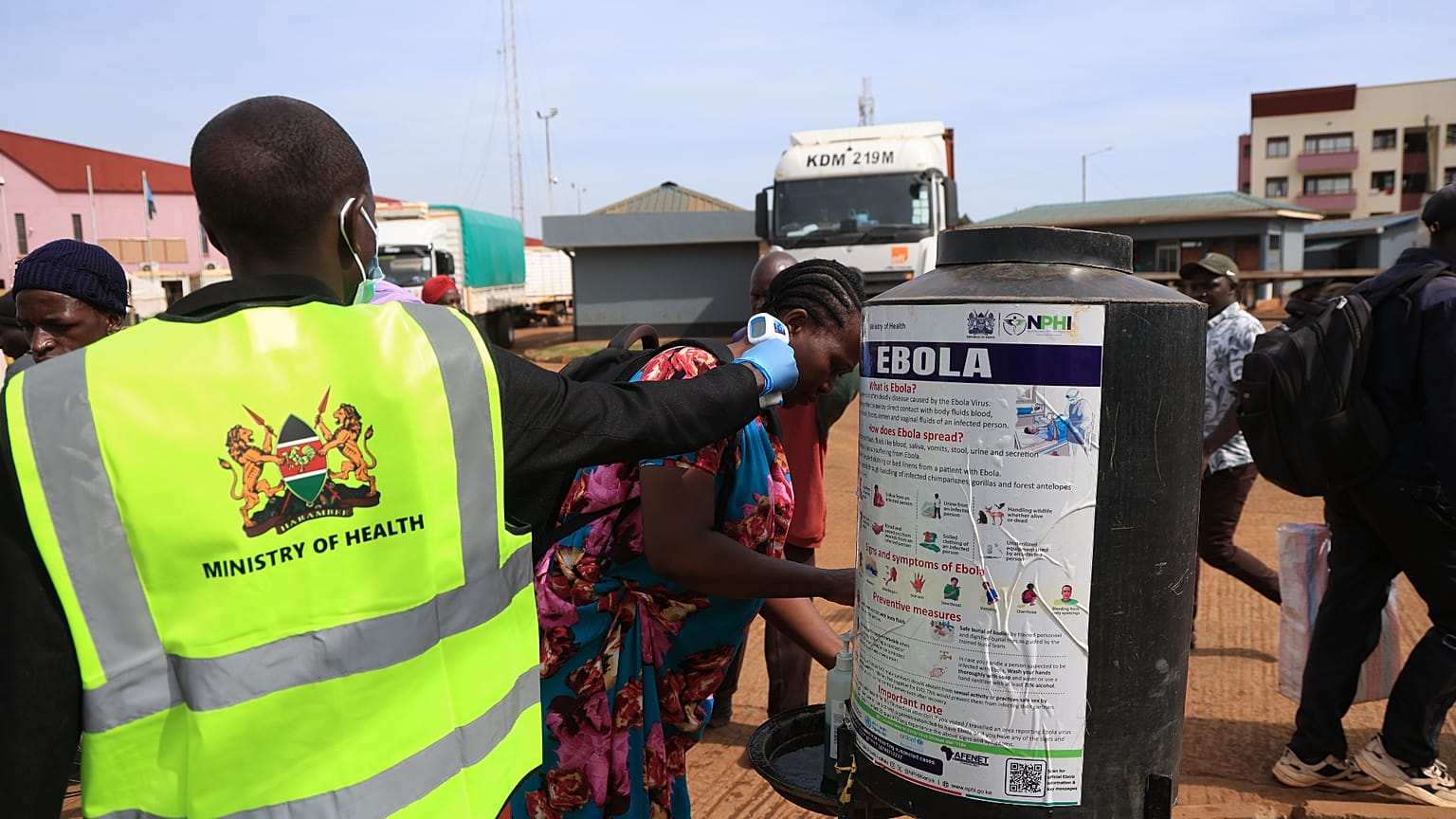
The article also notes that Kenya has reported its first Ebola case and two deaths, with seven other patients in isolation. It describes previous medical evacuations of Ebola patients to Europe and highlights the continuing risks posed by cross-border travel, community connections and a strained response in the DRC.
Entities: Ebola outbreak, Democratic Republic of Congo (DRC), Uganda, Nigeria, Kenya • Tone: analytical • Sentiment: negative • Intent: inform