23-09-2026
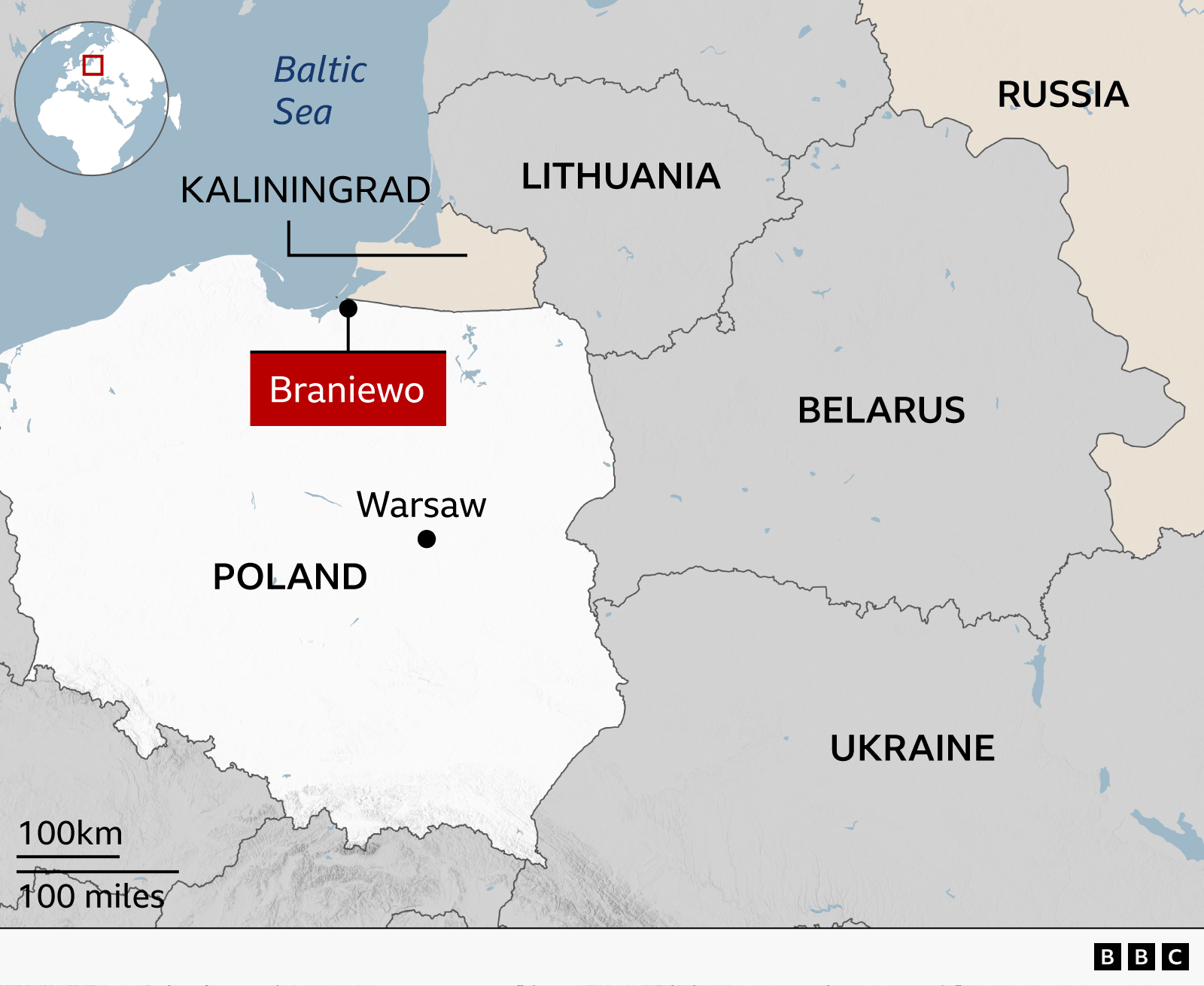
Poland’s Army Operational Command said a Russian military Mi-8 helicopter briefly entered Polish airspace after flying from Russia’s Kaliningrad exclave. The incident occurred on Wednesday, September 23, 2026. According to the command’s post on X, the helicopter remained in Polish airspace for 42 seconds and penetrated approximately 300 metres (328 yards) beyond the border.
Polish authorities said fighter aircraft were scrambled in response, while ground-based forces and other assets remained on standby. The Operational Command characterized the incident as a possible test of Poland’s air-defense readiness, saying that its nature indicated Russia was “once again testing” the system. This was the Polish military’s assessment; the article does not report an explanation from Moscow.
Poland is maintaining heightened alert for airspace incursions connected to Russia’s war in Ukraine. The Russian embassy in Warsaw had not immediately responded to a Reuters request for comment. The article reports no damage, casualties, or further operational consequences. It presents the event as a short-lived border incursion and focuses on Poland’s response and interpretation, while noting that the Russian side had not publicly commented at the time of publication.
Entities: Russian military Mi-8 helicopter, Poland, Kaliningrad, Polish Army Operational Command, NATO • Tone: analytical • Sentiment: neutral • Intent: inform
23-09-2026
Poland says a Russian Mi-8 military helicopter briefly entered Polish airspace from the Russian exclave of Kaliningrad on Wednesday morning. The aircraft reportedly flew about 300 metres into Polish territory north of Braniewo and remained there for 42 seconds. Poland’s military said the incident suggested Russia was testing the readiness of Polish air defences. Radar tracked the helicopter, fighter jets were scrambled, and Polish air-defence units remained on alert. Moscow had not commented at the time of publication.
The incident comes amid wider concern among Poland and other European Nato members that Russia may be testing their resolve to support Ukraine, although Russia denies plans to attack Nato states. President Vladimir Putin has said Russia does not intend to attack Nato, while Foreign Minister Sergei Lavrov has warned that a war between Europe and Russia would be short. Russia invaded Ukraine in 2022 and currently controls about a fifth of its territory, including Crimea, which it annexed in 2014.
Poland has previously reported Russian drones and an unarmed missile landing in its territory. Prime Minister Donald Tusk recently warned that Russia might plan drone and missile strikes against Poland and other Nato countries on the alliance’s eastern flank. French President Emmanuel Macron also said France had been targeted by Russian hybrid attacks and ordered measures to protect critical infrastructure and defence-industry sites.
The article describes hybrid attacks as non-military pressure tactics such as cyberattacks, sabotage and misinformation, often conducted through proxies. European countries have reported suspicious fires and explosions at defence facilities, and Germany has blamed Russia for a drone attack at Leipzig airport, an allegation Moscow denies. Lithuania has made evacuation plans in response to threats but says it would not surrender if attacked. The article also notes a Russian drone strike on a passenger train in Ukraine near the Polish border; Ukraine said a diplomatic train may have been the target, while Russia said it struck railway infrastructure.
Entities: Poland, Russia, Mi-8 military helicopter, Kaliningrad, Braniewo • Tone: analytical • Sentiment: negative • Intent: inform
23-09-2026
Polish President Karol Nawrocki has renewed the proposal for a permanent U.S. military base in Poland, which has been informally dubbed “Fort Trump.” Speaking in New York on September 22, Nawrocki said he expected Warsaw and Washington to reach an agreement and hoped President Donald Trump would attend the base’s inauguration. The proposal originated in 2018, when then-President Andrzej Duda promoted a permanent American installation as a way to secure a long-term U.S. troop presence in Poland.
The proposal gained urgency after a Russian Mi-8 military helicopter briefly entered Polish airspace from Russia’s Kaliningrad region. Polish military authorities said the aircraft crossed near Braniewo, remained in Polish airspace for 42 seconds, and was tracked by radar. Polish fighters were scrambled and air-defense units put on standby. Officials characterized the incident as a possible test of NATO’s readiness and response times.
Nawrocki said the base’s administrative and financial details, including its location, remain unsettled, though infrastructure is being selected. He described the project as a matter of time and suggested it could be completed before Trump’s term ends in 2029. Deputy Defense Minister Stanisław Wziątek said the base could host 3,000 to 5,000 U.S. troops. Poland hopes to increase the American presence to around 15,000, from roughly 10,000 troops currently stationed there, mostly on a rotational basis.
The article places the proposal amid wider concerns about Russian activity near NATO territory. Prime Minister Donald Tusk said intelligence indicated Russia was planning drone and missile strikes against eastern NATO countries that could be presented as accidental. Russian drones have previously entered alliance airspace or crashed in Poland and Romania, prompting NATO aircraft to respond. The article’s final sentence is cut off in the supplied text.
Entities: Karol Nawrocki, Donald Trump, Andrzej Duda, Radosław Sikorski, Stanisław Wziątek • Tone: analytical • Sentiment: neutral • Intent: inform