23-09-2026
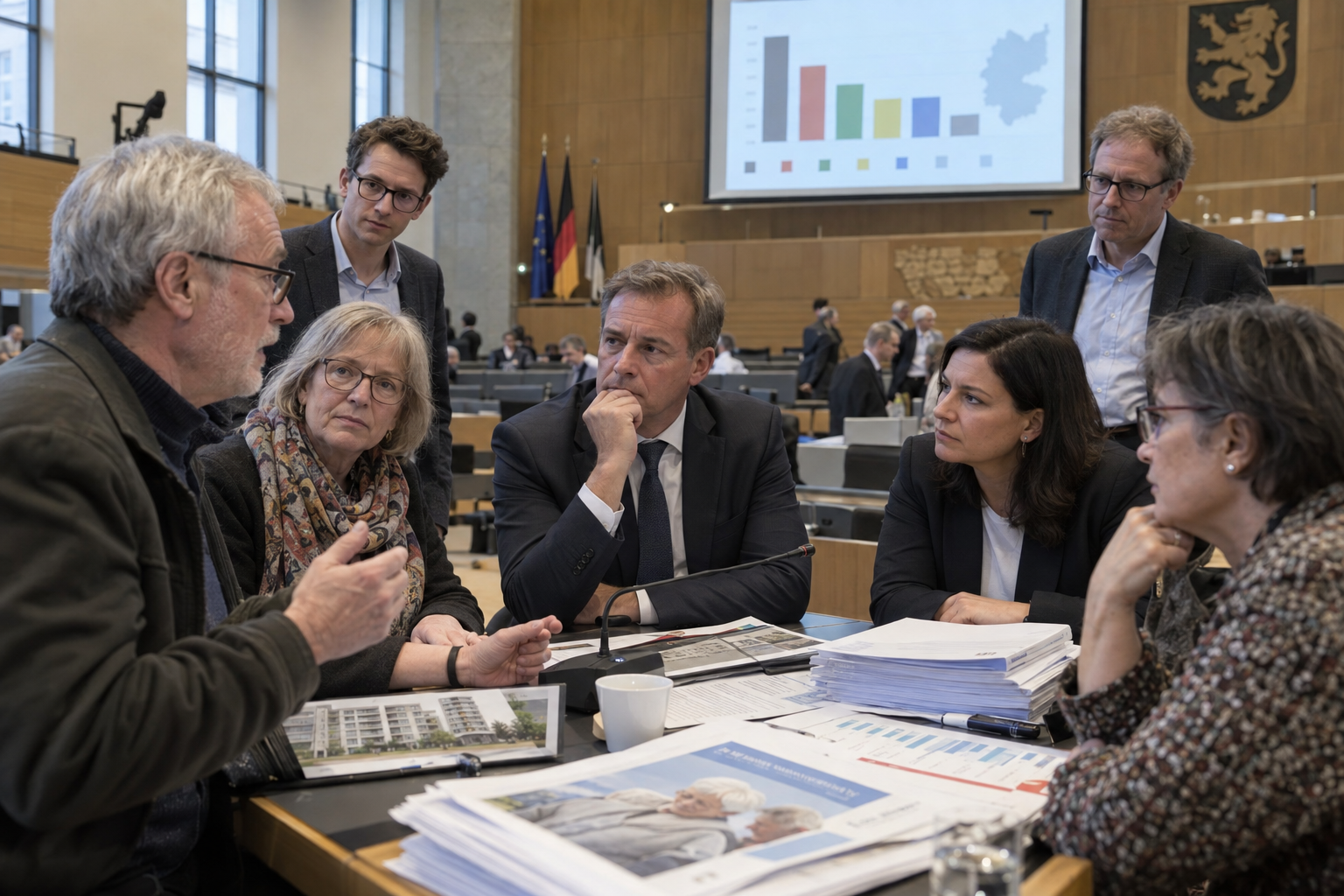
Berlin's Left Party has pledged to pursue the result of a 2021 referendum in which 57.6% of voters supported transferring apartments owned by large real estate companies into public ownership. The proposal, backed by the grassroots campaign Deutsche Wohnen & Co. enteignen, targets companies with more than 3,000 units and could bring roughly 240,000 to 270,000 Berlin apartments under public control, with the aim of making rents more affordable. Housing costs remain a major concern, although about a quarter of Berlin's rented homes are already publicly owned.
The referendum was not legally binding. A commission established by the then-governing coalition concluded in 2023 that expropriation could be constitutional, but said budget questions needed further consideration. Berlin's subsequent CDU-led government rejected expropriation and instead proposed a socialization law that would rule it out. The campaign opposed that approach and developed its own draft legislation.
The campaign relies on Articles 14 and 15 of Germany's Basic Law: Article 14 permits expropriation for the public good, while Article 15 allows certain property to be transferred to public ownership by law with compensation. Although Article 14 is used in some circumstances, Article 15 has never been implemented, leaving important legal questions unresolved. Critics also raise concerns about European law, court challenges, and the amount of compensation companies might receive.
After the Left Party's victory in Berlin's election, Chancellor Friedrich Merz promised a federal law to prevent state governments from expropriating private property. It is unclear whether the federal government has the authority to do so. The Left must still negotiate a coalition with the SPD and Greens, and the proposal could become a point of conflict. Implementation would take years, and a recent poll found support had fallen to 37% of Berliners. In the meantime, the party has proposed measures such as a rent cap.
Entities: Berlin, The Left Party, Deutsche Wohnen, Deutsche Wohnen & Co. enteignen, 2021 Berlin expropriation referendum • Tone: analytical • Sentiment: neutral • Intent: inform
23-09-2026
The article examines the Social Democratic Party’s mixed response to state election results in Mecklenburg-Western Pomerania and Berlin. The SPD’s strong result in Mecklenburg-Western Pomerania has brought relief and renewed confidence, with co-leader Lars Klingbeil presenting Manuela Schwesig’s victory as evidence that the party can win more than 30% of the vote and make a comeback. But the article argues that Schwesig succeeded partly by distancing herself from the unpopular federal government and criticizing its pension reform plans.
Schwesig has challenged Chancellor Friedrich Merz to respond to public concerns, arguing that many people in her state consider the reforms unfair and that “there can be no business as usual.” Merz, however, has maintained that the reforms must proceed. This leaves the SPD’s national leaders, Klingbeil and Bärbel Bas, in a difficult position: they are government ministers responsible for implementing coalition policy, while also being expected to defend their party’s priorities and respond to members’ concerns. Both have acknowledged that reforms may need substantive changes, not merely better communication, and have called for fairness and practical viability to be assessed.
Schwesig’s success has increased her influence within the party, and some members reportedly want her to become its next leader. The article frames the election as a lesson in the value of emphasizing traditional SPD concerns and speaking directly to voters’ lived realities.
The provided text also includes a historical overview of the SPD, from its labor-movement origins in 1863 and growth despite anti-socialist restrictions, through its role in the Weimar Republic and opposition to the Nazi regime, to postwar reconstruction and its shift toward a broader political appeal with the 1959 Godesberg Program. The supplied article text ends during a section titled “Willy Brandt’s legacy.”
Entities: Social Democratic Party of Germany (SPD), Manuela Schwesig, Lars Klingbeil, Bärbel Bas, Friedrich Merz • Tone: analytical • Sentiment: neutral • Intent: analyze
23-09-2026
German Chancellor Friedrich Merz’s reform programme is under pressure after his conservative Christian Democratic Union (CDU) suffered historic losses in eastern state elections, while coalition partner the Social Democratic Party (SPD) also lost ground in several contests. Although both parties say they intend to maintain their coalition, the results have intensified calls within the government for a change in policy direction. The SPD says voters’ concerns about inflation, living standards and economic insecurity cannot be ignored and plans to present new proposals at a special party meeting in December.
A key point of dispute is the proposed removal of the option to retire at 63 with a full pension after 45 years of contributions. The government’s pension commission recommended the change as part of efforts to make pensions sustainable as Germany’s population ages. But many eastern residents, who often have fewer savings and experienced unemployment after reunification, fear they would be disproportionately affected. Leaders in eastern states from both coalition parties have called for the proposal to be dropped. Merz has acknowledged that many voters do not consider the government’s reform plans fair.
The political setback comes as Germany seeks to revive an economy weakened by years of stagnation, competition from China and the loss of inexpensive Russian energy after the war in Ukraine. Merz has pledged wide-ranging tax, pension and health reforms and approved a €500 billion spending package for infrastructure and the armed forces. He also announced a €2.5 billion tax cut and a proposed fuel-price cap shortly before the elections.
Economic experts warn that reopening reforms could delay needed changes and weaken confidence among businesses and investors. At the same time, gains by the far-right Alternative for Germany (AfD) and low trust in Merz underscore the coalition’s political difficulties. Analysts warn that economic stagnation has contributed to political fragmentation, which may in turn make recovery harder.
Entities: Friedrich Merz, Christian Democratic Union (CDU), Social Democratic Party (SPD), Alternative for Germany (AfD), Manuela Schwesig • Tone: analytical • Sentiment: negative • Intent: analyze