12-08-2026
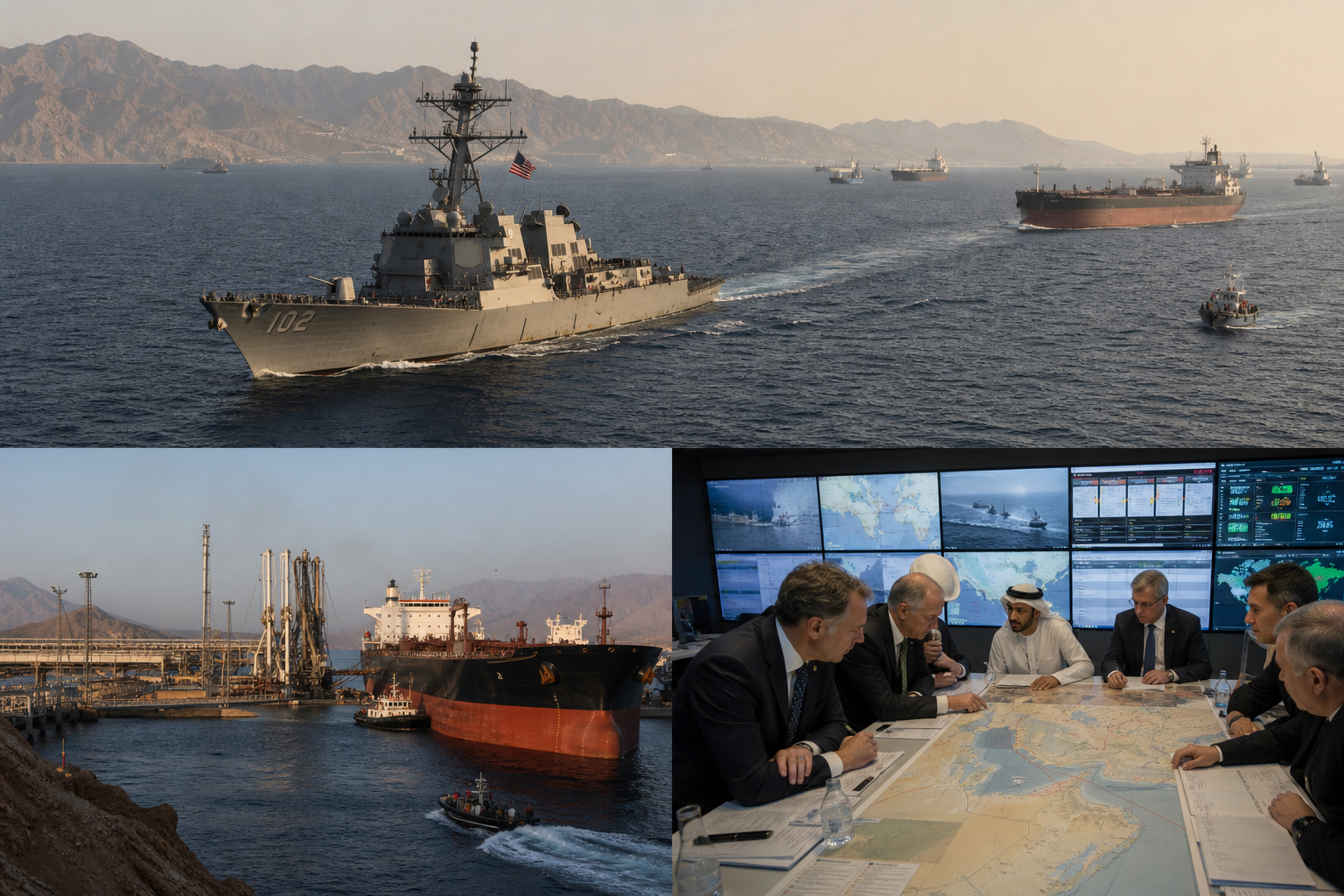
Iran has maintained that the Strait of Hormuz will remain closed until the United States ends its military campaign and naval blockade against Iran, releases Iranian funds frozen abroad, and agrees to a region-wide ceasefire covering Gaza and Lebanon. Mohsen Rezaei, the newly appointed head of Iran’s Supreme National Security Council, communicated those conditions to China’s ambassador in Tehran and later reiterated them on X. Washington had not immediately commented.
The statement came during a visit to Tehran by Pakistan’s interior minister, Mohsin Naqvi. Pakistan is attempting to mediate an end to the conflict, while Iranian President Masoud Pezeshkian and Foreign Minister Abbas Araghchi discussed expanded political, economic, trade, cultural and security relations with Naqvi. Qatar, another mediator, said negotiations between Iran and Oman over shipping routes through Hormuz had reached an advanced stage, although Iran emphasized that an agreement on routes would not itself reopen the strait.
Former US diplomat Alan Eyre said Iran was using the closure to increase pressure on Washington and reestablish strategic deterrence after what Tehran views as repeated attacks. US President Donald Trump continued to alternate between threats and indications that a deal might be near, while also suggesting the United States could allow Iran’s economy to deteriorate or intensify military action.
The conflict also expanded across regional waterways. US Central Command said a Navy helicopter fired Hellfire missiles at a Panama-flagged cargo ship in the Gulf of Oman after it allegedly violated the US blockade. In the Bab al-Mandeb strait, four crew members and two Yemeni rescuers were reportedly killed in a suspected Houthi attack on an Egyptian-owned vessel. The broader war has caused thousands of deaths in Iran, Lebanon and Israel, with Iranian attacks also reaching US and allied assets across the region.
Entities: Iran, United States, Strait of Hormuz, Mohsin Naqvi, Mohsen Rezaei • Tone: analytical • Sentiment: negative • Intent: inform
12-08-2026
The live CBS News report tracks escalating military tensions surrounding the U.S.-Iran war while highlighting tentative signs of diplomacy. Pakistan’s Defense Minister Khawaja Asif said the United States and Iran were moving toward “some sort of an arrangement” or peace deal, although no agreement had been announced. President Trump said the U.S. controls the Strait of Hormuz, argued that the conflict is damaging Iran’s economy, and echoed Tehran’s demand that the opposing side compensate it for wartime destruction.
The report also details a previously undisclosed security incident involving Trump. U.S. intelligence reportedly detected a credible Iranian or proxy plot to fire a missile at Air Force One as Trump departed Turkey after the NATO summit. Following Secret Service instructions, Trump secretly transferred to another aircraft. He said he did not ask for extensive details about the threat and simply followed the guidance of the Secret Service and military.
Other updates underscore the conflict’s regional and economic consequences. Oil prices rose, with Brent crude reaching $89.67 per barrel and U.S. crude reaching $83.98. Average U.S. gasoline prices climbed to $4.01 per gallon, up significantly from the previous year.
A former Mossad chief, Yossi Cohen, said Israeli intelligence agents had visited Iran’s Fordo nuclear site repeatedly before U.S. strikes on Iranian nuclear facilities. The article also reports that U.S. forces struck a Panama-flagged vessel accused of violating a blockade of Iranian ports, while Iran’s new Supreme Leader, Mojtaba Khamenei, appointed senior military and security officials in what analysts viewed as a consolidation of power. Finally, alleged Houthi attacks in Yemen killed people aboard a cargo vessel and marked an escalation in the group’s attacks on regional shipping and Yemen’s government.
Entities: United States, Iran, Pakistan, Khawaja Asif, President Donald Trump • Tone: urgent • Sentiment: negative • Intent: inform
12-08-2026
The article follows developments in the escalating conflict between the United States and Iran, focusing on the Strait of Hormuz, a vital global shipping route. President Trump demanded that Iran compensate victims and countries affected by conflicts allegedly supported or carried out by Tehran. His demands followed Iran’s statement that it would not reopen the strait without compensation for war damage and other conditions. Trump said the United States was only “semi-negotiating” with Iran and suggested that Washington would continue increasing economic pressure.
The standoff has intensified concerns about energy supplies and inflation. Oil prices rose sharply as hopes for an agreement to reopen the strait faded, with crude increasing more than 10% in a week and Brent crude approaching $90 per barrel. Analysts described the situation as a confrontation in which both sides were using oil access as leverage. Higher energy prices also increased expectations that the Federal Reserve may raise interest rates.
Trump claimed that the United States controlled the strait completely but acknowledged that Iran could disrupt shipping, including by placing naval mines. He also extended a 90-day waiver of the Jones Act to facilitate the movement of oil, fuels, fertilizers and other commodities between U.S. ports, indicating that the administration expects continued supply and price pressures.
Meanwhile, Iranian-backed Houthi rebels renewed attacks in Yemen, targeting the government-held port of Mokha and Marib with missiles and drones. The attacks followed strikes that killed at least seven people and raised fears that Yemen’s civil war could resume after a 2022 truce. Because the Strait of Hormuz is effectively closed, attention has shifted to the Red Sea and Bab el-Mandeb Strait, alternative routes for regional oil shipments. The renewed Houthi attacks could therefore broaden the conflict and threaten another major maritime corridor.
Entities: Donald Trump, Iran, United States, Strait of Hormuz, Houthi rebels • Tone: urgent • Sentiment: negative • Intent: inform
12-08-2026
Pakistan is making a final diplomatic effort to revive a peace agreement between the United States and Iran, with only four days remaining before a 60-day negotiating period expires on August 16. Interior Minister Mohsin Naqvi travelled to Tehran for talks with Iranian President Masoud Pezeshkian and Foreign Minister Abbas Araghchi. The talks are based on a June 17 memorandum of understanding, and any extension would require agreement from both Washington and Tehran.
Pakistan’s Defence Minister Khawaja Asif said the two sides were close to an arrangement concerning the Strait of Hormuz and that developments were favouring peace. Qatar also said negotiations between Oman and Iran on shipping had reached an advanced stage. However, Iran’s newly appointed security chief, Mohsen Rezaei, said the strait would not reopen until the US ended its blockade, released frozen Iranian assets, eased sanctions and agreed to ceasefires across the region, including in Lebanon and Gaza.
The diplomatic effort is being undermined by escalating attacks on maritime traffic. Houthi rebels killed six people in an apparent double-tap attack on a cargo ship near Yemen, while US forces fired missiles at a Panama-flagged vessel in the Gulf of Oman after it allegedly ignored warnings linked to Washington’s blockade of Iranian ports. The incidents have increased fears of further energy-supply disruptions, and oil prices have risen for six consecutive days.
The US and Iran remain divided over sanctions, control of Hormuz, compensation for conflict-related losses and guarantees against future military action. US President Donald Trump has demanded compensation from Iran and claimed the US has complete control of the waterway, while Tehran is seeking sanctions relief and an end to the blockade. The UAE has warned against allowing the region to remain in a state of “neither war nor peace”. If Pakistan cannot secure an agreement by the deadline, disputes over Hormuz, sanctions and regional security will remain unresolved, with some Iranian officials warning that a prolonged conflict could be used to impose costs on future US administrations.
Entities: Pakistan, United States, Iran, Strait of Hormuz, Mohsin Naqvi • Tone: analytical • Sentiment: negative • Intent: inform
12-08-2026
The article reports that President Donald Trump is currently favoring intensified economic pressure over immediately expanding military action against Iran. In an interview with Axios, Trump said the United States is only “semi-negotiating” with Tehran while watching the effects of severe inflation, depleted finances and a naval blockade of the Strait of Hormuz. He later reinforced that message on Truth Social, portraying Iran’s currency as nearly worthless and blaming what he described as 51 years of bad behavior by the Islamic Republic.
The report highlights the growing effect of the economic crisis on ordinary Iranians. A report in the Iranian newspaper Jahan-e Sanat described customers allegedly stealing or consuming basic groceries in stores because they could no longer afford them. At the same time, the Trump administration has expanded sanctions under its “Economic Fury” campaign, targeting Iran’s oil trade, shadow banking networks, weapons procurement, cryptocurrency holdings, sanctions-evasion systems and vessels linked to its shadow fleet. U.S. officials say the campaign has deprived Iran and its proxies of tens of billions of dollars and weakened the regime’s ability to pay its troops.
The article also examines the causes of Iran’s economic weakness. While sanctions, war and the blockade have accelerated the deterioration, Miad Maleki of the Foundation for Defense of Democracies argues that decades of corruption, mismanagement, nuclear brinkmanship, missile and drone attacks, and support for militant proxies created the underlying vulnerabilities. A U.S. official says economic pressure remains part of a broader strategy and that Trump still prefers diplomacy, but will retain military options if Iran continues terrorism or refuses a deal. The report ends while introducing the debate over whether the crisis is primarily externally imposed or the result of the regime’s own policies.
Entities: Donald Trump, Iran, United States, Strait of Hormuz, Economic Fury sanctions campaign • Tone: analytical • Sentiment: negative • Intent: analyze