12-08-2026
At least 13 people, including a child, were killed and 78 others injured in a Ukrainian drone attack in Russia’s Tatarstan region, according to local authorities. The strike occurred in and around Nizhnekamsk, approximately 750 miles east of the Ukrainian border, and was described by Tatarstan’s head, Rustam Minnikhanov, as a “massive” attack on industrial and civilian facilities. Russian media reported that a major oil refinery was among the targets.
Ukrainian officials confirmed that their forces struck the oil facility, describing the attack as part of an effort to weaken Russia’s military capabilities. Ukraine has increasingly used long-range drones against Russian oil refineries and other energy infrastructure. Kyiv says the campaign is intended to reduce Russia’s refining capacity, place pressure on its fuel supply and economy, and ultimately encourage President Vladimir Putin to negotiate an end to the invasion.
Ukrainian President Volodymyr Zelenskyy defended the strikes as justified responses to Russian attacks, saying that Russia’s war should increasingly be felt within Russia itself. He argued that the conflict continues because of Moscow’s unwillingness to end it.
The attack came amid Russia’s continuing aerial bombardment of Ukraine with missiles, glide bombs and drones. The United Nations has reported that Russian strikes have hit civilian areas and caused thousands of civilian casualties. Separately, the World Health Organization’s European office said one of its warehouses in Ukraine’s central Dnipro region was struck twice in less than 24 hours. The attacks destroyed approximately $500,000 worth of emergency medical supplies intended for frontline health facilities, highlighting the continuing damage to civilian and humanitarian infrastructure.
Entities: Ukraine, Russia, Tatarstan, Nizhnekamsk, Rustam Minnikhanov • Tone: urgent • Sentiment: negative • Intent: inform
12-08-2026
Drone debris damaged six residential buildings and a commercial building in Novorossiysk, a major Russian Black Sea port and commodities-export hub, according to city mayor Andrei Kravchenko. Kravchenko said people injured in the incident were receiving medical treatment. Unverified Telegram posts appeared to show a large column of flames in the city, but the article did not independently confirm the images or the full extent of the damage.
In Russia-occupied Crimea, Sevastopol Governor Mikhail Razvozhayev said that more than 30 drones had been shot down. He reported damage to several houses but no injuries. The account of the attacks came from Russian officials and social-media posts, and the article provided no independent attribution for responsibility.
Separately, a Russian strike reportedly started a fire at a shopping mall in Zaporizhzhia, southeastern Ukraine. Regional Governor Ivan Fedorov said the attack damaged the building and disrupted electricity supplies to approximately 1,200 consumers. Photographs posted by Fedorov showed the building ablaze.
The incidents occurred amid an intensification of Russian strikes against Ukrainian food and agricultural facilities, which Moscow has described as a response to Ukrainian attacks on Russian energy, port and logistics hubs. The report also noted a diplomatic development: Ukrainian President Volodymyr Zelenskiy said Kyiv had submitted proposals to US negotiators for a plan to end the war, which began with Russia’s full-scale invasion of Ukraine in February 2022. Overall, the article presents a concise account of reported drone and missile-related damage on both sides of the conflict while noting the uncertainty surrounding some evidence.
Entities: Novorossiysk, Russia, Black Sea, Andrei Kravchenko, Sevastopol • Tone: neutral • Sentiment: negative • Intent: inform
12-08-2026
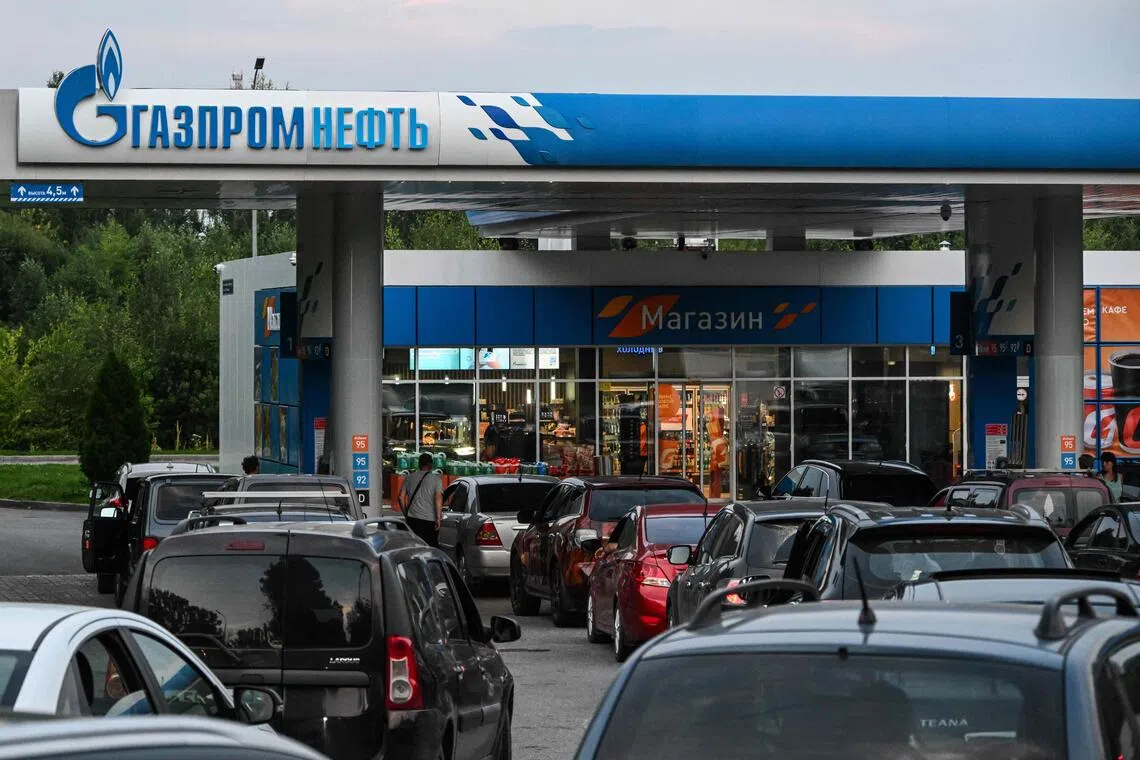
Russia has begun importing petrol from India for the first time, highlighting the severity of fuel shortages caused by Ukrainian attacks on Russian oil refineries. Data from commodities intelligence firm Kpler shows that the first Indian shipment arrived in Russia on Aug 5, with additional cargoes potentially en route. The petrol was supplied by Nayara Energy, an Indian refinery backed by Russia’s biggest oil producer, Rosneft, and transported through a network of Russian-linked and sanctioned tankers using ship-to-ship transfers near Egypt.
The imports supplement continuing supplies from Belarus and other neighbouring markets. Russia, traditionally a major fuel exporter, has banned petrol and diesel exports to prioritise domestic consumers as refinery operations decline. EA Analytics estimated that Russian crude-processing rates fell to about 3.6 million barrels per day in July—roughly one-third below the seasonal average. Ukraine intensified its attacks, striking five processors in one week and at least two more the following week.
Tracking data indicates that several tankers loaded petrol at Nayara’s Vadinar refinery on India’s west coast before transferring their cargoes at Damietta, Egypt. The shipments were then moved onto vessels potentially bound for Russia. Many of the tankers involved are sanctioned by the European Union, while some are also subject to United States sanctions. Kpler said the pattern suggests Damietta is becoming a hub for moving Indian-origin petrol into Russian import channels.
Nayara has faced difficulties since being sanctioned by the European Union in July 2025 and has relied on “dark-fleet” tankers and trans-shipment operations. Its need to find new export markets has also increased after Hindustan Petroleum expanded its own regional fuel production. The disruptions are contributing to tighter global fuel markets amid the wider impact of the Russia-Ukraine conflict and tensions between the United States and Iran.
Entities: Russia, India, Ukraine, Nayara Energy, Rosneft • Tone: analytical • Sentiment: negative • Intent: inform