12-08-2026
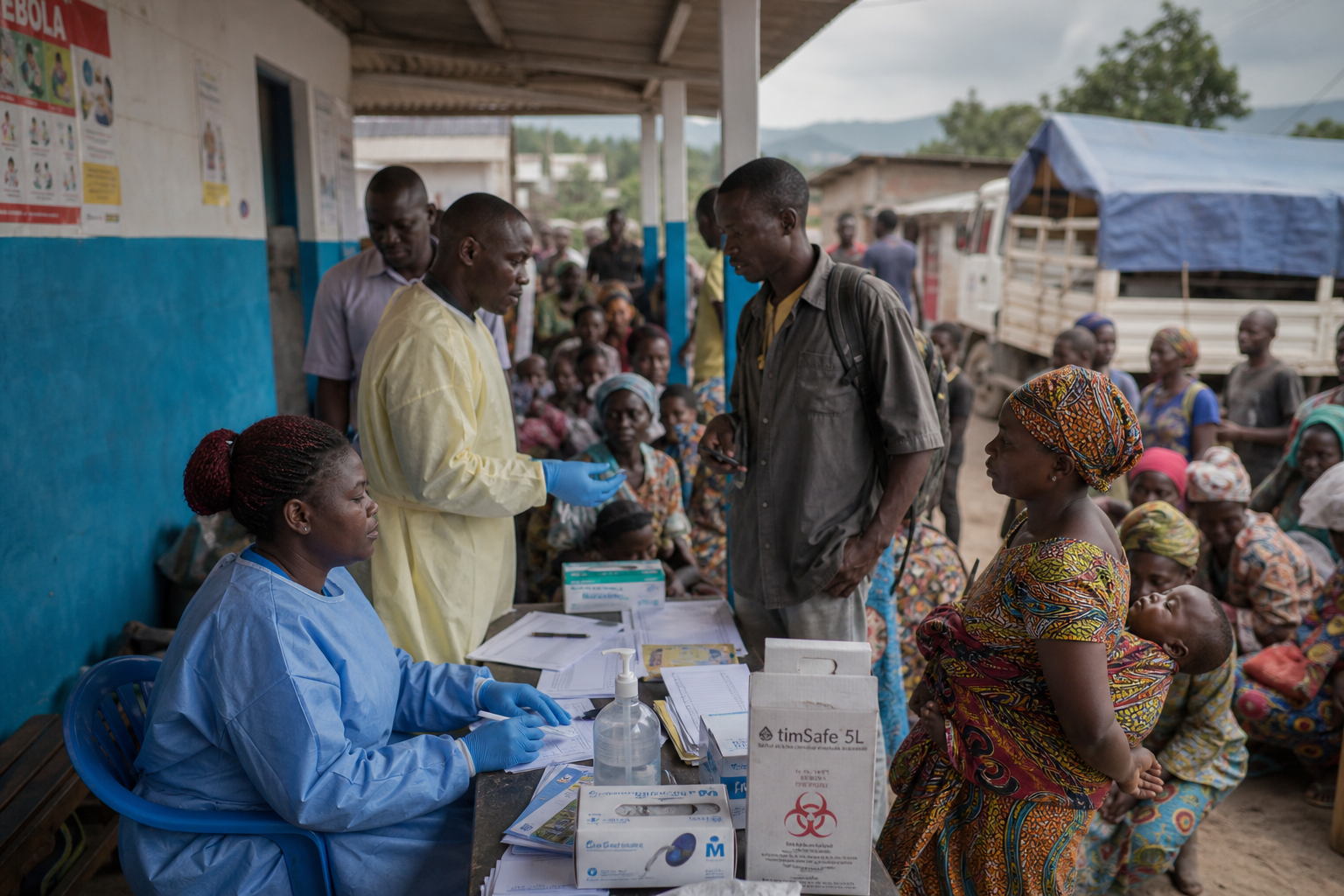
The Ebola outbreak in the Democratic Republic of Congo has surpassed 2,000 deaths among confirmed cases, becoming the fastest-spreading Ebola outbreak on record, according to the latest government data. Authorities reported 4,381 confirmed infections and 2,011 deaths, nearly three months after the outbreak was declared on May 15. The pace of fatalities has accelerated sharply: the first 1,000 deaths took roughly nine weeks, while the next 1,000 occurred in about three weeks.
The response is being hindered by rebel conflict, poor roads, remote communities and work stoppages by health workers protesting unpaid wages. Aid workers say the virus is outpacing efforts across the five affected provinces, while most new infections are occurring outside the network of monitored contacts. Neighboring Uganda has also reported cases, and the World Health Organization has declared the outbreak a public health emergency of international concern.
The outbreak is particularly difficult to control because it is caused by the rare Bundibugyo virus, for which no vaccines or treatments have been approved. Clinical trials have begun in Ituri province, the epicenter of the outbreak. The WHO said the outbreak likely began in February, months before it was detected, and that early cases were mistakenly attributed to malaria and typhoid. Initial testing also focused on a more common Ebola strain.
WHO regional director for Africa Dr. Mohamed Yakub Janabi said responders are effectively “chasing the virus,” which is ahead of them. The outbreak is Congo’s 17th and largest, and it is already the second-largest Ebola outbreak in history, behind the 2014–2016 West Africa outbreak, which caused more than 28,000 cases and over 11,000 deaths.
Entities: Democratic Republic of Congo, Bunia, Ituri province, Uganda, World Health Organization • Tone: urgent • Sentiment: negative • Intent: inform
12-08-2026
Congo’s Ebola outbreak has killed at least 2,011 people among 4,381 confirmed cases, making it the fastest-growing Ebola outbreak on record, according to newly released government data. The outbreak has expanded across five eastern provinces, particularly Ituri, amid armed conflict, poor roads, interrupted communications and work stoppages related to payment disputes. These conditions have severely hindered efforts to identify patients, trace contacts and provide treatment quickly.
Although the outbreak was officially declared on May 15, genetic sequencing indicates it began months earlier, in February. The death toll reached 1,000 in approximately nine weeks but doubled in only about three weeks, suggesting that transmission is accelerating faster than authorities can respond. The outbreak’s fatality rate is 45.9 per cent, higher than the 39.6 per cent rate recorded during the 2014–2016 West African outbreak.
The outbreak is caused by the rare Bundibugyo virus, for which there are no approved vaccines or treatments. Clinical trials have begun in Ituri. Health experts say delayed reporting of symptoms and reliance on traditional treatment are contributing to late diagnosis. Early cases were reportedly misidentified as malaria or typhoid, and initial testing focused on a more common Ebola strain.
The World Health Organization said responders are effectively chasing a virus that is moving faster than the response. Conflict-related displacement, trade and mining continue to drive population movements despite restrictions on public gatherings and the closure of Ituri’s main airport. Experts warn that in such a remote and unstable setting, identifying cases early enough to prevent further transmission can be nearly impossible.
Entities: Democratic Republic of the Congo, Ituri province, Ebola outbreak, Bundibugyo virus, World Health Organization (WHO) • Tone: urgent • Sentiment: negative • Intent: inform
12-08-2026
The World Health Organization says the Ebola outbreak in the Democratic Republic of Congo began in February, months before authorities officially declared it on May 15. The finding is based on genetic sequencing, according to WHO regional director for Africa Dr. Mohamed Yakub Janabi. Some early cases were misdiagnosed as malaria or typhoid, while initial testing focused on a more common Ebola strain rather than the rare Bundibugyo virus responsible for the outbreak. Because the Bundibugyo strain has no approved vaccines or treatments, these diagnostic delays have made the response more difficult. Confirmed cases have risen to 4,200, including more than 1,900 deaths, according to government figures. WHO officials say it is the fastest-growing Ebola outbreak on record, with the virus spreading more quickly than response efforts can contain it. WHO Director-General Tedros Adhanom Ghebreyesus described the situation as deeply concerning and said new cases are doubling in some hotspots. Between 60 and 70 per cent of new cases are reportedly occurring outside monitored contacts. The outbreak is taking place in eastern Congo, an area already affected by rebel conflict, displacement, weak healthcare access and difficult transportation. Response workers face strikes by unpaid health workers, threats from rebel groups, shortages of protective equipment, misinformation and resistance from communities traumatized by previous crises. Displaced people also lack dependable access to water for handwashing. Fear of infection has caused some pregnant women and other patients to avoid health centres, putting their health at risk. The article notes that previous Ebola outbreaks, including the 2014–2016 West Africa outbreak, were also declared after transmission had already begun. However, the current outbreak has killed people faster than any previous one, intensifying concerns about the humanitarian and public-health consequences.
Entities: World Health Organization (WHO), Democratic Republic of Congo (DRC), Dr. Mohamed Yakub Janabi, Tedros Adhanom Ghebreyesus, Bundibugyo virus • Tone: urgent • Sentiment: negative • Intent: inform
12-08-2026
The Democratic Republic of the Congo’s current Ebola outbreak has reached 4,449 confirmed cases and 2,061 deaths, according to government data released on August 11, 2026. Health officials describe it as the fastest-spreading Ebola outbreak on record, with the death toll doubling from 1,000 to 2,000 in less than a month. This pace is substantially faster than during the DRC’s 2018–2020 outbreak, when it took more than 12 months to reach 2,000 deaths, and than during the 2014–2016 West African epidemic, which took nearly five months to reach 1,000 deaths.
The outbreak, the DRC’s 17th, is being driven by the Bundibugyo species of Ebola. The article states that no approved vaccines or treatments exist for this species, increasing the difficulty of responding to the crisis. Confirmed cases have been reported across five provinces, while cases have also spread into neighbouring Uganda.
The World Health Organisation has designated the outbreak a public health emergency of international concern. A study published in Science last month suggested that transmission may have started in January or earlier in Ituri province. Researchers identified more than 500 suspected cases between mid-January and May 15, indicating that the outbreak may have been spreading before it was formally detected.
Conflict, insecurity, delayed detection, shortages of medical supplies and overstretched health services have hampered efforts to trace contacts, isolate patients and prevent further transmission. These conditions have made it difficult for health workers to respond quickly in affected communities.
Although the present outbreak is already larger than most previous Ebola outbreaks, it remains smaller than the West African epidemic, which recorded 28,616 cases and 11,310 deaths across Guinea, Liberia and Sierra Leone. The article emphasises that the rapid rise in deaths in the DRC underscores the exceptional speed at which the virus is spreading and the growing pressure on the country’s public-health system.
Entities: Democratic Republic of the Congo (DRC), Ebola virus disease, Bundibugyo species of Ebola, Bunia, Ituri province • Tone: urgent • Sentiment: negative • Intent: inform