12-08-2026
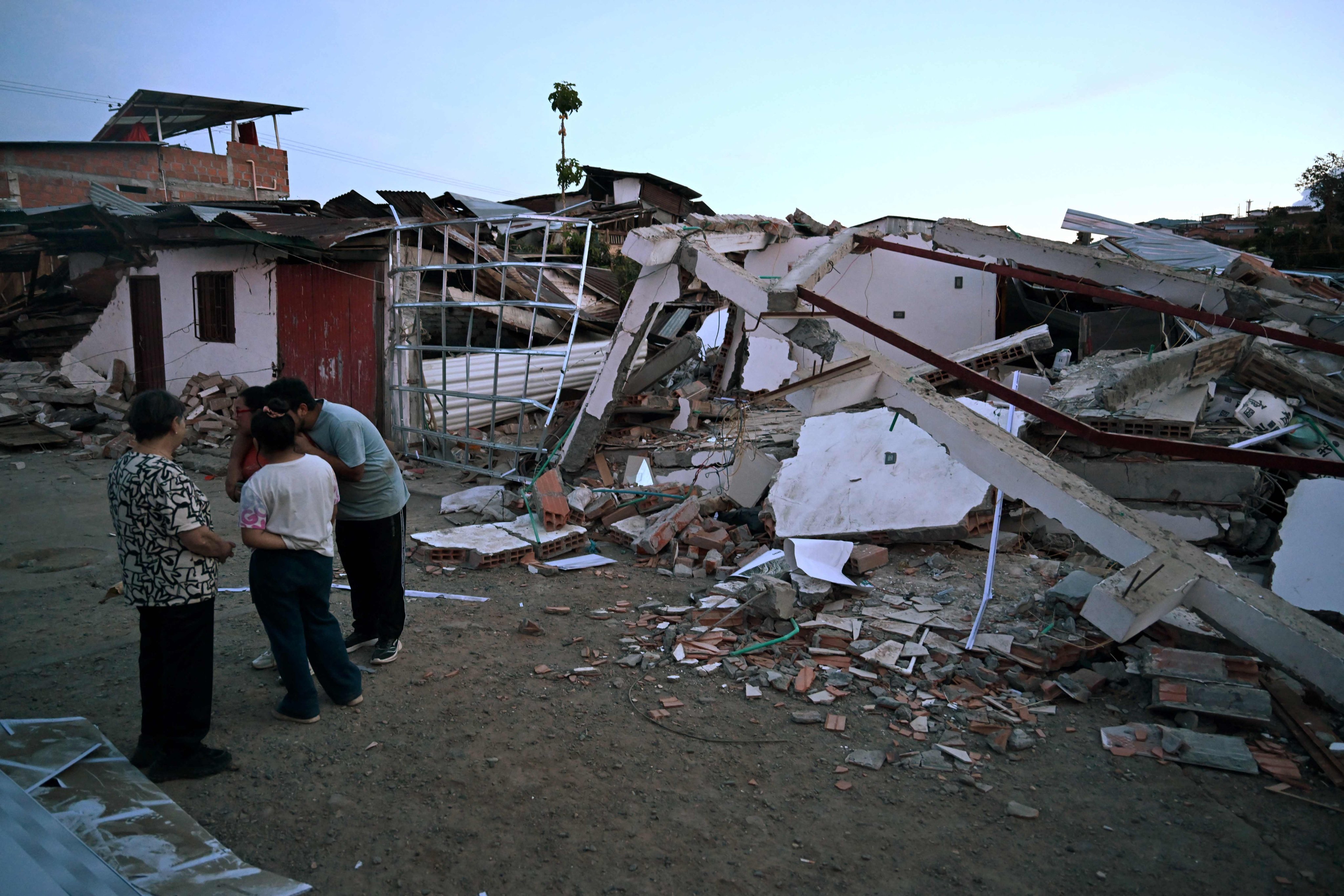
Rescue teams in Colombia are searching buildings and piles of rubble for survivors after a powerful magnitude 7.4 earthquake struck at 07:34 local time on Monday. The earthquake affected a broad area across western Colombia, including Cali, Pereira and Manizales, and was followed by more than 70 aftershocks, with further tremors reported on Tuesday.
The official death toll stands at 181, although figures compiled from local officials suggest it could exceed 240. Nearly 2,600 people have been injured, almost 200 remain missing, more than 1,100 homes have been destroyed and over 8,000 damaged. A state of emergency has been declared by President Abelardo de la Espriella.
Cali has recorded 95 deaths, with 239 people reportedly still trapped, 949 injured and 45 buildings partially or completely collapsed. A hospital suffered damage to several upper floors, trapping some patients, while four children died when part of a school in the Calima neighbourhood collapsed. Authorities imposed a night-time curfew there to deter looting. In Pereira, where 79 deaths have been reported, a car-free day was introduced to help rescue operations, and large numbers of volunteers joined the effort. Manizales reported five deaths and 60 collapsed or damaged buildings.
Residents described widespread fear, blocked roads and the danger of further structural collapses. Officials warned the public not to spread unverified messages during the continuing aftershocks. International support has been offered by the United Nations, Spain, the United States, Ecuador, Brazil, El Salvador and Venezuela. Spain said 164 of its citizens remained unaccounted for, while the United States announced $15.5m in aid to Colombia.
Entities: Colombia earthquake, Cali, Pereira, Manizales, Abelardo de la Espriella • Tone: urgent • Sentiment: negative • Intent: inform
12-08-2026
Rescue workers and volunteers in Colombia raced to find survivors after a 7.4-magnitude earthquake struck the country’s western region shortly after 7:30 a.m. Monday. The earthquake was described as Colombia’s strongest on record and caused widespread destruction, particularly in Pereira and Cali. President Abelardo de la Espriella said at least 181 people had died, 1,595 were injured and 195 were officially reported missing. Civilian-run databases suggested the number of missing people could be as high as 3,900, prompting families to share information about relatives online.
More than 1,100 homes were destroyed and over 8,300 damaged, according to the president. Electricity was largely unavailable in Pereira, a city of more than half a million people, and many residents slept outdoors because their homes were damaged or because they feared additional aftershocks. Volunteers searched collapsed buildings through the night, often using basic tools and their bare hands. In one rescue effort, workers formed human chains and listened for signs of life beneath the rubble. A rescuer said a trapped person whistled back after being asked to signal, leading crews to pull out a man and a baby while another family member remained trapped.
Hospitals in five cities were placed on red alert, and authorities imposed a nighttime curfew in Cali. De la Espriella declared a state of emergency and mobilized the military and police. Residents described blacked-out streets, panic and desperate efforts to locate loved ones.
International assistance followed. The United States announced $15.5 million in emergency relief, while the European Union activated its Copernicus satellite service to support rescue operations. Israel, Mexico, Ecuador and France also offered help. Pope Leo XIV expressed condolences and prayed for the victims and survivors.
Entities: Colombia earthquake, Pereira, Colombia, Cali, Colombia, El Cairo, Colombia, San Jose Del Palmar • Tone: urgent • Sentiment: negative • Intent: inform
12-08-2026
A magnitude-7.4 earthquake struck western Colombia at about 8:34 a.m. ET on Monday, killing at least 111 people, injuring at least 87 and causing widespread destruction. The epicenter was near San José del Palmar in the rural Chocó province, roughly 250 miles west of Bogotá. A magnitude-5.0 aftershock followed less than an hour later. The earthquake was described as the strongest ever recorded in Colombia since national records began in the early 1920s.
Most fatalities occurred in provinces neighboring Chocó, including at least 40 in Risaralda, 27 in Valle del Cauca, 12 in Chocó, four in Caldas and one in Antioquia. Officials reported damage in more than 20 municipalities and hundreds of damaged buildings. Cali reported 30 collapsed structures, while Pereira experienced deaths and widespread building collapses. In Manizales, 17 buildings collapsed and 19 partially collapsed; part of the city’s neo-Gothic cathedral also fell. Search-and-rescue teams and residents worked through rubble in Cali, Pereira, Manizales and Quibdó, with additional people feared trapped.
The quake caused evacuations as far away as Bogotá and was felt along Colombia’s Caribbean coast and in Ecuador. The USGS estimated that approximately 10.5 million people experienced strong to very strong shaking. Airports in several cities suspended flights, and residents in Armenia were evacuated because of concerns about structural damage. Bogotá officials reported no structural damage in the capital.
President Abelardo de la Espriella promised government assistance, while U.S. Secretary of State Marco Rubio said the Trump administration was prepared to support Colombia. Humanitarian organizations in the United States, including groups in South Florida, began preparing aid. The disaster struck Colombia’s coffee region, which was devastated by a 1999 earthquake that killed more than 1,200 people. Colombia lies along the Pacific Ring of Fire, where multiple tectonic plates meet and seismic activity is common.
Entities: Magnitude-7.4 Colombia earthquake, San José del Palmar, Chocó province, Cali, Pereira • Tone: urgent • Sentiment: negative • Intent: inform
12-08-2026
Rescue crews and volunteers searched collapsed buildings across western Colombia after a powerful earthquake struck on Monday, killing 216 people. The article describes the country’s largest disaster responses in years, with soldiers, firefighters, sniffer dogs, cranes, scanners and heavy machinery working alongside residents who used shovels, picks and their bare hands to clear rubble. Authorities revised the death toll downward after local officials in Cali corrected earlier figures.
A dramatic rescue in Pereira briefly lifted spirits when workers pulled 32-year-old Daniela Largo alive from a collapsed building. A local resident reportedly heard her cries and helped neighbors remove debris before professional rescuers arrived. Largo was taken from the wreckage wrapped in a blue blanket, while her family celebrated and her 12-year-old son waited at home.
The earthquake overwhelmed parts of the health system. Part of Cali’s Hospital Universitario del Valle collapsed, forcing doctors to treat patients in a parking lot and outdoors. Buildings and entire blocks were reduced to rubble in Cali and Pereira, while the dome of Manizales Cathedral was partially destroyed. Aftershocks led many survivors to sleep in parks or makeshift shelters because their homes were damaged or unsafe.
Families continued waiting for missing relatives, while others mourned deaths and the loss of homes, possessions and livelihoods. At the same time, communities showed strong solidarity by supplying food and water, forming human chains to clear debris and donating blood. President Abelardo de la Espriella declared a state of emergency and promised rent subsidies. The United States announced $15.5 million in emergency aid, and international offers of assistance followed. Rescuers continued searching for survivors as aftershocks shook the affected cities.
Entities: Daniela Largo, Sandra Milena Perez, Abelardo de la Espriella, Colombia, Pereira • Tone: urgent • Sentiment: negative • Intent: inform
12-08-2026
A powerful 7.4-magnitude earthquake in Colombia partially collapsed the Hospital Universitario del Valle in Cali, forcing patients and medical staff outside while rescue teams searched for people believed to be trapped. CCTV footage captured people fleeing as sections of the building gave way and debris fell. One person was injured but survived. The hospital reported that approximately 90 patients were transferred after parts of the facility, including emergency areas, became unusable.
The hospital collapse occurred amid widespread destruction across western Colombia. Authorities said the earthquake had killed at least 181 people and injured more than 1,300 by Tuesday. Cali recorded 95 deaths, the highest reported toll in a single city, while an estimated 239 people were believed to remain trapped beneath rubble. The government declared a state of emergency and ordered a coordinated rescue operation.
Several hospitals in Cali sustained damage. The World Health Organization reported that collapses affected cardiology and paediatric areas at the Hospital Universitario del Valle. Despite the damage, medical teams continued treating patients outdoors, with police and armed forces assisting with rescue efforts and the delivery of supplies. The report highlights the severe impact of the earthquake on the city’s healthcare infrastructure and the ongoing emergency response. The article’s figures describe an evolving disaster, with casualty and rescue estimates potentially changing as search operations continue.
Entities: Hospital Universitario del Valle, Cali, Colombia, Colombia, 7.4-magnitude earthquake, World Health Organization • Tone: urgent • Sentiment: negative • Intent: inform
12-08-2026
A powerful magnitude 7.4 earthquake struck western Colombia at 7:34 a.m. local time, causing widespread destruction, building collapses, evacuations and a rapidly rising death toll. The quake occurred at a depth of approximately 96 kilometers, with an epicenter near San Jose del Palmar in the Pacific coastal department of Chocó. Colombia’s geological service reported that the earthquake was felt across nine departments and all 32 departmental capitals. The U.S. tsunami warning system said there was no tsunami threat.
At least 47 people were reported dead, with the highest number of fatalities in Pereira, where Mayor Mauricio Salazar said 18 people had died. Three people were killed in nearby Manizales, while one person died in Buenaventura after a building collapsed and trapped residents. Cali, one of the country’s largest cities, reported more than two dozen collapsed structures and numerous people trapped in rubble. Mayor Alejandro Eder said two people, an elderly woman and a young girl, had been rescued alive, but additional victims remained trapped at multiple critical sites.
Significant damage was also reported in Quibdó, the capital of Chocó, and at Manizales Cathedral. Airports in Pereira, Manizales, Quibdó, Armenia, Cartago and Buenaventura temporarily suspended flights while inspectors assessed structural damage. Authorities warned residents about possible aftershocks and requested additional disaster-response teams from Bogotá and Medellín.
U.S. Secretary of State Marco Rubio said the Trump administration was monitoring the disaster and was prepared to support Colombia. The earthquake was also felt in parts of neighboring Venezuela, including Táchira and Barquisimeto. Reuters contributed to the report.
Entities: Colombia, Pereira, Cali, Manizales, Buenaventura • Tone: urgent • Sentiment: negative • Intent: inform
12-08-2026
A 7.4-magnitude earthquake struck Colombia on Monday, August 10, 2026, causing widespread destruction and prompting an extensive search-and-rescue operation. More than 3,000 people were reported missing, while local officials in Cali, Pereira, Chocó and Manizales said at least 179 people had died. Colombia’s federal government had reported a lower death toll of at least 111, based on an earlier update, indicating that casualty figures were still developing. Approximately 1,600 buildings were reported damaged or collapsed, and videos and photographs showed rescue workers and volunteers searching through rubble for survivors.
The earthquake was centered near San José del Palmar in the western Chocó region, which borders the Pacific Ocean. Newly inaugurated President Abelardo De la Espriella traveled to Quibdó, the capital of Chocó, and ordered the deployment of military and police personnel, engineers, rescue workers and search dogs. He said the government was mobilizing its full response apparatus and pledged that Chocó would no longer be neglected. Officials also said that more than 1,400 families and individuals had been affected and that immediate economic and humanitarian assistance had been allocated.
The Trump administration pledged $15.5 million in emergency aid through the State Department. The funding is intended to support emergency shelter, food, protection services and earthquake assessments. U.S. officials expressed solidarity with the Colombian people and said they were prepared to support President De la Espriella’s government as it assessed conditions. Injured people and those needing urgent medical attention were being transferred to Medellín, where available hospital capacity was being mobilized. The Associated Press contributed reporting, and the article includes photographs and video descriptions of the destruction and rescue effort.
Entities: Colombia, 7.4-magnitude earthquake, Chocó region, San José del Palmar, Cali • Tone: urgent • Sentiment: negative • Intent: inform
12-08-2026
A powerful 7.4-magnitude earthquake struck western Colombia on Monday, killing at least 111 people, injuring 87 and damaging roughly 1,600 buildings. At least 61 structures completely collapsed, leaving residents and rescue workers searching through rubble for survivors, particularly in Cali, the country’s third-largest city. Volunteers formed human chains to remove concrete and debris from destroyed buildings, while families reported loved ones missing through digital databases.
The earthquake’s epicenter was near San José del Palmar, a remote community of about 4,800 people in the Chocó region, approximately 400 kilometres west of Bogotá, according to the U.S. Geological Survey. The quake affected several cities, including Cali, Pereira, Quibdó and Manizales, and was felt in neighbouring Ecuador and Panama. Authorities said the disaster was Colombia’s strongest recorded earthquake of the 21st century and was followed by 21 aftershocks.
Reported fatalities included at least 40 people in Risaralda, 27 in Valle del Cauca—including three children—nine in Chocó, two in Caldas and one in Antioquia. The locations of the remaining deaths were not immediately known. Damage assessments in Chocó remained limited because the region is remote, mountainous and difficult to reach, with disrupted phone service and no airport in San José del Palmar.
President Abelardo de la Espriella declared an emergency to speed recovery funding and pledged that the government would support affected residents. In Cali, officials said people remained trapped in some of the city’s 380 damaged buildings. The disaster heightened anxiety after deadly earthquakes struck neighbouring Venezuela weeks earlier, killing more than 6,300 people and destroying hundreds of buildings.
Entities: 7.4-magnitude earthquake, Colombia, Cali, San José del Palmar, Chocó region • Tone: urgent • Sentiment: negative • Intent: inform
12-08-2026
A powerful 7.4-magnitude earthquake struck western Colombia on Monday, killing at least 181 people, injuring 2,595 and leaving at least 195 people officially missing. Civilian-run databases estimate the number of missing people may be closer to 4,000. As search teams worked through the rubble in Cali, Pereira, Manizales and Quibdo, rescuers faced a critical 48-to-72-hour window during which survivors are most likely to be found alive. Although many buildings were flattened, rescuers reported several signs of hope, including the rescue of a baby through a crack in a concrete wall and the recovery of a woman who was lifted onto a stretcher.
The disaster is testing the administration of newly elected President Abelardo de la Espriella, which is attempting to coordinate an emergency response while contending with Colombia’s longstanding poverty, displacement and armed conflict. Humanitarian organizations warned that the earthquake has compounded an already severe crisis, particularly in vulnerable and conflict-affected communities. However, the country’s existing aid infrastructure may help relief efforts: organizations established through the 2016 peace accord and ongoing humanitarian operations already have a presence in areas such as Choco, near the earthquake’s epicenter.
International assistance is also being offered. The United States has pledged more than $15 million, while Mexico has offered to send search-and-rescue and medical personnel, health supplies and equipment. El Salvador has said it will send two planes carrying 100 tons of aid. Despite these efforts, the continuing search for survivors remains urgent as rescuers work against time and the scale of the destruction.
Entities: 7.4-magnitude Colombia earthquake, Colombia, Abelardo de la Espriella, Cali, Pereira • Tone: urgent • Sentiment: negative • Intent: inform
12-08-2026
A 7.4-magnitude earthquake struck western Colombia on Monday, becoming the country’s strongest earthquake in a century and killing at least 216 people, according to revised figures. The disaster also placed significant strain on parts of Colombia’s healthcare system and prompted one of the country’s largest emergency responses in years. Soldiers, firefighters and volunteers searched collapsed buildings for survivors as rescue operations continued across the affected region.
A moment of hope emerged when rescuers pulled 32-year-old Daniela Largo alive from the rubble of a collapsed building on Tuesday. She was carried out wrapped in a blue blanket as rescuers embraced and relatives cheered. Largo’s mother, Sandra Milena Perez, said the family had begun losing hope before receiving a call about her daughter. A local resident reportedly heard Largo crying for help beneath the debris and worked with neighbours to remove rubble before professional rescue teams arrived.
Perez expressed gratitude to the resident and said Largo’s 12-year-old son was waiting for her at home. The rescue occurred as authorities corrected earlier casualty figures from Cali, revising the death toll downward to 216. Despite the successful recovery, exhausted crews continued searching for additional survivors amid widespread destruction and pressure on emergency and medical services.
Entities: Colombia, western Colombia, Cali, Pereira, Daniela Largo • Tone: urgent • Sentiment: negative • Intent: inform
12-08-2026
A 7.4-magnitude earthquake struck western Colombia on Aug 10, becoming the country’s strongest earthquake in a century and causing widespread destruction in Pereira, Cali and surrounding areas. The death toll was reported at 241 before local officials in Cali corrected earlier figures, bringing the revised total to 216. More than 1,600 people were injured. The disaster damaged or destroyed homes, apartment blocks, office buildings and part of the Hospital Universitario del Valle, forcing medical staff to treat patients outdoors.
Rescue operations involved soldiers, firefighters, volunteers, cranes, heavy machinery and sniffer dogs. In several locations, residents formed human chains and used their hands, shovels and picks to remove debris. Rescuers repeatedly stopped work to listen for voices or other signs of life. Their efforts produced a major breakthrough when 32-year-old Daniela Largo was found alive and pulled from a collapsed building in Pereira. She was wrapped in a blue blanket and carried to an ambulance as relatives and rescuers celebrated. Her mother said a local resident had heard her cries and helped neighbours clear rubble before professional rescuers arrived.
The search continued as aftershocks rattled damaged neighbourhoods and families waited near collapsed buildings for news of missing relatives. Many survivors spent the night in parks because their homes were unsafe or destroyed. Residents described losing homes, possessions and livelihoods, while others expressed gratitude for surviving and praised community support.
The earthquake triggered one of Colombia’s largest disaster responses in years. Thousands of people donated food, water, clothing and blood. President Abelardo de la Espriella declared a state of emergency and promised rent subsidies for affected families. The United States announced US$15.5 million in emergency aid, while other countries offered support. Rescue crews continued searching through the ruins for survivors.
Entities: Daniela Largo, Sandra Milena Perez, Abelardo de la Espriella, Pereira, Colombia, Cali, Colombia • Tone: urgent • Sentiment: negative • Intent: inform
12-08-2026
A 7.4-magnitude earthquake that struck western Colombia on Aug 10 has left more than 240 people dead and triggered a second day of search-and-rescue operations. In Pereira, one of the hardest-hit cities, rescue workers and volunteers repeatedly halt machinery and ask crowds to remain silent so audio equipment can detect possible survivors beneath collapsed buildings. Families sleep outdoors, while occasional cheers break the tension when rescuers locate someone alive.
The disaster is an early and significant test for President Abelardo de la Espriella, who took office after a narrow election victory. He toured Pereira, promised a three-month suspension of utility bills for affected residents, and announced financial support and temporary rental assistance. Some residents praised the rapid arrival of heavy equipment and rescue personnel, but others said they had received little or no government help. Power outages, damaged roads, failed traffic lights and uncleared debris continued to disrupt the city.
The earthquake disproportionately damaged impoverished neighbourhoods with poorly built structures. Venezuelan migrants were among those affected, including Carolina Rojas, who escaped a collapsing building with her two children. In Manizales, at least five people were killed, 2,000 displaced and 60 buildings damaged or destroyed; the collapse of a tower at the Cathedral Basilica of Our Lady of the Rosary also threatened a major landmark.
The quake is expected to worsen Colombia’s fiscal pressures and disrupt the economy. The government plans to declare an economic emergency to unlock funding and allow temporary economic and tax measures without congressional approval. Coffee exports have been disrupted by damage and roadblocks, while several airports remain restricted. The United States pledged US$15.5 million in aid, and leaders from Brazil, Mexico, Ecuador and other countries offered support. Alongside official relief, volunteers—including engineers, psychologists and social workers—have mobilised through WhatsApp to assist survivors and assess damaged buildings.
Entities: Pereira, Colombia, Manizales, Colombia, Abelardo de la Espriella, Isabella Montoya, Carolina Rojas • Tone: analytical • Sentiment: negative • Intent: inform
12-08-2026
The article follows Efraín Gallego as he waits anxiously at the collapsed Torres del Limonar building in Cali, Colombia, hoping rescuers will find his 80-year-old brother and sister-in-law alive beneath the rubble. The four-storey residential building collapsed after a magnitude 7.4 earthquake struck Colombia, becoming a symbol of the devastation in Cali, the country’s third-largest city.
Rescue workers, firefighters, military personnel, medical teams, humanitarian workers and volunteers search through the wreckage, repeatedly calling for silence so they can hear anyone trapped below. Although reports about the number of survivors vary, rescuers say at least two people have been detected alive and that tunnels are being dug to reach them. A rescuer says about 10 people have already been saved, while local media reports put the number of confirmed survivors at six, including an infant.
The disaster has caused widespread destruction, with more than 50 buildings reportedly collapsed in Cali and at least 95 deaths cited by Mayor Alejandro Éder. Other regions, including Chocó, have also been affected. A nighttime curfew was introduced to support rescue operations, which continued through the night and into the following day.
The article conveys the exhaustion and emotional strain of those waiting at the site, while also highlighting public solidarity. Residents provide water, tools and other supplies, and young volunteers such as 19-year-old Alejandro Mahecha help clear rubble and support rescue teams. Despite repeated moments when no response comes from beneath the debris, Gallego and the rescuers continue to hold on to hope that survivors can still be found.
Entities: Efraín Gallego, Alejandro Éder, James Velasco, Alejandro Mahecha, Cali, Colombia • Tone: emotional • Sentiment: negative • Intent: inform
12-08-2026
This Al Jazeera video report provides an on-the-ground account of the aftermath of Monday’s earthquake in Cali, Colombia, described as the country’s worst-hit city. Reporting from the rubble of a collapsed or severely damaged apartment building, Al Jazeera Latin America Editor Lucia Newman documents an urgent search for a possible survivor. The report focuses on the immediate rescue effort rather than offering a broad assessment of the earthquake’s cause, magnitude, or effects across the country.
Thousands of volunteers are participating in the response, digging through the debris in an attempt to locate and rescue people who may remain trapped. Their involvement underscores the scale of the emergency and the desperation surrounding the search. The report also states that the death toll is continuing to rise, indicating that the disaster’s human impact remains unresolved at the time of publication.
Cali is identified as Colombia’s third-largest city, providing context for the potential significance of the earthquake and the scale of the affected urban population. However, the supplied article text does not provide the number of fatalities, details about injuries or damage elsewhere, the earthquake’s magnitude, or information about official rescue agencies and government measures. Instead, it presents a concise field report centered on the rubble, the search for a survivor, and the collective efforts of volunteers.
Published on August 12, 2026, the report conveys a rapidly developing and dangerous situation. Its emphasis on the rising death toll and the desperate search gives the story an urgent and somber character while informing viewers about conditions at one of the disaster’s most heavily affected locations.
Entities: Cali, Colombia, Lucia Newman, Al Jazeera, Latin America Editor, Monday’s earthquake • Tone: urgent • Sentiment: negative • Intent: inform