11-08-2026
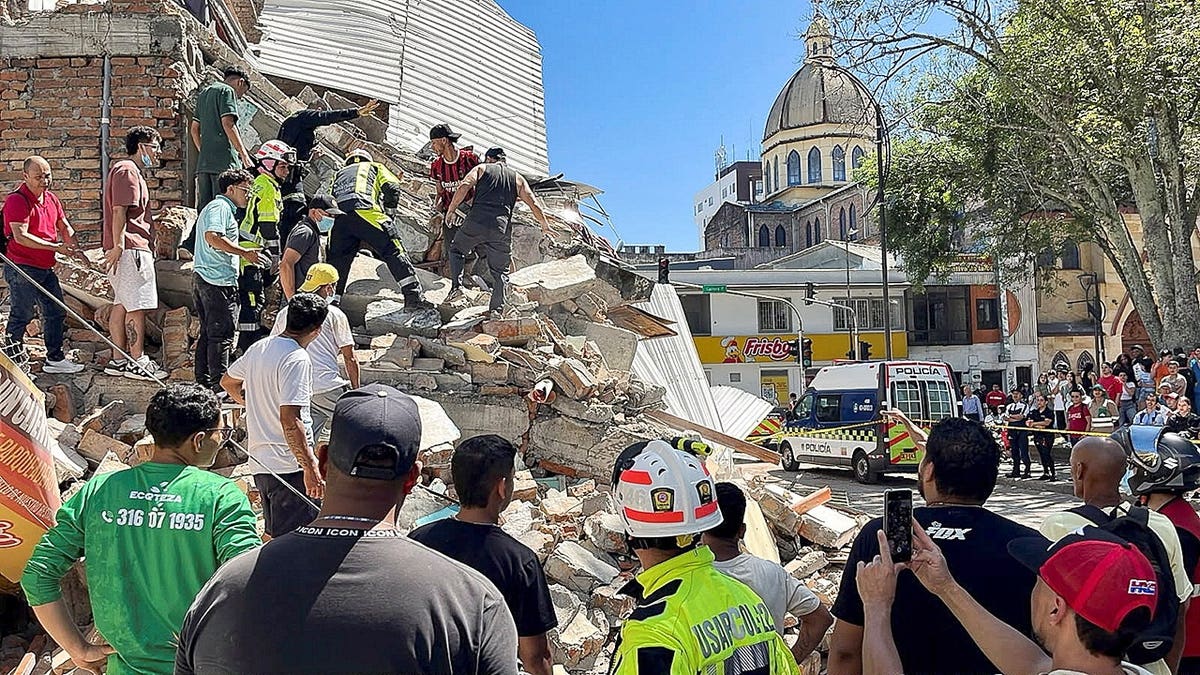
A magnitude 7.4 earthquake struck Colombia’s Chocó province, killing at least 132 people and injuring more than 570, with authorities warning the death toll is likely to rise as rescue workers search collapsed buildings for survivors. The quake, which hit at a depth of 103 km and was felt across a vast area of western Colombia and in neighboring countries, caused the worst destruction in cities including Pereira, Cali, Manizales, and Quibdó. Pereira suffered especially severe damage, with officials reporting 67 deaths in its metropolitan area, 65 collapsed buildings, and people believed trapped in 15 of them. Cali reported 32 collapsed buildings, while Manizales also recorded fatalities and heavy structural damage. The article highlights eyewitness accounts describing panic, falling bricks, dust, shattered glass, and cracks in hotel and home walls. Colombia’s aviation authority reported damage at several regional airports, and Bogotá experienced strong shaking but no major infrastructure damage. President Abelardo de la Espriella declared a national disaster situation, giving the government expanded powers to respond, while international leaders and organizations, including the US, the EU, and El Salvador, offered assistance. The piece also notes that the quake comes soon after devastating earthquakes in Venezuela and explains that although deep quakes are often less dangerous than shallow ones, they can still produce damaging energy and strong aftershocks.
Entities: Colombia, Chocó province, Pereira, Cali, Manizales • Tone: urgent • Sentiment: negative • Intent: inform
11-08-2026
A powerful 7.4-magnitude earthquake struck western Colombia, becoming the strongest quake ever recorded in the country and killing at least 111 people while injuring at least 87. The epicenter was in San José del Palmar in rural Chocó province, and the tremor was followed by a 5.0 aftershock less than an hour later. The shaking was felt widely across Colombia, including Bogotá, Cali, Pereira, Manizales, Quibdó and as far as Ecuador, with about 10.5 million people experiencing strong to very strong shaking, according to the U.S. Geological Survey.
The quake caused extensive destruction across multiple provinces and municipalities, with collapsed buildings, damaged airports, evacuations and rescue operations underway. Pereira and Cali reported especially heavy damage, while Manizales saw major structural failures, including part of a cathedral tower collapsing. Local officials said dozens of buildings collapsed or were partially damaged, and hundreds of structures across more than 20 municipalities were affected. Airports in several cities suspended flights, and authorities urged calm and damage reporting.
Officials and rescue teams continued searching rubble for survivors, while national and international assistance began mobilizing. Colombia’s president issued a message of solidarity, and U.S. officials said they were monitoring the situation and ready to support relief efforts. The article also places the disaster in context, noting Colombia’s location on the Pacific Ring of Fire and referencing earlier devastating quakes in the region, including the deadly 1999 Colombia quake and recent major earthquakes in neighboring Venezuela.
Entities: Colombia, San José del Palmar, Chocó province, Bogotá, U.S. Geological Survey (USGS) • Tone: urgent • Sentiment: negative • Intent: inform
11-08-2026
The article focuses on a video captured by Wilson Barco, a CNN contributor, showing how he and his family reacted when a strong earthquake struck Colombia on Monday morning. Barco rushed with his family into the bathroom of their apartment as the quake shook the building, illustrating the immediate fear and urgency caused by the seismic event. The article notes that the earthquake measured 7.4 in magnitude, making it the strongest recorded in Colombia in the last decade, according to officials. Although the piece is brief and centered on a single dramatic moment, it places that footage within the broader context of a major national disaster. The article also references other related CNN earthquake coverage, including reports of chaos after the catastrophic quake and confirmation that more than 100 deaths had been reported. Overall, the story conveys the panic of civilians during the quake and underscores the severity of the disaster in Colombia.
Entities: Wilson Barco, CNN, Briana Morales, Colombia, 7.4 magnitude earthquake • Tone: urgent • Sentiment: negative • Intent: inform
11-08-2026
CNN’s live updates cover the aftermath of a devastating 7.4-magnitude earthquake that struck western Colombia on Monday, killing at least 132 people and injuring about 570, with officials warning the toll is likely to rise. The quake’s epicenter was in San José del Palmar, a remote and underdeveloped area in western Colombia roughly 150 miles west of Bogotá, but its effects were felt widely, including in the capital and in cities such as Cali, Pereira, and Medellín. Rescue teams, soldiers, firefighters, police officers, and volunteers worked through the night and into Tuesday to search collapsed buildings for survivors, using torches and heavy equipment amid widespread debris and structural damage.
The article emphasizes the scale of destruction and the urgency of the response. The Colombian government declared a national disaster, deployed soldiers, and mobilized emergency responders while hospitals and schools were reported badly affected. In Cali, rescuers recovered multiple people from one collapsed building while two children were still trapped. The earthquake also damaged a pediatric and neonatal hospital section. Survivors described the experience as terrifying, with some comparing the shaking to scenes from ‘The Exorcist.’
The live coverage also highlights the impact on remote Indigenous communities near the epicenter, where help had not yet arrived and residents reported flattened homes and a need for food and medicine. International assistance is also mentioned: the European Union activated its Copernicus satellite service, funding, and consular support. Overall, the article is a developing disaster report focused on death toll updates, rescue operations, damage assessment, and humanitarian needs.
Entities: Colombia, San José del Palmar, Bogotá, Cali, Pereira • Tone: urgent • Sentiment: negative • Intent: inform
11-08-2026
CNN’s video report describes the aftermath of a catastrophic 7.4 magnitude earthquake that struck western Colombia on Monday, creating scenes of widespread chaos and concern. The quake occurred on the first full day in office for incoming President Abelardo de la Espriella, adding a political backdrop to an already serious natural disaster. In the brief report, CNN correspondent Stefano Pozzebon is cited as covering the situation on the ground, while a later clip notes that at least 111 deaths had been confirmed and dozens of people injured. The article is presented as a news video item focused on the immediate impact of the earthquake and the scale of destruction and casualties. Much of the page is cluttered with unrelated CNN video promotions, but the core story is the deadly earthquake in Colombia and the emergency conditions it caused.
Entities: Colombia, western Colombia, 7.4 magnitude earthquake, Abelardo de la Espriella, Stefano Pozzebon • Tone: urgent • Sentiment: negative • Intent: inform
11-08-2026
A powerful 7.4-magnitude earthquake struck western Colombia, causing widespread destruction, building collapses, and multiple fatalities. The article centers on harrowing video footage showing a building in Pereira collapsing as people nearby scream and flee. Authorities reported that at least 47 people were killed as the death toll continued to rise, with many others trapped under rubble in cities including Pereira, Manizales, Buenaventura, and Cali.
The quake’s epicenter was near San Jose del Palmar in Choco province, at a depth of 96 kilometers, according to Colombia’s geological service. Emergency responders were deployed across affected areas, and local officials described dozens of collapsed structures, damaged infrastructure, and ongoing rescue efforts. In Cali, officials said at least two people had been rescued alive while more victims remained trapped. Flights were temporarily suspended at several airports while inspectors checked for structural damage.
The report also includes reactions from U.S. officials, who said they were monitoring the situation and ready to support Colombia. The disaster was felt broadly across the country and even into neighboring Venezuela, underscoring the scale of the seismic event. Overall, the article is a fast-moving breaking-news account of a natural disaster emphasizing human suffering, emergency response, and the destruction caused by the earthquake.
Entities: Colombia, Pereira, Manizales, Buenaventura, Cali • Tone: urgent • Sentiment: negative • Intent: inform
11-08-2026
A major earthquake struck western Colombia on Monday morning, causing severe damage across a constellation of cities in the Andean foothills. The article explains that while residents in Bogotá and Medellín reported strong shaking, those two major cities appear to have avoided the worst destruction. The hardest-hit areas were in and around Cali, Pereira, Manizales, and other towns in the west, where rescuers were searching through collapsed structures for survivors and more than a hundred deaths had already been reported. The article is structured as a visual map-style roundup of the most affected places, using photos, videos, and before-and-after street imagery to illustrate the scope of the destruction. In Cali, a large motel near a highway collapsed into rubble, and in nearby Risaralda-region cities such as Pereira, widespread damage was visible in commercial buildings and downtown streets. Manizales also suffered significant damage, including the collapse of a cathedral spire and debris scattered across commercial districts. The piece emphasizes the geographic spread of the quake’s impact and the visible toll on buildings, infrastructure, and human life, while highlighting ongoing rescue efforts.
Entities: Colombia, Bogotá, Medellín, Cali, Pereira • Tone: analytical • Sentiment: negative • Intent: inform
11-08-2026
A powerful 7.4-magnitude earthquake struck western Colombia on Monday morning, killing at least 126 people, injuring 1,495, and causing widespread destruction across several cities and towns. The epicenter was near San José del Palmar in the Chocó region, but the worst damage was reported in Cali, Pereira, Manizales, and other parts of the Andean foothills. Thousands of homes were damaged, hundreds destroyed, and critical infrastructure including hospitals, schools, and airports was affected. Rescue crews raced to locate survivors trapped in collapsed buildings, with officials emphasizing a narrow window for saving people buried in rubble. The quake was also felt in neighboring countries, though serious damage was not reported there. The disaster posed the first major crisis for Colombia’s newly inaugurated president, Abelardo De La Espriella, who declared a state of emergency, canceled travel, and said he would personally direct the national response.
Entities: Colombia, San José del Palmar, Chocó region, Cali, Pereira • Tone: urgent • Sentiment: negative • Intent: inform
11-08-2026
Rescue operations continued in western Colombia a day after a powerful 7.4-magnitude earthquake devastated the country’s coffee-growing region, killing at least 164 people and leaving many more injured or missing. Emergency teams, supported by police, soldiers, and volunteers, worked through the night and into the next day searching collapsed buildings and flattened homes for survivors, often using heavy machinery and their hands. The hardest-hit cities included Cali and Pereira, where buildings, homes, a hospital, and even part of a cathedral were badly damaged or destroyed. In Cali, at least 85 people were reported killed, while hospital staff were treating hundreds of patients outside after part of a hospital collapsed and trapped some patients. Authorities also said dozens remained missing, and residents feared more victims might still be buried under debris. To prevent unrest and looting, the government deployed 1,000 security personnel to Cali and imposed curfews in both Cali and Pereira. President Abelardo De La Espriella said the state would cooperate fully in the emergency response, emphasizing solidarity amid the disaster. The quake drew comparisons to past deadly earthquakes in the same region, especially the devastating 1999 quake that killed more than 1,000 people.
Entities: Colombia, BOGOTA, Cali, Pereira, Manizales • Tone: urgent • Sentiment: negative • Intent: inform
11-08-2026
The article is a live blog recap of a devastating 7.4-magnitude earthquake that struck western Colombia on Monday morning, causing widespread destruction and prompting an urgent search-and-rescue operation. By the time the live coverage closes, officials report at least 110 deaths, more than 2,700 missing people, and extensive damage to homes, hospitals, roads, airports, and other infrastructure. The hardest-hit areas include Pereira, Chocó, and Valle del Cauca, with significant casualties also reported in Cali and other nearby cities. The quake was felt as far as Bogotá and in neighboring Ecuador, Venezuela, and Panama.
Colombian authorities declared a state of emergency and deployed national resources to rescue those trapped under rubble and assist affected communities. Curfews were imposed in several cities amid fears of looting and aftershocks, while flights were suspended at multiple airports as damage was assessed. Rescue teams, volunteers, and local residents worked through the night, using makeshift tools and hand searches in collapsed buildings, sometimes hearing signs of life beneath the debris.
The article also notes international aid, including a $15.5 million pledge from the United States, and offers from other Latin American governments. The report emphasizes the scale of destruction, the uncertainty around remote areas like Chocó, and the continuing danger from aftershocks. Overall, it presents a grim, urgent snapshot of a major natural disaster and the immediate response efforts.
Entities: Colombia, 7.4-magnitude earthquake, Abelardo de la Espriella, Pereira, Chocó • Tone: urgent • Sentiment: negative • Intent: inform
11-08-2026
A powerful 7.4-magnitude earthquake struck western Colombia on Monday morning, causing widespread destruction across major cities including Cali, Pereira, Manizales and parts of Chocó. The quake, which the US and Colombian geological surveys said hit at 7:34 a.m. local time with an epicentre in Chocó, killed at least 132 people and injured more than 570, with authorities warning the toll could rise as rescue operations continued. Buildings collapsed or were severely damaged across the region, including homes, hotels, churches, hospitals and airports, leaving many people trapped in the rubble.
Local officials described chaotic scenes as rescue teams and civilians searched for survivors amid aftershocks and structural hazards. The national government declared a state of emergency and deployed all available resources to rescue people, provide aid and protect affected communities. Mayors in Cali, Pereira and Manizales reported extensive damage, ordered residents to stay outside or leave unsafe buildings, and introduced curfews over fears of looting. In Pereira, hospitals were overwhelmed with the injured, while aviation authorities reported damage to airports in several cities.
President Abelardo de la Espriella, who had taken office just days earlier, visited affected areas and promised rent subsidies and additional security personnel. The United States, through Secretary of State Marco Rubio, pledged $15.5 million in emergency assistance. The earthquake also revived regional concerns because it was felt in neighboring Venezuela, which had suffered devastating earthquakes months earlier. Overall, the article portrays a major national disaster unfolding in real time, with rescue, emergency response, and public safety at the center of the government’s response.
Entities: Colombia, Western Colombia, Chocó, Cali, Pereira • Tone: urgent • Sentiment: negative • Intent: inform
11-08-2026
Rescuers in western Colombia are racing against time to locate people trapped beneath collapsed buildings after a powerful 7.4-magnitude earthquake struck Monday morning. The disaster has already caused severe loss of life, with local authorities reporting at least 150 deaths and hundreds of injuries, and officials warning that both figures are likely to increase as search and rescue operations continue. Cali, one of the hardest-hit cities, reported 85 deaths and 885 injuries. In the Capri neighborhood of Cali, Mayor Alejandro Eder said 25 people were still trapped under a collapsed building overnight, underscoring the urgency and uncertainty surrounding the rescue efforts.
The article emphasizes the immediate emergency response and the escalating human toll of the quake. The framing focuses on rescuers searching through rubble, the scale of destruction, and the expectation that casualty numbers will rise as more information becomes available. The piece is brief and news-focused, relying on official reports and the mayor’s social media update to convey the severity of the situation. It does not delve into broader seismic context or political analysis, instead centering on the unfolding disaster and the pressing need to find survivors.
Entities: Colombia, western Colombia, Cali, Capri neighborhood, Alejandro Eder • Tone: urgent • Sentiment: negative • Intent: inform