11-08-2026
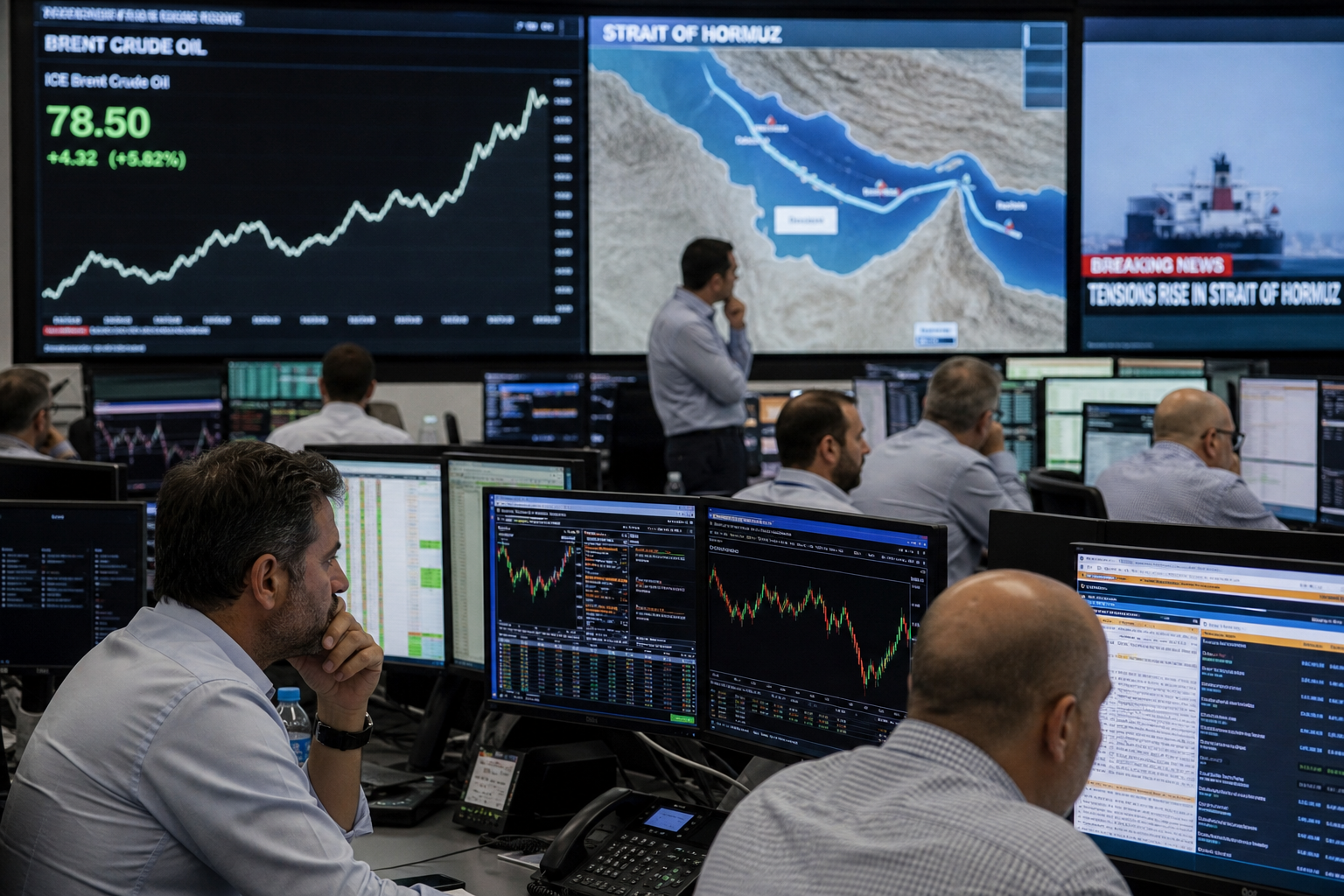
Oil prices have held below recent highs despite an unresolved U.S.-Iran standoff over the Strait of Hormuz, a critical shipping route for global energy flows. The article explains that recent market calm came after Washington hinted at a possible deal to reopen the strait, but negotiations have not produced an agreement and prospects appear to be worsening. Brent crude climbed to around $88 a barrel in early Tuesday trading, up from about $83 at the end of the previous week, though still far below peaks above $100 in the prior month and above $110 in May.
Analysts quoted in the piece argue that the current stability may be temporary. Jefferies economist Modupe Adegbembo says traders are assuming some kind of deal will be reached, but that optimism is “time-sensitive” and could unravel if deadlock persists into next week. Capital Economics economist Kieran Tompkins similarly warns that if the closure continues, the market may eventually hit a “tipping point” where inventories can no longer absorb the supply shock, potentially pushing oil into the $120-140 per barrel range. The article also notes that broader factors have helped cushion prices so far, including alternative export routes, weaker demand, rising production, and a temporary drop in Chinese imports. But with Chinese crude imports rebounding and Houthi attacks continuing, analysts caution that the market’s apparent resilience may not last.
Entities: Strait of Hormuz, U.S.-Iran deal, Brent crude, Donald Trump, Tehran • Tone: analytical • Sentiment: neutral • Intent: analyze
11-08-2026
Oil prices climbed sharply on Tuesday as traders reacted to fading hopes for a near-term U.S.-Iran agreement that would fully reopen the Strait of Hormuz, a critical global shipping chokepoint. West Texas Intermediate rose 2.7% to $84.36 a barrel, its highest level of the month, while Brent crude increased 2.53% to $89.94. The article says that the latest statements from Washington and Tehran suggest no imminent breakthrough, despite expectations from the previous week that a deal might be possible. A new point of contention has emerged around reparations, with both sides reportedly demanding compensation for claimed damages, further complicating negotiations.
The Trump administration also tried to support fuel flows by extending a suspension of a shipping law that restricts transport between U.S. ports to American vessels, though it narrowed the waiver to ships carrying certain energy resources. That move came after data showed U.S. crude inventories had fallen to their lowest level in more than four decades, reinforcing bullish pressure on prices. Analysts quoted in the article say the market remains heavily driven by headlines and that the latest optimism is fading quickly, leaving oil prices exposed to further upside risk if diplomatic deadlock continues.
Entities: Oil prices, West Texas Intermediate (WTI), Brent crude, Strait of Hormuz, U.S.-Iran deal • Tone: analytical • Sentiment: negative • Intent: inform
11-08-2026
Stocks were little changed in early Tuesday trading as investors balanced easing hopes around the Strait of Hormuz with persistent uncertainty over the U.S.-Iran conflict. S&P 500 and Nasdaq futures were modestly higher, while Dow futures were slightly lower, even as oil prices climbed on concerns that Middle East tensions could disrupt energy supplies. Iranian officials signaled progress toward a deal with Oman to reopen the Strait of Hormuz, but also said direct negotiations with the U.S. remained unlikely unless Washington met certain conditions, keeping geopolitical risk elevated.
The article places the market reaction in a broader global context. Asian markets finished mixed, with gains in South Korea and Australia offset by declines in Hong Kong and mainland China, while European stocks opened only slightly higher, led by oil and gas shares. U.S. Treasury yields moved higher as investors prepared for key inflation reports later in the week, which could influence Federal Reserve policy expectations after a weak jobs report complicated the outlook. Higher oil prices are reviving inflation concerns at the same time that slowing hiring has raised questions about consumer spending and economic growth.
The live blog also covers several corporate developments. Intel expanded its common stock offering to $20 billion from $15 billion to help fund its artificial intelligence computing buildout, a move that added pressure to its share price. Hims & Hers shares fell in premarket trading after the telehealth company reported a larger-than-expected quarterly loss despite strong revenue growth, though it raised full-year guidance and continues to benefit from demand for weight-loss drugs. InterContinental Hotels Group reported stronger earnings and described conditions in the Middle East as showing signs of normalization. Overall, the article captures a market landscape shaped by geopolitics, energy prices, inflation expectations, and company-specific earnings news.
Entities: Stock futures, S&P 500 futures, Nasdaq-100 futures, Dow Jones Industrial Average, Strait of Hormuz • Tone: analytical • Sentiment: neutral • Intent: inform
11-08-2026
President Donald Trump said Iran should pay reparations for damages he attributed to decades of conflict and Iranian actions, escalating tensions already centered on the Strait of Hormuz. In remarks from the Oval Office and in a Truth Social post, Trump said he had instructed his representatives to include compensation demands in any future negotiations, citing U.S. personnel killed or wounded in the Middle East as well as families of protesters killed in Iran’s crackdown on unrest. The article places these remarks in the context of a broader U.S.-Iran standoff over the strategic waterway, where Trump claimed the U.S. Navy had cleared mines and now had full control of the strait, while Iranian officials insisted the strait would not fully reopen until Washington lifted sanctions, ended its naval blockade, withdrew forces, and paid war reparations. Iranian and U.S. positions remain far apart, and the dispute continues to unsettle energy markets, with oil prices rising and tanker traffic still subdued. The article also notes an incident involving a tanker in the Gulf of Oman reported by UKMTO, underscoring the continuing maritime security risks. Despite the escalating rhetoric, analysts cited in the piece said a full regional war is not yet their base-case scenario, though periodic flare-ups remain possible.
Entities: Donald Trump, Iran, Strait of Hormuz, U.S. Navy, White House • Tone: analytical • Sentiment: negative • Intent: inform
11-08-2026
CNN’s live updates describe an escalating U.S.-Iran standoff centered on the Strait of Hormuz, where hopes for a quick reopening deal are fading as both sides add new conditions. Trump says the strait is “open” and claims the U.S. Navy has swept it for mines and controls the waterway, but shipping data cited in the report does not support that assertion: vessel traffic remains sharply reduced compared with prewar levels. Iran has demanded the U.S. lift its naval blockade on Iranian ports and pay damages before reopening the passage, while Trump has now said he wants compensation from Iran for past misdeeds before talks can move forward. The article also reports a military shakeup in Tehran, with Supreme Leader Mojtaba Khamenei announcing six senior appointments, including new leadership for the armed forces and the Revolutionary Guards, amid skepticism about negotiations with the U.S. The broader conflict is affecting global oil markets, with Brent and WTI prices rising as the prospect of a deal recedes. The live blog also notes a maritime incident in the Gulf of Oman involving a container ship and military forces, additional U.S. sanctions on Iran, and other regional developments, underscoring the instability and lack of progress toward de-escalation.
Entities: Donald Trump, Mojtaba Khamenei, Ali Abdollahi, Ahmad Vahidi, Ali Azmaei • Tone: analytical • Sentiment: neutral • Intent: inform
11-08-2026
The article reports that President Donald Trump is, at least for the moment, favoring economic coercion over immediate military escalation against Iran. Citing a phone interview with Axios and comments on Truth Social, Trump frames Iran as financially strained, saying the country has “no money” and is suffering from inflation, a collapsing currency, and inability to pay its troops. The piece argues that the administration’s strategy is centered on intensifying pressure through sanctions, a naval blockade tied to the Strait of Hormuz, and Treasury actions that have targeted Iran’s oil trade, shadow banking, weapons procurement, cryptocurrency, and sanctions-evasion networks.
The article also highlights the debate over how much of Iran’s crisis is caused by U.S. pressure versus the regime’s own long-running corruption, economic mismanagement, and costly foreign policy choices. It quotes a Treasury spokesperson and a U.S. official describing the campaign as highly effective and warning that all options remain on the table if Iran continues terrorism-related activity or refuses a deal. A sanctions expert from the Foundation for Defense of Democracies argues that sanctions and war have accelerated decline, but that the root causes are Iran’s own actions, including nuclear brinkmanship, attacks on tankers, and support for proxy groups. The article uses examples of daily hardship inside Iran to illustrate how the economic strain is affecting ordinary citizens, underscoring the human costs of the standoff.
Entities: Donald Trump, Iran, Tehran, Strait of Hormuz, Axios • Tone: analytical • Sentiment: negative • Intent: inform
11-08-2026
The article reports that President Donald Trump is shifting his Iran strategy back toward economic sanctions after other approaches, especially military pressure and stop-start diplomacy, have not produced a breakthrough. Trump argues that Iran is financially near collapse and that more pressure can force Tehran to agree to U.S. demands, including ending its nuclear program and reopening the Strait of Hormuz to shipping. The administration is already pursuing what it calls “Operation Economic Fury,” using sanctions and a naval blockade to squeeze Iran’s oil exports and financial system. However, the article notes that sanctions typically work slowly, while the broader war has already driven up oil prices and created inflation concerns in the U.S. and elsewhere.
The piece highlights the strategic uncertainty surrounding Trump’s approach. Critics and analysts say he has not clearly defined his goals, shifting between preventing Iran from obtaining a nuclear weapon, controlling the Strait of Hormuz, and addressing ballistic missiles. A former Obama administration sanctions expert argues that Trump has weakened his own leverage through extensive bombing, mixed messaging, and inconsistent negotiations. At the same time, former Bush administration adviser Juan Zarate says sanctions and the blockade still give the U.S. meaningful leverage, though the results will take time.
The article also emphasizes the severe damage to Iran’s economy, including sharp inflation and reduced oil shipments, while noting that the U.S. economy has remained larger and more resilient despite higher borrowing costs and political disapproval over the war. Iranian officials publicly dismiss the renewed sanctions approach, accusing Washington of relying on pressure rather than diplomacy. Overall, the article portrays Trump’s sanctions pivot as a high-stakes gamble in a war that has not ended as quickly as promised and whose economic consequences are spreading beyond Iran.
Entities: Donald Trump, Iran, White House, U.S. Treasury Department, Scott Bessent • Tone: analytical • Sentiment: negative • Intent: inform