09-09-2026
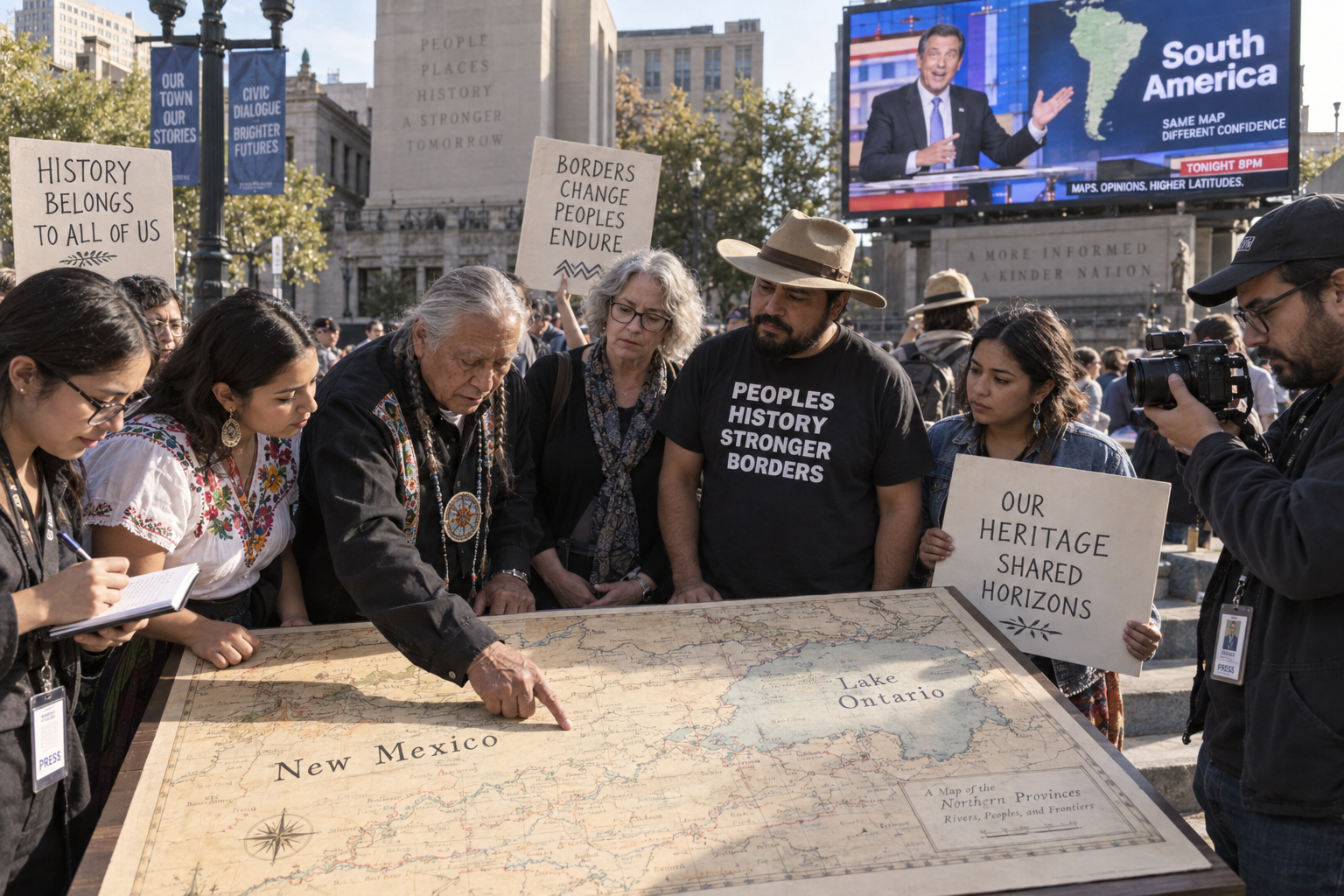
New Mexicans across political and cultural backgrounds have rejected US President Donald Trump’s proposal to rename their state “New America.” Residents and historians say the name New Mexico represents more than 450 years of Indigenous, Spanish, Mexican and American history, and that replacing it would amount to erasing the state’s identity and culture.
Trump proposed the renaming on Sept 6, 2026, as trade negotiations with Mexico intensified. The article links the suggestion to his earlier efforts to rename major geographic features, including Lake Ontario as “Lake America” and the Gulf of Mexico as the “Gulf of America,” which he said would restore “American Greatness.” However, more than a dozen New Mexicans interviewed by Reuters said they saw nothing positive in the latest proposal.
The idea has been opposed by both Republican and Democratic politicians in New Mexico. Indigenous potter Ethel Yazza, a member of the Santa Clara and Picuris communities, said Trump would not take anything from the state’s people. State Historian Rob Martinez explained that Spanish explorers named the region La Nueva Mexico in the 1560s, while seeking wealth and labor similar to those found around present-day Mexico City. He argued that the existing name is historically meaningful and more attractive than “New America.”
The article also emphasizes the state’s Mexican and Hispanic heritage. New Mexico became part of Mexico in 1821 before being invaded and occupied by the United States roughly three decades later. Mexican American artist Jesus Trevizo Martinez called Trump’s proposal racist and an attack on people of Mexican ancestry. Hispanic and Latino residents make up about 49 percent of New Mexico’s population, the highest proportion among US states.
Even Larry Cruz, a Trump voter in 2024, described the proposal as frightening because it appeared designed to erase history. The White House had not responded publicly to the criticism or to Reuters’ request for comment.
Entities: Donald Trump, New Mexico, New America renaming proposal, Indigenous and Puebloan heritage, Spanish and Mexican colonial history • Tone: analytical • Sentiment: negative • Intent: inform
09-09-2026
The article reports that the creators of the animated television series “South Park,” Trey Parker and Matt Stone, are jokingly changing the show’s name to “South America” ahead of its 29th season, which premieres on Sept. 16. In a sarcastic statement, the creators said they were inspired by the “bravery and patriotism” of Apple and Google, whose mapping services displayed different names for Lake Ontario depending on the user’s location. The statement also mocked the show’s parent company, Paramount, by referring to it as “a Skydance Capitulation.”
The parody follows a series of geographic renaming initiatives and proposals associated with President Donald Trump. Trump issued an executive order seeking to rename Lake Ontario as Lake America during a trade dispute with Canada, though Canadian officials said they would not recognize the change. Apple and Google subsequently showed “Lake America” to users in the United States while retaining “Lake Ontario” for Canadian users. Trump also shared AI-generated social media posts suggesting that New Mexico should be renamed “New America.” In 2025, he used a similar executive order to rename the Gulf of Mexico as the Gulf of America, a move that attracted international opposition.
The article connects the “Skydance Capitulation” joke to Paramount’s $8 billion merger with Skydance, approved by the Federal Communications Commission after Paramount settled a lawsuit filed by Trump for $16 million. Trump had accused CBS’s “60 Minutes” of deceptively editing a 2024 interview with then-presidential candidate Kamala Harris. The story also notes that CBS News canceled “The Late Show” in 2025 after host Stephen Colbert criticized Paramount’s settlement with Trump. Paramount and the White House had not responded to requests for comment.
Entities: Trey Parker, Matt Stone, South Park, South America, Donald Trump • Tone: analytical • Sentiment: neutral • Intent: inform
09-09-2026
The article reports that The Associated Press is instructing its journalists and other users of AP style to continue calling the body of water Lake Ontario. This position conflicts with an order issued by President Donald Trump the previous month, which directed that the lake be renamed Lake America. According to the article, the renaming order came as the Trump administration’s trade conflict with Canada intensified.
The report frames the AP’s decision as a refusal to adopt the administration’s preferred terminology. By advising reporters to retain the lake’s original name, the AP is maintaining its existing editorial style rather than reflecting the presidential order in its standard usage. The article does not provide further details about the legal status of the renaming directive, the AP’s reasoning, reactions from Canadian or U.S. officials, or how other news organizations intend to handle the change.
The dispute illustrates how geographic names can become politically charged during periods of tension between governments. It also highlights the role of news organizations’ style guides in determining how official actions and contested terminology are presented to the public. The article’s brief account connects the naming controversy directly to the broader escalation of trade tensions between the United States and Canada, suggesting that the order was part of a wider political dispute rather than an isolated administrative change. Written by Amy B. Wang for The Washington Post, the piece primarily informs readers about the AP’s editorial guidance and its disagreement with the president’s naming order.
Entities: Amy B. Wang, The Associated Press, The Washington Post, President Donald Trump, Lake Ontario • Tone: analytical • Sentiment: negative • Intent: inform