09-09-2026
Israel has announced four retaliatory measures against the United Kingdom after the British government decided to ban imports of goods produced in Israeli settlements in the occupied West Bank. The measures include closing the British consulate in East Jerusalem within 30 days, removing British representatives from the US-led International Gaza Support Center in southern Israel, ending British training activities for Palestinian Authority security forces in the West Bank, and barring 12 British parliamentarians and other nationals from entering Israel over alleged antisemitic and anti-Israel activity.
The Israeli response followed remarks by British Foreign Secretary Ed Miliband, who described Israel’s settlement expansion as unlawful, accused Israel of ethnic cleansing, announced sanctions against companies servicing settlements, and imposed tighter restrictions on arms exports. Israel’s Foreign Minister Gideon Saar called the British statements “outrageous lies” and accused the UK of interfering in Israel’s upcoming elections. President Isaac Herzog said the British measures represented a serious interference in the democratic process.
The article explains that the East Jerusalem consulate has particular political importance because it serves British nationals in the occupied Palestinian territories and has operated as a de facto diplomatic mission to Palestine since the UK recognised Palestinian statehood. Its closure reinforces Israel’s claim to sovereignty over a unified Jerusalem, despite East Jerusalem being internationally regarded as occupied Palestinian territory.
The termination of British training programs would deprive Palestinian Authority forces of UK expertise, while Britain’s removal from the Gaza support centre would reduce its direct influence over postwar planning for Gaza. Miliband condemned the closure but said intelligence, security, and cooperation concerning threats from Iran would continue. Israel has not yet announced similar countermeasures against the other countries that backed restrictions on settlement goods, including France, Canada, Spain, Ireland, Norway, Sweden, and others.
Entities: Israel, United Kingdom and Labour government, Ed Miliband, Gideon Saar, Isaac Herzog • Tone: analytical • Sentiment: negative • Intent: inform
09-09-2026
The UK has announced a new sanctions regime targeting Israeli settlements and settlement expansion in the occupied West Bank, prompting a furious response from Israel. Foreign Secretary Ed Miliband said the measures would prohibit goods from settlements and target companies and individuals providing services that support expansion. The UK will also ban advertising for illegal West Bank settlements, with the regime expected to be introduced over six to nine months.
Miliband accused Israel’s government of turning a blind eye to what he described as the “ethnic cleansing” of Palestinians by settler groups. He said the UK considered Israel’s occupation of the West Bank unlawful, citing the entrenchment of Israeli control, the intention to extend permanent sovereignty and the expansion of settlements. He linked this position to a 2024 advisory opinion from the International Court of Justice and said the UK’s economic relationship with the territory should reflect it.
The measures were announced jointly with France and Canada and supported by 11 other countries. They followed Israeli plans to build approximately 1,200 settlement homes in the strategically important E1 area east of Jerusalem. Miliband warned that the development could make a two-state solution unviable by dividing the West Bank.
Israel’s Foreign Minister Gideon Saar called Miliband’s allegation an “outrageous lie” and announced the closure of Israel’s consulate in East Jerusalem. Israel also said 11 British MPs would be barred from entering the country, accusing them of antisemitic and anti-Israel activity.
Miliband reaffirmed Israel’s right to exist and defend its people, while arguing that this could not justify the conduct of the Gaza war. He cited allegations that international humanitarian law may have been violated, while noting that international courts should determine whether genocide occurred. Israeli leaders reject allegations of genocide and war crimes.
The sanctions were criticized by Britain’s Chief Rabbi, the Board of Deputies of British Jews and Conservative politicians, who argued that they could fuel antisemitism or oversimplify the conflict. The dispute has intensified tensions between the UK and Israel while the British government presents the measures as support for a two-state solution rather than opposition to Israel itself.
Entities: Ed Miliband, Gideon Saar, Andy Burnham, UK government, Israeli government • Tone: analytical • Sentiment: negative • Intent: inform
09-09-2026
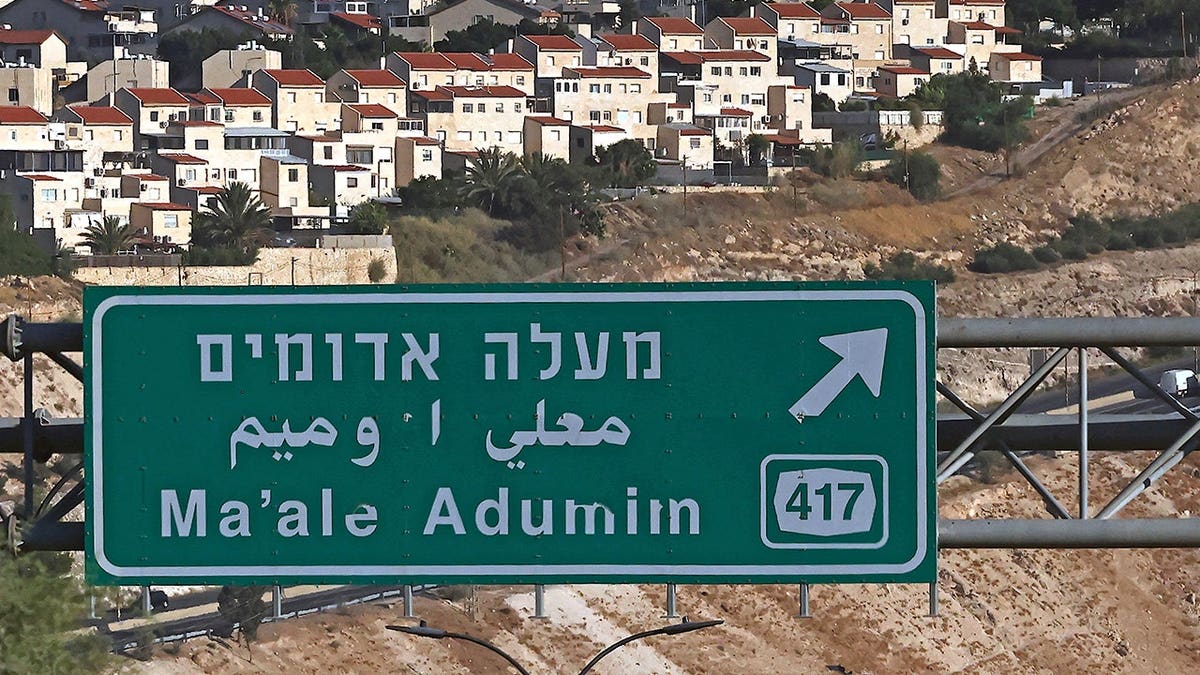
The article examines Israel’s plan to build in the E1 area, a strategically important 4.6-square-mile corridor between Jerusalem and the West Bank city of Ma’ale Adumim. The Netanyahu government has issued tenders for the first 1,400 of approximately 3,400 planned housing units, advancing a project intended to expand the built-up connection between Ma’ale Adumim and Jerusalem, where about 40,000 people live.
The move has generated strong international opposition. Britain announced sanctions on products from Judea and Samaria, while foreign ministers from Canada, Denmark, Finland, France, Iceland, Ireland, Norway, Poland, Portugal, Spain and Sweden said they intend to impose or are considering similar trade restrictions on goods from Israeli communities in the West Bank. The article presents the dispute as part of a broader argument over Israeli settlements, Palestinian territorial continuity and the future of a two-state solution.
Doron Spielman, an international spokesman for Prime Minister Benjamin Netanyahu’s Office, defended the project, saying E1 is located in Area C, which is under full Israeli security and civilian control under the Oslo Accords. He argued that the area is a natural extension of Ma’ale Adumim and claimed the construction would not restrict Palestinian freedom of movement or violate any agreement.
Palestinian officials and former officials reject that interpretation. Ashraf al-Ajrami said the project would divide the West Bank, sever territorial contiguity between East Jerusalem and nearby Palestinian villages, and undermine Palestinian self-determination and statehood. Former Israeli Ambassador Michael Oren said the project is controversial because the United States and other supporters of a two-state solution believe it could prevent the creation of a viable Palestinian state.
The U.S. State Department said Washington opposes West Bank annexation and warned that such actions could undermine President Donald Trump’s Gaza peace plan and wider regional stability. The supplied excerpt ends while discussing the West Bank.
Entities: E1 area, Ma’ale Adumim, Jerusalem, West Bank, Netanyahu government • Tone: analytical • Sentiment: negative • Intent: inform
09-09-2026
France 24 reports that a diplomatic dispute between Israel and three Western countries has intensified after Britain, France and Canada announced plans to ban imports from Israeli settlements in the occupied West Bank. The measures target goods produced in settlements, which the three governments appear to regard as part of a broader response to Israel’s settlement policy and the treatment of Palestinians in the territory.
The announcement was accompanied by unusually strong criticism from a British minister, who accused Israel of turning a blind eye to the “ethnic cleansing” of Palestinians in the West Bank. The report does not provide further details about the minister’s identity or the evidence cited, but the accusation signals the increasingly confrontational language being used by Western governments in relation to the Israeli-Palestinian conflict.
Israel reacted angrily to the planned import restrictions. According to the report, Jerusalem immediately announced counter-measures aimed at Britain, escalating the dispute beyond criticism and trade restrictions into a wider diplomatic confrontation. The specific nature of Israel’s counter-measures is not detailed in the available text.
The France 24 video report includes reporting from Jordana Miller, a Jerusalem-based journalist, and is presented as coverage of the growing row between Israel and the three countries. The article focuses on the announced import bans, Britain’s criticism of Israeli conduct in the West Bank, and Israel’s retaliatory response. It does not indicate whether the measures had already taken legal effect, describe their expected economic impact, or explain how France and Canada would implement them. The report was issued on September 9, 2026.
Entities: United Kingdom, France, Canada, Israel, West Bank • Tone: analytical • Sentiment: negative • Intent: inform
09-09-2026
France 24’s press review surveys British and Israeli newspaper reactions to several contrasting stories. The main focus is the United Kingdom’s sanctions against Israel over alleged ethnic cleansing in the occupied West Bank. The Independent presents the measures as a response to settler violence and the British government’s claim that the occupation is unlawful. The iPaper emphasizes the angry Israeli reaction, including the British Chief Rabbi’s description of the decision as a “truly dark day for British Jews.” It also warns that the sanctions and an import ban could reduce Britain’s access to Israeli intelligence. The Times takes a more critical view, arguing that the sanctions will not help Palestinians, do not match the government’s “theatrical rhetoric,” and could be counterproductive by fueling antisemitism in Britain.
The review then turns to Israeli coverage of a Haaretz investigation alleging that Prime Minister Benjamin Netanyahu had been warned about the October 7 attack before it occurred. YnetNews reportedly sees the warnings as part of a broader series of ignored signals and says the revelations may not affect the next election. Haaretz argues that the disclosures could become decisive for undecided voters and maintains that Netanyahu bears responsibility not only for his response to the warnings but also for policies that allowed Hamas to receive funding.
The final topics are cultural and satirical. The Washington Post reports that compact discs are experiencing a revival, driven by nostalgia, the appeal of physical media, perceived sound quality, and the success of K-pop releases such as BTS’s 2026 album. The Guardian reports that South Park has temporarily renamed itself South America to mock the renaming of Lake Ontario as “Lake America,” reportedly following an order signed by US President Donald Trump.
Entities: Ed Miliband, United Kingdom, Israel, West Bank, Israeli settlements • Tone: analytical • Sentiment: neutral • Intent: inform
09-09-2026
British Prime Minister Andy Burnham defended his government’s decision to block imports from Israeli settlements in the occupied West Bank, arguing that Britain must respond to injustice rather than merely endorse the two-state solution rhetorically. Speaking in Parliament on September 9, Burnham said political leadership required action when people were being driven from their homes and emphasized that Britain needed to “stand for something” in a dangerous international environment.
The import ban was announced the previous day by Foreign Secretary Ed Miliband together with sanctions targeting companies and individuals linked to the settlements. The measures formed part of a coordinated initiative with France and Canada to pressure Israel over settlement expansion, which the three countries said endangered the prospects of a two-state solution.
Israel responded forcefully. It ordered the closure of Britain’s consulate in East Jerusalem and barred 12 British citizens from entering the country. Israeli Foreign Minister Gideon Saar also said he had thanked Kemi Badenoch, leader of Britain’s opposition Conservative Party, for criticizing the British government’s policy. Badenoch accused the Labour government of prioritizing party-political interests over Britain’s national interest in an article for The Sun.
However, Badenoch did not raise the issue during parliamentary questioning on Wednesday, instead focusing on defence spending. Burnham used the debate to stress that the policy reflected longstanding demands from many Labour lawmakers. He said Britain would support vulnerable parties and take whatever action it could to assist them, presenting the sanctions as evidence of British leadership and a commitment to the country’s stated principles.
Entities: Andy Burnham, Ed Miliband, Gideon Saar, Kemi Badenoch, Britain/United Kingdom • Tone: analytical • Sentiment: negative • Intent: inform