09-09-2026
A technical failure in the National Air Traffic Services (NATS) air traffic control system caused extensive disruption across the United Kingdom, with approximately 1,300 flights canceled on Tuesday and a further 177 canceled by early Wednesday. London Heathrow was the most severely affected airport, while Gatwick, Stansted, Birmingham and Manchester also experienced significant disruption. Although the system issue was resolved within several hours, the effects continued because aircraft and crews were out of position, flights had accumulated, and staff were reaching legally permitted shift limits.
NATS chief executive Martin Rolfe said the organization had ruled out a cyber attack as the cause, while pledging a full investigation. He described the incident as unprecedented in the organization’s 50-year history. NATS said it had taken action to protect aircraft already in the air and accepted responsibility for the consequences for passengers, airlines and airports.
Airlines sharply criticized NATS, arguing that the latest failure was unacceptable because it followed two other major incidents in recent years. A radar problem in July 2025 caused more than 150 cancellations, while a flight-plan processing failure in August 2023 created days of disruption. Ryanair’s chief operating officer Neal McMahon accused NATS of charging airlines and passengers more while delivering a declining service. Wizz Air similarly said passengers were being disrupted by a failure outside the airline’s control.
The incident added to recent problems at Heathrow, where rail services had been suspended because of a fire and the airport had been closed for almost a day in March 2025 following a nearby substation power outage.
Entities: National Air Traffic Services (NATS), Martin Rolfe, Heathrow Airport, United Kingdom aviation network, Cyber attack assessment • Tone: analytical • Sentiment: negative • Intent: inform
09-09-2026
The United Kingdom’s National Air Traffic Services (NATS) has ruled out a cyberattack as the cause of a major air traffic disruption that affected airports across the country. NATS chief executive Martin Rolfe said the organization would conduct a thorough investigation after a problem with its flight-processing system caused widespread delays and cancellations on Tuesday.
Nearly 2,000 flights were cancelled or delayed during the initial disruption, which lasted several hours. Although NATS said the technical issue had been resolved, the effects continued into Wednesday, with more than 150 additional flights cancelled and further delays expected. Heathrow Airport warned that disruption could persist as airlines repositioned aircraft and crew. Travel journalist Simon Calder predicted that the consequences would be severe because many flights scheduled to arrive had not operated the previous night.
The incident has renewed concerns about the reliability of the UK’s air traffic-control infrastructure. Transport Secretary Heidi Alexander summoned Rolfe to explain the malfunction and demanded assurances that lessons would be learned and that aviation-support systems were fit for purpose. The failure follows other serious incidents, including a 2023 system meltdown that led to cancellations and cost airlines an estimated $135 million (€116 million), as well as radar problems affecting UK airports in 2025.
Ryanair said at least 150,000 of its passengers experienced delays of up to eight hours and that 200 of its flights were cancelled. The airline again called for Rolfe’s resignation. Rolfe accepted full responsibility for the disruption but did not indicate whether he would step down. NATS provides air traffic-control services to 15 UK airports and is partly owned by airlines, pension funds, and the British government.
Entities: Martin Rolfe, National Air Traffic Services (NATS), Heidi Alexander, United Kingdom, Heathrow Airport • Tone: analytical • Sentiment: negative • Intent: inform
09-09-2026
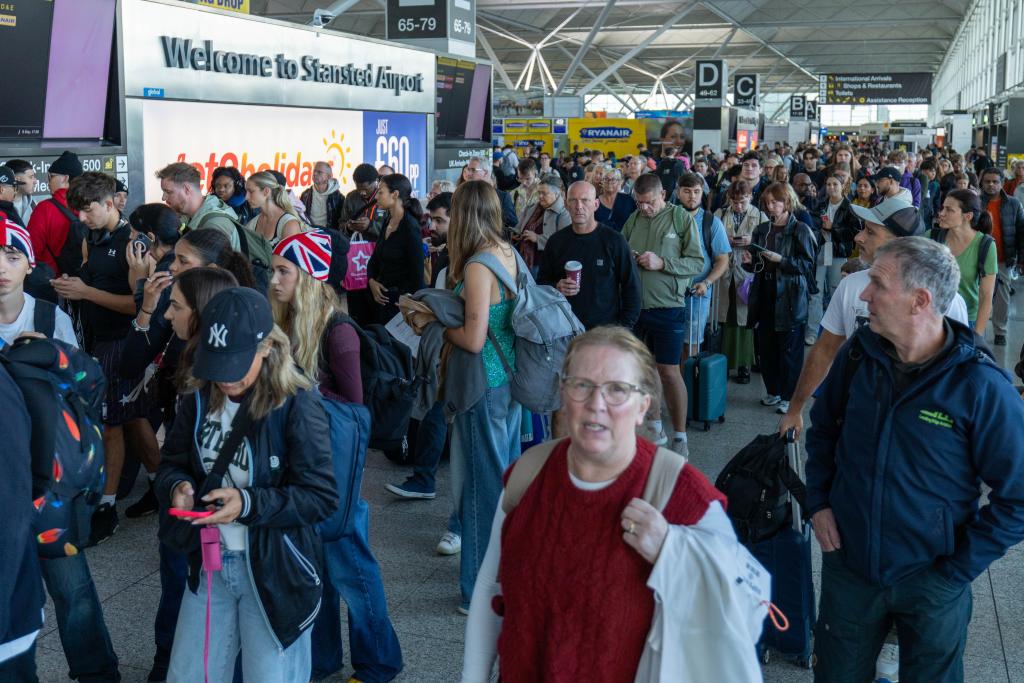
Technical problems in the United Kingdom’s air traffic control system caused airlines to cancel more than 2,000 flights and created widespread disruption across 15 airports. Although the underlying issue was reportedly resolved Tuesday afternoon, delays continued into a second day as airlines and airports worked through a large backlog of canceled and delayed flights. Passengers were stranded for hours on runways and in terminals, while airlines attempted to rebook travelers and reposition aircraft left at the wrong airports.
NATS, formerly known as National Air Traffic Services, said the disruption resulted from “an issue in our flight processing system.” The organization apologized and said it was assisting airports and airlines, while emphasizing that safety considerations required flights to be restricted when the complex systems could not be restored quickly. NATS chief executive Martin Rolfe described the U.K. system as among the safest and most efficient in the world.
The incident prompted anger from airlines, which called for Rolfe to consider resigning after the second major air traffic control failure in three years. Transport Secretary Heidi Alexander met with Rolfe and gave him one week to complete a full investigation. Despite the criticism, Prime Minister Andy Burnham’s office said Rolfe continued to have the government’s confidence. The government owns 49% of NATS and is its largest shareholder.
Passengers reported poor communication and difficulty obtaining help. Cartoonist Charlie Adlard abandoned his journey from England to Sicily after failing to reach British Airways and incurring costs for accommodation and meals. At Gatwick, travelers slept on terminal floors, while Heathrow advised passengers to travel only if their flights were confirmed. The disruption was expected to continue as the aviation network gradually returned to normal.
Entities: NATS (National Air Traffic Services), U.K. air traffic control system, Martin Rolfe, Heidi Alexander, Andy Burnham • Tone: urgent • Sentiment: negative • Intent: inform
09-09-2026
Air travel disruption across the United Kingdom intensified on Wednesday after a technical failure in the country’s air traffic control system caused widespread cancellations the previous day. Nearly 300 additional flights were cancelled on Wednesday, bringing the reported total to more than 2,000 over two days. Aviation analytics firm Cirium said 291 flights were scrapped on Wednesday, with most involving London Heathrow, the UK’s largest airport and one of Europe’s busiest.
The disruption followed the cancellation of 1,746 flights on Tuesday, when the air traffic control outage affected travel across Britain. The National Air Traffic Services (NATS), which was working to restore normal operations, described the incident as a technical glitch. NATS chief executive Martin Rolfe said the organization had ruled out cyber activity as the cause, although the article does not identify the precise technical problem or provide a full timeline for recovery.
Passengers reported severe delays and chaotic conditions at airports. Matt Ernster, a 28-year-old traveller returning to Boston through Heathrow after a honeymoon in Paris, said he and other passengers were kept aboard their aircraft for more than five hours. After they were allowed to disembark, he described the terminal and baggage-collection process as chaotic and said no hotels were available within a two-hour radius. He called it the worst travel experience he had ever had.
The article portrays an ongoing recovery effort with substantial effects on passengers, airport operations and international connections. It emphasizes the scale of the cancellations, the concentration of disruption at Heathrow and the human consequences of the outage, while noting that authorities had excluded a cyberattack as the cause.
Entities: United Kingdom, London Heathrow Airport, National Air Traffic Services (NATS), Martin Rolfe, Cirium • Tone: urgent • Sentiment: negative • Intent: inform
09-09-2026
Travellers across the United Kingdom faced a second day of widespread disruption after a technical problem at the country’s air traffic control service caused hundreds of flight cancellations. Flight-tracking website FlightRadar24 reported that 177 flights scheduled for Wednesday had already been cancelled, following approximately 1,300 cancellations involving UK airports on the previous day. Nearly all of the newly cancelled flights were at Heathrow Airport in London, Britain’s busiest airport, according to the tracking service.
The disruption began after a system issue affected the National Air Traffic Services (NATS), which is responsible for managing the UK’s air traffic control. NATS said it was continuing efforts to restore normal operations but warned that recovery would be complicated because the problem had affected the wider aviation network. The organisation described the recovery as “very complex” and said it would take time for the network to return to normal.
The continuing cancellations extended the problems for passengers who had already experienced delays and disruption on the previous day. The article does not identify the precise technical cause of the fault or provide an estimated time for a full resolution. However, the government was seeking answers: British Transport Secretary Heidi Alexander was expected to meet NATS chief executive Martin Rolfe on Wednesday. The meeting indicates that officials were monitoring the incident at a senior level while airlines and airports worked through the backlog. Overall, the report highlights the cascading effects that an air traffic control failure can have across the aviation system, causing cancellations beyond the location where the original technical problem occurred.
Entities: United Kingdom, Britain, Heathrow Airport, London, National Air Traffic Services (NATS) • Tone: urgent • Sentiment: negative • Intent: inform
09-09-2026
Britain’s aviation network continued to experience major disruption on Sept 9 after a technical glitch affected the National Air Traffic Services (NATS), the country’s air traffic control provider. Flight-tracking website FlightRadar24 reported that 177 scheduled flights had been cancelled that day, following around 1,300 cancellations to and from British airports on Sept 8. Most of the new cancellations were at Heathrow, Britain’s busiest airport.
NATS said it had resolved the original system issue but warned that restoring normal operations was a complex process because the disruption had created a backlog throughout the wider aviation network. Heathrow said departures had resumed after arrivals were suspended on Sept 8, but cautioned passengers that delays and cancellations would continue and advised them to check with their airlines before travelling.
Heathrow and Gatwick were among the airports affected, while Liverpool, Birmingham and Edinburgh also reported disruption. Dublin Airport in Ireland cancelled dozens of flights. British Airways said it had cancelled or diverted more than 100 flights, affecting tens of thousands of passengers. Ryanair said more than 65,000 of its passengers had been disrupted and that it had cancelled over 50 flights. Travellers described lengthy delays and difficult conditions, including one passenger who spent three hours stranded on a runway at Gatwick.
The incident also affected Arsenal’s travel plans, forcing the football club to cancel a news conference after its flight to Italy was delayed. Transport Secretary Heidi Alexander said she was seeking assurances that lessons would be learned and that aviation-support systems were reliable. Ryanair chief operating officer Neal McMahon renewed calls for NATS chief executive Martin Rolfe to be dismissed, arguing that the government needed to intervene. The disruption follows previous air traffic failures in July 2025 and 2023, the latter affecting more than 700,000 passengers.
Entities: Britain’s air traffic disruption, National Air Traffic Services (NATS), Heathrow Airport, Gatwick Airport, FlightRadar24 • Tone: urgent • Sentiment: negative • Intent: inform