07-10-2026
Maricarmen Abascal, an 87-year-old pensioner whose eviction from her longtime Madrid home became a rallying point for protests over Spain’s housing crisis, has died, the Madrid Tenants’ Union announced. Abascal had lived in the apartment for about 70 years and used a wheelchair. After a change in ownership, her monthly rent reportedly rose from around €500 to €2,650, which she could not afford. She was removed from the home on a stretcher and hospitalized after becoming exhausted. Although an agreement was later reached allowing her to return at roughly her former rent, the tenants’ union said the resolution came too late and described her ordeal as avoidable and torturous.
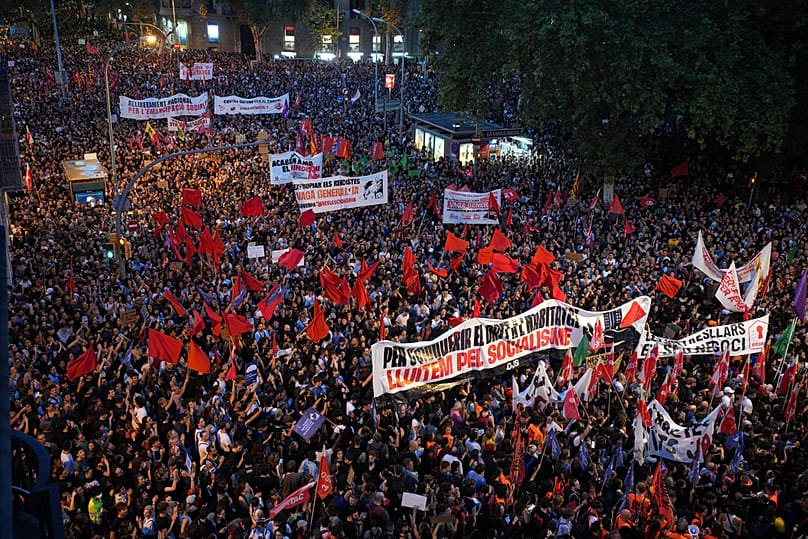
Images of the eviction prompted demonstrations in Madrid and other Spanish cities, including Barcelona, Vigo and Malaga. Protesters demanded lower rents, rent freezes, open-ended leases and stronger protections against eviction. A camp of about 100 tents appeared in Madrid’s Puerta del Sol, and tens of thousands marched. Abascal’s case came to represent the pressure faced by people unable to afford housing, particularly as average asking rents have nearly doubled over a decade and Spain faces a nationwide shortage of hundreds of thousands of apartments.
Prime Minister Pedro Sanchez and Territorial Policy Minister Angel Victor Torres expressed condolences, with Torres describing Abascal as a symbol of the housing crisis. Sanchez’s government is working on housing measures, though parliamentary support is uncertain and a similar initiative has failed before. The article also reports that Spain’s major trade unions called for a nationwide strike over housing and cost-of-living concerns. It says protests and lawmakers’ rejection of housing reforms contributed to Sanchez calling an early election for November 29, with housing and migration expected to be major campaign issues.
Entities: Maricarmen Abascal, Madrid Tenants’ Union, Pedro Sanchez, Angel Victor Torres, Beatriz Duro • Tone: analytical • Sentiment: negative • Intent: inform
07-10-2026
Spain's snap parliamentary election, called by Prime Minister Pedro Sanchez for November 29, follows the collapse of government housing measures in parliament and months of political instability. Seven lawmakers from Junts, the Catalan separatist party whose votes the government has depended on, opposed the measures. Sanchez says he wants a broader progressive majority, and the defeat may allow him to present himself as a defender of tenants. Whether that strategy will succeed is uncertain.
Housing has become a central election issue amid a shortage estimated by the Bank of Spain at 750,000 homes, rising prices, limited social housing and financial dependence on parents among many young adults. The eviction of 87-year-old Maria del Carmen Abascal prompted protests, while unions announced a general strike. Yet tenants' groups consider the government's plans inadequate, and the People's Party and business groups warn that rent controls could worsen the problem.
The government has struggled to pass legislation and has not secured a new budget during its term, leaving Spain operating under its 2023 budget. Its parliamentary position has also been strained by corruption allegations and a migration crisis in Ceuta, where a large crossing from Morocco left thousands of migrants in the small Spanish exclave. The government has since proposed faster asylum procedures, deportations and tighter rules, drawing criticism from human rights organizations.
The conservative People's Party appears positioned to win the most seats, but the right-wing populist Vox has gained support and could be pivotal to a right-of-center governing majority. Its demands include tougher migration policy and economic deregulation, creating a challenge for PP leader Alberto Nunez Feijoo as he seeks both Vox's support and centrist voters.
The election also carries European and international significance. Sanchez has criticized Donald Trump, opposed higher defense spending and taken a more liberal stance on migration, while criticizing US-Israeli attacks and Israel's war in Gaza. A left-wing defeat could therefore remove one of the EU's most prominent voices challenging Trump's policies and opposing increased defense spending.
Entities: Pedro Sanchez, Maria del Carmen Abascal, Alberto Nunez Feijoo, Santiago Abascal, Spain • Tone: analytical • Sentiment: neutral • Intent: analyze
07-10-2026
Maricarmen Abascal, an 87-year-old woman whose repeated resistance to eviction became a symbol of Spain’s housing protests, has died. She had lived in her Madrid flat, in the Retiro district, for 70 years and faced four eviction attempts over the past decade after she could no longer afford a sharply increased rent. Her case attracted widespread attention and helped draw hundreds of thousands of people into demonstrations. She was ultimately evicted while media watched, then hospitalized. Although a property fund later agreed, after negotiations with authorities, to let her return home, the Madrid Tenant’s Union said the agreement came too late and described her experience as an avoidable ordeal. Before her death, she urged protesters to “Fight!” from her hospital bed. Demonstrators gathered in Madrid’s Sol square held a minute of silence, and Prime Minister Pedro Sánchez offered condolences to her family and to others mourning her. The article places her death amid renewed political and social tension over housing affordability. Trade unions UGT and CCOO called for mobilization for higher wages, decent housing, and price controls, while protests continued and a demonstration in Barcelona had turned violent. Spain’s parliament had rejected emergency housing measures proposed by Sánchez’s minority government, and the government subsequently approved similar urgent measures. The article also reports that Sánchez dissolved parliament and called an early election for November 29. More broadly, rising housing costs and a shortage of homes are putting ownership and secure housing out of reach for many Spaniards, despite strong economic growth. Protesters are demanding stronger tenant protections, action against fraud, and a ban on evictions when no alternative accommodation is available.
Entities: Maricarmen Abascal, Madrid, Retiro district, Sol square, Pedro Sánchez • Tone: analytical • Sentiment: negative • Intent: inform
07-10-2026
Spain’s government approved 21 urgent measures to address the country’s housing crisis after nationwide protests, including demonstrations in which clashes broke out in Barcelona. The protests were sparked in part by the eviction of 87-year-old María del Carmen Abascal from her Madrid home, an incident that intensified criticism of Prime Minister Pedro Sánchez’s administration and demands for stronger protections for renters. The measures resemble emergency decrees that Parliament rejected the previous week, when right-wing opposition parties defeated them. Sánchez’s coalition lacks a parliamentary majority, and he has called an early election for 29 November amid mounting pressure.
The measures include steps to make renting or buying a home easier, extend eviction protections for vulnerable residents, regulate room rentals, tax seasonal rentals, restrict speculative property purchases, and provide tax breaks to landlords and tenants who pay on time. Sánchez also announced a €10 billion fund offering loans of up to €50,000 for first-home purchases, alongside construction subsidies. Because Parliament has been dissolved ahead of the election, the measures must be ratified by a smaller interim legislature of 69 members; Sánchez’s coalition needs 35 votes to pass them. He appealed to opponents to support the package, framing housing as a matter of common sense rather than ideology.
In Barcelona, a march postponed because of severe weather began peacefully but turned violent when groups of activists clashed with police, threw stones, and set fire to rubbish containers. Political science professor Alejandro Quiroga said approving the measures through the interim legislature was constitutional and politically necessary, given Sánchez’s decision to make housing central to the election campaign. The article describes how rising housing costs and limited supply are putting homes out of reach for many Spaniards despite strong economic growth. Demonstrators have called for stronger tenant protections, action against fraud, and a ban on evictions when no alternative housing is available.
Entities: Pedro Sánchez, María del Carmen Abascal, Alejandro Quiroga, Spain, Madrid • Tone: analytical • Sentiment: negative • Intent: inform
07-10-2026
Maricarmen Abascal, an 87-year-old woman whose eviction became a focal point for Spain’s housing protests, died on Wednesday, according to the Madrid Tenants’ Union. Her eviction from her lifelong Madrid home on September 23 followed a sharp rent increase by the real estate firm that owned the apartment. She was removed on a stretcher, and her case became a symbol of Spain’s chronic housing crisis.
The eviction prompted nationwide demonstrations. Hundreds of people camped in Madrid’s Puerta del Sol, while protests also took place elsewhere, including Barcelona. The demonstrations increased pressure on Spain’s minority left-wing government to introduce urgent housing measures, such as tighter restrictions on evictions and automatic renewal of tenant contracts.
Parliament rejected the proposed measures last week. In response, Socialist Prime Minister Pedro Sanchez called a snap election for November 29, bringing forward a vote that had been scheduled for 2027. Housing is expected to be a prominent issue in the campaign. Sanchez expressed condolences to Abascal’s family and to others mourning her.
The tenants’ union described Abascal’s cause as a turning point in Spain’s history, but said the political cost of reaching an election had been too high. Abascal had been hospitalised with exhaustion after her eviction. Although an agreement with the apartment’s owner eventually allowed her to return home, the union said the resolution came too late and called the ordeal avoidable. The article presents her death amid an ongoing national debate over housing affordability, tenant protections and eviction policy.
Entities: Maricarmen Abascal, Pedro Sanchez, Madrid, Spain, Madrid Tenants’ Union • Tone: neutral • Sentiment: negative • Intent: inform
07-10-2026
The article reports that Maricarmen Abascal, an 87-year-old pensioner in Spain whose eviction became a focus of public protest, has died. Madrid’s tenants’ union announced her death on Wednesday. The report connects Abascal’s eviction with a series of housing protests that took place across Spain over the preceding couple of weeks. Among the actions described were activists camping in one of Madrid’s main squares, while protesters and others called for measures to address the country’s mounting housing crisis.
France 24’s report includes coverage from Madrid by journalist Sarah Morris. The supplied article text does not provide further details about the circumstances of Abascal’s death, the eviction itself, the identity of the property owner, or specific policy proposals. It also does not report a response from Spain’s government. The headline and article frame Abascal’s case as a catalyst for demonstrations, but the available text does not establish that the protests were limited to her individual circumstances; it presents them in the broader context of housing concerns.
Overall, the item is a brief news report about a death and the public reaction to an eviction, rather than a detailed examination of Spain’s housing policy. It identifies the tenants’ union as the source of the death announcement and notes that the protests included both street-level activism and calls for action on the wider housing crisis. The article’s central point is that Abascal’s eviction drew attention to housing pressures in Spain, and that demonstrations continued in the weeks before her death.
Entities: Maricarmen Abascal, Madrid, Spain, Madrid tenants’ union, Sarah Morris • Tone: analytical • Sentiment: negative • Intent: inform
07-10-2026
Maricarmen Abascal, an 87-year-old woman whose eviction from her Madrid home became a rallying point for Spain’s housing protests, has died, according to the Madrid tenants’ union. Her eviction took place on September 23, after she had lived in the home for more than 70 years. Police and social workers removed her on a stretcher. Abascal was subsequently hospitalized for severe anxiety and exhaustion.
Her case prompted demonstrations over Spain’s housing crisis, which the article describes as involving a shortage of homes and sharply rising rents. Activists also camped in a major square in Madrid. The report says protests around Abascal and the crisis were mounting, and its headline deck notes that her eviction had sparked mass demonstrations that led to an early election. It also reports that trade unions had called for a nationwide general strike. Thousands demonstrated over Abascal’s death, connecting public mourning to wider anger about housing conditions. The article provides no further details about the early election, the proposed strike, or the circumstances of Abascal’s death.
Entities: Maricarmen Abascal, Madrid, Spain, Madrid tenants’ union, Reuters • Tone: neutral • Sentiment: negative • Intent: inform