07-10-2026
Flávio Bolsonaro, the far-right candidate who unexpectedly beat incumbent Luiz Inácio Lula da Silva in the first round of Brazil’s presidential election, has promised to “re-democratise” the country and use his party’s stronger presence in Congress to change the constitution. He enters the 25 October runoff as the favourite. His language has alarmed critics, who argue that presenting institutional changes as democratic reform could conceal an authoritarian project.
The article places the controversy in the context of Brazil’s return to democracy after the 1964–1985 military dictatorship. Flávio’s father, former president Jair Bolsonaro, praised the regime and was jailed for 27 years after being convicted of attempting to overturn his 2022 election defeat. The plot, according to the article, culminated in far-right riots in Brasília in January 2023. Opponents and historians say Flávio’s rhetoric echoes earlier claims by undemocratic forces that they were acting in democracy’s name.
Commentators warn that an electoral victory could give Flávio significant institutional leverage. His Liberal party won the largest bloc in the Senate, and political scientist Miguel Lago says this could enable measures such as impeaching Supreme Court ministers. Journalist Míriam Leitão warns of another coup attempt and says a Flávio presidency could further his father’s authoritarian ambitions, potentially with Jair Bolsonaro freed and given a government role.
The article also draws comparisons with El Salvador’s Nayib Bukele and Hungary’s Viktor Orbán, describing a model in which elected leaders weaken democracy from within by controlling institutions and changing laws. Flávio has met Bukele’s security minister and praised El Salvador’s hardline policies. Political scientist Celso Rocha de Barros says the phrase “re-democratise” may make authoritarian aims sound acceptable. Flávio rejects claims that he intends to complete his father’s unfinished plans, saying Brazil needs to “go back to normal.”
Entities: Flávio Bolsonaro, Jair Bolsonaro, Luiz Inácio Lula da Silva, Brazil, Brasília • Tone: analytical • Sentiment: negative • Intent: analyze
07-10-2026
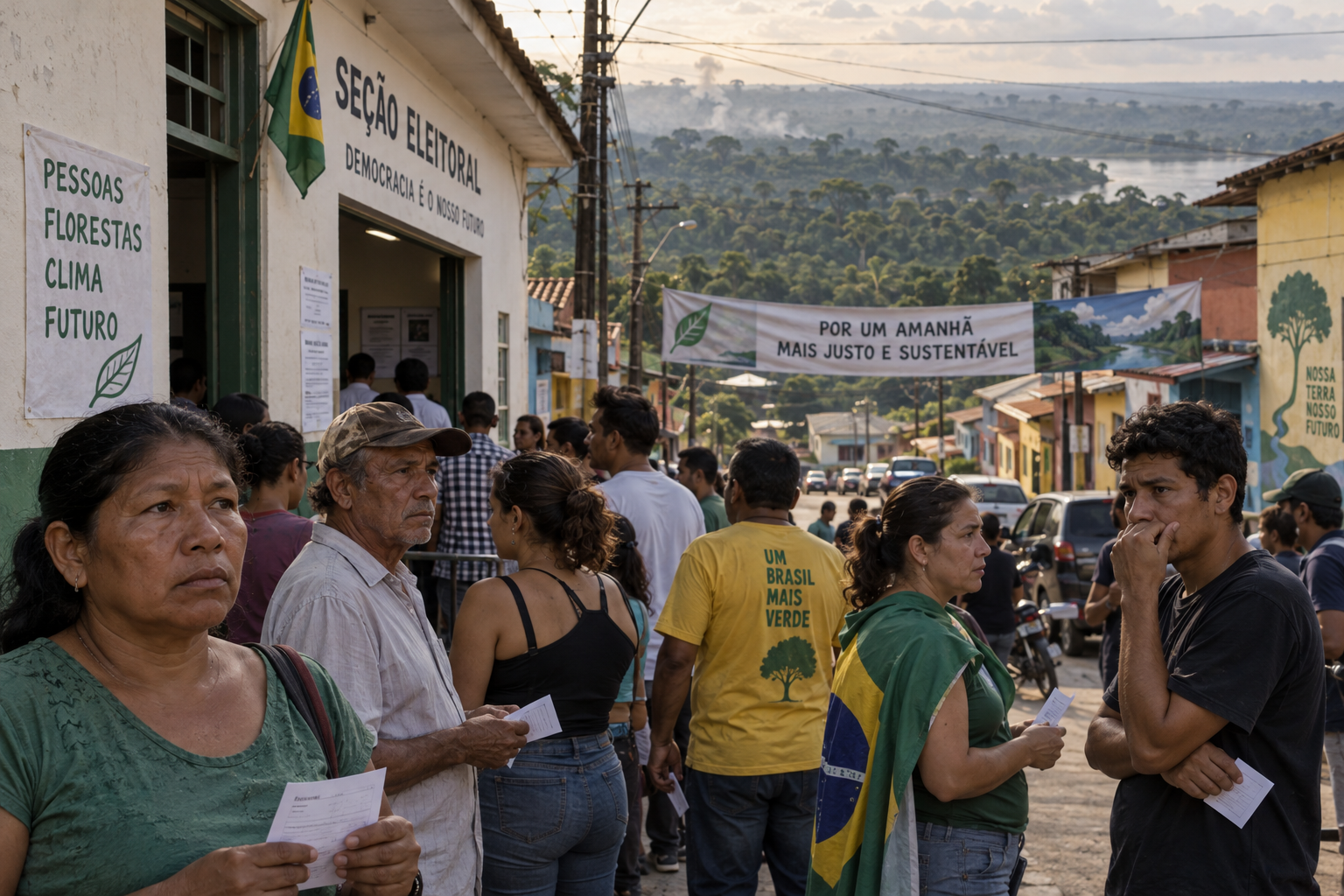
Flávio Bolsonaro’s 47% first-round vote in Brazil’s presidential election puts him ahead of incumbent Luiz Inácio Lula da Silva, who received 44.2%, before their 25 October runoff. The result alarms climate and nature campaigners because Bolsonaro has signaled that he would weaken environmental protections, echoing the record of his father, Jair Bolsonaro. During Jair Bolsonaro’s presidency, Amazon deforestation rose by 59.5%; Flávio has supported measures that would reduce conservation requirements and has courted powerful landowners. His political movement has also gained influence across Amazonian states and in Congress, where agribusiness interests are strong. The article warns that even a Lula victory could leave him struggling to defend environmental safeguards amid congressional opposition and turmoil in the supreme court. The threat extends beyond the Amazon to Brazil’s other biomes, Indigenous and traditional communities, and the global climate.
The article asks why Lula’s record of reducing Amazon deforestation by almost half did not translate into stronger electoral support. It points to the far right’s more effective use of social media and disinformation, the growth of Pentecostalism, and Lula’s difficulty adapting his political message. It also notes that the Workers’ party’s achievements in reducing poverty raised expectations for consumption and entrepreneurship, while subsidies to farmers helped some turn against environmental restrictions. Finally, the article situates Brazil’s election within a wider rightward shift in the Americas and intensifying US-China rivalry over resources. It concludes that Lula still has a chance to win over voters who backed neither candidate, but that the odds are against him.
Entities: Flávio Bolsonaro, Luiz Inácio Lula da Silva, Jair Bolsonaro, Amazon rainforest, Brazilian presidential election and 25 October runoff • Tone: analytical • Sentiment: negative • Intent: analyze
07-10-2026
The provided text is only the headline and opening sentence of a Washington Post article, so it does not include the reporting or evidence needed to assess the broader election picture. The excerpt says that a right-wing surge in Brazil’s elections could strengthen presidential front-runner Flávio Bolsonaro. In particular, it suggests that increased political leverage might enable him to seek the release of his imprisoned father, former president Jair Bolsonaro; pardon supporters convicted for an assault on Brazil’s capital described as resembling the Jan. 6 attack on the U.S. Capitol; and impeach Supreme Court justices who have pursued accountability in those cases.
The opening frames the election as consequential not only for the presidency but also for the fate of convictions and the balance of power between political leaders and the judiciary. Its emphasis is on possible institutional consequences of an electoral shift. However, the excerpt does not explain the election results or polling, identify the legal mechanisms involved, say which justices could be targeted, or provide responses from the candidates or other sources. Those details cannot be established from the supplied text. Accordingly, this summary describes the article’s stated premise and the stakes it raises, rather than treating the potential outcomes as confirmed or inevitable.
Entities: Flávio Bolsonaro, Jair Bolsonaro, Marina Dias, Brazil, São Paulo • Tone: analytical • Sentiment: negative • Intent: inform