07-10-2026
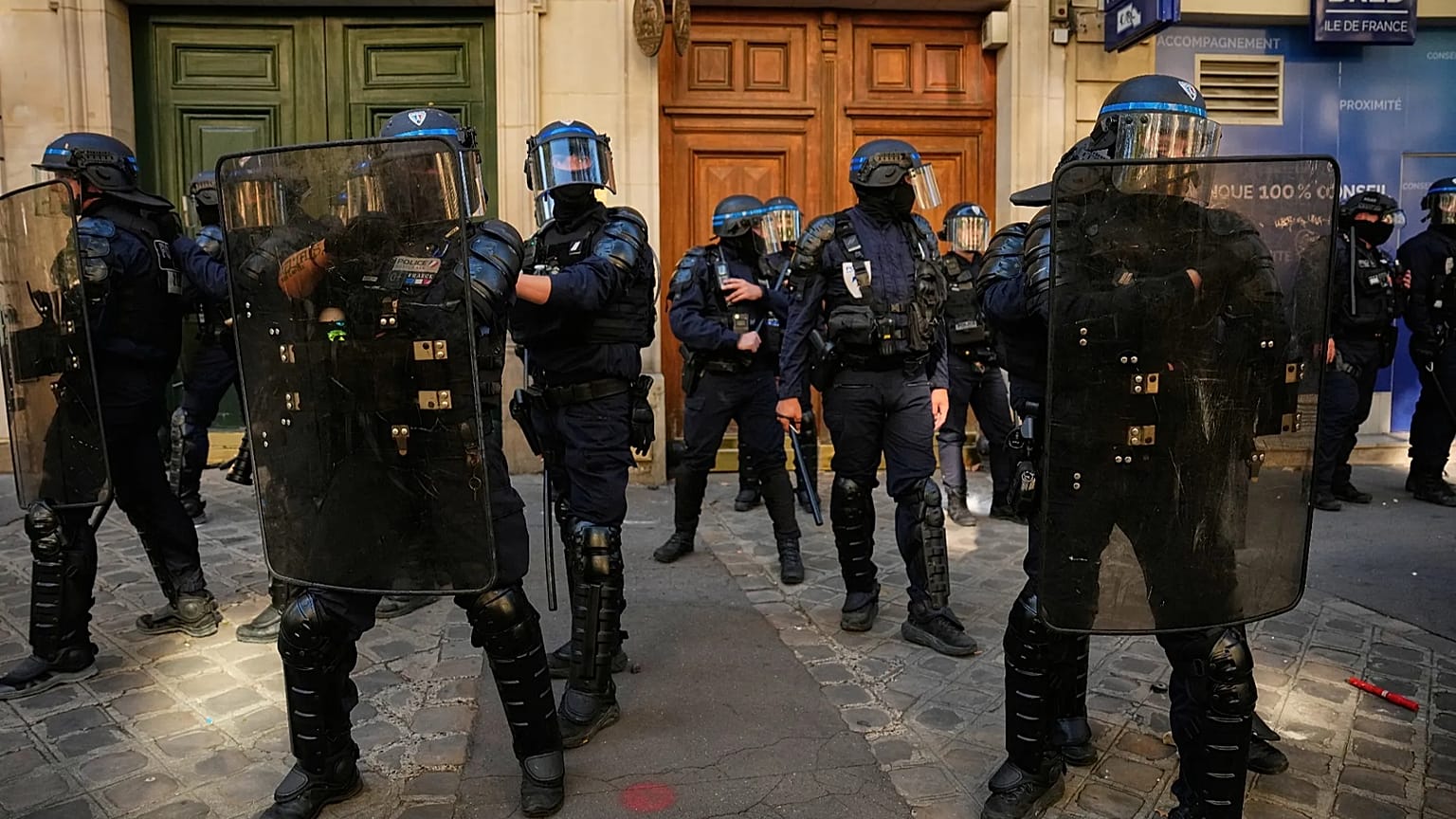
France has suspended police use of stun grenades at student-led demonstrations while authorities investigate the injury of a 15-year-old boy, who lost a hand after a grenade was fired during a clash with riot police in Lens on Monday. Interior Minister Laurent Nunez said the suspension applies only to high-school protests and will remain in place until the incident is understood. The move follows other allegations of police misconduct, including a case last week in which a 14-year-old student in north-west Paris was struck in the face by a tear-gas grenade and lost several teeth. A police officer has been charged over that incident, and 18 internal investigations have been opened since the protests began.
The demonstrations began in late September, with students blocking hundreds of high-school entrances to protest deteriorating facilities and teacher shortages. On Tuesday, a nationwide mobilisation drew about 250,000 people, according to the interior ministry. At least 488 people were arrested and 43 security-force members injured that day. While most demonstrations were peaceful, some involved clashes, projectiles and police tear gas. Since the movement began, more than 6,500 people—mostly minors—have been arrested; the government reports injuries to at least 215 students, 715 police officers and 85 teaching staff.
The government has blamed the left-wing France Unbowed party for intensifying tensions, while the party’s coordinator criticised the delayed suspension of grenades. Prime Minister Sebastien Lecornu condemned violence but rejected claims that his government had ordered police repression. He set aside half a day of school time for dialogue, a measure student and school-union representatives dismissed as inadequate. Lecornu was expected to address the protests and the country’s finances on Wednesday, amid debate over the 2027 budget. President Emmanuel Macron had convened an emergency meeting with Lecornu and other ministers as the crisis continued.
Entities: France, Sebastien Lecornu, Emmanuel Macron, Laurent Nunez, Manuel Bompard • Tone: analytical • Sentiment: negative • Intent: inform
07-10-2026
France has suspended police use of stun grenades at student protests while investigators examine how a 15-year-old boy lost his hand in Lens. Accounts of the incident differ: authorities say the teenager picked up a grenade that then exploded, while students say an officer fired it directly at him. Interior Minister Laurent Nuñez said the pause would remain in place until the facts are clarified. Police watchdog IGPN has opened 18 investigations into whether officers used proportionate force during demonstrations.
Protests over school conditions have spread from high school students to parents, university students and unions. On Tuesday, hundreds of thousands marched, with estimates ranging from more than 250,000 by the government to 450,000 by student unions. The Interior Ministry reported 488 arrests and 43 injured security-force members that day. More than 500 schools were fully or partly closed on Wednesday, while Education Minister Édouard Geffray said vandalism or fires had left 24 schools closed for several weeks, affecting 30,000 pupils. A further protest round was planned for Thursday.
The Lens injury has intensified concern about police tactics, alongside other cases involving a 14-year-old injured by a tear-gas grenade and a 17-year-old who alleges an officer held his head underwater during an arrest. A separate 16-year-old was seriously injured while reportedly handling a firework. A police union representative questioned the suspension, warning that removing the grenades could lead to more close-quarters clashes and injuries.
The unrest has become politically charged. Prime Minister Sébastien Lecornu condemned violence and accused the left-wing France Unbowed party of seeking to sow chaos ahead of the presidential succession election. Political leaders offered competing criticisms, while President Emmanuel Macron convened an emergency meeting with senior ministers. Lecornu was due to address the school protests in an evening statement.
Entities: France, Laurent Nuñez, Sébastien Lecornu, Emmanuel Macron, Jean-Luc Mélenchon • Tone: analytical • Sentiment: negative • Intent: inform
07-10-2026
French student protests paused on Wednesday after weeks of unrest, but demonstrations are expected to resume Thursday. The protests began in Paris over teacher shortages, long school days and deteriorating school buildings, then expanded nationwide and attracted support across age groups. Prime Minister Sébastien Lecornu said the government would use the pause to speak with high school students and examine issues including staffing, facilities, school schedules and student participation. He warned against what he described as political manipulation. Lecornu’s government has accused the left-wing party La France Insoumise (LFI) of exploiting the movement, while some LFI politicians have publicly supported the protests.
The unrest is unfolding as France approaches difficult budget negotiations, expected to begin next week. Since the July 2024 snap election left the National Assembly without a majority, disputes over public finances have contributed to political instability and the ousting of two administrations. Lecornu eventually passed the 2026 budget in February using emergency legislation to bypass parliament. The government now needs lawmakers from divided political blocs to agree to fiscal adjustments worth tens of billions of euros.
Investors are increasingly concerned about France’s deficit, political uncertainty and the government’s ability to implement spending cuts. The yield on the benchmark 10-year French government bond, or OAT, rose 16 basis points on Wednesday and has increased by more than 100 basis points since the start of the year. Pimco CEO Emmanuel Roman described the bond-market situation as critical and called for a credible budget and policy. Principal Asset Management’s Anthony Brinkman said the OAT sell-off may continue, pointing to deteriorating fiscal fundamentals and possible ratings downgrades by Moody’s and S&P. Bank of France Governor Emmanuel Moulin said the European Central Bank was not positioned to solve individual countries’ fiscal problems, and that conditions did not currently warrant ECB intervention. The article presents the protests and bond-market turmoil as connected pressures on a politically divided government ahead of budget talks and next year’s presidential election.
Entities: Sébastien Lecornu, French student protests, France, La France Insoumise (LFI), National Assembly • Tone: analytical • Sentiment: negative • Intent: inform
07-10-2026
France has suspended the use of police stun grenades at high school student protests while authorities clarify the circumstances surrounding reported injuries. Interior Minister Laurent Nunez announced the temporary measure on RTL radio, stressing that it applies only to protests involving high school students and will last only long enough to establish what happened. The decision follows public anger over reports of serious injuries to teenage demonstrators. A regional newspaper reported that a 15-year-old lost a hand and part of his lower arm after picking up a stun grenade that exploded. Separately, a 14-year-old was struck in the jaw by a tear gas canister fired during a protest in northwest Paris; the officer involved was charged on Tuesday.
The suspension was announced ahead of Prime Minister Sebastien Lecornu’s planned address to protesters on Wednesday evening. The demonstrations come as the French government faces pressure to control public debt while responding to calls for greater spending on public services.
Student protests began in mid-September in the Paris region, with pupils objecting to perceived inequalities in education. They say schools in disadvantaged neighborhoods have poorer teaching, facilities and opportunities for advancement, despite France’s national motto, “Liberty, Equality, Fraternity.” The demonstrations have since spread across the country, including to smaller towns. Trade unions joined the protests on Tuesday, when the Interior Ministry estimated that nearly 256,000 people demonstrated nationwide. Some protesters clashed with riot police in a Paris square. More than 6,500 people have been arrested over the previous two weeks, most of them minors.
Entities: France, Laurent Nunez, Sebastien Lecornu, La Voix du Nord, RTL • Tone: analytical • Sentiment: negative • Intent: inform
07-10-2026
France has suspended police use of stun grenades at high school student protests after a 15-year-old lost a hand in an incident involving a grenade. Interior Minister Laurent Nunez announced the temporary, protest-specific suspension on RTL radio, saying it would remain in place until the facts were clarified. Police have opened 18 internal investigations into alleged misconduct since the demonstrations began. An officer was charged after a separate incident in which a 14-year-old in northwest Paris was struck in the face by a tear gas grenade at close range and lost several teeth.
The protests began in late September, with students blockading high schools to protest deteriorating facilities and teacher shortages. More than 6,500 people—most of them minors—have been arrested, and hundreds of students, police officers and education staff have been injured. On Tuesday, about 250,000 people demonstrated across France, according to the Interior Ministry; authorities reported at least 488 arrests and 43 injured security-force members. Police in Rennes used water cannons against protesters.
Lawyers for detained teenagers say their clients have experienced violence and insults in custody. Prisca Ancion, of the Collective for Judicial Action, said every high school student arrested had reported an insult or physical mistreatment. France Unbowed coordinator Manuel Bompard accused Nunez of acting only after children were permanently maimed. The government, in turn, has blamed the hard-left party for contributing to tensions.
President Emmanuel Macron held an emergency meeting with Prime Minister Sebastien Lecornu and senior ministers on Tuesday evening. Lecornu said students’ voices were important and should be heard. Several national education unions have called for further strikes and demonstrations on Thursday.
Entities: France, Laurent Nunez, Emmanuel Macron, Sebastien Lecornu, Manuel Bompard • Tone: analytical • Sentiment: negative • Intent: inform
07-10-2026
The article examines the third week of student protests in France, which began over overcrowded classrooms, teacher shortages, underfunded schools and deteriorating buildings, but have developed into broader and more violent demonstrations. It reports that schools have been vandalized, blockaded and set on fire, and says Palestinian flags and anti-system slogans have appeared at protests. Researcher Nathalie Szerman argues that the scale and character of the unrest suggest that school conditions alone do not explain it. She says pro-Palestinian organizations have encouraged the demonstrations, while Heritage Foundation representative Nile Gardiner describes the unrest as a far-left and Islamist alliance aimed at undermining France. Former U.S. Assistant Attorney General Theo Wold attributes the protests to mass immigration and claims some participants reject French culture and the rule of law.
Other voices cited offer a more specific political explanation. Simone Rodan-Benzaquen of the Foundation for Defense of Democracies acknowledges students’ grievances about schools, but argues that La France Insoumise (LFI) has made hostility toward Israel central to its appeal to young voters and has brought the Gaza issue into school protests. She says this has broadened a dispute over education into a confrontation with the government and intensified racial dynamics. Szerman similarly characterizes LFI as a “Red-Green alliance” linking anti-system leftists with Islamists and pro-Palestinian groups.
The article therefore frames the protests not only as a response to education problems but as a politically and socially wider conflict. Its central claims about the role of immigration, Islamist groups and the far left are presented as the views of named commentators and organizations. The excerpt does not include a response from protesters, government officials or education advocates, and it ends mid-quotation.
Entities: Nathalie Szerman, Nile Gardiner, Theo Wold, Simone Rodan-Benzaquen, La France Insoumise (LFI) • Tone: analytical • Sentiment: negative • Intent: analyze
07-10-2026
French Prime Minister Sébastien Lecornu defended the police response to nationwide student protests after two teenagers suffered severe injuries: a 15-year-old lost a hand in an incident involving a police grenade, and a 16-year-old lost sight in one eye after being struck by a projectile. Speaking in parliament, Lecornu rejected accusations of police brutality and state repression, arguing that police action was prompted by urban violence and that accidents can happen. Interior Minister Laurent Nuñez likewise said the response was proportionate in “almost all cases,” while both officials maintained that police had acted within their authority.
The protests began at high schools in the Paris region in mid-September and spread across France. Students are demanding better school funding and learning conditions. The government faces mounting pressure after more than 6,500 people were arrested and hundreds injured; most of those arrested were minors, according to the Associated Press. Lecornu reported injuries to 215 students, 85 school staff members and 715 police officers. He also said he hoped to offer a political response to students’ concerns.
On Tuesday, unions, teachers, students and members of left-wing parties joined demonstrations. The Interior Ministry estimated that 266,000 people took part nationwide, including 56,000 in Paris. The Paris demonstration was largely peaceful, though smaller groups later clashed with police. President Emmanuel Macron called an emergency meeting with senior ministers to discuss the protests and their political consequences. Lecornu accused the left-wing party France Unbowed of exploiting the unrest for political advantage ahead of next year’s presidential election.
In the specific injury cases, a prosecutor said it was not yet clear whether the 15-year-old had picked up the grenade or had been hit by one thrown at him. In Tours, the projectile that injured the 16-year-old may have been fired from a police sub-lethal riot-control weapon. Socialist group leader Boris Vallaud said his lawmakers would propose legislation restricting such weapons at student demonstrations, warning that they can cause irreversible injuries.
Entities: Sébastien Lecornu, Laurent Nuñez, Emmanuel Macron, Boris Vallaud, France Unbowed • Tone: analytical • Sentiment: negative • Intent: inform
07-10-2026
France has suspended the use of stun grenades in policing high school student protests after a 15-year-old boy lost his hand during a clash with riot police in Lens. Interior Minister Laurent Nunez said there was a strong possibility a stun grenade caused the injury and ordered the pause until the circumstances are clearer. He said 18 investigations had been referred to the police inspectorate. Rights groups, students and political opponents have accused police of using disproportionate force during protests that have continued for more than two weeks.
Students are protesting deteriorating school buildings, teacher shortages, overloaded schedules and inadequate education funding. They link these conditions to France’s declining performance in the OECD’s PISA assessments: French 15-year-olds’ reading scores fell 43 points over a decade, the largest decline among OECD members, and their mathematics scores also recorded the steepest fall. More than 500 schools were closed on Wednesday, and unions called for further marches. Prime Minister Sebastien Lecornu recognized students’ demands as legitimate while describing the unrest as the most violent student demonstrations in decades.
The protests are unfolding ahead of next year’s election, amid weak growth and pressure to reduce public debt, which limits the government’s capacity to address the complaints. The CGT union pledged support for Thursday’s demonstrations and said it would help protect young people from violence and police repression. The article also reports related education unrest elsewhere in Europe: arrests and protests in Belgium, an indefinite teachers’ strike in Portugal over unpaid overtime, and planned teacher strikes in Spain over working hours, class sizes and salaries. The unions and article present these events as connected to common problems, including poor school conditions, staff shortages, excessive workloads and unequal access to education.
Entities: France, Paris, Lens, Laurent Nunez, Sebastien Lecornu • Tone: analytical • Sentiment: negative • Intent: inform
07-10-2026
The French government has made conciliatory overtures to a student protest movement driven by complaints about long school days, overcrowded classrooms, inadequate heating and cooling, and deteriorating school buildings. Prime Minister Sebastien Lecornu said students’ views must be heard and promised a concrete action plan, while the government launched an online consultation and pledged to simplify university applications. Lecornu proposed a half-day of dialogue in secondary schools, but the main school principals’ union rejected the idea and called instead for more resources and teachers. Teaching unions have called for another day of action.
After weeks of school blockades, demonstrations spread nationwide on Tuesday. The Interior Ministry reported 266,000 participants, including 56,000 in Paris. Police made 488 arrests, and 43 security personnel were injured; some protests turned violent and police used tear gas. Blockades continued at some schools and universities, including Sciences Po in Paris, although Education Minister Edouard Geffray said 86 per cent of schools were operating normally.
The article highlights the strain on France’s education system: classes average 29 pupils, compared with an OECD average of 26, and school days can run from 8 a.m. to 6 p.m. Government spending is constrained by parliamentary budget debates and the cost of servicing national debt, which exceeds education spending.
Public concern has also intensified over police conduct after a 15-year-old lost his hand during the protests. Interior Minister Laurent Nunez suspended stun-grenade use in connection with the high-school movement while the incident is investigated. Lecornu rejected the term “police violence” and described the police response as proportionate, while Nunez cited attacks on security forces and the difficult conditions officers face. President Emmanuel Macron convened ministers to address the crisis, asking them to explain police intervention policies and show empathy.
Entities: Sebastien Lecornu, Laurent Nunez, Emmanuel Macron, Edouard Geffray, Nicolas Sarkozy • Tone: analytical • Sentiment: neutral • Intent: inform
07-10-2026
The article reports on U.S. President Donald Trump’s response to nationwide student protests in France. In a Truth Social post, Trump characterized the unrest as a consequence of “mass migration” and claimed it was about “Islam wanting to take over,” rather than education. The protests, which began at a high school in the Paris region in mid-September, are described as student-led demonstrations demanding more education funding. France’s Interior Ministry said more than 266,000 people demonstrated on Tuesday, including 56,000 in Paris. While the march was largely peaceful, police used tear gas and clashed with small groups in Paris; nearly 500 people were detained that day. Officials also report more than 6,500 arrests since the protests began, many involving minors, while students have blockaded schools and boycotted classes for over two weeks.
The police response has drawn criticism from students, parents and teachers, particularly over the use of tear gas, batons and other crowd-control weapons against teenagers. University student Felix Barney called the response disproportionate. Tensions were further heightened by an incident on Monday in which a 15-year-old boy lost a hand after an apparent police stun-grenade incident. Interior Minister Laurent Nuñez defended officers’ actions as proportionate in almost all cases and said police intervened when demonstrations became violent; he also reported that 715 officers had been injured. Prime Minister Sébastien Lecornu said officials and school authorities should listen to students, while condemning what he called “ultra violence” and rejecting accusations of police racism.
The article notes that the demonstrations have become an early flashpoint in France’s presidential election campaign. Wider grievances include public spending, poverty and wealth inequality, with rising fuel prices linked to the Iran war adding to public discontent. It presents the protests as both a dispute over education funding and part of a broader climate of political and economic tension, while distinguishing Trump’s claims from the stated demands of student demonstrators.
Entities: Donald Trump, France, Paris, Truth Social, France’s Interior Ministry • Tone: analytical • Sentiment: neutral • Intent: inform