07-10-2026
The live update reports conflicting accounts of Iran’s control of the Strait of Hormuz and continuing disagreement over the conditions for ending the war. Vice President JD Vance said Iran must make a “meaningful” reduction in nuclear enrichment, a formulation that appears less absolute than President Donald Trump’s earlier demand for no enrichment. An unnamed Iranian official told Reuters that U.S. proposals conflict with Tehran’s demands, and said Iran’s right to enrichment remains a red line. The official said nuclear discussions cannot proceed until the United States meets Iranian conditions, including ending its blockade of Iranian ports, while suggesting that details of enrichment might be discussed later.
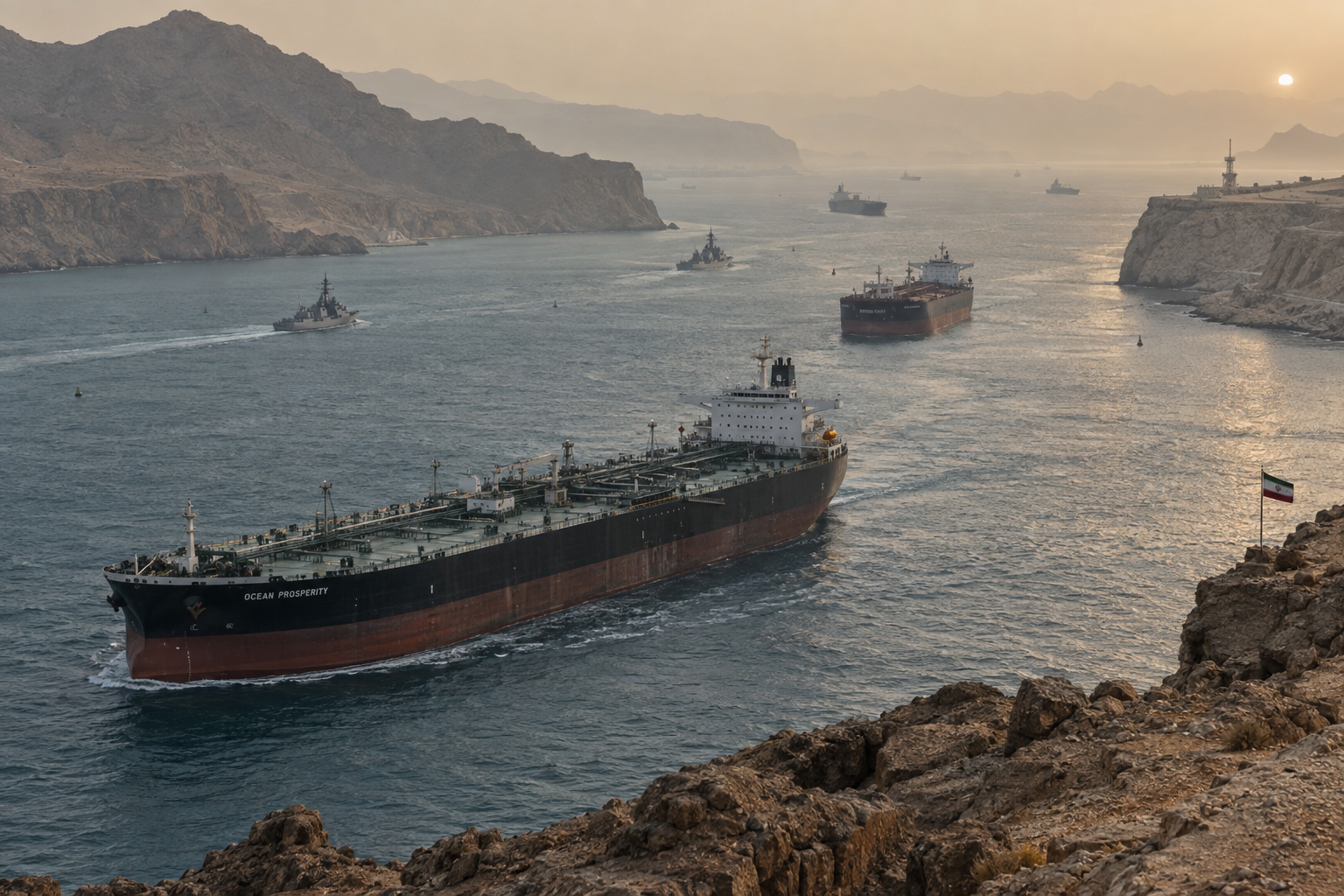
Secretary of State Marco Rubio said Iran had “lost complete control” of the Strait of Hormuz, which he described as open, and characterized Iran’s economy as being in freefall under sanctions. He argued that any acceptable agreement must ensure Iran never obtains a nuclear weapon. An Iranian Revolutionary Guard Corps adviser, Brig. Gen. Mohammad Reza Naqdi, disputed Rubio’s account, saying Iran considers the strait closed and will soon block routes it calls illegal. Naqdi acknowledged that some oil shipments are passing through, but claimed their volume is small and that routes opened by clearing previously impassable areas will be blocked.
The article notes that maritime data showed regional oil exports exceeding pre-war levels in the previous week, while Shell’s CEO put Middle Eastern oil flows at about 80% of pre-war levels. Renewed attacks on tankers nevertheless unsettled markets: oil prices rose and stocks fell, after benchmark crude prices had recently eased below $100 for Brent and $90 for West Texas Intermediate. A British maritime monitor reported nine attacks so far that month in the strait and Gulf, half the September total.
Separately, outgoing Iranian Oil Minister Mohsen Paknejad rejected Trump’s account of his resignation and Iran’s oil industry, saying his departure was unrelated to the president’s remarks. Paknejad said production and exports continued despite sanctions and a blockade, crediting oil-industry workers. The opening overview also notes the anniversary of Hamas’s October 7 attack on Israel and the deaths of tens of thousands in Israel’s retaliatory campaign in Gaza.
Entities: JD Vance, Donald Trump, Marco Rubio, Mohsen Paknejad, Mohammad Reza Naqdi • Tone: analytical • Sentiment: neutral • Intent: inform
07-10-2026
U.S. Secretary of State Marco Rubio said Iran had passed up multiple opportunities to reach an agreement with Washington on its nuclear program. Speaking during a visit to Greece, he described the nuclear issue as a central obstacle while efforts to secure a lasting ceasefire and broader peace agreement in the seven-month U.S.-led war remain stalled. A senior Iranian official, quoted by Reuters, disputed the premise of active nuclear negotiations, saying there had been no negotiations between Tehran and Washington on the program and that U.S. proposals conflict with Iran’s position. The official added that Iran would not surrender its claimed right to enrich uranium, though details of enrichment could be discussed later. Rubio’s comments followed Vice President J.D. Vance’s statement that any settlement must include a meaningful reduction in Iranian nuclear enrichment. President Donald Trump had also denied reports that he offered sanctions relief in exchange for nuclear concessions. The lack of agreement is unfolding alongside escalating risks to shipping: Iran has increased attacks on tankers transiting the Strait of Hormuz, where vessels now depend on U.S. military protection. Separately, two attacks by Iran-backed Houthi forces on airports in Saudi Arabia preceded a rise in energy prices. Brent crude gained 0.64% to $101.23 per barrel, while U.S. West Texas Intermediate futures rose 0.21% to $89.63. The article presents the nuclear dispute, stalled ceasefire efforts, attacks on shipping, and higher oil prices as interconnected consequences of the continuing regional conflict.
Entities: Marco Rubio, J.D. Vance, Donald Trump, Iran, United States • Tone: analytical • Sentiment: negative • Intent: inform
07-10-2026
Iranian military officials issued warnings and asserted control over the Strait of Hormuz as the conflict with the United States continued. Army spokesman Brigadier General Mohammad Akrami-Nia said Iran was prepared to launch pre-emptive operations if circumstances required, framing such action as a way to prevent further aggression. Senior Islamic Revolutionary Guard Corps (IRGC) figures said the strait was closed and under Iranian military control until Tehran’s demands were met, despite a US naval blockade. They also alleged that some vessels were smuggling oil through the waterway and said routes used by violators would soon be blocked. An IRGC adviser cited figures indicating roughly 10 ships a day were transiting, compared with nearly 125 before the war began with US-Israeli strikes on Iran on 28 February; he said most current transits had Iranian permission.
President Masoud Pezeshkian said Iran was negotiating while enduring what he described as an “all-out war on every front.” He also warned that the government might close sports and cultural venues to address severe electricity shortages. US Vice President JD Vance confirmed talks with Pezeshkian and Foreign Minister Abbas Araghchi, but said Washington was unsure how much authority they held in Iran’s political system. Vance reiterated that preventing Iran from obtaining nuclear weapons was the US objective and called for a meaningful step concerning enrichment to demonstrate Tehran’s intentions.
President Donald Trump claimed the United States had full control over the strait and said Iran was no longer as powerful a regional “bully,” while warning that the US would soon decide how to proceed. The article notes Trump’s repeated calls for new Iranian leadership and his comments about Supreme Leader Mojtaba Khamenei, who had not appeared publicly since his appointment in March. Trump has at times questioned who makes decisions in Iran, though he also previously suggested Khamenei was approving them. The competing claims over military control, Iranian decision-making, and negotiations underscore uncertainty amid the conflict.
Entities: Iran, United States, Donald Trump, JD Vance, Masoud Pezeshkian • Tone: analytical • Sentiment: negative • Intent: inform
07-10-2026
The article presents a lightly edited Reuters interview with US Vice President JD Vance, conducted in Fairbanks, Alaska, after a campaign rally for Republican Senator Dan Sullivan. The interview focuses mainly on Iran, its nuclear program, attacks on commercial shipping, and the US response. Vance says Iran is attempting to pressure the global economy by targeting shipping, but argues that these actions are causing greater harm to Iran than to the flow of oil and gas. He describes preventing Iran from obtaining nuclear weapons—and limiting wider regional nuclear proliferation—as the central US objective. According to Vance, Iran’s nuclear and enrichment facilities have been destroyed, and the United States intends to prevent their reconstruction.
Vance says decisions about renewed US military attacks belong to the president. He describes negotiations with Iran’s political leadership, including its foreign minister, but says it is unclear who actually makes decisions within the country. He claims Iran has failed to honor an earlier understanding to keep commercial shipping safe, and suggests some Iranian officials favor an agreement while others are undermining one. He argues that Iran’s 60-percent-enriched uranium is unnecessary for energy production and that a credible commitment against developing nuclear weapons would require meaningful limits on enrichment.
Vance says the administration is open to an agreement, but insists that Iran must take concrete steps rather than offer promises in exchange for US action. Asked about a reported Iranian operation involving RAF Fairford in the UK, he declines to discuss classified intelligence, saying no attack has occurred and that US military and intelligence personnel are monitoring potential threats. The supplied transcript ends during a question about whether military commanders have expressed concerns about ammunition stocks.
Entities: JD Vance, Jacob Bogage, Reuters, Iran, United States • Tone: analytical • Sentiment: neutral • Intent: inform
07-10-2026
US Vice-President J.D. Vance said Iran would have to make a “meaningful” reduction in its nuclear enrichment capacity for the United States to agree to an end to the seven-month war. In an interview with Reuters in Alaska, Vance argued that assurances about future reductions would not be enough: Washington wants concrete action, particularly an end to producing highly enriched fuel. The United States and Iran have exchanged proposals intended to end the conflict and reopen the Strait of Hormuz, but President Donald Trump rejected Tehran’s latest offer and warned that military operations could intensify after the US midterm elections.
Vance said negotiations are complicated by uncertainty in Washington about who has decision-making authority in Iran. US officials are speaking with President Masoud Pezeshkian and Foreign Minister Abbas Araqchi, but Vance said their influence within Iran’s power structure is unclear following the killing of Supreme Leader Ayatollah Ali Khamenei in joint US-Israeli strikes. Iran’s Foreign Ministry spokesperson Esmaeil Baghaei disputed that account, saying the difficulty stems instead from contradictory US positions and messaging.
Vance said he has spoken with field commanders about conditions on the battlefield. He dismissed concerns about shortages of critical munitions and said that although Iranian troops can sometimes strike commercial vessels in the Strait of Hormuz, they are largely unable to stop energy exports through the route.
The war has disrupted global energy markets and costs the United States about US$3 billion a month. Higher energy prices have become a political problem for Trump and Republicans before the November midterms, particularly in competitive states. Vance made the comments while campaigning in Alaska for Republican Senator Dan Sullivan, who faces Democratic challenger Mary Peltola. Vance, often viewed as a potential Republican successor to Trump, said he had not decided whether to run for president in 2028.
Entities: J.D. Vance, Iran, United States, Donald Trump, Masoud Pezeshkian • Tone: analytical • Sentiment: neutral • Intent: inform
07-10-2026
US Vice President JD Vance says Iran must make a substantive reduction in its nuclear enrichment capacity before Washington will agree to end the seven-month war. In an interview with Reuters, he said the United States remains open to a negotiated settlement but will not accept assurances without concrete action. Vance questioned why Iran would need fuel enriched to 60% if it does not intend to build a nuclear weapon, and said reducing enrichment would demonstrate that commitment.
Washington and Tehran have exchanged proposals intended to end the conflict and reopen the Strait of Hormuz, an important route for global energy shipments. US President Donald Trump has rejected Iran’s latest proposal and warned that military operations could intensify after the next month’s midterm elections.
Vance also said the United States is unsure how decisions are made within Iran, including how much authority President Masoud Pezeshkian and Foreign Minister Abbas Araghchi have. The uncertainty follows the killing of Supreme Leader Ayatollah Ali Khamenei in US-Israeli strikes at the start of the war. Iran disputes Washington’s account: Foreign Ministry spokesperson Esmaeil Baghaei said US officials understand Iran’s system and blamed the disagreement on Washington’s contradictory positions and mixed messages. Trump has also said that it is unclear who is running Iran.
The conflict is becoming a political liability for the Trump administration and Republicans before the November midterm elections. A Congressional Budget Office forecast cited by Reuters puts the war’s cost at about $3 billion a month, while higher energy prices have put Republicans on the defensive in competitive states. Vance has defended Trump’s approach on the campaign trail and urged voters not to let the war deter them from supporting Republican candidates.
Entities: JD Vance, Donald Trump, Iran, United States, Masoud Pezeshkian • Tone: analytical • Sentiment: neutral • Intent: inform
07-10-2026
An adviser to Iran’s Revolutionary Guards commander said on October 7 that Iran would soon close routes through the Strait of Hormuz that it considers illegal. Mohammadreza Naqdi was referring to a southern passage along Oman’s coast. He claimed the routes were created by blasting and damaging rocky passages in the waterway, and were being used by small boats to smuggle oil and transfer it to tankers. Naqdi asserted that the strait remains closed and under the full control of Iran’s armed forces, and said that would continue until Iran’s demands are met.
The statement challenges claims that Gulf oil exports have recovered to pre-war levels. Data from shipping analytics firm Kpler showed a seven-day moving average of 18.3 million barrels per day in crude exports from the region as of September 30. Volumes exceeded pre-war levels on 14 days in September, though the total included oil transported through several routes and methods, including the Strait of Hormuz, the Red Sea, terminals, and ship-to-ship transfers in the Gulf of Oman.
Iran’s Islamic Revolutionary Guard Corps has repeatedly rejected the suggestion that seaborne crude flows through Hormuz are rebounding with US Navy assistance. Another adviser, Majid Mirahmadi, said on October 1 that an average of 10 ships a day crossed the waterway, compared with 125 before the war began on February 28. The article says the war began with US and Israeli forces killing Supreme Leader Ayatollah Ali Khamenei in an airstrike in Tehran. Despite increased oil flows in September, Iranian attacks on tankers and logistical constraints remain, raising doubts about whether higher export volumes can be sustained.
Entities: Mohammadreza Naqdi, Majid Mirahmadi, Islamic Revolutionary Guard Corps (IRGC), Islamic Republic of Iran, Strait of Hormuz • Tone: analytical • Sentiment: neutral • Intent: inform