06-10-2026
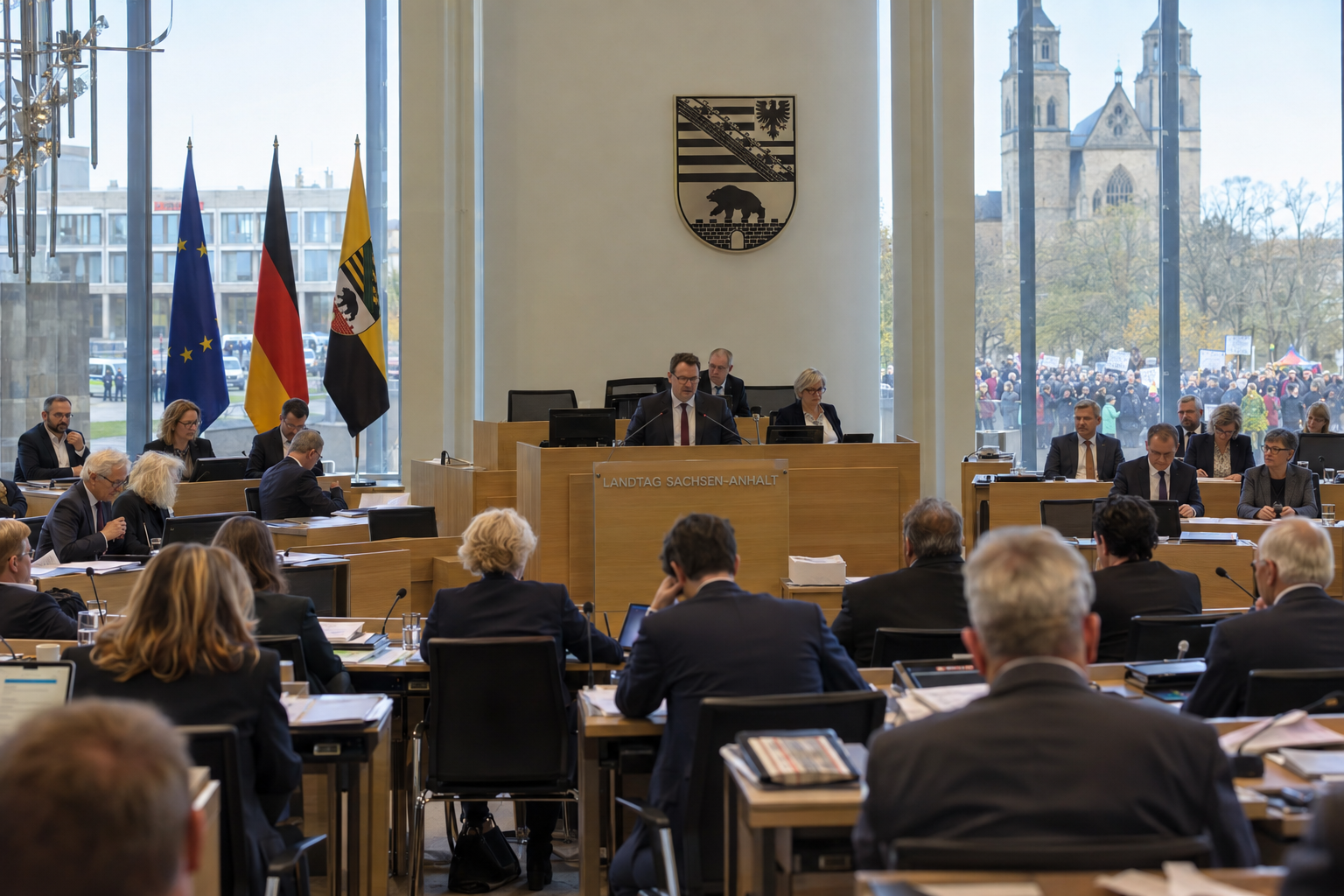
Tobias Rausch of the far-right Alternative for Germany (AfD) has been elected speaker of the Saxony-Anhalt state parliament, the first time since World War Two that a far-right party member has held the position. The vote came a month after the AfD won a decisive victory in the eastern German state, although it fell three seats short of a parliamentary majority. Rausch, 35, won comfortably, receiving support from nine MPs outside his party. Five votes came from the hard-left BSW, while the identities of the other four supporters are unknown.
The result drew criticism from Greens leader Susan Sziborra-Seidlitz, who said the election crossed a line and marked a watershed moment. More than 300 protesters gathered outside parliament in Magdeburg, with some displaying the slogan “Never again is now.” Rausch rejected the post-war political consensus against cooperation with the far right, saying that “the days of political firewalls should be a thing of the past.”
Rausch has served in the state parliament for a decade and is a close ally of AfD regional leader Ulrich Siegmund, who hopes to become state premier in December. As speaker, Rausch will chair debates, control access to the parliament building and represent the legislature at official events, though the role is largely symbolic.
The unexplained votes have prompted speculation that some conservative CDU MPs may have supported Rausch, despite Chancellor Friedrich Merz’s rejection of cooperation with the AfD and the CDU members’ stated opposition to voting for him. Siegmund’s bid to become premier remains uncertain: he needs 42 votes in the 83-seat legislature. The BSW has ruled out joining an AfD coalition and says it will instead support a non-partisan candidate and abstain in the December vote. The AfD is described as pro-Russian and anti-immigrant, and is classified as right-wing extremist by Saxony-Anhalt’s domestic intelligence service, a designation its leaders reject.
Entities: Tobias Rausch, Alternative for Germany (AfD), Saxony-Anhalt, Magdeburg, Susan Sziborra-Seidlitz • Tone: analytical • Sentiment: neutral • Intent: inform
06-10-2026
Saxony-Anhalt has entered a new political phase after Tobias Rausch of the far-right Alternative for Germany (AfD) was elected speaker of the state parliament. Rausch received 48 votes, nine more than the AfD’s 39 seats, making him the first representative of a party classified as right-wing extremist by Germany’s domestic intelligence agency to lead a state parliament since World War II. The vote took place amid a demonstration in Magdeburg opposing fascism and cooperation with the far right.
At the parliament’s opening session, senior member Eva von Angern of the Left Party invoked Germany’s constitutional commitment to human dignity and quoted former president Richard von Weizsäcker on respecting the dignity of others. The AfD caucus showed little visible support for her remarks. Rausch, a 35-year-old real estate agent, has faced allegations of nepotism after acknowledging that he employed friends from his soccer club in his legislative office. After his election, he said he would represent all parliamentary groups and uphold the rules.
The AfD’s prominent central seating position in the chamber, negotiated before the session, was presented as a statement that the party—not the established parties pushed to the edges—represents the political center. The AfD caucus consists of 39 lawmakers, mostly men.
The September 6 regional election attracted extensive national and international attention. The AfD won 39 of 83 seats, short of the 42 needed for an absolute majority. The CDU, Left Party, SPD and Greens together also hold 39 seats, while the BSW, founded by Sahra Wagenknecht, has five and may influence who becomes state premier. It has said it would support Rausch as speaker but not AfD candidate Ulrich Siegmund as premier. Siegmund plans to seek the position in December, expects to win on the first ballot, and has said he would seek fresh elections if he loses. The article concludes that Saxony-Anhalt faces a turbulent period.
Entities: Tobias Rausch, Ulrich Siegmund, Eva von Angern, Sahra Wagenknecht, Saxony-Anhalt • Tone: analytical • Sentiment: neutral • Intent: analyze
06-10-2026
A month after the Alternative for Germany (AfD) won the September 6 election in Saxony-Anhalt, it has not secured a clear route to forming the state’s government. The party fell three seats short of an absolute majority, despite its candidate for state premier, Ulrich Siegmund, having sought one. Siegmund says a vote on his bid for the premiership would not take place until December, giving him additional time to build support, but he has not explained his plan. The AfD has neither secured enough support from potential partners nor publicly attracted defections from rival parties.
The stalemate reflects the effects of Germany’s political “firewall”: mainstream parties’ refusal to cooperate with the AfD. Founded in 2013 as a eurosceptic movement, the party later gained support through increasingly hardline opposition to immigration. It has become a major force in eastern Germany, although many voters and parties remain opposed to deals with it. Around 400 people protested peacefully outside the state parliament in Magdeburg, reading the constitution and displaying a banner opposing cooperation with the far right.
The parliament’s opening session nevertheless gave the AfD a symbolic achievement. Tobias Rausch, an AfD member and Siegmund confidant, was elected parliament president with support from the left-wing populist BSW. He is the first AfD member to hold one of the highest offices in a German state legislature. Rausch called for cooperation and said political firewalls should be a thing of the past.
The AfD’s gains in Saxony-Anhalt and two other state elections have increased pressure on Chancellor Friedrich Merz’s government and prompted conservatives to question the firewall’s effectiveness. The BSW, the only party not to explicitly rule out cooperation with the AfD, opposes joining it in a coalition. It has said it would abstain in a vote on Siegmund, potentially enabling a minority government through passive support. Siegmund has rejected that arrangement as overly dependent on the BSW and has also raised the possibility of a new election. In the secret ballot for parliament president, Rausch received 48 votes, four more than the AfD and BSW together held, indicating additional lawmakers supported him.
Entities: Alternative for Germany (AfD), Saxony-Anhalt, Magdeburg, Ulrich Siegmund, Tobias Rausch • Tone: analytical • Sentiment: neutral • Intent: inform