01-09-2026
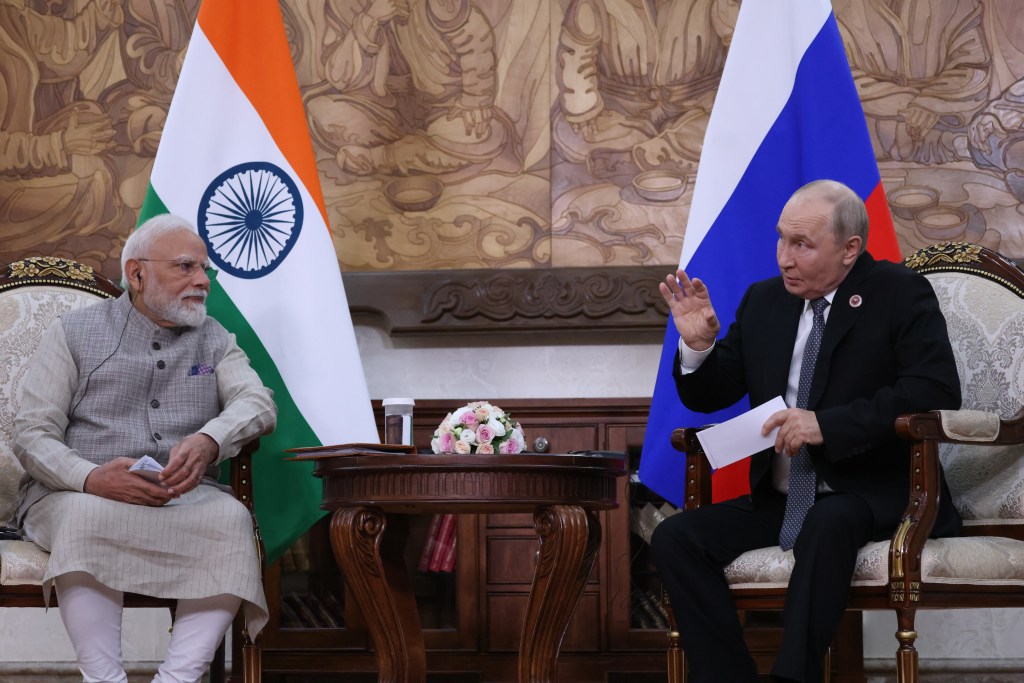
Indian Prime Minister Narendra Modi urged Russian President Vladimir Putin to end the war in Ukraine and support a cessation of hostilities during their meeting on the sidelines of the Shanghai Cooperation Organization summit in Bishkek, Kyrgyzstan. Modi said India supports peace efforts and that the world must move from “endless war to the end of war,” warning that each additional day of fighting harms humanity.
The appeal came as Russia indicated it was preparing “massive strikes” against Ukraine’s energy infrastructure. The warning followed a deadly Russian attack on an ammunition warehouse that reportedly killed 38 people. Ukrainian officials and national security experts fear that attacks on energy facilities could create the country’s most difficult winter of the war, particularly if Russia again targets power and heating systems.
India’s diplomatic position is complicated by its growing dependence on Russian oil. Russia supplied more than half of India’s crude imports in June and July and approximately 43% through August 24. Between April and July, Russian exports to India exceeded $34 billion, nearly 60% higher than the previous year. Putin praised the expansion of bilateral trade, although he acknowledged that trade declined slightly in the previous year.
The oil relationship also places India under increasing pressure from Washington. The U.S. House is expected to consider legislation later in September that could impose tariffs of up to 100% on countries among the five largest purchasers of Russian oil or gas, including India and China. The United States previously imposed tariffs on Indian exports because of New Delhi’s Russian energy purchases, though the total levy was later reduced to 18%. Washington has also encouraged India to replace Russian oil with Venezuelan crude. The article presents Modi’s peace appeal against the backdrop of intensifying military threats, energy insecurity, and economic pressure over India’s ties with Moscow.
Entities: Narendra Modi, Vladimir Putin, India, Russia, Ukraine • Tone: analytical • Sentiment: negative • Intent: inform
01-09-2026
Indian Prime Minister Narendra Modi urged Russian President Vladimir Putin to help bring the war in Ukraine to an end, saying that continued fighting harms humanity and that peace efforts offer hope. Modi made the comments during talks with Putin in Bishkek, Kyrgyzstan, on the sidelines of a Shanghai Cooperation Organization summit. He referred to Putin as “my friend” and emphasized the expanding economic relationship between India and Russia, while also stating that New Delhi supports all efforts aimed at ending the conflict.
Modi called for a shift from “endless war” toward a cessation of hostilities and reiterated his support for a negotiated settlement in Ukraine. Putin responded that the two countries were moving along the path toward peace, according to Russian state media. The remarks reflect India’s effort to maintain close ties with Moscow while presenting itself as supportive of diplomatic efforts to resolve the war.
India and China remain among the largest purchasers of Russian oil, providing Moscow with significant revenue despite sweeping Western sanctions imposed after Russia sent tens of thousands of troops into Ukraine in 2022. This economic relationship gives India influence with Russia but also places New Delhi in a delicate diplomatic position as it calls for peace without directly condemning Moscow.
Following the meeting, the Kremlin said Putin briefed Modi on the progress of Russia’s “special military operation,” the term Moscow uses for its invasion of Ukraine. Russia has repeatedly said it is prepared to end the war only on its own terms, while Ukraine has rejected those conditions as an unacceptable demand for capitulation. The article presents Modi’s appeal alongside the continuing gap between Moscow’s position and Ukraine’s demands.
Entities: Narendra Modi, Vladimir Putin, India, Russia, Ukraine • Tone: analytical • Sentiment: neutral • Intent: inform
01-09-2026
Indian Prime Minister Narendra Modi urged Russian President Vladimir Putin to help bring the war in Ukraine to an end, saying that continued fighting harms humanity and that peace efforts offer hope. Modi made the comments during talks with Putin in Bishkek, Kyrgyzstan, on the sidelines of a Shanghai Cooperation Organization summit. He referred to Putin as “my friend” and emphasized the expanding economic relationship between India and Russia, while also stating that New Delhi supports all efforts aimed at ending the conflict.
Modi called for a shift from “endless war” toward a cessation of hostilities and reiterated his support for a negotiated settlement in Ukraine. Putin responded that the two countries were moving along the path toward peace, according to Russian state media. The remarks reflect India’s effort to maintain close ties with Moscow while presenting itself as supportive of diplomatic efforts to resolve the war.
India and China remain among the largest purchasers of Russian oil, providing Moscow with significant revenue despite sweeping Western sanctions imposed after Russia sent tens of thousands of troops into Ukraine in 2022. This economic relationship gives India influence with Russia but also places New Delhi in a delicate diplomatic position as it calls for peace without directly condemning Moscow.
Following the meeting, the Kremlin said Putin briefed Modi on the progress of Russia’s “special military operation,” the term Moscow uses for its invasion of Ukraine. Russia has repeatedly said it is prepared to end the war only on its own terms, while Ukraine has rejected those conditions as an unacceptable demand for capitulation. The article presents Modi’s appeal alongside the continuing gap between Moscow’s position and Ukraine’s demands.
Entities: Narendra Modi, Vladimir Putin, India, Russia, Ukraine • Tone: analytical • Sentiment: neutral • Intent: inform