01-09-2026
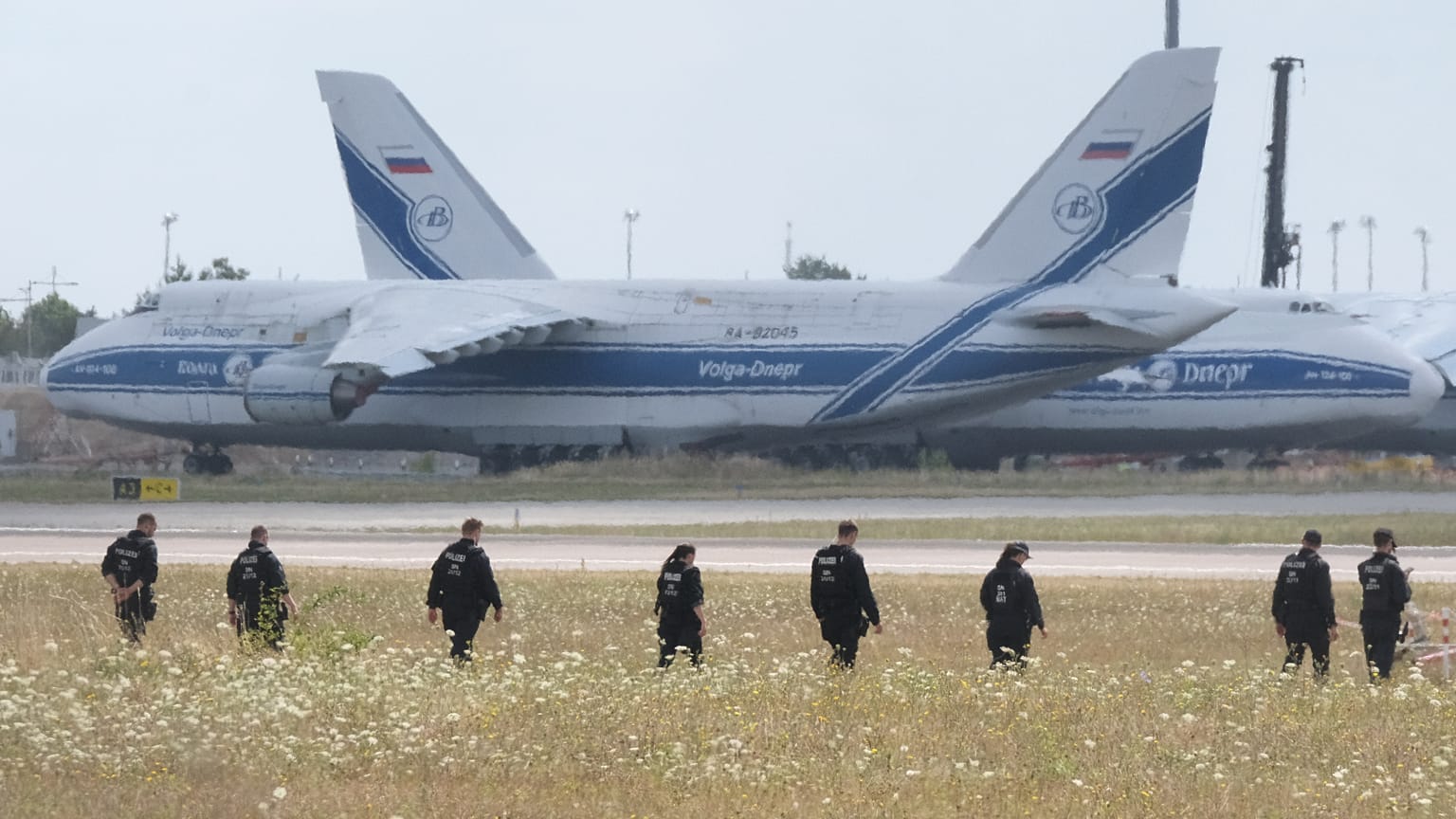
Germany has accused Russia of attempting to attack Leipzig/Halle Airport on Aug. 4 with a drone carrying explosives. The device was discovered near a Ukrainian Antonov cargo aircraft and defused before it could cause harm. German Interior Minister Alexander Dobrindt said investigators identified the drone’s configuration, components, explosives and detonator as features associated with Russian hybrid operations and the war in Ukraine. He said intelligence indicated that individuals acting for Russian state entities were involved, although he did not identify the organizations allegedly responsible. German officials described the operation as technically sophisticated and carefully planned but apparently carried out by low-level agents.
In response, Germany announced that it would close Russia’s consulate in Bonn on Sept. 18 and shut the Russian House cultural centre in Berlin. Berlin also plans to seek additional European Union sanctions against people linked to Russian hybrid attacks, increase entry controls for Russian citizens and intensify efforts against Russia’s so-called shadow fleet of tankers suspected of evading oil sanctions. Russia’s ambassador was summoned, while Russian officials rejected the accusations. Foreign Ministry spokesperson Maria Zakharova called them a contrived pretext for escalating tensions, and President Vladimir Putin claimed evidence had been planted without offering supporting evidence.
The airport is a significant international freight hub and supports Ukrainian Antonov aircraft, NATO’s Strategic Airlift International Solution and military logistics along NATO’s eastern flank. The alleged incident comes amid broader Western accusations that Russia has conducted sabotage, arson, cyberattacks and other malign operations across Europe since invading Ukraine in 2022. The Associated Press has tracked approximately 200 such incidents. NATO Secretary-General Mark Rutte and Canadian Prime Minister Mark Carney expressed support for Germany. The report also notes that Poland recently reported new suspected sabotage incidents and that Germany is seeking broader intelligence powers to counter sabotage and cyberattacks.
Entities: Germany, Russia, Leipzig/Halle Airport, Alexander Dobrindt, Johann Wadephul • Tone: analytical • Sentiment: negative • Intent: inform
01-09-2026
Germany has formally blamed Russia for an attempted drone attack at Leipzig/Halle Airport, escalating tensions between Berlin and Moscow. The incident occurred on the night of 4–5 August, when police found a drone carrying explosives near a Ukrainian cargo aircraft and used a robot to disable it. A second drone, reportedly found weeks later, also showed traces of an explosive substance. The airport is strategically important because it handles military shipments for Germany and NATO allies and serves as a base for Ukraine’s Antonov Airlines.
Interior Minister Alexander Dobrindt said the incident matched the established pattern of Russian hybrid operations in Europe. Foreign Minister Johann Wadephul announced that Germany would close Russia’s consulate in Bonn by 18 September and the Russian cultural centre in Berlin. Berlin also plans tighter controls on Russian nationals and increased pressure on Russia’s shadow fleet. Germany is expected to raise the matter with the NATO Council.
Russia has categorically rejected the accusations as absurd and unsubstantiated, warning that Germany’s measures represent an unprecedented escalation and will have consequences. Chancellor Friedrich Merz had previously warned that perpetrators of hybrid attacks against Germany would pay, although Berlin initially avoided directly naming Russia.
European Commission President Ursula von der Leyen expressed full EU solidarity with Germany and said she would discuss the incident with NATO Secretary General Mark Rutte. EU foreign policy chief Kaja Kallas described the alleged operation as part of a broader campaign of kinetic hybrid attacks intended to intimidate European countries and weaken support for Ukraine. She said the EU would increase aid to Ukraine, strengthen its own defence, and pursue its most far-reaching sanctions against Russia. The article notes that the situation remains developing.
Entities: Russia, Germany, Leipzig/Halle Airport, Alexander Dobrindt, Johann Wadephul • Tone: analytical • Sentiment: negative • Intent: inform
01-09-2026
Germany has formally attributed an August drone sabotage incident near Leipzig/Halle Airport to Russia, describing it as part of Moscow’s broader hybrid warfare campaign against Europe. The incident involved a drone found in the airport’s security zone near a Ukrainian cargo aircraft transporting military supplies. A second unmanned aerial vehicle later collided with an aircraft, preventing it from landing.
European Commission President Ursula von der Leyen expressed full solidarity with Germany and said she would meet NATO Secretary-General Mark Rutte to coordinate a response. The talks are expected to focus on strengthening EU-NATO cooperation against hybrid threats. Von der Leyen said the EU would remain united and warned that hybrid attacks would receive a clear response. European foreign ministers are also expected to prepare additional sanctions.
Germany has ordered the closure of Russia’s consulate in Bonn and the Russian House in Berlin. German officials described the incident as part of a wider pattern of destabilisation, disinformation, threats, sabotage and aggression. Russia has denied responsibility, rejected the accusations as premature, and warned of consequences in response to new sanctions.
EU foreign policy chief Kaja Kallas said Russia was using increasingly dangerous kinetic hybrid incidents to intimidate European countries and discourage further support for Ukraine. Officials from Ireland, Romania, Estonia and Germany reported recent airspace or territorial incursions, while explosive devices were found near a German power plant. Estonia’s defence minister warned that Russia was testing where Europe’s “red line” lies.
French President Emmanuel Macron and Italian Prime Minister Giorgia Meloni also backed Germany and called for a united European response, emphasizing that attacks against one ally threaten all allies.
Entities: Ursula von der Leyen, Mark Rutte, Germany, Russia, European Union • Tone: urgent • Sentiment: negative • Intent: inform
01-09-2026
Germany has accused Russia of attempting a hybrid attack involving an explosive-laden drone at a strategic airport near Leipzig in an incident that occurred the previous month. On Tuesday, the German government announced diplomatic counter-measures in response, escalating tensions between Berlin and Moscow amid the broader war in Ukraine and heightened concern over alleged Russian hybrid operations in Europe.
Foreign Minister Johann Wadephul said Germany would close Russia’s consulate in Bonn, the former German capital, later in September. Berlin will also cancel Russia’s contract for the Russian House, a cultural centre in the German capital. The measures represent a direct diplomatic response to what Germany characterises as a hostile operation on its territory.
The European Union expressed “full solidarity” with Germany, while NATO said it would defend its members. Britain, Estonia and Poland also issued strong statements of support for Berlin. The article does not provide further details about the drone’s interception, the suspected perpetrators, the damage caused or the evidence Germany is using to attribute the incident to Moscow.
The report, produced by France 24 correspondent Carys Garland, frames the incident as part of a wider European security challenge involving drones, sabotage risks and Russia’s alleged use of hybrid tactics. The German response and the backing from European governments and NATO indicate that the episode is being treated as more than an isolated airport security breach. It is presented as a politically significant confrontation that could further strain diplomatic relations between Russia and Germany and reinforce European coordination against perceived Russian threats.
Entities: Germany, Russia, Airport near Leipzig, Bonn, Berlin • Tone: urgent • Sentiment: negative • Intent: inform
01-09-2026
Germany is expected to publicly blame Russia for an attempted drone attack on a Ukrainian cargo aircraft at Leipzig/Halle Airport in August, according to two sources familiar with the government’s plans. The airport is a major civilian freight and NATO logistics hub in eastern Germany and hosts several Ukrainian Antonov An-124 transport planes. Workers discovered a drone equipped with explosives and a detonator near one of the aircraft, prompting an investigation.
Berlin had previously avoided directly attributing the incident to Moscow, describing it instead as part of a broader Russian “hybrid war” against Europe. German media reports, confirmed by the anonymous sources, indicate that the government may also prepare new sanctions against Russia in coordination with international allies. The sources did not provide details about the possible measures.
Foreign Minister Johann Wadephul declined to fully confirm the reports while visiting Algeria, but said Germany would respond when attacked and would not be intimidated. He was expected to hold a press conference with Interior Minister Alexander Dobrindt after returning to Germany. Wadephul characterized Germany as a stabilizing force that remained open to negotiations while prepared to defend itself.
The Russian embassy did not immediately comment. Moscow has previously rejected similar accusations as fabricated provocations and anti-Russian hysteria. European intelligence officials have for years monitored alleged Russian sabotage operations intended to weaken NATO unity and reduce European support for Ukraine.
Marie-Agnes Strack-Zimmermann, chair of the European Parliament’s Committee on Security and Defence, urged Germany to identify Russia as the mastermind behind the incident. She also argued that such events should no longer be described merely as “hybrid attacks,” saying they amount to actual attacks. The expected attribution could further intensify already deteriorated relations between Russia and the West following Russia’s full-scale invasion of Ukraine in 2022.
Entities: Germany, Russia, Ukraine, Leipzig/Halle Airport, Schkeuditz, Saxony • Tone: analytical • Sentiment: negative • Intent: inform
01-09-2026
Germany is reportedly preparing to formally blame Russia for an attempted drone attack near a Ukrainian cargo aircraft at Leipzig/Halle Airport in August. Two sources confirmed German media reports that the government may identify Moscow as responsible and consider new sanctions in coordination with allied countries, although the sources did not provide details about possible measures.
Airport workers discovered a drone carrying explosives and a detonator near a Ukrainian Antonov An-124 transport plane on August 5. Leipzig/Halle is a major civilian freight and NATO logistics hub in eastern Germany and serves as a base for several Ukrainian cargo aircraft. German authorities had previously described the incident as part of Russia’s broader hybrid war against Europe without directly assigning blame.
Foreign Minister Johann Wadephul did not fully confirm the reports while visiting Algeria, but he indicated that Germany was considering additional measures against Russia. He said Germany would respond to attacks while remaining willing to negotiate and asserted that Moscow would not intimidate Berlin. Wadephul was expected to hold a press conference with Interior Minister Alexander Dobrindt after returning to Germany.
Russia’s embassy did not immediately comment. It has previously rejected similar accusations as fabricated provocations and examples of anti-Russian hysteria. European intelligence officials have monitored suspected Russian sabotage operations across Europe, which they say are intended to weaken NATO cohesion and reduce support for Ukraine.
Marie-Agnes Strack-Zimmermann, chair of the European Parliament’s Committee on Security and Defence, urged Germany to explicitly identify Russia as the mastermind. She also argued that incidents of this kind should be described as actual attacks rather than merely hybrid attacks. The reported German response could further increase tensions between Russia and the West, which deteriorated sharply after Russia’s full-scale invasion of Ukraine in 2022.
Entities: Germany, Russia, Leipzig/Halle Airport, Ukrainian Antonov An-124 cargo planes, NATO logistics hub • Tone: analytical • Sentiment: negative • Intent: inform
01-09-2026
Germany has accused Russia of orchestrating an attempted drone attack at Leipzig/Halle Airport on August 4. The drone, which was reportedly carrying explosives, was discovered near a Ukrainian aircraft and subsequently defused. German officials said the incident represented a significantly higher level of danger than previous suspected acts of disruption.
Interior Minister Alexander Dobrindt said investigators identified features of the drone, including its configuration, components, explosives and detonator, that resembled equipment associated with other Russian “hybrid operations” and Russia’s war against Ukraine. He said the device showed evidence of sophisticated technical knowledge and careful planning, although the final execution appeared to have been assigned to lower-level operatives. German intelligence reportedly indicated that individuals acting on behalf of Russian state entities were involved. Dobrindt said the police investigation, the broader pattern of activity and intelligence assessments together established Russian responsibility, although he did not identify the specific Russian agencies allegedly involved.
The German government linked the incident to a wider campaign of sabotage and disruption that Western officials say is intended to undermine support for Ukraine and destabilize European countries. In response, Foreign Minister Johann Wadephul announced that Russia’s consulate in Bonn would close on September 18. Germany also plans to close the Russian House cultural centre in Berlin, though that process may take longer.
Wadephul said the attempted attack had been a deliberate decision by Russia’s leadership that would further damage already strained relations between Berlin and Moscow. The measures mark another escalation in Germany’s response to what it describes as Russian hybrid attacks against European targets.
Entities: Germany, Russia, Leipzig/Halle Airport, Leipzig, Bonn • Tone: analytical • Sentiment: negative • Intent: inform
01-09-2026
Germany is terminating the lease or operating agreement for Berlin’s Russian House, a prominent cultural center on Friedrichstrasse, according to Foreign Minister Johann Wadephul. The move is described as one of several retaliatory measures linked to alleged Russian involvement in an attempted drone attack at Leipzig/Halle Airport on August 4. The seven-story building, which covers nearly 30,000 square meters, opened in 1984 during East Germany’s alliance with the Soviet Union. It was established to promote Soviet-German friendship through concerts, films, book readings, and other cultural activities.
The building is owned by the Russian Federation but operates through Rossotrudnichestvo, Russia’s agency for promoting the Russian language and cultural relations abroad. Germany pays the property tax under a bilateral agreement concerning cultural institutions. Rossotrudnichestvo has been under EU sanctions since 2022 because of its alleged role in promoting the perception of occupied Ukrainian territories as Russian. Critics in Germany have accused the Russian House of serving as a propaganda outlet, citing films shown there that portrayed Ukrainians as Nazis. French authorities have also linked the building to possible Russian intelligence activities.
The decision is complicated by existing German-Russian treaties governing the Russian House and the Goethe-Institut in Moscow. German officials have previously warned that action against one institution could trigger retaliation against the other, including the closure of the Goethe-Institut. The article places the dispute within the broader deterioration of German-Russian relations following Russia’s invasion of Ukraine, while also providing a historical overview of relations between the two countries, from medieval trade and dynastic ties to the world wars, the Soviet-East German alliance, and postwar Ostpolitik.
Entities: Russian House, Berlin, Friedrichstrasse, Johann Wadephul, Martin Giese • Tone: analytical • Sentiment: negative • Intent: inform