01-09-2026
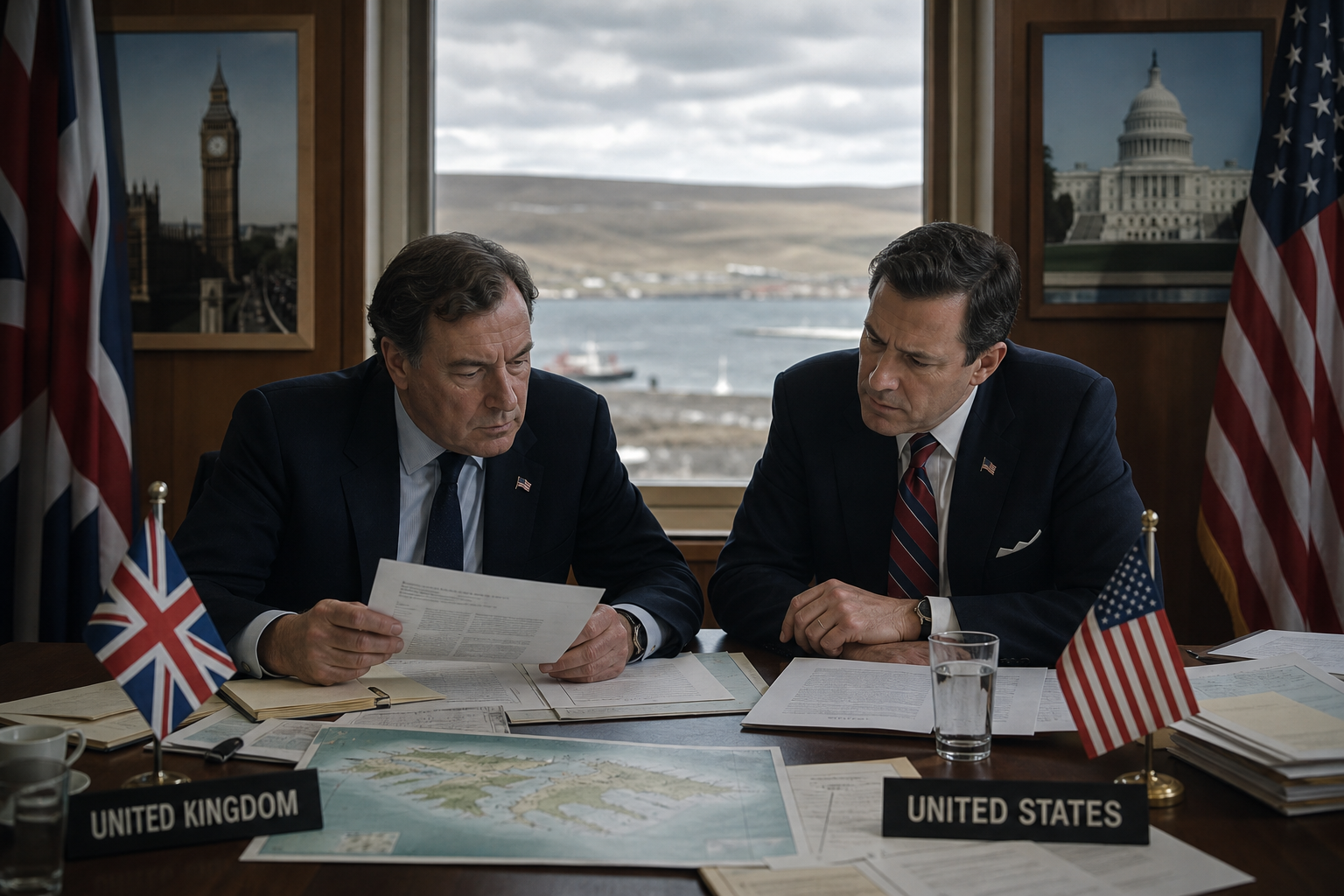
US President Donald Trump has indicated that Washington’s position on the sovereignty of the Falkland Islands is among several foreign-policy positions under review. Asked by the BBC whether the United States was reconsidering its stance, Trump replied that he reviews “every position” and described the Falklands as “one of many.” He also linked the issue to pressure on the UK to increase defence spending, saying Britain had “some problems” but that they would be resolved.
The remarks follow reports that US defence officials were considering measures to pressure NATO allies to meet military-spending commitments. One reported option was to threaten a review of the US position on the UK’s claim to sovereignty over the Falklands. The British government rejected any uncertainty over its position, stating that the islanders are British and have the right to determine their future. Foreign Office Minister Uma Kumaran said the islands would “always remain a British overseas territory” in accordance with the wishes of their inhabitants.
The Falklands remain disputed by the UK and Argentina, which fought a 74-day war over the territory in 1982. The conflict resulted in the deaths of 255 British military personnel, three islanders and 649 Argentine military personnel. Previous US administrations have recognised Britain’s de facto administration without taking a formal position on sovereignty.
The article also examines wider disputes involving UK defence spending and the proposed transfer of the Chagos Islands to Mauritius, including the future of the UK-US military base on Diego Garcia. The Chagos agreement was paused after Trump withdrew his support. The British government says maintaining control and security of the base remains a priority, while Conservative opponents have urged Prime Minister Andy Burnham to abandon the deal and redirect any savings to the armed forces.
Entities: Donald Trump, Falkland Islands, United Kingdom, Argentina, United States • Tone: analytical • Sentiment: neutral • Intent: inform
01-09-2026
US President Donald Trump has said Washington’s position on the sovereignty of the Falkland Islands is one of many foreign-policy positions under review. Responding to a BBC question, Trump said he routinely reviews every position, while also linking the issue to pressure on the UK to increase defence spending. He said Britain had “some problems” but that they would be resolved.
The comments follow reports in The Daily Telegraph that US defence officials had discussed measures to encourage NATO allies to meet spending commitments. One possible measure was reportedly a review of US support for the UK’s claim to the Falkland Islands. A similar option was mentioned in an internal Pentagon email reported by Reuters in April, in the context of potential penalties for NATO allies that failed to support the US during the war in Iran.
The UK government rejected any suggestion that its sovereignty over the islands was negotiable. It said Falkland Islanders are British and have the right to determine their own future, adding that residents have repeatedly expressed a desire to remain a British overseas territory and that the UK’s commitment to them is unwavering.
The Falkland Islands remain disputed by the UK and Argentina. The countries fought a 74-day war in 1982 after Argentine forces occupied the islands. The conflict resulted in the deaths of 255 British military personnel, three islanders and 649 Argentine soldiers. Previous US administrations have recognised the UK’s de facto administration but have avoided taking a formal position on sovereignty.
The dispute has resurfaced alongside debate over British defence spending. Prime Minister Andy Burnham has pledged to honour a commitment to raise core defence spending to 3.5% of GDP by 2035. Chancellor John Healey has said the government will set out a timetable for meeting NATO’s spending target, including a date for reaching 3% of GDP. Healey previously resigned as defence secretary after expressing frustration over the lack of a clear timetable.
Entities: Donald Trump, United States, United Kingdom, Falkland Islands, Argentina • Tone: analytical • Sentiment: neutral • Intent: inform
01-09-2026
Donald Trump has suggested that the United States may be reconsidering its position on sovereignty over the Falkland Islands, raising the prospect of renewed tension between Washington and London. Asked at the White House whether he was reviewing US policy toward the South Atlantic archipelago, Trump said he reviews “every position,” describing the Falklands as one of many issues under consideration.
The United States officially maintains a neutral position on the islands’ ultimate sovereignty, which is disputed by Argentina. However, Washington recognizes British administration of the territory, which Britain has controlled almost continuously since 1833. Argentina invaded the islands in 1982, prompting Britain to send a military taskforce and fight a conflict that ended with Argentina’s surrender. The war killed 649 Argentine and 255 British personnel.
Trump’s remarks appear linked to his broader campaign to pressure US allies to increase defence spending and Nato contributions. A US official reportedly told the Telegraph that Washington could change its position on the Falklands if Britain failed to meet its defence commitments. The possibility emerged amid reports that the UK government might abandon a previous pledge to spend 3% of GDP on defence by 2030.
The government of Prime Minister Andy Burnham said Britain’s position was “crystal clear,” emphasizing the Falkland Islanders’ right to determine their future and the UK’s commitment to them. A change in US policy would represent a significant symbolic and diplomatic setback for Britain, particularly because Ronald Reagan supported the UK during the 1982 conflict, strengthening the relationship between Reagan and Margaret Thatcher.
The article also highlights Trump’s growing relationship with Argentina’s president, Javier Milei, who supports Argentina’s claim to the islands. Trump has provided financial assistance to Argentina and authorized imports of Argentine beef. Despite Argentina’s claim, an overwhelming majority of Falkland Islanders voted in a 2013 referendum to remain part of the UK. The dispute has also appeared in football-related political displays, including a banner displayed by Argentine players after defeating England in a World Cup semifinal.
Entities: Donald Trump, Falkland Islands, United Kingdom, Argentina, Andy Burnham • Tone: analytical • Sentiment: negative • Intent: inform
01-09-2026
Donald Trump has suggested that the United States may be reconsidering its position on sovereignty over the Falkland Islands, raising the prospect of renewed tension between Washington and London. Asked at the White House whether he was reviewing US policy toward the South Atlantic archipelago, Trump said he reviews “every position,” describing the Falklands as one of many issues under consideration.
The United States officially maintains a neutral position on the islands’ ultimate sovereignty, which is disputed by Argentina. However, Washington recognizes British administration of the territory, which Britain has controlled almost continuously since 1833. Argentina invaded the islands in 1982, prompting Britain to send a military taskforce and fight a conflict that ended with Argentina’s surrender. The war killed 649 Argentine and 255 British personnel.
Trump’s remarks appear linked to his broader campaign to pressure US allies to increase defence spending and Nato contributions. A US official reportedly told the Telegraph that Washington could change its position on the Falklands if Britain failed to meet its defence commitments. The possibility emerged amid reports that the UK government might abandon a previous pledge to spend 3% of GDP on defence by 2030.
The government of Prime Minister Andy Burnham said Britain’s position was “crystal clear,” emphasizing the Falkland Islanders’ right to determine their future and the UK’s commitment to them. A change in US policy would represent a significant symbolic and diplomatic setback for Britain, particularly because Ronald Reagan supported the UK during the 1982 conflict, strengthening the relationship between Reagan and Margaret Thatcher.
The article also highlights Trump’s growing relationship with Argentina’s president, Javier Milei, who supports Argentina’s claim to the islands. Trump has provided financial assistance to Argentina and authorized imports of Argentine beef. Despite Argentina’s claim, an overwhelming majority of Falkland Islanders voted in a 2013 referendum to remain part of the UK. The dispute has also appeared in football-related political displays, including a banner displayed by Argentine players after defeating England in a World Cup semifinal.
Entities: Donald Trump, Falkland Islands, United Kingdom, Argentina, Andy Burnham • Tone: analytical • Sentiment: negative • Intent: inform