01-09-2026
U.S. President Donald Trump signed an executive order renaming Lake Ontario “Lake America,” prompting opposition from lawmakers in both the United States and Canada. Democratic representatives Tim Kennedy and Joe Morelle of New York, along with Debbie Dingell of Michigan, introduced the Hands Off Our Great Lakes Act. The bill would reverse the executive order and prevent future presidents from renaming any of the Great Lakes.
Kennedy, whose Buffalo district borders Canada, told CBC Radio’s The Current that the renaming is a distraction from Trump’s tariffs and broader economic policies. He described the president’s actions as childish and dangerous, arguing that tariffs have worsened an affordability crisis by increasing the cost of housing, groceries, fuel, health care and child care. Kennedy also criticized congressional Republicans for failing to challenge Trump.
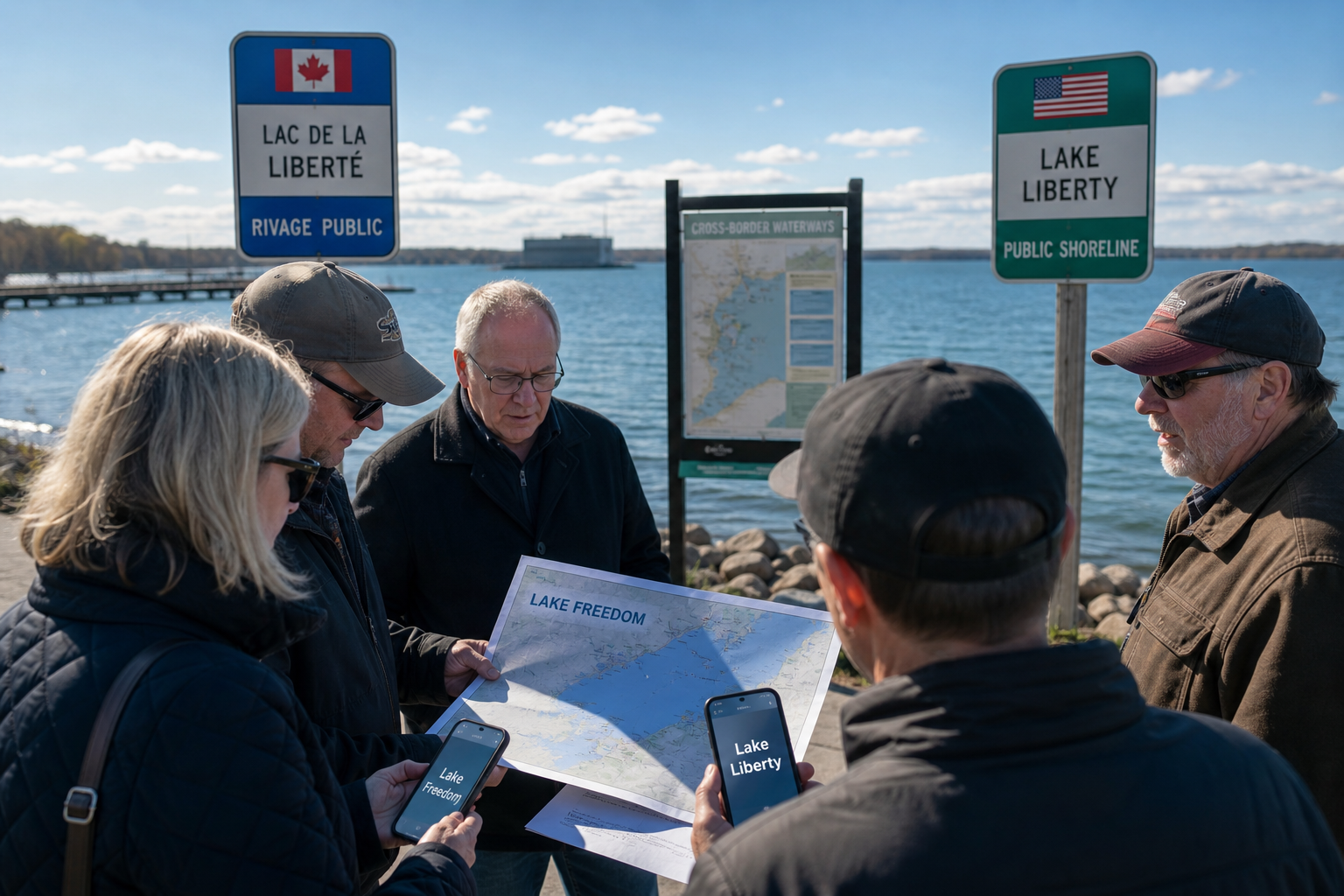
The dispute has expanded beyond government. Google changed its mapping application for users in the United States to display “Lake America,” while Trump reportedly urged Apple to make the same change on Apple Maps. MapQuest said it would not rename the lake. The changes have generated controversy because Lake Ontario is shared by the United States and Canada and has long carried its established name internationally.
Kennedy emphasized the deep personal, cultural and economic ties between western New York and Canada. He cited cross-border families, the Peace Bridge, Canadian health-care workers, manufacturing supply chains and the tradition of singing both countries’ national anthems at Buffalo Sabres games. He argued that the lake’s renaming cannot undermine the relationship between the two countries.
Although Republicans hold a slim majority in the House, Kennedy pointed to previous bipartisan opposition to Trump’s tariffs as evidence that some Republican support may be possible. He predicted that voters would respond to the administration’s policies in an upcoming election and elect a Democratic House majority capable of holding Trump accountable.
Entities: Donald Trump, Tim Kennedy, Joe Morelle, Debbie Dingell, Lake Ontario • Tone: analytical • Sentiment: negative • Intent: inform
01-09-2026
Google Maps has begun displaying “Lake America” instead of “Lake Ontario” for users in the United States, following an executive order by President Donald Trump and the US government’s adoption of the new name in its Geographic Names Information System (GNIS). The change is location-dependent: users in Canada continue to see “Lake Ontario,” while people in other countries, including France, may see both names. Apple Maps and MapQuest have not adopted the renaming and continue to use “Lake Ontario.”
MapQuest has publicly rejected the change, saying it will not rename the lake. The article reports that the company subsequently rose to the top of the US Apple App Store download charts, suggesting that opposition to the renaming has generated increased public interest in the service. The dispute has emerged during already tense relations between the United States and Canada, particularly as Trump escalates trade-related pressure on Canada.
Trump has promoted the new name on social media with AI-generated images that mock Canada and depict him celebrating or enforcing the renaming. Canadian officials and the public have responded dismissively. Ontario Premier Doug Ford erected a sign on the lake’s shoreline stating “Lake Ontario now and always” in English and French.
The article places the controversy in the context of Trump’s earlier effort to rename the Gulf of Mexico as the “Gulf of America.” Google adopted that name for US users while retaining the original name elsewhere. US Interior Secretary Doug Burgum has said Trump contacted Apple about compliance, but Apple’s position may still change. The report, presented by France 24’s Vedika Bahl, highlights how geographic names can vary according to national policy, mapping platforms, and political pressure.
Entities: Lake Ontario / “Lake America” renaming, Google Maps, MapQuest, Apple Maps, Donald Trump • Tone: analytical • Sentiment: negative • Intent: inform
01-09-2026
MapQuest has become the most-downloaded navigation app in the United States after publicly rejecting Donald Trump’s order directing federal agencies to rename Lake Ontario “Lake America.” The app surpassed Google Maps and Apple Maps on Apple’s App Store navigation chart and briefly ranked as the fourth most-downloaded app overall in the US, excluding games. It was also the second-most-downloaded app overall in Canada.
The surge followed MapQuest’s 27 August social-media post stating, “We’re not changing it,” in response to Trump’s executive order, issued amid an escalating trade dispute with Canada. MapQuest general manager Doug Berger said usage was approximately 50 times higher than normal, with hundreds of thousands of users downloading the app. The company also introduced a novelty feature allowing subscribers to generate alternative names for the lake.
Google has adopted “Lake America” for US users while retaining “Lake Ontario” elsewhere. Apple Maps continued to use “Lake Ontario” for all users as of Tuesday, despite pressure from the Trump administration and assurances from Interior Secretary Doug Burgum that the company would soon make the change.
The renaming effort appears unpopular with the broader public. A Reuters/Ipsos poll found that only 14% of Americans supported renaming the lake, while 20% approved of higher tariffs on Canadian goods and 57% opposed them. In Canada, opposition has included a large bilingual “Lake Ontario – Now and Always” sign near Grimsby and criticism from Ontario Premier Doug Ford.
The dispute has also prompted congressional action. Democratic representatives Tim Kennedy, Joe Morelle and Debbie Dingell introduced the Hands Off Our Great Lakes Act, which would block the current federal renaming order and prevent similar future changes. The article presents MapQuest’s commercial success as an example of public support for resisting the administration’s symbolic naming campaign.
Entities: MapQuest, Donald Trump, Lake Ontario, Lake America, Google Maps • Tone: analytical • Sentiment: positive • Intent: inform
01-09-2026
MapQuest has become the most-downloaded navigation app in the United States after publicly rejecting Donald Trump’s order directing federal agencies to rename Lake Ontario “Lake America.” The app surpassed Google Maps and Apple Maps on Apple’s App Store navigation chart and briefly ranked as the fourth most-downloaded app overall in the US, excluding games. It was also the second-most-downloaded app overall in Canada.
The surge followed MapQuest’s 27 August social-media post stating, “We’re not changing it,” in response to Trump’s executive order, issued amid an escalating trade dispute with Canada. MapQuest general manager Doug Berger said usage was approximately 50 times higher than normal, with hundreds of thousands of users downloading the app. The company also introduced a novelty feature allowing subscribers to generate alternative names for the lake.
Google has adopted “Lake America” for US users while retaining “Lake Ontario” elsewhere. Apple Maps continued to use “Lake Ontario” for all users as of Tuesday, despite pressure from the Trump administration and assurances from Interior Secretary Doug Burgum that the company would soon make the change.
The renaming effort appears unpopular with the broader public. A Reuters/Ipsos poll found that only 14% of Americans supported renaming the lake, while 20% approved of higher tariffs on Canadian goods and 57% opposed them. In Canada, opposition has included a large bilingual “Lake Ontario – Now and Always” sign near Grimsby and criticism from Ontario Premier Doug Ford.
The dispute has also prompted congressional action. Democratic representatives Tim Kennedy, Joe Morelle and Debbie Dingell introduced the Hands Off Our Great Lakes Act, which would block the current federal renaming order and prevent similar future changes. The article presents MapQuest’s commercial success as an example of public support for resisting the administration’s symbolic naming campaign.
Entities: MapQuest, Donald Trump, Lake Ontario, Lake America, Google Maps • Tone: analytical • Sentiment: positive • Intent: inform
01-09-2026
The article examines reactions in Ontario, New York, after President Donald Trump reportedly renamed Lake Ontario “Lake America.” The story focuses on Serafino Rosso, a 41-year-old telecommunications manager who lives in a large house in the small lakeside town of Ontario, N.Y. Rosso supports the renaming and says it makes him feel patriotic. He goes further, suggesting that the town itself should be renamed “the Town of America,” creating the phrase “The Town of America on the Lake of America.”
Rosso’s comments present the renaming as a symbolic effort to make the area feel more distinctly American. He says the lake previously felt Canadian to him, despite the town being located in New York. His reaction reflects the political and cultural identity themes suggested by the article’s headline, particularly the relationship between patriotism, place names and support for Trump in a community described as Trump-voting.
The supplied material is only a brief excerpt and does not include the broader reporting promised by the headline. It provides no details about the legal or political process behind the name change, whether the renaming is official, or how other residents and authorities responded. It also does not explain the town’s voting patterns beyond the headline’s characterization. Based on the available text, the article’s central focus is one resident’s enthusiastic response to the proposed or reported renaming of Lake Ontario and his desire to extend that symbolic change to the town of Ontario itself. The tone is vivid and lightly provocative, while the excerpt’s emotional perspective is chiefly expressed through Rosso’s pride and patriotic enthusiasm.
Entities: Lake Ontario, Lake America, Ontario, New York, Serafino Rosso, Donald Trump • Tone: emotional • Sentiment: neutral • Intent: inform
01-09-2026
The article examines reactions in Ontario, New York, after President Donald Trump reportedly renamed Lake Ontario “Lake America.” The story focuses on Serafino Rosso, a 41-year-old telecommunications manager who lives in a large house in the small lakeside town of Ontario, N.Y. Rosso supports the renaming and says it makes him feel patriotic. He goes further, suggesting that the town itself should be renamed “the Town of America,” creating the phrase “The Town of America on the Lake of America.”
Rosso’s comments present the renaming as a symbolic effort to make the area feel more distinctly American. He says the lake previously felt Canadian to him, despite the town being located in New York. His reaction reflects the political and cultural identity themes suggested by the article’s headline, particularly the relationship between patriotism, place names and support for Trump in a community described as Trump-voting.
The supplied material is only a brief excerpt and does not include the broader reporting promised by the headline. It provides no details about the legal or political process behind the name change, whether the renaming is official, or how other residents and authorities responded. It also does not explain the town’s voting patterns beyond the headline’s characterization. Based on the available text, the article’s central focus is one resident’s enthusiastic response to the proposed or reported renaming of Lake Ontario and his desire to extend that symbolic change to the town of Ontario itself. The tone is vivid and lightly provocative, while the excerpt’s emotional perspective is chiefly expressed through Rosso’s pride and patriotic enthusiasm.
Entities: Lake Ontario, Lake America, Ontario, New York, Serafino Rosso, Donald Trump • Tone: emotional • Sentiment: neutral • Intent: inform