18-09-2026
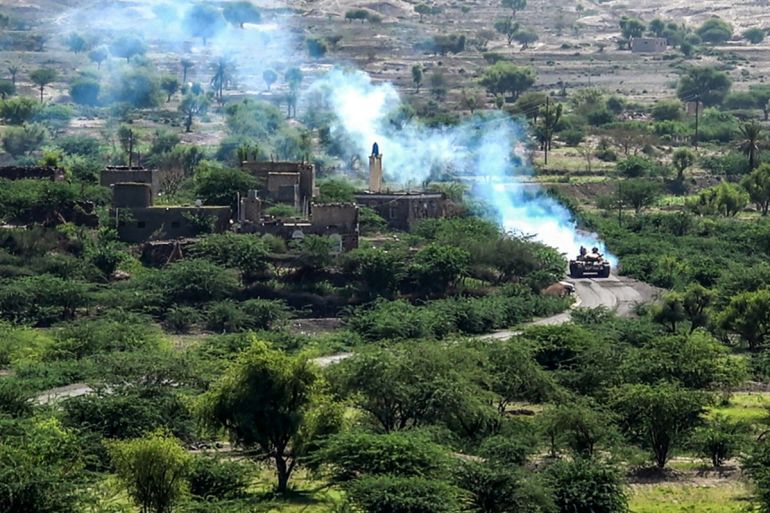
The article examines how a week-long Houthi offensive in Yemen has expanded the group’s military reach, threatened Saudi Arabia’s oil exports and unsettled global energy markets. The Iran-backed Houthis have seized the Red Sea port of Mokha and nearby islands close to the Bab el-Mandeb strait, a maritime chokepoint through which roughly 12 per cent of global trade passes during peacetime. Their forces are also fighting around Marib, an oil-rich province, threatening Taiz and potentially moving toward Yemen’s oil-producing east.
The Houthis say their attacks are intended to pressure Saudi Arabia to end its blockade of territory under their control. Their new positions allow them to more easily target Saudi-linked ships and tankers, although analysts warn the group could broaden its definition of Saudi connections and disrupt wider global commerce. Shipping traffic through Bab el-Mandeb initially fell from about 35 to 25 daily transits but later recovered to 45, suggesting markets and carriers have not yet fully retreated from the route.
The crisis is complicated by the wider confrontation between Iran and the United States. Washington, which previously bombed Houthi positions, has so far avoided direct involvement. Diplomatic efforts involving Oman, Egypt, Turkey, Saudi Arabia and Pakistan have begun, but a durable agreement may depend on progress in the broader Iran-US dispute over sanctions, the Strait of Hormuz and Iran’s nuclear program.
The offensive has also sharply worsened Yemen’s humanitarian crisis. The UN says about 125,000 people have been displaced, while eight civilians have been killed and 32 wounded in the latest fighting. Yemen’s broader civil war has killed more than 150,000 people and left millions dependent on humanitarian assistance. Only 20 per cent of the UN appeal is funded, while restrictions on aid workers and shortages of food, healthcare, water and protection services threaten civilians trapped by the fighting.
Entities: Houthi movement, Saudi Arabia, Iran, United States, Yemen • Tone: analytical • Sentiment: negative • Intent: analyze
18-09-2026
The article examines how the Houthi movement’s recent territorial gains in Yemen have strengthened its control over the Bab al-Mandeb Strait, a critical maritime chokepoint connecting the Red Sea with the Gulf of Aden. After seizing thousands of square kilometres, including strategically important islands and sections of Yemen’s Red Sea coast, the Iran-aligned group has reportedly tightened its grip on shipping routes.
US officials met Houthi representatives in Muscat, Oman. The Houthis reportedly promised not to attack US shipping in the Red Sea, while saying restrictions would target vessels linked to Saudi Arabia. However, given the group’s history of attacking commercial vessels and its hostility toward Washington, analysts question whether those assurances can be trusted. Any additional disruption would compound the effects of restrictions in the Strait of Hormuz, potentially driving up global oil and consumer prices before the US midterm elections.
The article suggests that Washington is reluctant to intervene directly. Saudi Crown Prince Mohammed bin Salman reportedly urged President Donald Trump to launch strikes, but Trump declined. The US instead sent Central Command commander Admiral Brad Cooper to Riyadh for coordination talks, signaling support for Saudi Arabia without a direct military commitment. Israel has reportedly offered to intervene on Riyadh’s behalf, although analysts believe Israeli involvement would be limited because of its existing military commitments and domestic political concerns.
Saudi Arabia’s doubts about US security guarantees may deepen. Riyadh has already expanded defense ties with Pakistan and Turkiye, reflecting a broader effort to diversify its security partnerships. The US is constrained by its ongoing, costly war with Iran, depleted weapons stocks, public opposition to further military action, and the approaching November elections. A Pentagon report estimated that the first four months of the Iran war cost $33bn. The supplied article ends as it begins to consider whether China could be a greater strategic loser from the developments.
Entities: Houthi movement, Bab al-Mandeb Strait, Strait of Hormuz, Yemen, Red Sea shipping • Tone: analytical • Sentiment: negative • Intent: analyze
18-09-2026
Italy plans to deploy warships to protect its commercial vessels passing through the Bab al-Mandeb strait, according to Defence Minister Guido Crosetto. Rome intends to act without waiting for a coordinated European Union decision, arguing that bureaucratic delays could worsen an already dangerous situation. Crosetto warned that the waterway becoming impassable would have severe economic consequences.
Bab al-Mandeb connects the Red Sea with the Gulf of Aden and the Indian Ocean, making it a crucial maritime corridor between Europe and Asia. The article says that roughly 12 to 15 percent of global trade has historically passed through the strait, including oil, gas and container traffic moving to and from the Suez Canal. At its narrowest point, the waterway is about 30km wide and lies between Yemen and the African countries of Djibouti and Eritrea.
The strait’s strategic significance has increased following Iran’s alleged control of the Strait of Hormuz during its war with the United States and Israel. With Hormuz effectively blocked, Gulf oil shipments have been redirected toward alternative routes, including pipelines and Red Sea shipping. Saudi Arabia has reportedly relied more heavily on these alternatives, making Bab al-Mandeb one of the last major routes for Gulf oil to reach international markets.
Control of the waterway has long been contested amid Yemen’s conflict, which began in 2015. The article reports that the Iran-backed Houthi movement recently captured Yemen’s entire western Red Sea coast and several nearby islands, giving the group broad access to Bab al-Mandeb. This development is described as a major setback for international shipping because of the Houthis’ history of attacking vessels linked to the United States and its regional allies. The United States and European Union have conducted military operations to protect merchant ships, but those efforts have not fully secured the route as fighting has intensified.
Entities: Italy, Guido Crosetto, Bab al-Mandeb strait, Red Sea, Gulf of Aden • Tone: urgent • Sentiment: negative • Intent: inform
18-09-2026
The article examines the growing contradiction in Iran’s regional strategy: Tehran seeks stable diplomatic relations with Arab Gulf states while continuing to benefit from an aligned regional network capable of threatening those same states. The 2023 Beijing-brokered agreement between Saudi Arabia and Iran created limited political space for managed competition, but that framework has come under increasing strain following direct Iranian attacks on Saudi Arabia, Riyadh’s expulsion of Iranian diplomatic personnel, renewed Houthi attacks, and the postponement of talks hosted by Oman.
The latest escalation in Yemen is presented as a significant development because the conflict has again crossed into Saudi territory. On September 8, the Houthis reportedly launched drones and ballistic missiles at Saudi cities and strategic sites, while fighting intensified around Bab al-Mandeb. The seizure of Mocha and nearby strategic islands, along with the displacement of tens of thousands of people, demonstrates that the conflict involves not only Yemen’s internal territorial struggle but also control of vital maritime geography.
The article links developments around Bab al-Mandeb to pressure on the Strait of Hormuz. Since Israel and the United States launched a war against Iran in February, Tehran has restricted shipping through Hormuz, increasing the importance of Saudi Arabia’s western export routes through the Red Sea. Pressure in both maritime theaters could therefore create interconnected sources of regional leverage.
The postponement of Oman-hosted talks on maritime security illustrates how military escalation can undermine diplomacy. Saudi Arabia’s ability to negotiate with Tehran while facing attacks from an Iran-aligned actor has become politically difficult. The article concludes that continued escalation may erode Gulf confidence in rapprochement, encourage stronger external security partnerships, and ultimately undermine Iran’s goal of preventing a consolidated regional security architecture directed against it. The supplied text ends mid-sentence before the article’s conclusion.
Entities: Iran and Tehran, Saudi Arabia and Riyadh, Houthi movement, Yemeni government forces, 2023 Beijing-brokered Saudi-Iran agreement • Tone: analytical • Sentiment: negative • Intent: analyze
18-09-2026
The live CBS News report describes escalating military, diplomatic and humanitarian tensions surrounding the Iran war. Two tankers were reportedly attacked in or near the Strait of Hormuz, a crucial global energy corridor. The United Kingdom Maritime Trade Operations center said one tanker was hit by an unidentified projectile, causing a fire that was later extinguished; the crew was safe, but possible environmental damage remained unclear. Iran’s Islamic Revolutionary Guard Corps claimed it had struck a Togo-flagged vessel attempting an “illegal crossing,” although it was uncertain whether the claim referred to the same incident. A second tanker was reportedly hit while leaving the strait on September 16.
President Donald Trump said he faces a major decision about whether to launch a broader assault intended to “annihilate” Iran’s ruling regime. His comments came before an expected meeting with Persian Gulf leaders, whose countries have hosted U.S. forces and faced Iranian retaliation during the conflict. The report also says a U.N.-commissioned panel of human-rights experts found “reasonable grounds” to believe that two early U.S. strikes on Iran may constitute war crimes.
Inside Iran, hundreds of thousands of people participated in a government-organized mobilization portraying national unity and resistance. Iranian officials said more than 600,000 people had registered for limited military training, with more than 1 million potentially taking part. Demonstrators chanted anti-American and anti-Israeli slogans and some trampled the flags of both countries.
Pakistan’s military said it would go “to any extent” to defend Saudi Arabia, including its holy sites, under recently strengthened defense arrangements. Separately, Russia and China vetoed a U.S.-backed resolution to extend U.N. monitoring of sanctions on Iran. The administration also approved visas for senior Iranian officials to attend the U.N. General Assembly, although the supplied article ends before providing further details.
Entities: Donald Trump, Iran, United States, Strait of Hormuz, United Kingdom Maritime Trade Operations (UKMTO) • Tone: urgent • Sentiment: negative • Intent: inform
18-09-2026
The article examines the consequences of a major Houthi offensive in Yemen that has extended the group's control along the Red Sea coast and brought it closer to Saudi Arabia's oil infrastructure. Over the past week, the Iran-backed Houthis captured the port city of Mokha and islands near the Bab el-Mandeb Strait, a maritime chokepoint through which roughly 12% of global trade passes during peacetime. Their advance has also brought them within about 20 miles of Djibouti, which hosts U.S. and other military bases, and has intensified fighting around Marib and Taiz.
The offensive has threatened Saudi oil facilities, pipelines and tankers, while a separate attack on Saudi Arabia's east-west pipeline, blamed on Iran-backed Iraqi militias, has further unsettled energy markets. Although shipping traffic through the Bab el-Mandeb initially declined, it has since recovered. Analysts warn, however, that the Houthis could broaden their definition of Saudi-linked shipping and increase pressure on the global economy. The group says its goal is to force Saudi Arabia to lift its blockade of Houthi-controlled territory.
Diplomatic efforts involving Oman, Egypt, Turkey, Iran, the United States and Saudi Arabia have begun, but a settlement appears tied to the broader confrontation between Washington and Tehran over sanctions, the Strait of Hormuz and Iran's nuclear program. The United States has so far avoided direct involvement, despite its alliance with Saudi Arabia. Meanwhile, the humanitarian crisis is worsening: about 125,000 people have fled their homes, civilians have been killed and wounded, aid workers have been detained, and only 20% of the U.N. humanitarian appeal for Yemen has been funded. Doctors and displaced civilians describe severe shortages and devastating conditions.
Entities: Houthi movement, Saudi Arabia, Yemen civil war, Iran, United States • Tone: urgent • Sentiment: negative • Intent: inform
18-09-2026
Saudi Arabia is facing a serious strategic and economic problem after the United States declined to intervene militarily against the Iran-aligned Houthi militia in Yemen. The Houthis have seized Yemen’s entire Red Sea coast and tightened a blockade affecting Saudi Arabia’s backup maritime trade route to Asia. Riyadh is reportedly working urgently to assemble a coalition capable of protecting commercial shipping in the Red Sea while also defending the kingdom from further Houthi attacks.
The crisis is compounded by Iran’s reported blockade of the Strait of Hormuz, Saudi Arabia’s primary route for exporting oil and petrochemicals from the Gulf. With both Hormuz and the Red Sea route under threat, the kingdom’s ability to move energy exports has been severely constrained. US President Donald Trump reportedly dismissed the Houthi seizure of the Yemeni coast on September 12, describing it as an issue that “only affects one country.”
That position has alarmed Saudi leaders, according to Michael Ratney, a former US ambassador to Saudi Arabia. Ratney characterized Riyadh as deeply disturbed and frustrated by Washington’s refusal to provide military assistance. The US stance also contrasted with the immediate economic consequences facing Saudi Arabia. On the same day Trump expressed confidence that the situation would be resolved, Saudi Arabia suspended oil exports through the Red Sea after drone strikes by Iran-allied Iraqi militias damaged the east-west pipeline.
The pipeline had allowed Saudi Arabia to bypass the Strait of Hormuz since the war with Iran began on February 28. Its damage therefore removed an important alternative export route just as the kingdom was confronting simultaneous maritime threats in the Red Sea and the Gulf. The article presents Saudi Arabia’s predicament as both a security crisis and a major challenge to its energy-export strategy.
Entities: Saudi Arabia, United States, Donald Trump, Houthi militia, Iran • Tone: urgent • Sentiment: negative • Intent: inform
18-09-2026
Saudi Arabia is facing a strategic and politically embarrassing crisis after the United States declined to intervene militarily against the Iran-aligned Houthi militia in Yemen. The Houthis have seized Yemen’s entire Red Sea coast and are tightening a blockade that threatens Saudi Arabia’s main alternative maritime trade route to Asia. Riyadh is now working urgently to assemble an international coalition capable of protecting commercial shipping in the Red Sea and defending Saudi territory from Houthi attacks.
The US position, expressed by President Donald Trump on September 12, was that the Houthi takeover was a problem affecting only one country. Analysts say this response has deeply unsettled Saudi leaders, who have traditionally relied on Washington for security support. Former US ambassador to Saudi Arabia Michael Ratney described the reaction in Riyadh as deeply frustrating.
Saudi Arabia’s predicament has been worsened by simultaneous threats to both of its major export routes. Iran has blockaded the Strait of Hormuz, the kingdom’s principal channel for exporting oil and petrochemicals from the Gulf. Meanwhile, Saudi oil shipments through the Red Sea were suspended after drone strikes by Iran-allied Iraqi militias severely damaged the east-west pipeline, which had allowed the kingdom to bypass Hormuz since the Iran war began on February 28.
The combination of the Houthi blockade, the closure of Hormuz and damage to the pipeline leaves Saudi Arabia with limited options for moving energy exports and maintaining trade. The article presents Riyadh’s coalition-building effort as an urgent attempt to compensate for Washington’s unwillingness to provide direct military protection, while highlighting the broader deterioration of regional security and the kingdom’s vulnerability to attacks by Iran-aligned forces.
Entities: Saudi Arabia, United States, Donald Trump, Houthi militia, Yemen • Tone: analytical • Sentiment: negative • Intent: analyze
18-09-2026
The article examines Saudi Arabia’s efforts to obtain Western and European support as Houthi forces intensify their offensive in Yemen and threaten shipping through the Bab Al Mandeb strait. It argues that Riyadh is unlikely to receive substantial direct military intervention because Western governments face both limited military capacity and weak political appetite for another major regional operation.
The United States is heavily engaged in an operation to reopen the Strait of Hormuz and is therefore unlikely to divert significant forces to the Red Sea. Britain has HMS Dragon, a Type 45 air-defence destroyer, and the support ship Lyme Bay in the region, but officials reportedly believe that additional deployments are not politically expedient and that the military has limited resources available. Analysts also say European governments have little interest in a ground intervention in Yemen or in becoming directly involved in what they may portray as someone else’s war.
Saudi Arabia is expected to focus on improving air defences, protecting its territory and shipping routes, and supporting Yemen’s internationally recognised government. Although Saudi Arabia has enough aircraft to conduct around 60 sorties a day, analysts say it lacks the satellite and electronic intelligence needed to identify targets effectively. Western personnel are discreetly discussing possible assistance with Riyadh, while Britain has offered only a general commitment to regional stability.
The article presents a possible role for Europe in limited air strikes against Houthi military sites, potentially framed as protecting European economies from rising energy costs and prolonged disruption. However, experts say the political conditions for a significantly expanded European military role do not currently exist. The situation is linked to wider regional tensions involving Iran, the Strait of Hormuz, energy security, and Red Sea shipping.
Entities: Saudi Arabia, Houthi movement, Yemen, Strait of Hormuz, Bab Al Mandeb strait • Tone: analytical • Sentiment: negative • Intent: inform
18-09-2026
The article examines how Yemen’s Houthi rebels have rapidly expanded their military capabilities and become more emboldened amid a widening regional conflict. An intensified Houthi offensive against Saudi Arabia, combined with the group’s seizure of Yemen’s western coast, has reportedly displaced at least 125,000 civilians and given the Houthis unprecedented access to the Bab Al Mandeb strait, a crucial maritime chokepoint for global shipping.
The developments come as the Strait of Hormuz remains effectively closed because of the war between the United States and Iran. Violence around both waterways has disrupted the movement of oil, commercial goods and humanitarian aid, increasing threats to global shipping and energy supplies. The article also reports that the Houthis attacked Saudi targets, including Makkah, while an East-West pipeline was struck from Iraq. At the same time, pro-government forces in Yemen have suffered significant losses.
In the Beyond the Headlines podcast episode, host Nada AlTaher investigates how the Iran-backed group was able to make such sweeping gains within days. The discussion focuses on the factors behind the Houthis’ growing ability to conduct offensives, the consequences of their control over territory near the Bab Al Mandeb, and the likelihood that the confrontation will escalate further.
AlTaher speaks with Baraa Shiban, a political analyst on Yemen at the Royal United Services Institute, and Cinzia Bianco, a Gulf expert and visiting fellow at the European Council on Foreign Relations. Their analysis places the Houthi advance within the broader US-Iran war and considers whether the current escalation will eventually subside or develop into a larger regional crisis.
Entities: Houthis, Yemen, Saudi Arabia, Bab Al Mandeb strait, Strait of Hormuz • Tone: urgent • Sentiment: negative • Intent: analyze
18-09-2026
Italy is urging a stronger international naval presence in the Red Sea to protect merchant shipping from growing threats linked to the Iran-backed Houthi movement in Yemen. Defence Minister Guido Crosetto said the Bab el-Mandeb Strait, a crucial maritime passage connecting the Red Sea with the Gulf of Aden, is becoming increasingly vulnerable as the Middle East conflict widens.
Italy is participating in the European Union’s Aspides naval mission, which was launched in 2024 to defend commercial vessels from Houthi attacks. However, Rome announced that it was preparing a separate naval mission because it believed the European Union was responding too slowly to the latest crisis. Crosetto said that only Italy and Greece were genuinely supporting security efforts in the region and called for additional ships to be deployed, although he did not specify how many would be required.
The Bab el-Mandeb is only 29km wide at its narrowest point and is one of the world’s most important shipping routes. Goods and commodities travelling between Asia and Europe pass through the strait and the Suez Canal. Data from Kpler showed that petroleum shipments through the Bab el-Mandeb represented about 7 per cent of global oil production in June. The route is particularly important to Italy, with shipowners’ association Assarmatori estimating that roughly 40 per cent of the country’s international trade passes through the Suez Canal.
Crosetto criticised what he called “European bureaucracy,” warning that delays could worsen the security situation. Italy has not yet disclosed the specific measures or naval assets it may deploy. Assarmatori President Stefano Messina welcomed Rome’s decision, saying the Italian Navy had the expertise and readiness to operate while the EU considers its next steps.
Entities: Guido Crosetto, Giorgia Meloni, Italy, Greece, European Union • Tone: urgent • Sentiment: negative • Intent: inform
18-09-2026
Oil prices are set to remain above $100 a barrel for a second consecutive week as renewed conflict involving Saudi Arabia and Yemen’s Houthi rebels keeps geopolitical risk elevated across the Middle East. Brent crude was trading at $103.41 a barrel and West Texas Intermediate at $101.51, after both benchmarks rose more than 2% earlier on Friday. Brent was on course for a weekly decline of 1.15%, while WTI was set to gain 1.15%.\n\nMarkets have largely absorbed the higher prices, with investors having already incorporated crude at around $100 a barrel into financial models. Hou Wey Fook, chief investment officer at DBS Bank, said oil would likely need to reach $160 to materially affect financial markets, a scenario he considered unlikely.\n\nPrices had approached $110 earlier in the week after Saudi Arabia shut its East-West pipeline following Houthi drone attacks. The closure heightened concerns about a global supply shortage by removing an important crude-export route. Although Saudi supply-disruption concerns have since eased, the broader conflict continues to support a geopolitical premium. A Houthi drone was intercepted over Taif on Thursday, but falling debris killed one person and injured two others—the first reported death in Saudi Arabia since the Iran-backed group resumed attacks this month.\n\nThe Houthis have reportedly assured US officials that their control of the Red Sea coast near the Bab Al Mandeb Strait will not lead to attacks on American ships. Separately, Iran said it would not reopen the Strait of Hormuz unless US President Donald Trump and Israeli Prime Minister Benjamin Netanyahu were removed from power.\n\nAnalyst Nagham Hassan said oil’s six-month outlook would depend heavily on the conflict’s trajectory. Further escalation near either strategic waterway, combined with Ukrainian attacks on Russian refineries and low reserves, could create a genuine supply shortage and keep prices well above $100. De-escalation remains the clearest route to lower prices. Gold and silver also rose as investors sought safe-haven assets, with gold reaching a one-week high.
Entities: Oil prices above $100, Brent crude, West Texas Intermediate (WTI), Saudi Arabia, Yemen’s Houthi rebels • Tone: analytical • Sentiment: neutral • Intent: analyze
18-09-2026
Oil prices moved in opposite directions on Friday as markets balanced renewed violence between Saudi Arabia and Yemen’s Iran-backed Houthis against indications that Saudi Arabia may be able to maintain some crude exports to Asia. West Texas Intermediate futures rose $1.14 to $103.05 per barrel, while Brent crude fell 18 cents to $104.64. WTI was up 3% for the week, whereas Brent was little changed.
The latest Saudi-Houthi attacks have increased concerns that the broader Middle East conflict could disrupt energy supplies, which have already been strained following U.S. and Israeli attacks on Iran in February. Houthi attacks also contributed to the closure of a key Saudi pipeline, creating additional uncertainty over export volumes.
However, reports that Saudi Arabia has developed alternative routes through Oman to deliver some crude shipments to Asian buyers have reduced fears of a major supply shock. According to Simon-Peter Massabni, head of business development at XS.com, the recent decline in oil prices represents a partial retreat of the geopolitical risk premium rather than a fundamental change in supply and demand. Improved export logistics have reduced the amount of oil that traders believe is immediately at risk.
Despite the easing in prices, the regional supply network remains vulnerable. Traders are closely monitoring developments around the Strait of Hormuz, export routes and oil terminals, as well as the restoration of Saudi Arabia’s East-West pipeline. Massabni expects oil prices to remain more responsive to geopolitical developments than conventional market fundamentals in the near term. Continued Saudi shipments to Asia and progress on the pipeline could pressure prices lower, while renewed disruptions to Middle Eastern exports could quickly push prices higher by restoring the geopolitical risk premium.
Entities: West Texas Intermediate (WTI), Brent crude, Saudi Arabia, Yemen’s Iran-backed Houthis, Oman • Tone: analytical • Sentiment: neutral • Intent: analyze