18-09-2026
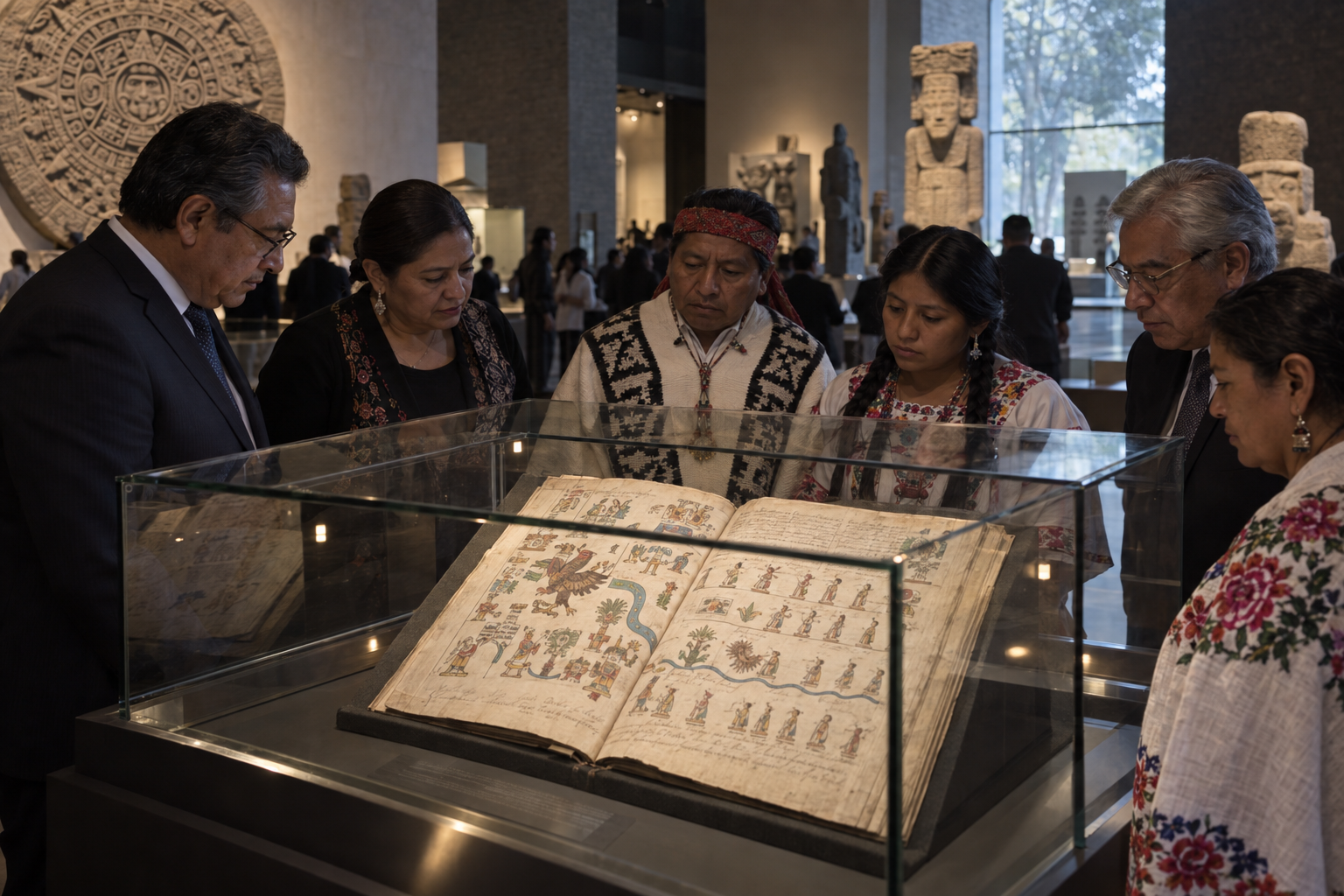
The Azcatitlan Codex, a rare 16th-century manuscript documenting Aztec history through colorful pictograms and European writing, has returned to Mexico for the first time since 1840. The manuscript is being displayed at Mexico City’s National Museum of Anthropology under a temporary loan from France’s Bibliothèque Nationale, which has held it since 1898. The loan coincides with the 200th anniversary of diplomatic relations between Mexico and France; Mexico will send the Codex Boturini to France in exchange.
The codex recounts the Mexica migration from the mythical homeland of Aztlan to the founding of Tenochtitlan, the capital of the Aztec Empire and modern-day Mexico City. It also portrays the succession of Aztec rulers, the arrival of Spanish forces led by Hernán Cortés, and the subsequent evangelization of the region. Its vivid imagery includes warriors, feathered headdresses, pyramid temples, and ritual scenes.
Mexican officials and representatives of Indigenous communities described the exhibition as an important reconnection with the country’s collective memory and identity. Foreign Minister Roberto Velasco called the pictograms “the written voice of our ancestors,” while members of the Hnahnu and Mexica peoples celebrated the manuscript’s return. Some Indigenous representatives also characterized the continued removal of such documents to foreign institutions as a historical injustice and called the loan a first step toward restitution.
The codex was created in Mexico by an Indigenous craftsman from the Otomi people. It will remain on display through December, giving the public temporary access to one of the most important visual records of Aztec history.
Entities: Azcatitlan Codex, Mexico City, Bibliothèque Nationale of France, National Museum of Anthropology, Roberto Velasco • Tone: analytical • Sentiment: neutral • Intent: inform
18-09-2026
France 24 reports that a highly valued 16th-century Mexican manuscript describing Aztec history through pictograms has gone on public display in Mexico City. The manuscript returned to Mexico nearly two centuries after it was taken to France. It is currently being shown under a loan arrangement from France’s National Library, which has held possession of the document for more than a century.
The loan was arranged to mark 200 years of relations between Mexico and France, giving the exhibition both cultural and diplomatic significance. The manuscript is presented as an important record of Mexican and Aztec history, as well as an example of the pictographic tradition used to document historical events and cultural knowledge.
Although the temporary return allows Mexican audiences to see the codex in its country of origin, it has not resolved the question of ownership. Mexico is seeking the manuscript’s permanent return rather than a short-term loan. The report therefore highlights a broader cultural-heritage issue: the continued presence of historically important objects from Mexico in European institutions and the demands for their repatriation.
The brief video report does not identify the codex by name or provide details about the circumstances under which it was taken to France. It focuses instead on the manuscript’s exhibition in Mexico City, its long history in French custody, the commemorative purpose of the loan, and Mexico’s ongoing request for permanent restitution.
Entities: Aztec codex, 16th-century Mexican manuscript, Aztec history, Pictograms, Mexico • Tone: neutral • Sentiment: neutral • Intent: inform
18-09-2026
The 16th-century Codex Azcatitlan, a rare pictorial manuscript documenting the history of the Aztec civilization, has gone on display at Mexico City’s National Museum of Anthropology after nearly two centuries in France. Two folios from the manuscript are being shown under glass as part of a temporary loan from France’s National Library, which holds the codex. The exhibition commemorates 200 years of diplomatic relations between Mexico and France.
The codex traces the Aztec migration from Aztlan, the mythical birthplace of the civilization, to Tenochtitlan, the city that preceded modern Mexico City. Its colorful illustrations depict warriors, ceremonies, temples and other aspects of Indigenous life. It also chronicles the rise of the Aztec Empire and its collapse following the Spanish conquest and the spread of Christianity.
Mexico has been seeking the permanent return of the Codex Azcatitlan for years, along with the Codex Borbonicus, another important manuscript held in France. President Claudia Sheinbaum raised the issue with French President Emmanuel Macron during his visit to Mexico. Mexican officials view the manuscripts as essential parts of the country’s collective memory and cultural identity. Since 2018, more than 16,200 cultural objects have reportedly been repatriated to Mexico from other countries.
Indigenous activists welcomed the exhibition but said it should lead to restitution. The codex was taken to France in the 19th century by French researcher Joseph Marius Alexis Aubin and donated to the National Library in 1898 by the widow of collector Eugene Goupil. Disputes over colonial-era artifacts have previously strained relations between the two countries, notably after Mexico retained the Codex Tonalamatl, which a Mexican lawyer took from France in 1982. French institutions continue to claim ownership of the remaining codices.
Entities: Codex Azcatitlan, Aztec Empire and Aztec civilization, Mexico City, National Museum of Anthropology, France’s National Library • Tone: analytical • Sentiment: neutral • Intent: inform