18-09-2026
French President Emmanuel Macron has warned that Russian hybrid attacks against Europe and France have intensified in recent weeks. Speaking after consultations with French party leaders at the Élysée Palace, Macron said Russia was attempting to intimidate European countries and weaken their support for Ukraine. He announced a plan to protect critical infrastructure, defence-industry facilities and sensitive technology sites from possible drone and cyberattacks, adding that recent attacks against France would not go unanswered.
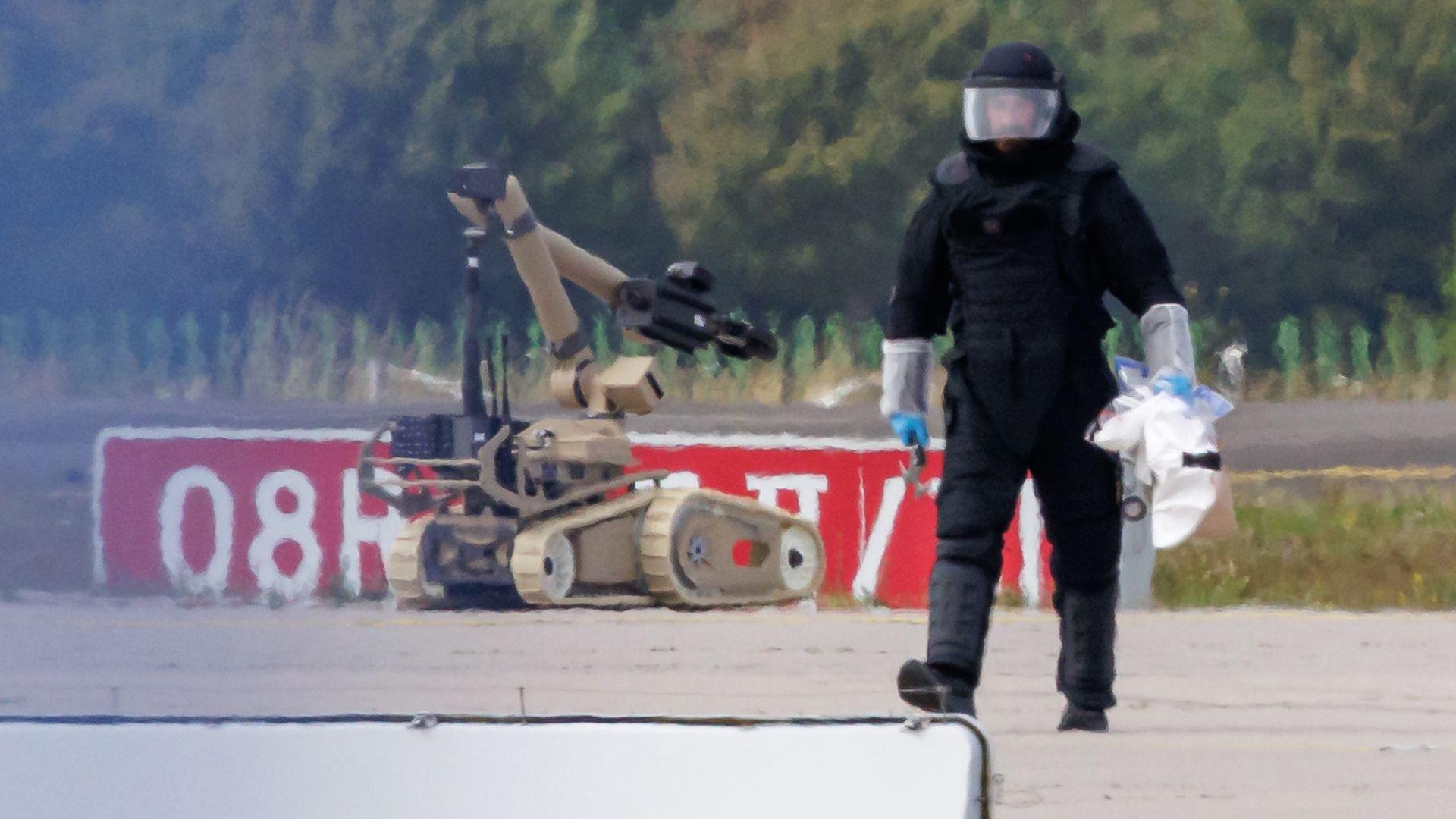
Macron referred to a drone incident at Leipzig airport in Germany, which was blamed on Russia, and to warnings from Polish Prime Minister Donald Tusk that Russia could conduct drone and missile strikes against Poland and other NATO countries on the alliance’s eastern flank. Tusk said Moscow might describe such attacks as accidental in order to divide NATO. A Russian drone also struck a passenger train near Yahodyn on the Ukraine-Poland border shortly after Boris Johnson and European security officials had travelled along the route. Ukraine said passengers had been evacuated moments before the strike.
The article describes hybrid warfare as including cyberattacks, sabotage and disinformation, often carried out through proxies. It also notes suspicious fires at defence facilities in several European countries, some of which have blamed Russia. Moscow denies plans to attack Europe, but Foreign Minister Sergey Lavrov has warned that European troop deployments to Ukraine could be treated as a declaration of war. Russia has separately threatened British military facilities in Ukraine that support strikes against Russian territory.
Macron also addressed energy security, announcing a forthcoming G7 meeting on energy cooperation, gas stocks and the possible release of strategic reserves. Domestically, he urged election candidates not to exploit concerns over fuel-price inflation, which he attributed to international conditions. Marine Le Pen’s National Rally is leading polls for the next presidential election.
Entities: Emmanuel Macron, France, Russia, Europe, Ukraine • Tone: urgent • Sentiment: negative • Intent: inform
18-09-2026
French President Emmanuel Macron has ordered the government to develop a plan to protect France’s critical infrastructure from an intensifying Russian hybrid threat. The plan is expected to focus particularly on sensitive defense-industry and technology sites, which could face drone attacks, cyberattacks, sabotage, or other forms of covert interference.
Macron said France would continue supporting Ukraine after Russia’s full-scale invasion in February 2022. He warned that Russian “shadow attacks” intended to intimidate European countries and weaken support for Ukraine would not go unanswered. According to Macron, such actions would have the opposite effect because France and its partners recognize that Ukraine’s security is closely linked to their own.
The French announcement comes amid growing concern across Europe about alleged Russian hybrid operations. Poland, Germany, and Denmark have accused Moscow of involvement in drone incursions, sabotage, arson, and surveillance of defense facilities. Russia has also been accused of planning an attack on an airport using a drone carrying explosives. German authorities have attributed an attempted drone attack on Leipzig to Russia.
European Commission President Ursula von der Leyen has called for the European Union to establish a response mechanism modeled on NATO. She argued that EU members need a shared understanding of how to respond to incidents that fall below the threshold of armed aggression but still pose a clear threat to national security. The developments reflect a broader European effort to strengthen defenses against covert attacks, cyberoperations, disinformation, and other activities designed to disrupt infrastructure and undermine political support for Ukraine.
Entities: Emmanuel Macron, France, Russia, Ukraine, European Union • Tone: urgent • Sentiment: negative • Intent: inform
18-09-2026
French President Emmanuel Macron said on September 18, 2026, that France would strengthen protections for critical infrastructure and sensitive defence and technology sites in response to what he described as an intensifying Russian hybrid threat. Speaking after a meeting in Paris with political party leaders and potential presidential candidates about international developments, Macron said Russia’s shadow operations were increasingly affecting France and other European countries.
Macron ordered the government to prepare a national plan to protect critical infrastructure from possible drone and cyber-attacks. He also said France’s interior minister had met regional prefects to increase vigilance and improve preparedness against Russian hybrid operations. The remarks suggest that French authorities are concerned about attacks designed to disrupt essential services, defence production, or public confidence without constituting conventional military action.
Despite the alleged threats, Macron said France would continue supporting Ukraine following Russia’s full-scale invasion in February 2022. He warned that Russian shadow attacks would not go unanswered, while arguing that intimidation would have the opposite of its intended effect and strengthen European resolve to assist Ukraine. Macron framed the conflict as directly connected to France’s own national security, saying that Ukraine’s security is also at stake for France.
The French president is scheduled to attend the United Nations General Assembly the following week, where international affairs, including the war in Ukraine, are expected to be discussed. The article does not provide specific details about the planned protective measures or identify particular incidents that prompted the heightened alert.
Entities: Emmanuel Macron, France, Russia, Ukraine, Paris • Tone: urgent • Sentiment: negative • Intent: inform
18-09-2026
France 24 reports that French President Emmanuel Macron has ordered the development of measures to protect France’s critical infrastructure and defence-industry sites from what he described as increasing Russian hybrid attacks. The announcement was made on 18 September 2026 during a press conference in Paris, following Macron’s meeting with leaders of France’s political parties.
The meeting focused on recent international developments, including the wars in the Middle East and Ukraine. Against this wider backdrop of geopolitical instability, Macron’s remarks indicate that the French government is treating hybrid threats attributed to Russia as a growing national-security concern. Such threats can include activities below the threshold of conventional warfare, although the article does not specify which incidents or tactics prompted the decision.
The report does not provide details about the measures Macron ordered, the sites considered most vulnerable, or the timetable for implementing the plan. Instead, it directs viewers to watch the full recording of Macron’s press conference. The available text therefore serves primarily as a brief account of the announcement rather than a detailed explanation of France’s security strategy.
The page is presented as a replay video issued and modified on 18 September 2026. Its central focus is Macron’s response to perceived Russian hybrid activity and the broader international situation discussed with party leaders. The article is factual and restrained in tone, presenting the government’s announcement without adding independent analysis or confirming specific attacks. It places the statement within the context of ongoing wars and diplomatic consultations, while leaving further information to the accompanying video.
Entities: Emmanuel Macron, France, Paris, France 24, Russian hybrid attacks • Tone: neutral • Sentiment: neutral • Intent: inform
18-09-2026
Polish Prime Minister Donald Tusk has warned that Russia could launch drone or missile strikes against countries supporting Ukraine, while claiming that any incidents were accidental. Speaking to Poland’s parliament, Tusk said such attacks would aim to paralyze NATO or weaken its willingness to respond collectively, thereby suggesting that the alliance’s Article 5 mutual-defense commitment exists only in theory. Article 5 treats an armed attack against one NATO member as an attack against all.
Tusk said his warning was based on intelligence from NATO, Ukraine and U.S. agencies, although he did not identify the specific sources. He emphasized that there was no indication Russia was preparing an invasion, but argued that Poland, as one of Ukraine’s strongest supporters and a country close to both Russia and Ukraine, was approaching a serious test of allied solidarity. He also criticized political movements in Europe that he said promote Ukraine’s capitulation while presenting themselves as advocates of peace.
His comments followed a week of incidents along NATO’s eastern flank. A Russian drone struck a passenger train in Ukraine near the Polish border; Poland recovered a Russian drone carrying a warhead off its coast; and NATO aircraft shot down a drone in Lithuanian airspace. European governments increasingly describe such events, along with sabotage, cyberattacks and disinformation, as part of a Russian hybrid-warfare campaign. Russia has denied the accusations, calling them contrived and far-fetched.
Tusk’s warning coincided with President Donald Trump’s announcement of progress toward establishing a permanent U.S. Army base in Poland. The planned base would strengthen the U.S.-Polish alliance and potentially reinforce NATO’s eastern flank. Tusk concluded by calling for unity and a firm collective response to any attacks.
Entities: Donald Tusk, Poland, Russia, NATO, Ukraine • Tone: urgent • Sentiment: negative • Intent: inform
18-09-2026
Polish Prime Minister Donald Tusk warned NATO allies that Russia may be preparing hybrid attacks against European countries supporting Ukraine, particularly Poland and other nations on NATO’s eastern flank. He said Moscow could use drones or other projectiles in attacks disguised as accidents, creating uncertainty and discouraging the alliance from invoking Article 5, which treats an attack on one NATO member as an attack on all.
Tusk said Russia is developing faster, jet-powered drones that could evade air defenses and that Moscow is increasingly targeting supply routes and infrastructure connecting Ukraine with its European allies. He predicted an intense barrage against six Ukrainian cities and warned that attacks on border hubs could undermine Poland’s ability to help Ukraine survive the winter. Tusk also argued that Russia is unwilling to pursue meaningful peace talks unless Ukraine completely capitulates.
Despite the security threat, Tusk announced plans to travel to Kyiv to meet President Volodymyr Zelenskyy and discuss countering Russia’s drone technology. He also planned to discuss additional sanctions with Slovakian officials. The report links his warnings to recent Russian missile and drone strikes on Kyiv and western Ukraine, including incidents near Poland and Moldova that prompted Poland to scramble aircraft and shoot down drones entering its airspace.
The article also describes growing US-Polish defense cooperation. President Donald Trump said progress was being made toward establishing a permanent US Army base in Poland, while Poland plans to spend 4.8% of its GDP on defense in 2026. NATO Secretary-General Mark Rutte said Russian strikes near NATO territory demonstrated Moscow’s desperation and intent to sow fear, but insisted the attacks would strengthen, rather than weaken, allied support for Ukraine. The article additionally reports that Congress passed a new sanctions bill targeting Russia and Iran, which Trump is expected to sign.
Entities: Donald Tusk, Vladimir Putin, NATO, Poland, Ukraine • Tone: urgent • Sentiment: negative • Intent: warn
18-09-2026
French President Emmanuel Macron said Russia has intensified its hybrid attacks against France and other European countries in recent weeks, signaling that Paris is preparing a response. Macron made the remarks on September 18 after meeting political party leaders and candidates for France’s 2027 presidential election at the Élysée Palace in Paris. The meeting focused on international developments and their consequences for France.
Macron described the threat as particularly serious, referring specifically to Russian hybrid activity directed at Europeans and France. The article does not identify the precise attacks or operations involved, but the term generally encompasses activities such as disinformation, cyberattacks, sabotage, election interference, and other coercive actions below the threshold of conventional warfare. Macron’s statement indicates that French authorities view the recent activity as an escalating national and European security concern.
Interior Minister Laurent Nunez separately said that all relevant government services would be mobilized. He also emphasized the involvement of local stakeholders, suggesting that France’s response will require coordination among national agencies, regional authorities, and other public bodies. His comments focused on preparedness and the need to ensure that the country is ready to confront the new threats.
The report provides no details about the promised response, the identity of specific targets, or whether France has attributed particular incidents directly to Russian agencies. It also does not mention any immediate retaliatory measures. Instead, the statements from Macron and Nunez point to a government preparing its institutions to respond to what it characterizes as a worsening Russian hybrid threat. The article, published by Reuters, presents the developments as part of broader geopolitical tensions affecting France and Europe.
Entities: Emmanuel Macron, Laurent Nunez, France, Russia, Paris • Tone: urgent • Sentiment: negative • Intent: inform
18-09-2026
The provided content is only a brief headline-and-opening excerpt, not the complete Washington Post article, so a full 200–400-word summary of the article’s reporting is not possible without adding unsupported information. The excerpt describes a series of events that appear to heighten concerns about the Russia-Ukraine conflict spreading or becoming more dangerous. The headline characterizes the developments as a “wave” of Russian strikes and alleged plots, suggesting that the incidents are connected by a broader pattern rather than being isolated episodes.
The opening identifies two reported or suspected incidents. First, an airstrike targeted a train line and allegedly endangered the lives of former European leaders and Central Intelligence Agency officers. The excerpt does not identify the leaders, the CIA personnel, the location of the train line, or whether they were traveling together. Second, armed drones operating in Moldova were suspected of stalking or tracking an aircraft carrying Ukrainian President Volodymyr Zelensky. The wording indicates suspicion rather than a confirmed attribution or motive.
Taken together, the incidents are presented as evidence of escalating risks involving Russia, Ukraine, Moldova, European officials, and Western intelligence personnel. The framing emphasizes the potential for unintended escalation and wider regional instability. However, the supplied text does not provide details about casualties, official investigations, Russian responses, the identities of the former leaders, or the broader evidence supporting the allegations. Those details would be necessary for a complete account of the article’s conclusions and reporting.
Entities: Russia, Ukraine, Moldova, Volodymyr Zelensky, The Washington Post • Tone: urgent • Sentiment: negative • Intent: warn
18-09-2026
Finland has completed approximately 200 kilometers, or 124 miles, of fencing along parts of its 833-mile eastern border with Russia. The barrier is intended to supplement border closures and strengthen Finland’s ability to respond to what officials describe as Russian “hybrid warfare,” particularly the alleged use of migrants to create political and administrative pressure.
Petri Hakkarainen, political director for Finland’s Ministry for Foreign Affairs, said Russia has previously attempted to push migrants toward the Finnish border, forcing Helsinki to process large numbers of asylum claims. Finnish officials argue that a sudden, sustained influx could strain government institutions and destabilize society. In response, Finland closed its entire land border with Russia in 2023. Moscow condemned the decision as “Russophobic” and said it had replaced decades of pragmatic relations with an anti-Russian policy.
The border measures followed Russia’s full-scale invasion of Ukraine and Finland’s decision to join NATO in April 2023, ending its longstanding policy of military neutrality. Finnish officials said more than 1,300 migrants without visas arrived at the eastern border after the country joined the alliance, reinforcing their concerns that migration was being weaponized. The Kremlin denied the accusation.
Finland also enacted a temporary Border Security Act allowing authorities to restrict asylum applications and return migrants when a foreign power is believed to be using migration to destabilize the country. The law generated concerns about possible violations of human rights and international law, but Hakkarainen said national security and sovereignty carried greater weight.
The article presents Finland’s actions as part of a broader European response to Russian disinformation, economic coercion and other destabilization campaigns. Hakkarainen characterized Russia as a long-term threat not only to Ukraine and Europe, but to transatlantic security as a whole.
Entities: Finland, Russia, Petri Hakkarainen, Finnish Ministry for Foreign Affairs, NATO • Tone: analytical • Sentiment: negative • Intent: inform