18-09-2026
The article reports that United Nations-backed human rights experts believe two US strikes on Minab, Iran, may constitute war crimes. According to the report, the attacks took place on February 28, 2026, at the beginning of what the article describes as the US-Israeli war on Iran. More than 178 people were reportedly killed in the strikes, including approximately 120 children. The findings raise questions about whether the attacks complied with international humanitarian law, particularly rules protecting civilians and children during armed conflict.
The wording “could be war crimes” indicates that the experts’ assessment concerns possible violations rather than a final judicial determination. The short report does not provide further details about the targets, the circumstances of the strikes, the evidence reviewed by the experts, or any response from the United States, Israel, or Iranian authorities. It also does not describe whether the strikes were directed at military objectives or whether adequate precautions were taken to prevent civilian casualties.
By foregrounding the UN-backed findings and the reported death toll, the article presents the incident as a serious international-law and civilian-protection issue. The inclusion of the number of children killed emphasizes the human cost of the attacks and the potential gravity of any legal violations. The report is primarily informational: it relays the experts’ conclusions and identifies the broader conflict context without offering extensive commentary or analysis. It was published on September 18, 2026, and is presented as a news video item by Al Jazeera.
Entities: United Nations, UN-backed human rights experts, United States, Israel, Iran • Tone: neutral • Sentiment: negative • Intent: inform
18-09-2026
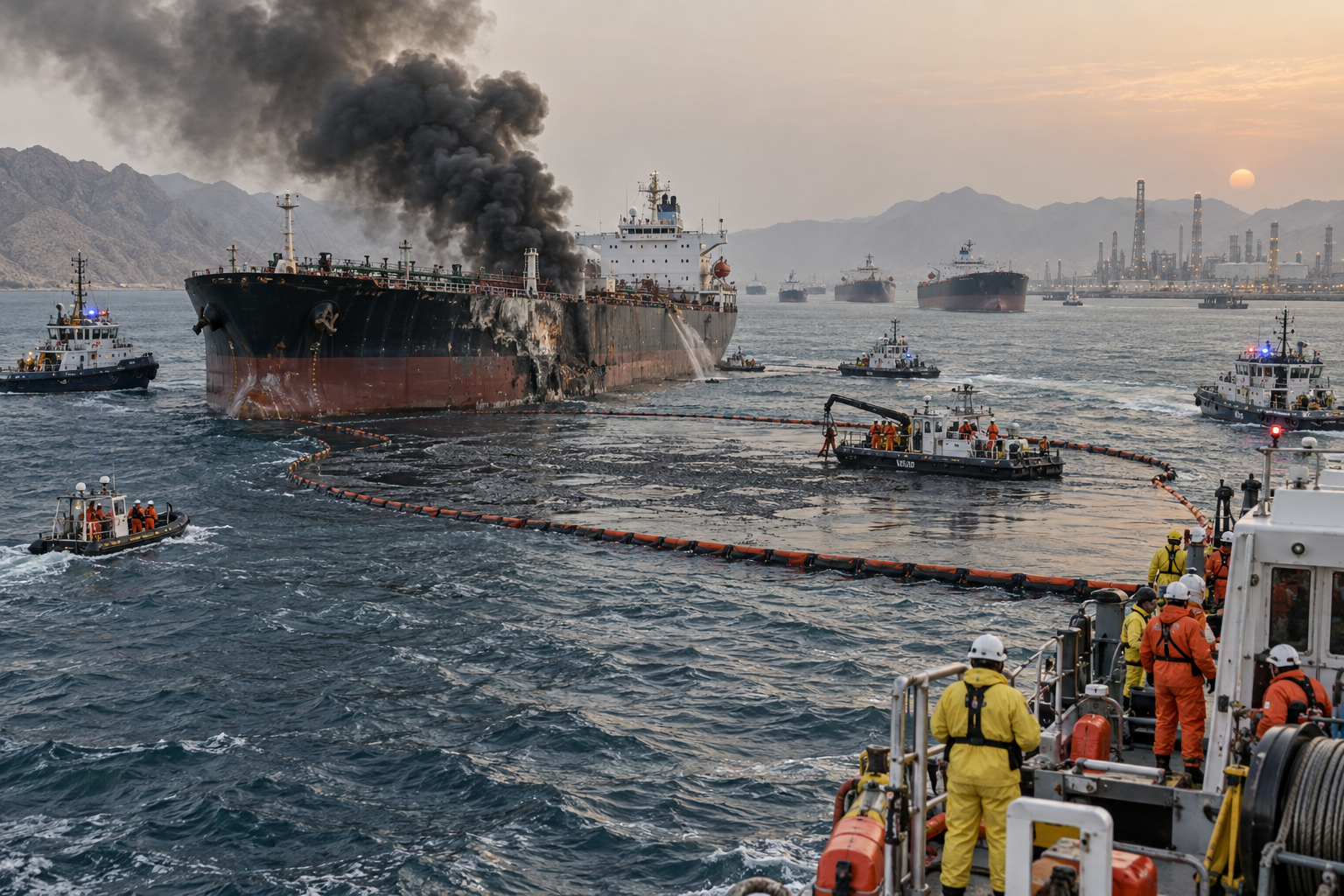
The live CBS News report describes escalating military, diplomatic and humanitarian tensions surrounding the Iran war. Two tankers were reportedly attacked in or near the Strait of Hormuz, a crucial global energy corridor. The United Kingdom Maritime Trade Operations center said one tanker was hit by an unidentified projectile, causing a fire that was later extinguished; the crew was safe, but possible environmental damage remained unclear. Iran’s Islamic Revolutionary Guard Corps claimed it had struck a Togo-flagged vessel attempting an “illegal crossing,” although it was uncertain whether the claim referred to the same incident. A second tanker was reportedly hit while leaving the strait on September 16.
President Donald Trump said he faces a major decision about whether to launch a broader assault intended to “annihilate” Iran’s ruling regime. His comments came before an expected meeting with Persian Gulf leaders, whose countries have hosted U.S. forces and faced Iranian retaliation during the conflict. The report also says a U.N.-commissioned panel of human-rights experts found “reasonable grounds” to believe that two early U.S. strikes on Iran may constitute war crimes.
Inside Iran, hundreds of thousands of people participated in a government-organized mobilization portraying national unity and resistance. Iranian officials said more than 600,000 people had registered for limited military training, with more than 1 million potentially taking part. Demonstrators chanted anti-American and anti-Israeli slogans and some trampled the flags of both countries.
Pakistan’s military said it would go “to any extent” to defend Saudi Arabia, including its holy sites, under recently strengthened defense arrangements. Separately, Russia and China vetoed a U.S.-backed resolution to extend U.N. monitoring of sanctions on Iran. The administration also approved visas for senior Iranian officials to attend the U.N. General Assembly, although the supplied article ends before providing further details.
Entities: Donald Trump, Iran, United States, Strait of Hormuz, United Kingdom Maritime Trade Operations (UKMTO) • Tone: urgent • Sentiment: negative • Intent: inform
18-09-2026
The CBS News live update reports on the continuing Iran-U.S. war, its humanitarian, diplomatic and economic consequences, and renewed claims that negotiations may be possible. A U.N.-commissioned panel of human rights experts said there were "reasonable grounds" to believe the United States committed war crimes in two strikes in Iran that killed at least 178 civilians. President Donald Trump again asserted that Iran wants a deal to end the six-and-a-half-month conflict, although the war remains stalled and there is no clear progress toward reopening the Strait of Hormuz or resuming nuclear talks.
The conflict is driving sharp increases in fuel and transportation costs. Gasoline reached a national average of $4.44 per gallon, nearly 50% higher than before the war began, while diesel reached a record $6.40. Farmers and other businesses are also facing higher fuel, fertilizer and equipment costs. North Carolina farmer Matt Bell, who voted for Trump, said he believes the administration has misled the public about the war and its consequences.
Diplomatically, Russia and China vetoed a U.S.-backed resolution that would have extended U.N. monitoring of sanctions against Iran. The United States also imposed sanctions on Bitbank, an Iranian cryptocurrency venture allegedly linked to financier Babak Zanjani, as part of its campaign to restrict Tehran’s access to money. Despite the conflict, Washington approved visas for Iranian President Masoud Pezeshkian, Foreign Minister Abbas Araghchi and other officials to attend the U.N. General Assembly, subject to travel and purchasing restrictions.
The update also reports an attack on a vessel in the Strait of Hormuz. Iran’s Islamic Revolutionary Guard Corps claimed it struck a ship making an "illegal passage," though it was unclear whether that claim concerned the same incident reported by the United Kingdom Maritime Trade Operations Centre. Iran also supported the Houthis’ denial that they targeted Mecca with a drone, while condemning attacks on Islamic holy sites.
Entities: Iran-U.S. war, Donald Trump, United Nations panel of human rights experts, Strait of Hormuz, Islamic Revolutionary Guard Corps • Tone: urgent • Sentiment: negative • Intent: inform
18-09-2026
The live CBS News report describes escalating consequences of the more than six-month Iran war, including allegations of possible U.S. war crimes, attacks near the Strait of Hormuz, worsening energy costs and growing political and social divisions. A U.N.-commissioned panel of human rights experts said there were “reasonable grounds” to believe the United States committed war crimes in two strikes in Iran that killed at least 178 civilians. The report does not provide the panel’s full findings in the supplied excerpt.
President Donald Trump again claimed that Iran wants to negotiate an end to the conflict and expressed hope that the war is nearing its conclusion. At the same time, fighting and maritime tensions continued. A tanker in the Strait of Hormuz was reportedly hit by an unknown projectile, causing a fire, while another vessel attack was reported the previous day. Iran’s Islamic Revolutionary Guard Corps claimed it had struck a ship making an “illegal passage,” although it was unclear whether the incidents were connected.
South Korean President Lee Jae Myung said his country would not deploy troops or military assets for intervention, though Seoul would protect its merchant ships and oil routes. Russia and China also vetoed a U.S.-backed U.N. resolution to extend monitoring of sanctions imposed on Iran over its nuclear and missile programs.
The war’s economic effects are spreading. Gasoline and diesel prices continued to surge, while oil prices fell after a Saudi pipeline operator said repairs would be completed relatively soon. The report also highlights domestic criticism from Matt Bell, a North Carolina farmer and Trump voter, who said higher fuel, fertilizer and equipment costs were damaging his business and that Americans had been misled about the conflict. Iranian Americans, meanwhile, remain broadly opposed to Iran’s government but are sharply divided over whether the war will end clerical rule, straining friendships and family relationships.
Entities: United States, Iran, President Donald Trump, U.N.-commissioned panel of human rights experts, United Nations Security Council • Tone: analytical • Sentiment: negative • Intent: inform
18-09-2026
A United Nations fact-finding mission on Iran said there are reasonable grounds to believe that U.S. forces committed war crimes during the conflict by carrying out indiscriminate attacks that killed civilians or damaged civilian infrastructure. The mission highlighted a Tomahawk missile strike on a primary school in Minab that killed more than 150 people. It also cited an airstrike on a clearly identifiable sports complex and nearby residential area that killed 22 civilians. According to the mission, the school was the intended target, and investigators found no evidence that it was being used for military purposes or that the damage resulted from an errant strike or collateral impact from an attack on a nearby Iranian Revolutionary Guard compound.
The U.S. rejected the findings. A State Department official said Washington does not consider the report credible and accused the UN Human Rights Council of promoting anti-American rhetoric and antisemitism while appeasing repressive regimes. The White House also dismissed the report, asserting that only Iran had committed war crimes in the conflict. The report separately accused Iran of human rights violations and crimes against humanity. The United States withdrew from the UN Human Rights Council in February 2025 under an executive order signed by President Donald Trump.
The report comes as diplomatic activity may be resuming. Government officials told MS NOW that representatives of Gulf Arab nations, the United States and Iran could meet around the time of the United Nations General Assembly the following week. Washington also approved travel for an Iranian delegation to attend the assembly, although the delegation will face restrictions on travel and purchases. Iran’s delegation is expected to include President Masoud Pezeshkian and Foreign Minister Abbas Araghchi.
Entities: United Nations Independent International Fact-Finding Mission on Iran, United States, Iran, Minab, Tomahawk missile strike • Tone: analytical • Sentiment: negative • Intent: inform
18-09-2026
An Independent International Fact-Finding Mission on Iran, established by the UN Human Rights Council, says there are “reasonable grounds” to believe that US forces committed war crimes in two strikes in Iran. One of the alleged attacks hit the Shajareh Tayyebeh Primary School in Minab on February 28. Iranian authorities reported that more than 150 people, including approximately 120 schoolchildren, were killed. The UN experts concluded that the strike was indiscriminate, caused civilian deaths and damaged civilian infrastructure, and found no evidence that the school had been used for military purposes. They reached a similar conclusion about a strike on a sports center in Lamerd, which reportedly damaged nearby homes and a school and killed or injured 22 civilians. US Central Command has denied launching strikes into Lamerd that day, while the Pentagon declined to comment on the report, saying its investigation remains ongoing.
The report also accused Iran’s government of crimes against humanity during the nationwide unrest that began in late December. The alleged abuses included unlawful killings, torture, arbitrary detention, enforced disappearances and severe restrictions on freedom of expression. The mission said the official figures of 3,038 deaths and 25,000 injuries were likely far below the actual toll, although it could not independently verify the numbers. Iranian authorities blamed terrorists and rioters supported by exiled opponents and foreign governments, including the United States and Israel.
Although the report is not legally binding, it adds to the international record concerning the conflict and could eventually support legal cases in international courts. The White House rejected the findings, accusing the UN human rights system of producing “unserious nonsense” and claiming that Iran was the only party responsible for war crimes. The mission’s findings were expected to be presented to the UN Human Rights Council, which consists of 47 member states.
Entities: Independent International Fact-Finding Mission on Iran, United Nations Human Rights Council, Sara Hossain, United States, Iran • Tone: analytical • Sentiment: negative • Intent: inform
18-09-2026
The article reports that US President Donald Trump is considering whether to resume large-scale military attacks against Iran as tensions around the Strait of Hormuz intensify. In an interview with Axios, Trump said he faced a “big decision” about whether to “annihilate” the Iranian regime or refrain from doing so, while emphasizing that the outcome remained uncertain. The comments are presented as another escalation in his repeated threats against Iran’s power infrastructure and other strategic facilities.
The immediate flashpoint is the Strait of Hormuz, where Iran’s Islamic Revolutionary Guard Corps has restricted vessel traffic. The IRGC Navy said it stopped a Togo-flagged tanker for what it called an “illegal passage” and accused the US military of misleading the ship into attempting the crossing. Commercial shipping through the waterway has reportedly declined sharply, raising concerns about oil supplies and global energy markets.
The United States is maintaining a naval blockade of Iranian ports and attempting to restore tanker traffic through the strait. Trump said the blockade had prevented Iran from exporting oil and that vessels attempting to do so had been attacked. The confrontation is occurring alongside wider regional tensions, including fresh exchanges of strikes between Saudi Arabia and Iran-backed Houthi forces in Yemen.
According to Axios, Trump postponed plans for renewed large-scale attacks in August after Saudi Arabia and Qatar warned that Iran might retaliate against Gulf energy infrastructure. Since then, Washington has suspended negotiations with Tehran, expanded sanctions, and kept US forces at current levels in the Middle East through the end of the year. Trump is expected to meet leaders from six Gulf states during the UN General Assembly to discuss the conflict. He is weighing renewed escalation against the possibility of pursuing a diplomatic agreement.
Entities: Donald Trump, Iran, Islamic Revolutionary Guard Corps (IRGC), Strait of Hormuz, United States • Tone: analytical • Sentiment: negative • Intent: inform