18-09-2026
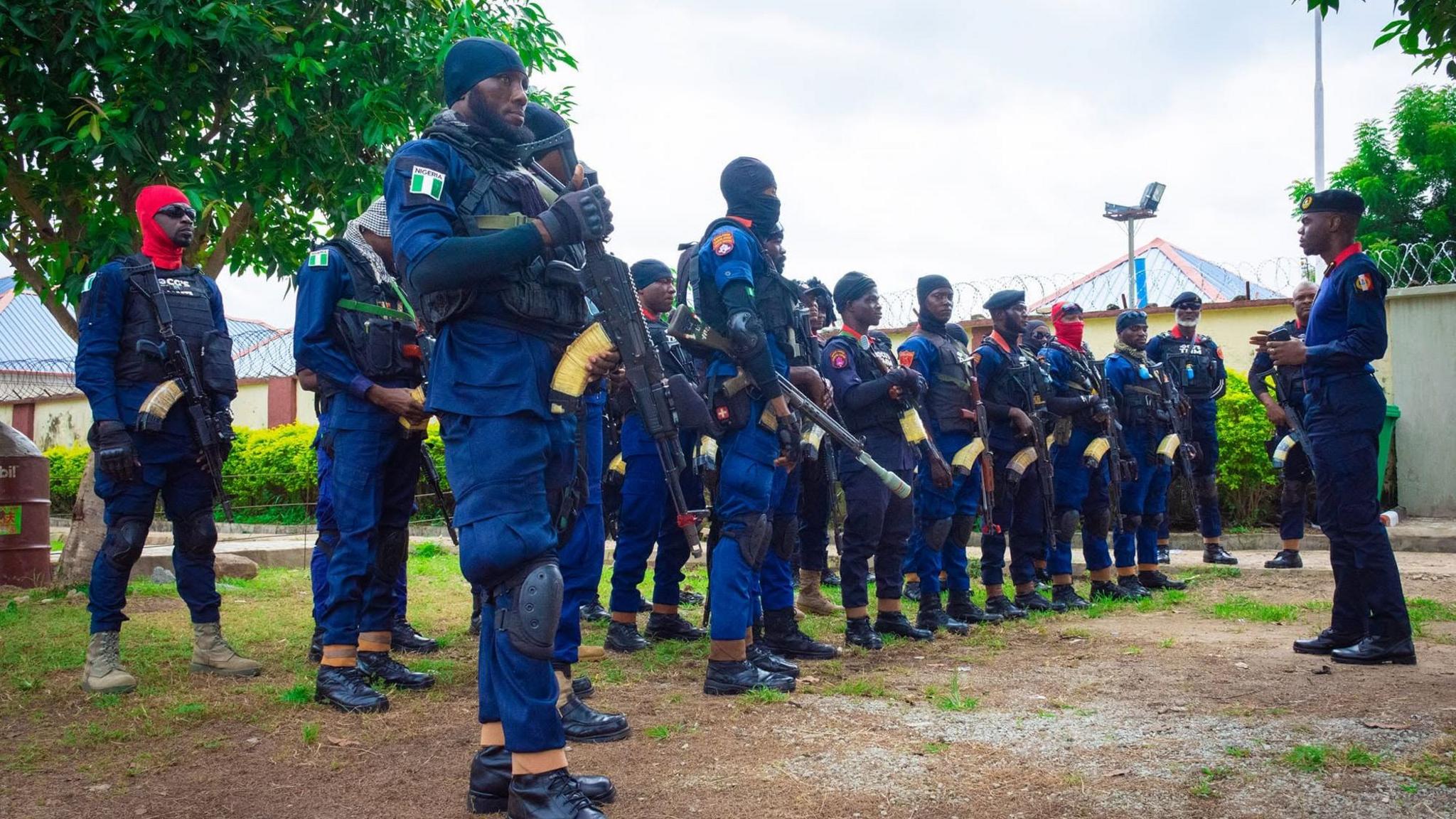
At least 37 people arrested on suspicion of illegal mining were found dead while in the custody of Nigeria’s Security and Civil Defense Corps (NSCDC) in Niger state, according to officials. The detainees had been arrested on Tuesday and Wednesday during a security operation targeting suspected illegal mining activities in the north-central state. Niger State Gov. Farmer Mohammed Umaru Bago declared three days of mourning for the victims.
The NSCDC said it suspected a disease outbreak may have caused the deaths, but stated that the bodies had been sent to Minna General Hospital for medical examinations to establish the actual cause. The agency did not identify the suspected disease. This explanation was challenged by Dauda Shehu, a survivor, who told The Associated Press that 65 detainees had been packed into a poorly ventilated cell. Shehu said the detainees struggled to breathe, scrambled for fresh air and banged on the cell door to attract the guards’ attention, raising the possibility that some or all of the victims suffocated.
Shafatu Sulaiman, who lost two sons in the incident, appealed to the government for intervention while speaking at the hospital where the bodies were taken. Police in Niger state said they had opened an investigation and urged relatives of the victims to provide relevant information.
The deaths have drawn attention to the conditions in which suspects were detained, while the precise cause remains unconfirmed pending medical findings. The incident also highlights Nigeria’s continuing struggle with illegal mining. Analysts have linked illegal mining in the country’s north-central and northwest regions to armed gangs involved in kidnappings for ransom, saying the illicit trade may provide funding for those groups.
Entities: Dauda Shehu, Shafatu Sulaiman, Farmer Mohammed Umaru Bago, Bologi Ibrahim, Suberu Siyaka Aniviye • Tone: urgent • Sentiment: negative • Intent: inform
18-09-2026
Armed security personnel have been deployed in Minna, Nigeria, following unrest triggered by the deaths of dozens of people suspected of engaging in illegal gold mining. The miners reportedly died while in the custody of a paramilitary civil defence group, prompting demonstrations and rioting in the city.
Survivors described chaotic and terrifying conditions inside the cell where they were being held. One survivor, who requested anonymity, said detainees struggled to breathe and repeatedly screamed for assistance. According to the account, guards were told that people were dying “one after the other,” but did not respond or believe the warnings. Another survivor said detainees raised the alarm several times after noticing that others were suffocating, but received no answer.
The deaths led demonstrators to take to the streets in Minna. Police opened fire in an attempt to disperse the crowds, while authorities subsequently deployed armed security personnel to the city. The article does not provide details about the number of people killed, the identity of the civil defence group, or whether officials have announced an investigation into the deaths.
The incident occurred amid wider tensions surrounding illegal gold mining in the area. Officials and experts say competition for gold reserves extracted from unlicensed mines is contributing to violence involving criminal gangs. The report therefore links the immediate deaths in custody and ensuing protests to broader problems involving informal mining, criminal activity, public security, and the treatment of detainees. The survivors’ accounts and the police response underscore the urgency and volatility of the situation in Minna.
Entities: Nigeria, Minna, Armed security deployment, Demonstrations and rioting, Suspected illegal gold miners • Tone: urgent • Sentiment: negative • Intent: inform
18-09-2026
Thirty-seven people accused of illegal mining in Niger state, north-central Nigeria, have died while being held at a detention facility operated by the Nigerian Security and Civil Defence Corps (NSCDC). The detainees were among more than 50 people arrested near Borgu, an area known for small-scale gold mining. They had apparently not yet been charged, as officials said profiling and documentation were still in progress.
The NSCDC initially suggested that the deaths may have resulted from a diphtheria outbreak, but its national headquarters later said the cause had not been established. An intelligence report shared with AFP instead attributed the deaths to overcrowding and inadequate ventilation. Relatives also alleged that detainees collapsed in extreme heat after repeatedly calling for help. The BBC said it could not independently verify those accounts. Some families have called for independent post-mortem examinations, noting that the reported illness did not appear to affect guards.
The deaths triggered unrest in Niger state, including attacks on public buildings and public transport buses by miners and relatives. Police dispersed protesters with tear gas, while a 24-hour curfew was imposed in the state capital, Minna. The bodies were taken to the general hospital in Minna for examination, and the state police opened an investigation. Governor Mohammed Umaru Bago described the deaths as tragic, announced three days of mourning, postponed election campaigning, and said an NSCDC commander had been detained.
The report also raises questions about Nigeria’s legal protections for detainees, which generally require suspects to be brought before a court within one or two days unless a longer period is justified. Officials and experts say competition for gold extracted from illegal mines has contributed to criminal gang violence, while a 2024 report found that much of the region’s gold enters global supply chains through trafficking.
Entities: Niger State, Nigeria, Minna, Borgu, Nigerian Security and Civil Defence Corps (NSCDC), Thirty-seven deaths in detention • Tone: urgent • Sentiment: negative • Intent: inform
18-09-2026
At least 37 people suspected of illegal mining died while being held by the Nigeria Security and Civil Defense Corps (NSCDC) in Minna, the capital of Niger State, according to Governor Mohammed Umaru Bago. The detainees had been arrested on Tuesday and Wednesday amid a crackdown on suspected illegal mining in the mineral-rich north-central state.
Bago described the deaths as “sad” and “tragic,” announced a three-day mourning period, and postponed the start of campaigning for January elections. He also said a committee of inquiry had been established. Police in Niger State launched a separate investigation and asked victims’ relatives to provide information.
NSCDC state commander Suberu Siyaka Aniviye said the agency suspected that disease may have caused the deaths, but the bodies were transferred to a local hospital for medical examination. An intelligence report cited preliminary indications that overcrowding and inadequate ventilation in the detention facility may have contributed. A video circulating online showed the bodies of dozens of young men, many apparently teenagers, while relatives attempted to identify them.
A survivor, Dauda Shehu, told the Associated Press that 65 detainees had been packed into a poorly ventilated cell. He said the prisoners struggled to breathe, scrambled for fresh air, and banged on the cell door to attract guards’ attention.
Niger State, which is more than twice the size of Belgium, attracts thousands of artisanal miners seeking gold and other valuable minerals. Officials and experts say illegal mining is also connected to violence by criminal gangs known as bandits, who tax miners and demand a share of extracted ore in exchange for access to mining sites.
Entities: Nigeria, Niger State, Minna, Nigeria Security and Civil Defense Corps (NSCDC), Mohammed Umaru Bago • Tone: analytical • Sentiment: negative • Intent: inform
18-09-2026
Protests broke out in Minna, the capital of Nigeria’s Niger State, after 37 suspected illegal miners died while being held by the Nigeria Security and Civil Defense Corps (NSCDC). The detainees had been arrested on Tuesday and Wednesday during a crackdown on illegal mining. Demonstrators, including miners and relatives of the deceased, gathered with sticks and machetes, prompting police to use tear gas.
Niger State Governor Mohammed Umaru Bago described the deaths as “sad” and “tragic.” He established a committee of inquiry, declared three days of mourning, and postponed the start of campaigning for January elections. The federal government also suspended the commandant of the state’s civil defense corps and promised a full investigation.
The precise cause of death remains unconfirmed. NSCDC officials said the agency suspected disease and sent the bodies to a hospital for examination. However, an intelligence report suggested that overcrowding and inadequate ventilation in the detention facility may have caused the fatalities. A video shared online showed the bodies of dozens of young men, many of whom appeared to be teenagers, while relatives attempted to identify them.
A survivor, Dauda Shehu, told the Associated Press that 65 detainees had been packed into a poorly ventilated cell. He said the prisoners struggled to breathe and banged on the cell door to attract guards’ attention.
The deaths have intensified scrutiny of illegal mining in Niger State, a mineral-rich region that attracts thousands of artisanal miners seeking gold. Officials and experts say criminal gangs known as bandits exploit the mining economy by taxing miners and demanding a share of extracted ore in exchange for access to mining sites.
Entities: 37 detained miners’ deaths, Minna, Niger State, Nigeria, Nigeria Security and Civil Defense Corps (NSCDC), Mohammed Umaru Bago, Suberu Siyaka Aniviye • Tone: urgent • Sentiment: negative • Intent: inform
18-09-2026
Nigerian authorities have launched an investigation after 37 people suspected of illegal mining died while detained at a Nigeria Security and Civil Defence Corps (NSCDC) facility in Minna, the capital of Niger State. The deaths were reported early on September 17, 2026, after the NSCDC detained scores of suspected illegal miners during raids on Tuesday and Wednesday.
Authorities have offered conflicting explanations. The NSCDC attributed the deaths to a suspected disease outbreak, while a preliminary intelligence report indicated that overcrowding and inadequate ventilation in the detention facility may have caused or contributed to the fatalities. Police spokesman Wasiu Abiodun said the state police chief ordered an immediate investigation. Governor Mohammed Umaru Bago described the deaths as tragic, established a committee of inquiry, declared three days of mourning and postponed the start of campaigning for elections scheduled for January.
The deaths reportedly sparked protests in Minna by miners and sympathisers, during which vehicles and other property were damaged. A video circulating online showed the bodies of dozens of young men, many appearing to be teenagers, lying outdoors while volunteers and relatives attempted to identify them.
Niger State is rich in gold and other minerals, including tantalite, copper and lithium, and attracts thousands of artisanal miners. Illegal mining has also contributed to violence by criminal gangs known as bandits, who reportedly tax miners and demand a share of extracted ore. Much of the illegally mined gold is smuggled to the United Arab Emirates and then laundered into global supply chains in Europe, the United States, Asia and South Africa, according to a 2024 SwissAid report. The incident highlights concerns about detention conditions, illegal mining and security in one of Nigeria’s key mineral-producing regions.
Entities: Nigeria, Niger State, Minna, Governor Mohammed Umaru Bago, Nigeria Security and Civil Defence Corps (NSCDC) • Tone: urgent • Sentiment: negative • Intent: inform
18-09-2026
This France 24 “Eye on Africa” programme leads with an investigation into the deaths of 37 people who died in custody after being accused of illegal mining in Nigeria’s Niger State. The headline describes the incident as causing an “uproar,” while the programme description says that an investigation remains ongoing. The supplied text does not provide further details about the victims, the circumstances or causes of death, the detention facility, or any official response. It also does not say whether the accusations resulted in prosecutions or convictions.
The broadcast includes two additional Africa-focused stories. The second examines Tunisia’s growing role as a boat-building hub. According to the description, the country serves both domestic buyers and international markets, suggesting a focus on the development of its manufacturing sector and its regional and global commercial connections.
The final segment is an interview with Ricci Shryock, identified as the author of “The Moon Will Not Burn Us.” The available article text does not explain the book’s subject or provide details about the interview.
The programme was issued on 18 September 2026 and has a stated duration of 13 minutes and six seconds. It is credited to Hélène Daouphars, Clarisse Fortuné, Aurore Bayoud, Emmet Livingstone, Sam Olukoya, Lilia Blaise, and Sarah Sakho. The material presented is a brief programme introduction rather than a full report, so the central detention case is framed as an ongoing investigation and remains underdeveloped in the supplied excerpt.
Entities: Niger State, Nigeria, France 24, Eye on Africa, Thirty-seven deaths in custody, Illegal mining accusations • Tone: analytical • Sentiment: negative • Intent: inform
18-09-2026
Thirty-seven suspected illegal goldminers died inside overcrowded cells operated by Nigeria’s paramilitary Nigeria Security and Civil Defence Corps (NSCDC) in Minna, Niger state. Survivors said detainees were packed into a poorly ventilated cell and repeatedly pleaded for help as people began struggling to breathe. One survivor said he survived because he was near the entrance, where there was more air. Many of the victims were reportedly teenagers aged between 14 and 18 who had been working in illegal mines instead of attending school.
The NSCDC initially attributed the deaths to a disease outbreak, but an intelligence report reviewed by Agence France-Presse indicated that overcrowding and inadequate ventilation were likely responsible. President Bola Ahmed Tinubu ordered an investigation, while the interior minister suspended Niger state’s NSCDC commander pending the inquiry. The state governor declared three days of mourning, postponed election campaigning and confirmed that 37 people had died. The bodies were buried according to Islamic tradition without forensic examinations.
The deaths triggered protests in Minna. Police used teargas to disperse demonstrators, while a Reuters witness reported that security forces fired live rounds. Some protesters, including miners and relatives of the victims, carried sticks, machetes and hunting rifles, and others attempted to set fire to government buildings. Authorities imposed a curfew beginning at 6pm to restore order.
The incident highlights the dangers surrounding illegal mining in Niger state, a mineral-rich region that attracts thousands of artisanal miners. Criminal gangs reportedly tax miners and control access to mining sites. Gold extracted from the state is frequently smuggled to the United Arab Emirates and then enters global supply chains. Niger state also contains deposits of tantalite, copper and lithium, minerals increasingly sought for electric vehicles and clean-energy technologies.
Entities: Nigeria, Niger state, Minna, Nigeria Security and Civil Defence Corps (NSCDC), Bola Ahmed Tinubu • Tone: urgent • Sentiment: negative • Intent: inform