18-09-2026
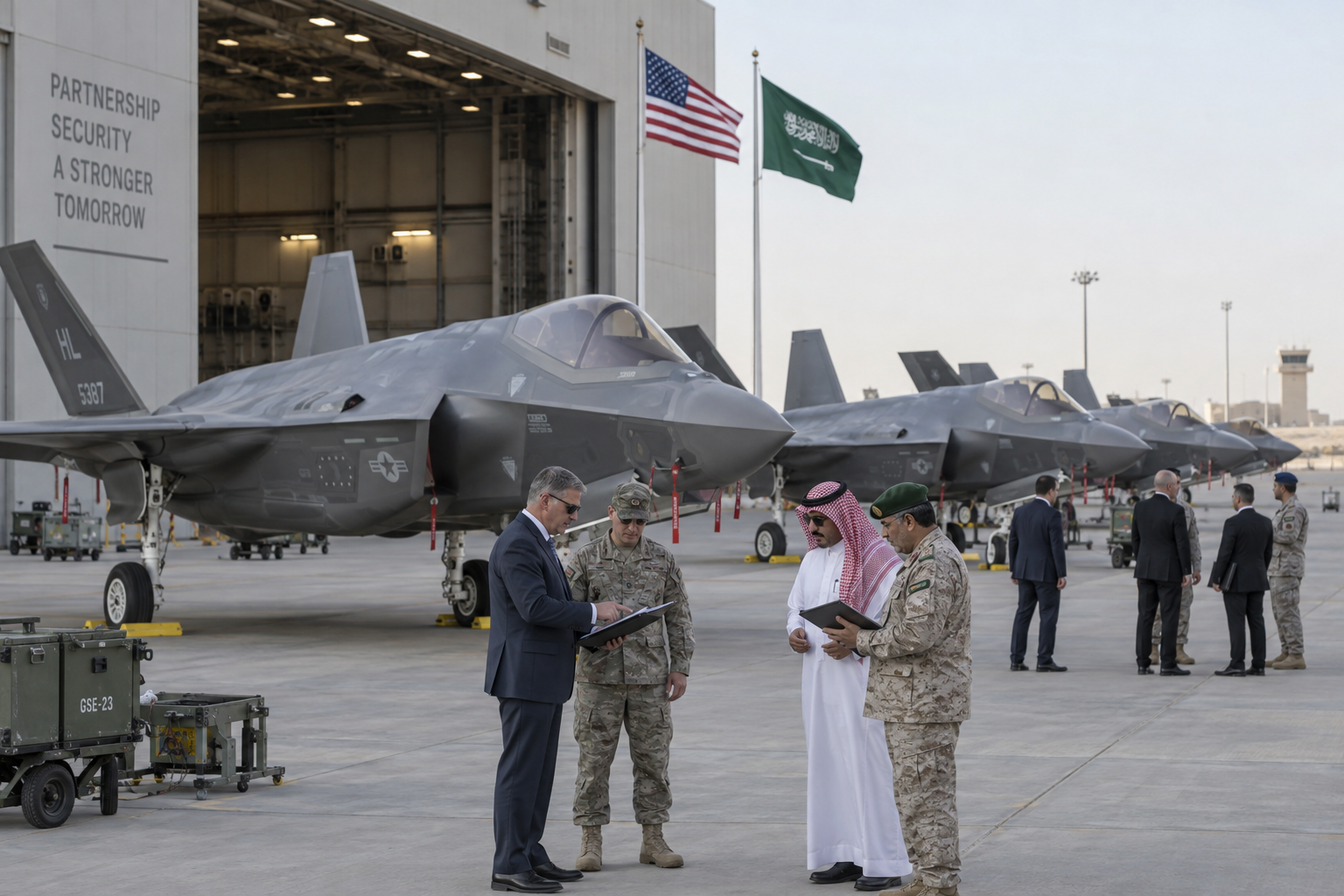
The article presents five international developments reported on Sept. 17, 2026. The most consequential is the US State Department’s approval of a potential US$24.3 billion sale of 48 Lockheed Martin F-35 fighter jets to Saudi Arabia. The deal would include Pratt & Whitney engines, communications equipment, spare parts and support, and could significantly alter the Middle East’s military balance. It may also challenge Washington’s longstanding policy of preserving Israel’s “qualitative military edge,” particularly as Saudi Arabia is increasingly involved in the region’s conflict.
Australia’s Labor government announced tighter migration rules aimed at international students and working holidaymakers, including measures against students who switch courses to extend their stays. However, students from ASEAN countries, including Singapore, will be exempt from a new restriction on bringing family members. The policy is intended partly to strengthen regional ties and partly to respond to rising support for anti-immigration politician Pauline Hanson.
Russia and China ended the mandate for independent UN monitoring of sanctions on Iran. They argued that the sanctions had already expired under the 2015 nuclear agreement, while European governments had triggered their reimposition a year earlier over allegations that Tehran violated the pact. Iran denies pursuing nuclear weapons. The UN Security Council has been unable to appoint a monitoring panel for the past year because consensus is required.
Prince Harry made his first public appearances in Britain since returning from the United States with his family three weeks earlier. He attended an Invictus Games fundraising event in London and met wounded former soldiers; Meghan did not attend.
Finally, SpaceX has discussed informally acquiring customer and operational data from troubled or failed startups to help train its artificial-intelligence models. The proposal resembles Google’s reported effort to buy data from Spirit Airlines, which raised privacy concerns. The discussions may not lead to a deal, and SpaceX did not comment.
Entities: The Straits Times, United States Department of State, Saudi Arabia, F-35 Lightning II, Donald Trump • Tone: neutral • Sentiment: neutral • Intent: inform
18-09-2026
The Trump administration has approved a potential $24.3 billion sale of 48 Lockheed Martin F-35 fighter jets to Saudi Arabia, along with 49 Pratt & Whitney engines and related parts. The proposed package is being presented as a way to strengthen the defense capabilities of a major U.S. partner in the Gulf, as Saudi Arabia faces increased attacks from Iran-backed Houthi forces in Yemen.
The announcement comes amid a wider escalation involving the Houthis, who have reportedly attacked targets in Saudi Arabia and launched a ground offensive aimed at gaining control of the Bab el-Mandeb Strait. The waterway is a strategically important passage for oil and global shipping. The Trump administration argues that the F-35 sale would improve Saudi Arabia’s ability to deter current and future threats. It also maintains that the deal would not undermine the longstanding U.S. policy requiring Israel to preserve a military advantage over potential regional adversaries.
Congress has 30 days to review the proposed sale and potentially block it. Some lawmakers have expressed concern that transferring the F-35, described as the world’s most advanced fighter aircraft, could expose sensitive U.S. military technology to China because of Saudi Arabia’s relationship with Beijing. Representative Raja Krishnamoorthi warned that the sale could place “the crown jewels” of American military technology within reach of the Chinese Communist Party.
The deal also faces scrutiny because of Saudi Arabia’s human-rights record and the 2018 killing of journalist Jamal Kohsoggi, which previously prompted congressional questioning of arms sales to Riyadh. The proposal follows closer relations between President Donald Trump and Crown Prince Mohammed bin Salman, as well as Saudi commitments to invest hundreds of billions of dollars in the United States. Those commitments included a previously announced defense package worth nearly $142 billion.
Entities: Donald Trump, Mohammed bin Salman, Saudi Arabia, United States Department of State, U.S. Congress • Tone: analytical • Sentiment: negative • Intent: inform
18-09-2026
France 24 reports that the United States has approved a $24.3 billion arms deal to sell Saudi Arabia 48 F-35 stealth fighter jets. The announcement was attributed to the U.S. State Department and represents Saudi Arabia’s latest major military purchase since the beginning of what the report describes as the Iran war. The proposed sale would provide Riyadh with advanced combat aircraft and deepen U.S.-Saudi defense ties amid escalating regional conflict.
According to the report, Saudi Arabia has repeatedly faced drone and missile attacks from forces associated with Tehran since the United States and Israel launched their war against Iran in February. The kingdom has also come under attack from Yemen’s Iran-backed Houthi rebels. The article presents the F-35 purchase within this broader security context, suggesting that the attacks and regional instability are important factors behind Saudi Arabia’s continued acquisition of major weapons systems.
The supplied video article is brief and does not provide details about the sale’s approval process, delivery schedule, operational conditions, congressional reaction, or responses from Saudi, Iranian, Israeli, or Houthi officials. It also does not explain whether the deal includes training, maintenance, weapons packages, or technology-transfer provisions. The report primarily communicates the scale of the proposed transaction and links it to the worsening security environment surrounding Saudi Arabia. The information is presented as a straightforward news update rather than an opinion or policy analysis.
Entities: United States, Saudi Arabia, F-35 stealth fighter jets, U.S. State Department, $24.3 billion arms sale • Tone: neutral • Sentiment: negative • Intent: inform