18-09-2026
French President Emmanuel Macron has warned that Russian hybrid attacks targeting Europe and France have intensified in recent weeks. Speaking at a news conference at the Élysée Palace after consulting French party leaders, Macron said the attacks were intended to intimidate European countries and weaken their support for Ukraine. He argued that the strategy would have the opposite effect, insisting that France and its allies were not intimidated and that Ukraine’s security was closely linked to their own.
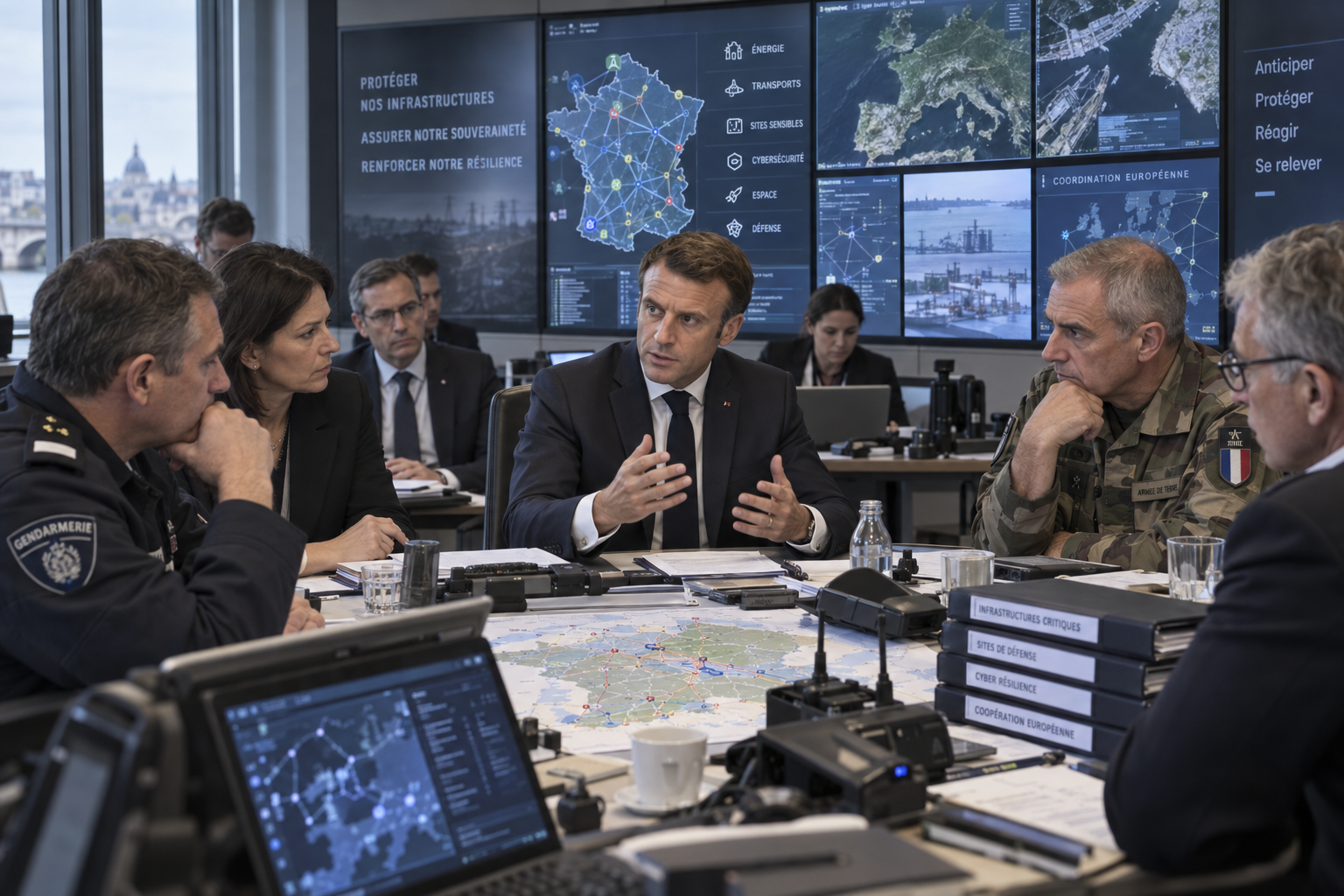
Macron said France had recently been targeted by Russian hybrid operations and that these incidents would not go unanswered. He instructed the French government to develop a plan to protect critical infrastructure, sensitive defence-industry and technology sites, and other facilities from potential drone and cyberattacks.
His warning comes amid growing concern among European leaders that Russia could conduct further operations to test European and NATO resolve over support for Ukraine. Macron referred to a drone incident at Leipzig airport in Germany, which was blamed on Russia, and to comments by Polish Prime Minister Donald Tusk suggesting that Russia could be preparing drone and missile strikes against Poland and other countries on NATO’s eastern flank.
The French president also announced plans for France to convene a G7 meeting on energy issues. The meeting would aim to strengthen cooperation among G7 members, prevent unnecessary tensions with partner countries, and examine whether strategic energy reserves could be released or made available. Macron’s comments link the security threat from Russia with broader European concerns about infrastructure protection, energy security, and continued support for Ukraine.
Entities: Emmanuel Macron, Russia, France, Europe, Ukraine • Tone: urgent • Sentiment: negative • Intent: inform
18-09-2026
French President Emmanuel Macron has ordered the government to develop a plan to protect France’s critical infrastructure from an intensifying Russian hybrid threat. The plan is expected to focus particularly on sensitive defense-industry and technology sites, which could face drone attacks, cyberattacks, sabotage, or other forms of covert interference.
Macron said France would continue supporting Ukraine after Russia’s full-scale invasion in February 2022. He warned that Russian “shadow attacks” intended to intimidate European countries and weaken support for Ukraine would not go unanswered. According to Macron, such actions would have the opposite effect because France and its partners recognize that Ukraine’s security is closely linked to their own.
The French announcement comes amid growing concern across Europe about alleged Russian hybrid operations. Poland, Germany, and Denmark have accused Moscow of involvement in drone incursions, sabotage, arson, and surveillance of defense facilities. Russia has also been accused of planning an attack on an airport using a drone carrying explosives. German authorities have attributed an attempted drone attack on Leipzig to Russia.
European Commission President Ursula von der Leyen has called for the European Union to establish a response mechanism modeled on NATO. She argued that EU members need a shared understanding of how to respond to incidents that fall below the threshold of armed aggression but still pose a clear threat to national security. The developments reflect a broader European effort to strengthen defenses against covert attacks, cyberoperations, disinformation, and other activities designed to disrupt infrastructure and undermine political support for Ukraine.
Entities: Emmanuel Macron, France, Russia, Ukraine, European Union • Tone: urgent • Sentiment: negative • Intent: inform
18-09-2026
French President Emmanuel Macron said on September 18, 2026, that France would strengthen protections for critical infrastructure and sensitive defence and technology sites in response to what he described as an intensifying Russian hybrid threat. Speaking after a meeting in Paris with political party leaders and potential presidential candidates about international developments, Macron said Russia’s shadow operations were increasingly affecting France and other European countries.
Macron ordered the government to prepare a national plan to protect critical infrastructure from possible drone and cyber-attacks. He also said France’s interior minister had met regional prefects to increase vigilance and improve preparedness against Russian hybrid operations. The remarks suggest that French authorities are concerned about attacks designed to disrupt essential services, defence production, or public confidence without constituting conventional military action.
Despite the alleged threats, Macron said France would continue supporting Ukraine following Russia’s full-scale invasion in February 2022. He warned that Russian shadow attacks would not go unanswered, while arguing that intimidation would have the opposite of its intended effect and strengthen European resolve to assist Ukraine. Macron framed the conflict as directly connected to France’s own national security, saying that Ukraine’s security is also at stake for France.
The French president is scheduled to attend the United Nations General Assembly the following week, where international affairs, including the war in Ukraine, are expected to be discussed. The article does not provide specific details about the planned protective measures or identify particular incidents that prompted the heightened alert.
Entities: Emmanuel Macron, France, Russia, Ukraine, Paris • Tone: urgent • Sentiment: negative • Intent: inform
18-09-2026
France 24 reports that French President Emmanuel Macron has ordered the development of measures to protect France’s critical infrastructure and defence-industry sites from what he described as increasing Russian hybrid attacks. The announcement was made on 18 September 2026 during a press conference in Paris, following Macron’s meeting with leaders of France’s political parties.
The meeting focused on recent international developments, including the wars in the Middle East and Ukraine. Against this wider backdrop of geopolitical instability, Macron’s remarks indicate that the French government is treating hybrid threats attributed to Russia as a growing national-security concern. Such threats can include activities below the threshold of conventional warfare, although the article does not specify which incidents or tactics prompted the decision.
The report does not provide details about the measures Macron ordered, the sites considered most vulnerable, or the timetable for implementing the plan. Instead, it directs viewers to watch the full recording of Macron’s press conference. The available text therefore serves primarily as a brief account of the announcement rather than a detailed explanation of France’s security strategy.
The page is presented as a replay video issued and modified on 18 September 2026. Its central focus is Macron’s response to perceived Russian hybrid activity and the broader international situation discussed with party leaders. The article is factual and restrained in tone, presenting the government’s announcement without adding independent analysis or confirming specific attacks. It places the statement within the context of ongoing wars and diplomatic consultations, while leaving further information to the accompanying video.
Entities: Emmanuel Macron, France, Paris, France 24, Russian hybrid attacks • Tone: neutral • Sentiment: neutral • Intent: inform
18-09-2026
Polish Prime Minister Donald Tusk has warned that Russia may deliberately launch drones or missiles into NATO territory and then describe the incidents as accidental. Speaking to Polish lawmakers, Tusk said such attacks would be intended to paralyze NATO or weaken its willingness to respond collectively, thereby demonstrating that the alliance’s Article 5 mutual-defense guarantee exists only in theory. Article 5 treats an armed attack on one NATO member as an attack on all members.
Tusk said he had received intelligence from NATO, Ukraine and U.S. agencies, although he did not identify the specific sources. He emphasized that there was no indication Russia was preparing an invasion, but argued that Poland—one of Ukraine’s strongest supporters and a country bordering both Ukraine and Russia—was approaching a serious test of allied solidarity. He also criticized political shifts in Europe, pointing to Russia-friendly parties such as Marine Le Pen’s National Rally in France and the Alternative for Germany. According to Tusk, these parties invoke peace while effectively advocating Ukraine’s capitulation.
His warning followed a week of incidents that European governments have attributed to Russia. A Russian drone reportedly struck a passenger train near the Polish border, Poland recovered a Russian drone carrying a warhead off its coast, and NATO aircraft shot down a drone in Lithuania. European officials increasingly describe such events, along with sabotage, cyberattacks and disinformation, as part of a coordinated Russian hybrid-warfare campaign that remains below the threshold of an act of war. Germany also blamed Russian operatives for an attempted drone strike on an airport serving as a NATO hub, allegations Moscow rejected.
Tusk’s remarks were directed both at Russia and at NATO members, especially those farther from the alliance’s eastern flank. Shortly afterward, President Trump announced progress toward establishing a permanent U.S. Army base in Poland, which currently hosts American troops on a rotational basis.
Entities: Donald Tusk, Poland, Russia, NATO, Ukraine • Tone: urgent • Sentiment: negative • Intent: inform
18-09-2026
French President Emmanuel Macron said Russia has intensified its hybrid attacks against France and other European countries in recent weeks, signaling that Paris is preparing a response. Macron made the remarks on September 18 after meeting political party leaders and candidates for France’s 2027 presidential election at the Élysée Palace in Paris. The meeting focused on international developments and their consequences for France.
Macron described the threat as particularly serious, referring specifically to Russian hybrid activity directed at Europeans and France. The article does not identify the precise attacks or operations involved, but the term generally encompasses activities such as disinformation, cyberattacks, sabotage, election interference, and other coercive actions below the threshold of conventional warfare. Macron’s statement indicates that French authorities view the recent activity as an escalating national and European security concern.
Interior Minister Laurent Nunez separately said that all relevant government services would be mobilized. He also emphasized the involvement of local stakeholders, suggesting that France’s response will require coordination among national agencies, regional authorities, and other public bodies. His comments focused on preparedness and the need to ensure that the country is ready to confront the new threats.
The report provides no details about the promised response, the identity of specific targets, or whether France has attributed particular incidents directly to Russian agencies. It also does not mention any immediate retaliatory measures. Instead, the statements from Macron and Nunez point to a government preparing its institutions to respond to what it characterizes as a worsening Russian hybrid threat. The article, published by Reuters, presents the developments as part of broader geopolitical tensions affecting France and Europe.
Entities: Emmanuel Macron, Laurent Nunez, France, Russia, Paris • Tone: urgent • Sentiment: negative • Intent: inform