18-09-2026
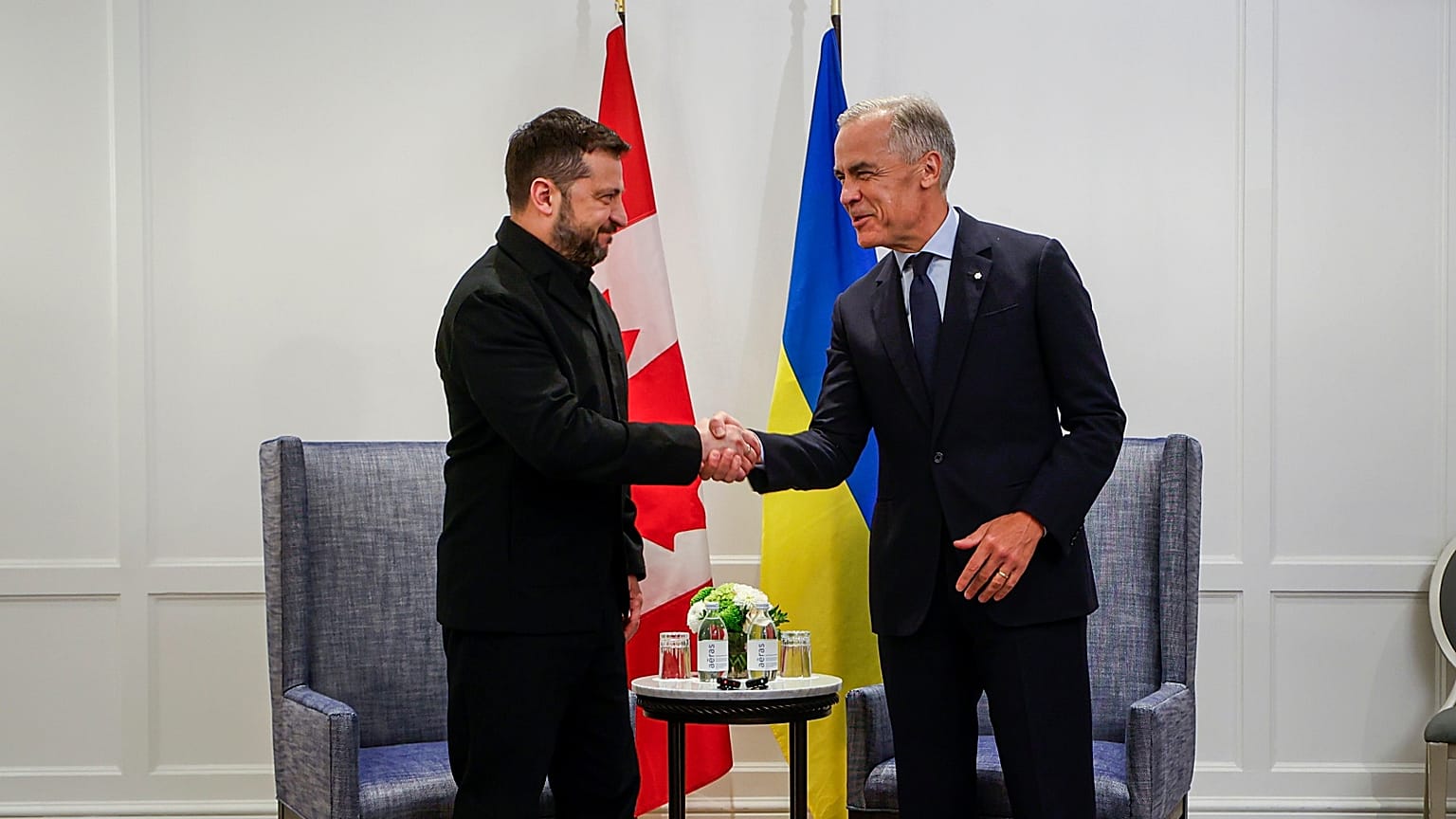
Canada has applied to join the Joint Expeditionary Force (JEF), a UK-led coalition of 10 European countries focused on rapid military deployments in Northern Europe, the North Atlantic-Arctic region and the Baltic Sea. Prime Minister Mark Carney made the request during a visit to the United Kingdom, following talks in Brussels where European Commission President Ursula von der Leyen proposed that Canada become the European Union’s first associate member.
The article presents Canada’s JEF application as part of a broader effort to diversify its diplomatic and security relationships after a sharp deterioration in ties with the United States. Ottawa and Washington are engaged in a trade war, with retaliatory tariffs affecting sectors including steel, dairy, appliances, farm equipment, pulp and paper, and electronics. The dispute has been compounded by President Donald Trump’s suggestions that Canada could become the 51st US state and by wider disagreements over defence spending, NATO and Greenland.
The JEF was formed in 2014 and operates independently of NATO, although it can support NATO or United Nations missions. Participation is voluntary, and the coalition is intended to act quickly and flexibly, including below the traditional threshold of war. Its combined rapid-response force numbers about 10,000 soldiers, but it has not yet been tested in a major high-stakes operation. Questions also remain about the United Kingdom’s ability to provide effective leadership given its defence-spending limitations.
Canada was invited to join in 2015 but declined because it saw no immediate threat. The article argues that the country’s geographic position, NATO role, Commonwealth ties with the UK and shared concerns about the North Atlantic now make membership more logical. Canada is also increasing defence spending from approximately 40 billion to more than 60 billion Canadian dollars over five years, reducing its dependence on US military suppliers.
Entities: Canada, Prime Minister Mark Carney, Joint Expeditionary Force (JEF), United Kingdom, European Union • Tone: analytical • Sentiment: negative • Intent: inform
18-09-2026
Canadian Prime Minister Mark Carney was interrupted by a lone heckler as he approached the podium to address the European Parliament in Strasbourg, France. German Member of the European Parliament Siegbert Droese, a representative of the far-right Alternative for Germany (AfD), shouted “U.S.A.! U.S.A.!” before Carney began speaking. Some members of the audience groaned, while Carney chuckled and proceeded with his address.
Carney’s speech called for closer Canada–European Union relations and described the partnership as an “alliance for the future.” His appearance came amid a broader Canadian and European effort to strengthen bilateral ties, including a proposal from European Commission President Ursula von der Leyen for Canada to become the EU’s first “associate member.” The article notes that this proposed status is new and undefined, and its legal basis remains unclear.
Droese said his chant was intended to highlight what he viewed as the “geopolitical elephant in the room,” particularly Canada’s relationship with the United States. In a statement, he criticized von der Leyen’s proposal as “absurd and unrealistic,” arguing that associate EU membership is not recognized in the bloc’s treaties. He also accused von der Leyen of seeking an arrangement with Canada to compensate for poor relations with the United States.
The article places Droese’s intervention in the context of the AfD’s rising popularity in Germany. It describes the party’s proposals for large-scale deportations of people without German heritage and a “patriotic” cultural policy that could reduce funding for projects such as some Holocaust remembrance programs. Droese concluded that it was ironic that six letters—“USA! USA!”—were enough to provoke a reaction from Carney.
Entities: Mark Carney, Siegbert Droese, Ursula von der Leyen, European Parliament, European Union • Tone: analytical • Sentiment: neutral • Intent: inform
18-09-2026
The article argues that the rapidly deepening relationship between the European Union and Canada is largely a response to Donald Trump’s return to the White House and his confrontational policies toward both partners. Over roughly 20 months, the EU and Canada have faced punitive tariffs, annexationist rhetoric, regulatory pressure and public insults from a US president who has disrupted assumptions about America as their closest ally, security provider and preferred trading partner.
This shared experience has produced an unusually public display of solidarity. During her State of the Union address, European Commission President Ursula von der Leyen invited Canada to become the EU’s first “associate member,” a proposed legal status intended to bring Ottawa closer to the bloc. Canadian Prime Minister Mark Carney responded enthusiastically, describing the relationship as an “alliance for the future” while stressing that Canada would not surrender sovereignty. The proposal generated strong support among European lawmakers and public enthusiasm in Canada, where a poll found that 56% of respondents felt closer to the EU than to the US.
The two sides identify common ground in liberal democracy, the rule of law and open markets. They see opportunities for cooperation in trade, energy, critical raw materials, batteries, artificial intelligence, quantum technology, finance, defence, space and the Arctic. However, the partnership is also driven by anxiety. The EU and Canada face pressure from Trump’s “America first” agenda, China’s competition and Russia’s aggression, while global norms and economic stability appear increasingly vulnerable.
Trump has already threatened “very serious tariffs” if the proposed associate membership is viewed as hostile. Analysts therefore interpret the rapprochement not simply as a positive partnership, but as an effort to adapt to a more dangerous and uncertain international environment in which trade and regulatory alignment have become instruments of geopolitical power.
Entities: European Union, Canada, United States, Donald Trump, Ursula von der Leyen • Tone: analytical • Sentiment: negative • Intent: analyze
18-09-2026
Canada is seeking to join the European Union’s €90 billion support loan for Ukraine, the European Commission confirmed on 18 September 2026. Commission officials said technical discussions with Ottawa are ongoing, but no final agreement has yet been reached. If Canada joins, Ukraine would be able to use part of the financing to purchase weapons and ammunition from Canadian defence companies, allowing those purchases to bypass the loan programme’s “Made in Europe” requirements.
The EU established the loan to cover approximately two-thirds of Ukraine’s financial and military needs during 2026 and 2027, with other Western allies expected to provide the remaining support. The programme is financed through joint EU borrowing and is expected to generate around €3 billion in annual interest payments. Those costs are currently shared proportionally by 24 EU member states, while Hungary, Slovakia and the Czech Republic have opted out. Canada would contribute a proportionate share of the interest, with the precise amount determined by the extent to which Canadian companies benefit from the scheme.
The Commission said broader participation would help Ukraine obtain the equipment best suited to its defence needs. The United Kingdom became the first non-EU country to join the programme in July, and Brussels is encouraging additional partners to participate as Ukraine faces a widening budget deficit caused in part by Russia’s escalation of the war and its blockade in the Black Sea. Norway has separately pledged $9 billion for Ukraine in 2027.
Canada’s application is also part of a wider effort to strengthen EU-Canadian relations. Commission President Ursula von der Leyen recently invited Canada to become the EU’s first associate member, suggesting that cooperation over Ukraine is developing alongside deeper institutional and political ties.
Entities: Canada, European Union, Ukraine, European Commission, €90 billion Ukraine support loan • Tone: analytical • Sentiment: neutral • Intent: inform
18-09-2026
The European Union’s proposal to make Canada its first “associate member” could establish a new model for cooperation with democratic countries outside Europe, but it also carries significant political risks. European Commission President Ursula von der Leyen invited Canada to pursue the unprecedented status, while Canadian Prime Minister Mark Carney presented the idea as part of a broader alliance of middle powers focused on resilience, sovereignty and democratic values.
Unlike EU membership or candidacy, associate membership would be open to a non-European country that has no intention of joining the bloc. The precise legal and institutional framework remains undefined, although EU treaties permit association agreements with third countries. Possible areas of cooperation include critical minerals, defence, artificial intelligence, energy security, space and payments.
The initiative is attracting attention from other like-minded democracies. Australia, New Zealand, Japan, South Korea, Norway and Iceland have been mentioned as potential future partners, while some British observers reportedly fear that the EU is prioritising Canada over the United Kingdom. Supporters believe the arrangement could position the EU as the centre of a wider democratic coalition, particularly as some countries lose confidence in the United States’ leadership of the Western alliance.
However, the proposal has unsettled EU candidate countries, especially in the Western Balkans. Governments that have waited years for membership are concerned that repeated alternatives—including gradual integration, reverse enlargement and tiered membership—could weaken the promise of full accession. Officials also warn that the initiative could worsen tensions with Washington, particularly if Donald Trump retaliates and pressures candidate countries to choose between the EU and the US.
The article presents the Canada initiative as both a potentially influential geopolitical innovation and a source of uncertainty about the EU’s enlargement policy, neighbourhood priorities and transatlantic relationships.
Entities: European Union (EU), Canada, Associate EU membership, Mark Carney, Ursula von der Leyen • Tone: analytical • Sentiment: neutral • Intent: analyze
18-09-2026
The article examines the European Union’s proposal to grant Canada associate membership, presenting it as an effort to deepen economic and political cooperation between the two sides. The initiative would potentially create a closer relationship short of full EU membership and contribute to what European officials describe as a common prosperity and security alliance. Canada has expressed support for stronger links with Europe, including expanded trade cooperation and youth mobility arrangements.
The proposal comes as Canada seeks to reinforce its international partnerships and Europe looks for closer cooperation with like-minded countries. However, the plan faces substantial legal and political obstacles. The EU treaties may not provide a straightforward framework for associate membership, and the bloc’s member states would need to reach consensus on the nature and limits of the relationship. Questions also remain over how much access Canada would receive to the European single market and whether it would be expected to follow EU rules without having full voting rights.
The proposal has drawn a hostile response from US President Donald Trump, who called the idea “laughable” and threatened to impose “very heavy tariffs” on the EU if it proceeds. His comments add a broader geopolitical dimension to the debate, particularly given Canada’s economic dependence on the United States and Europe’s own trade tensions with Washington.
The article suggests that the proposal remains uncertain and that its practical meaning will depend on negotiations over legal arrangements, trade, security and mobility. Greater clarity is expected at an upcoming EU-Canada summit, where both sides may outline whether associate membership is politically and institutionally feasible.
Entities: Canada, European Union (EU), Mark Carney, Donald Trump, European Parliament • Tone: analytical • Sentiment: neutral • Intent: analyze
18-09-2026
CNBC’s Daily Open examines how the Trump administration is using trade policy and tariffs as leverage while multiple geopolitical and economic risks remain unresolved. Canadian Prime Minister Mark Carney rejected U.S. criticism of Canada’s proposed closer relationship with the European Union. European officials offered Canada associate membership in a proposed “Alliance for the Future,” but President Donald Trump dismissed the idea as “laughable” and threatened heavy tariffs on Europe if he concluded the move was made in bad faith. Carney emphasized Canada’s desire to build resilient partnerships without dominating other countries.
The U.S. House also passed a Russia sanctions bill giving Trump authority to impose tariffs of up to 100% on countries that purchase Russian oil. China and India, both major buyers of Russian crude, would be the primary targets. Experts said the measure may not persuade either country to reduce purchases but would give Washington additional negotiating power.
Trump said the nearly seven-month war with Iran was “hopefully” nearing its end and claimed that the two sides had communicated directly. However, fighting between Saudi Arabia and Iran-backed Houthis in Yemen was escalating, underscoring the broader instability in the region.
Financial markets were relatively calm. U.S. stock futures were little changed, Asian markets opened higher, and oil prices continued to fall. Investors were watching upcoming comments from Federal Reserve officials after the central bank’s first rate hike in three years. The Bank of Japan was also expected to raise its policy rate to 1.25%, a 31-year high.
The article closes with developments in artificial intelligence and Japan’s currency market. Nvidia CEO Jensen Huang forecast strong chip demand and called for formal AI safety testing, while Palantir CEO Alex Karp advocated reasonable guidelines and suggested nationalization could eventually be necessary. Anthropic released proposed transparency metrics, while a Rhodium Group report said Chinese AI models were gaining users without yet generating comparable revenue. Japanese executives, including Kawasaki Heavy Industries Chairman Yoshinori Kanehana, warned that yen volatility was making long-term planning difficult.
Entities: Donald Trump, Mark Carney, Ursula von der Leyen, Canada–European Union partnership, U.S. tariff authority and Russia sanctions • Tone: analytical • Sentiment: neutral • Intent: inform