18-09-2026
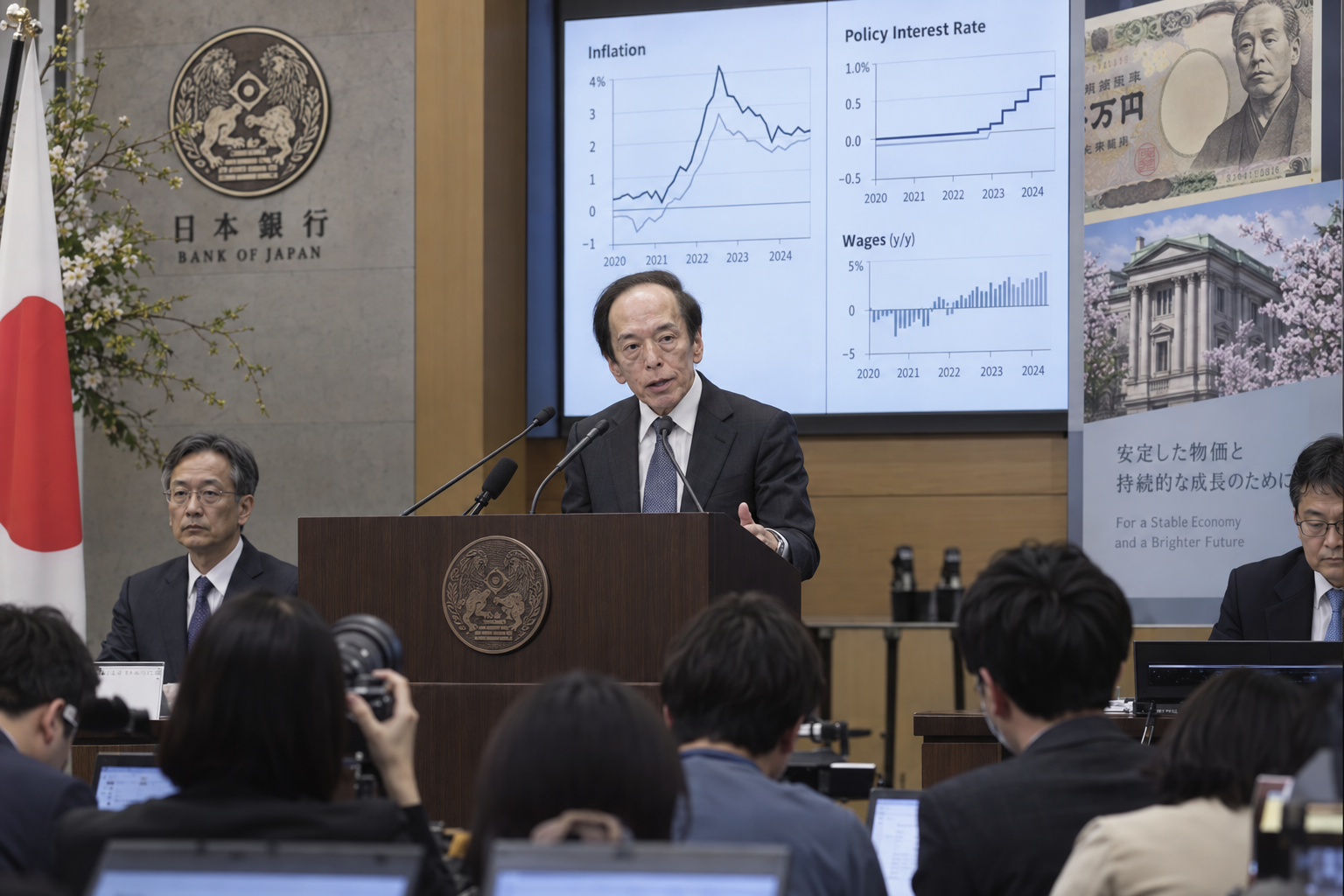
The Bank of Japan has raised its policy interest rate from 1 per cent to 1.25 per cent, the highest level in 31 years, in an effort to contain persistent inflation and support the weakening yen. The widely expected increase follows a rate rise in June and represents the shortest interval between Japanese rate increases since 1990.
Inflation is currently close to 2 per cent, a level that would be modest in many countries but is significant in Japan after nearly three decades of near-zero interest rates and deflation. Recent price increases have largely been driven by supply shocks, including higher energy, import and production costs, the COVID-19 pandemic, and wars in Ukraine and the Middle East. The Bank of Japan has also cited exchange-rate movements and strong demand for artificial intelligence products.
The yen’s depreciation has made imports more expensive and contributed to inflation. It recently reached a 40-year low against the US dollar, prompting joint intervention by the United States and Japan. US Treasury Secretary Scott Bessent has said a stronger yen would benefit American exporters, although economists stress that the Bank of Japan must make decisions independently of political pressure from Washington.
Further rate rises are expected, but they could be difficult because Japan’s government debt exceeds 200 per cent of GDP. Higher rates could increase government borrowing costs and unsettle the bond market, while weak real wages could make it harder for inflation to remain sustainable. The government is planning tax relief on food and pursuing expansionary fiscal policies, but these measures could worsen budget pressures.
The article also examines the effect of inflation on older Japanese residents. A 69-year-old woman in Tokyo said she had taken part-time work because her pension no longer covered living costs. Japan’s rapidly aging population, including more than 100,000 people aged over 100, adds to the country’s long-term financial challenges.
Entities: Japan, Bank of Japan, 1.25 per cent interest-rate increase, Japanese inflation and supply shocks, Japanese yen depreciation • Tone: analytical • Sentiment: negative • Intent: inform
18-09-2026
The Bank of Japan (BoJ) raised its policy interest rate by 0.25 percentage points to 1.25 percent, the highest level in 31 years. The decision, announced on Friday, was the first rate increase since June and represents another move away from the ultra-low interest-rate policies that prevailed in Japan for decades and helped make the yen a major low-cost funding currency.
The rate increase comes as Japan struggles with persistent inflation. Price pressures are being driven by higher energy costs, global supply problems and domestic inflation that remains above the BoJ’s 2 percent target. Core consumer inflation stayed near the target in August, while companies continued passing higher costs on to consumers through increases in food and grocery prices.
Rising wages are another factor influencing the central bank. BoJ Executive Director Koji Nakamura said Japan is experiencing a “slow-moving demographic shock,” in which a shrinking labor force is contributing to higher wages. He argued that this structural pressure should not be dismissed as temporary.
The BoJ is also facing pressure from international interest-rate movements, particularly in the United States. The Federal Reserve’s rate increase on Wednesday, along with the possibility of another hike later in the year, could widen the interest-rate gap between the US and Japan. Analysts warned that this could weaken the yen and increase inflation by making imports more expensive.
Although Japan’s new rate is higher than in recent years, it remains below the European Central Bank’s 2.5 percent rate. Markets will closely follow Governor Kazuo Ueda’s post-meeting briefing for indications of when and how quickly the BoJ may raise rates again.
Entities: Bank of Japan (BoJ), Japan, Kazuo Ueda, Koji Nakamura, Federal Reserve • Tone: analytical • Sentiment: neutral • Intent: inform
18-09-2026
The Bank of Japan (BOJ) raised its policy interest rate by 25 basis points to 1.25%, the highest level since 1995, as it accelerates the pace of monetary policy normalization. The hike occurred only three months after the previous increase, compared with a six-month interval earlier in the cycle that began in March 2024. The decision passed by a 7-2 vote, with board members Toichiro Asada and Ayano Sato opposing the increase. Both dissenters, appointed by Prime Minister Sanae Takaichi, are viewed as favoring more accommodative monetary policy.
The rate increase was broadly anticipated, with nearly 90% of economists surveyed by CNBC forecasting a 25-basis-point hike and correctly identifying the likely dissenters. The BOJ justified the decision by citing the risk that inflation could rise above its 2% target. It said it wants underlying inflation to stabilize at around 2% to prevent excessive price increases from damaging the Japanese economy later.
The move comes as Japan faces persistent inflation and a historically weak yen. August headline inflation was 1.9%, while core inflation stood at 1.7%, down from 1.8% in July. Tokyo and Washington have also coordinated an intervention intended to support the currency. Following the BOJ announcement, the yen traded at 156.64, weakening 0.45%, while the 10-year Japanese government bond yield declined 4.9 basis points to 2.947%.
Asada argued that core inflation below 2% suggested economic conditions might not be sufficiently strong to justify a hike. Sato said economic and price developments had not accelerated substantially. The United States has continued to urge Japan to maintain its tightening cycle, putting pressure on Takaichi’s preference for easy monetary policy and expansionary fiscal policy. Treasury Secretary Scott Bessent recently called on BOJ Governor Kazuo Ueda to take decisive market and monetary measures.
Entities: Bank of Japan (BOJ), Japan, Tokyo, Japanese yen, Japanese government bonds (JGBs) • Tone: analytical • Sentiment: neutral • Intent: inform