18-09-2026
The US Federal Reserve’s decision to raise its benchmark interest rate by 25 basis points to a range of 3.75 per cent to 4 per cent marks its first increase since 2023 and signals that the global interest-rate outlook may be changing. Although markets had expected borrowing costs eventually to decline, the Fed’s updated projections indicate another increase could occur before the end of 2026, while inflation may remain above its 2 per cent target through 2027.
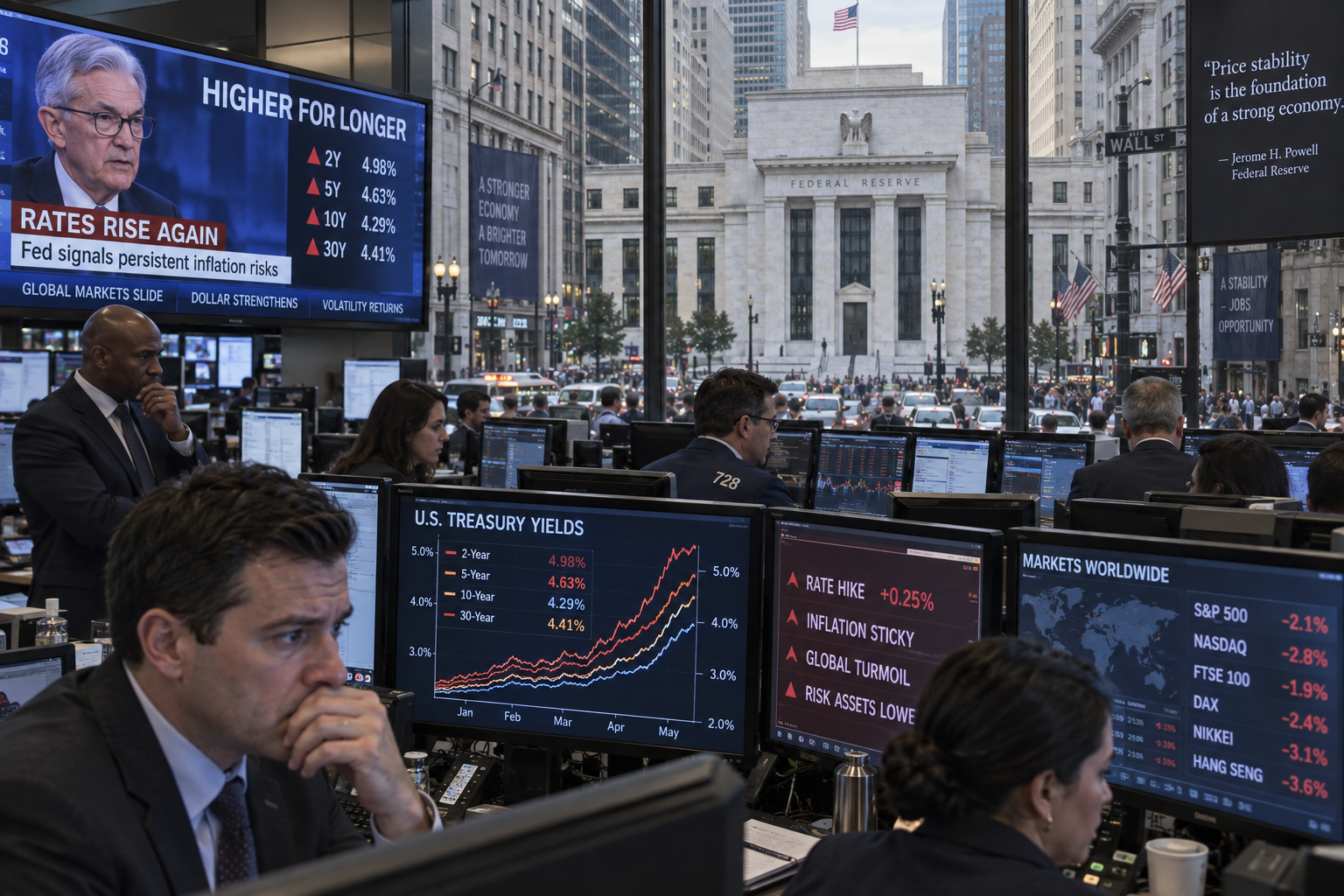
The article argues that the more important signal is coming from long-term government bond yields. The US 10-year Treasury yield has moved above 5 per cent, while the 30-year yield has reached levels not seen since before the global financial crisis. These yields reflect not only central-bank policy, but also expectations for inflation and economic growth, government borrowing needs, and the risk premium investors demand for holding long-term debt. Similar increases in long-term yields are occurring in the UK, Europe and Japan, suggesting that governments are increasingly competing for capital.
Higher US rates would normally support the dollar, but the relationship is becoming less straightforward. The dollar may benefit from safe-haven demand and higher short-term yields, while longer-term concerns about US deficits, inflation and debt supply could undermine sustained strength.
For the Gulf, dollar pegs transmit higher US borrowing costs directly to banks, companies, households and governments. However, oil prices above $100 a barrel are improving revenues for regional exporters, offsetting some of the pressure. Strong external balances and sovereign wealth also make higher yields more manageable and may create attractive investment opportunities in fixed income.
The article concludes that the direction of long-term Treasury yields will be crucial. Falling yields could indicate renewed confidence in price stability, while persistently high or rising yields would point to deeper concerns over inflation, fiscal deficits, geopolitical risks and government debt. Markets may be pricing a future defined by structurally higher capital costs, greater volatility and less room for policy mistakes.
Entities: Tim Fox, US Federal Reserve, Capital Gate Advisors, Emirates NBD, US dollar • Tone: analytical • Sentiment: neutral • Intent: analyze
18-09-2026
Federal Reserve Chairman Kevin Warsh’s description of the latest interest-rate increase has prompted Wall Street to reassess how many additional hikes may be ahead. The Fed raised its benchmark rate by 25 basis points to a target range of 3.75%-4%, its first increase since 2023. Rather than characterize the move as a conventional tightening, Warsh said the central bank had removed “a dose of accommodation” from the economy, arguing that economic growth had strengthened and financial conditions had become less restrictive.
Economists viewed the wording as a deliberate and notably hawkish shift from the Fed’s recent policy framework. Krishna Guha of Evercore ISI said the phrase could imply that policymakers are prepared to continue raising rates until financial conditions are no longer accommodative, without specifying a clear endpoint. This would represent a more open-ended approach than judging policy primarily against the estimated neutral rate—the level thought neither to stimulate nor restrain growth.
Warsh further unsettled investors by rejecting the idea that the neutral rate has a direct operational role in current policy decisions, calling it mainly an academic tool. His response reinforced a perception that the new Fed chair is deliberately cryptic about the benchmarks guiding monetary policy.
Markets subsequently increased the probability of another hike at the Fed’s October meeting. Goldman Sachs added an October move to its forecast, while Bank of America expects increases in both October and December. CME FedWatch data showed the implied odds of an October hike rising to about 58%, from 42% a week earlier. Futures also suggested a federal funds rate of 4.635% by late 2027, implying three or four additional increases.
Some analysts believe substantially more tightening may be needed because policy remains stimulative, economic momentum is strong, and inflation is persistent. Others, including Natixis strategist Jack Janasiewicz, argue that the Fed is more likely removing earlier “insurance cuts” than beginning an aggressive new tightening cycle.
Entities: Kevin Warsh, Federal Reserve, Wall Street, U.S. interest-rate hikes, “Dose of accommodation” • Tone: analytical • Sentiment: neutral • Intent: analyze
18-09-2026
U.S. Treasury yields moved higher on Friday as investors assessed the Federal Reserve’s outlook for monetary policy following a closely watched FOMC meeting. The benchmark 10-year Treasury yield rose by more than 4 basis points to 4.99%. The 2-year Treasury yield also gained more than 4 basis points, reaching 4.735%, while the 30-year Treasury yield increased by more than 2 basis points to 5.322%. Because bond prices and yields move in opposite directions, the rise in yields indicates pressure on Treasury prices. One basis point equals 0.01 percentage point.
The market’s focus remained on the prospect of additional monetary tightening. The Federal Reserve’s meeting concluded Wednesday with its first interest-rate hike in three years, and policymakers signaled that another increase could follow. Fed Chairman Kevin Warsh said inflation had been “too high ... for too long,” while the central bank’s dot plot showed that most officials expected at least one more rate increase. Treasury yields initially declined across maturities after the rate-hike announcement, but they moved higher again as investors continued to interpret the Fed’s guidance.
Earlier in the week, the 10-year Treasury yield reached 5.041%, its highest level since 2007. The elevated yield reflects continued investor concern about inflation and the potential path of interest rates. Overall, the article presents a snapshot of a volatile week in bond markets, with traders seeking further evidence about how aggressively the Federal Reserve may respond to persistent inflation.
Entities: U.S. Treasury yields, 10-year Treasury yield, 2-year Treasury note, 30-year Treasury yield, Federal Reserve • Tone: analytical • Sentiment: neutral • Intent: inform