28-09-2026
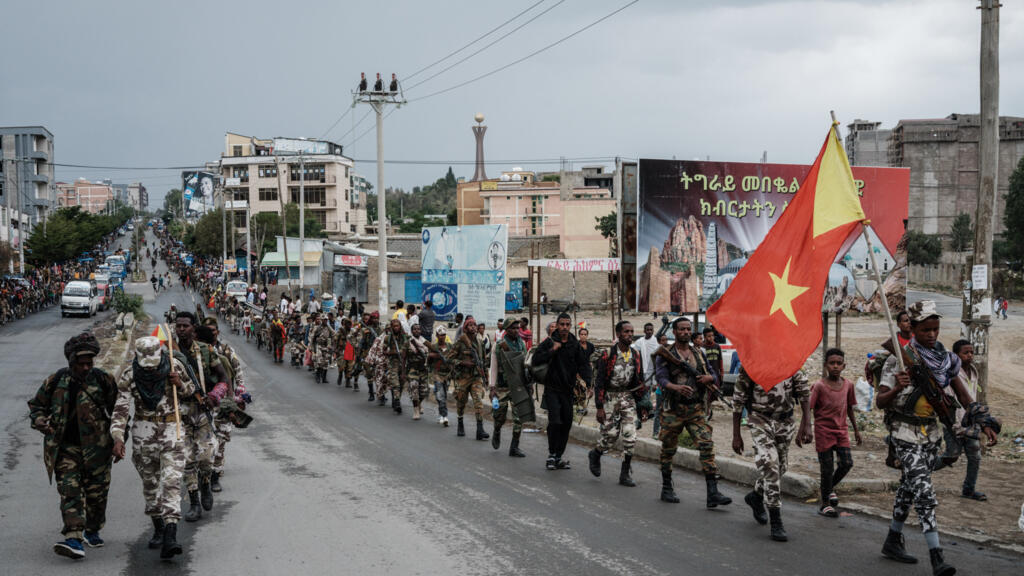
Fighting has intensified in northern Ethiopia, prompting fears of renewed displacement and a worsening humanitarian crisis. Clashes between the Tigray People's Liberation Front (TPLF) and Ethiopia’s federal government resumed on Wednesday. The TPLF has reportedly seized airports and launched attacks in the neighbouring regions of Afar and Amhara, describing its campaign as a defensive war against Prime Minister Abiy Ahmed’s government. A humanitarian source estimated that at least 150,000 people have been displaced in Afar, though precise figures are unavailable.
Human Rights Watch warned that the risks to civilians are spreading as international attention to the conflict has diminished. The organization’s Africa deputy director, Laetitia Bader, said the region was already enduring severe human rights and humanitarian crises, with neighbouring Sudan facing what she described as the world’s largest humanitarian crisis.
Ethiopian army chief Field Marshal Birhanu Jula accused Eritrea and Sudan of backing armed groups fighting government forces. He said the forces were organized in the interests of external powers and named Sudan, Egypt and others as alleged sources of support. The article reports that the TPLF has allied with seven armed groups and appears to be pursuing a strategy resembling its previous war, advancing south through Amhara toward Addis Ababa. Its offensive in Afar could also threaten supply routes from Djibouti, which handles nearly all of Ethiopia’s international cargo, including fuel.
The conflict has also affected communications and media. A drone struck Tigrai TV’s headquarters in Mekelle on Sunday, while widespread telecom disruptions have limited phone and internet access in Tigray since Friday. Residents fear a return to the blockade imposed during the 2020–2022 conflict, when electricity, banking and almost all aid were cut off. UN Secretary-General António Guterres expressed particular alarm over reports of drone use and harm to civilians.
Entities: Tigray People's Liberation Front (TPLF), Ethiopia, Afar, Amhara, Addis Ababa • Tone: urgent • Sentiment: negative • Intent: inform
28-09-2026
Sudan’s military has rejected accusations by Ethiopian army chief Field Marshal Birhanu Jula that Sudan is helping armed groups fighting Ethiopia’s federal forces in Tigray. Khartoum called the allegations “baseless” and said it remained committed to international law and good-neighbourly relations. Jula also accused Egypt and Eritrea of supporting forces opposed to the Ethiopian government, saying the Tigray People’s Liberation Front (TPLF) and Eritrean forces could not succeed without assistance from outside powers. Egypt and Eritrea have not publicly responded.
The accusations come amid renewed fighting between Ethiopia’s federal government and Tigray authorities, after a devastating civil war from 2020 to 2022. The latest clashes have raised fears of a return to conflict; African Union estimates put the death toll of the earlier war at more than 600,000.
The article describes a broader pattern of reciprocal accusations between Ethiopia and Sudan. Sudan has accused Ethiopia of supporting the Rapid Support Forces (RSF), the paramilitary group fighting Sudan’s army in a war that began in April 2023. Khartoum has also alleged that Ethiopia permitted drone attacks to be launched from its territory in coordination with the United Arab Emirates. Ethiopia and the UAE deny those claims. In May, Ethiopia accused Sudan’s army of backing TPLF-linked “mercenaries,” an allegation Sudan also denied. The article reports these claims and denials without establishing their truth, highlighting rising regional tensions alongside the fighting in Tigray.
Entities: Sudan, Ethiopia, Tigray, Field Marshal Birhanu Jula, Tigray People's Liberation Front (TPLF) • Tone: analytical • Sentiment: negative • Intent: inform
28-09-2026
Fighting between Ethiopia’s federal government and the Tigray People’s Liberation Front (TPLF) has intensified, prompting fears of a return to the 2020–2022 war, which was estimated to have killed 600,000 people. Since Wednesday, the TPLF has seized airports and attacked neighbouring Afar and Amhara, describing its actions as defensive. A drone struck Tigrai TV’s headquarters in Mekelle, while severe disruption to phone and internet services has made it difficult to report from Tigray and raised fears of a renewed federal blockade.
In Afar, rebels captured Erebti and were advancing toward Afdeera. A humanitarian source estimated that at least 150,000 people had been displaced in the region, though reliable figures were unavailable. Human Rights Watch warned that civilians face growing risks amid diminished international attention and already severe regional humanitarian crises.
Ethiopian army chief Birhanu Jula accused Egypt, Eritrea and Sudan of supporting armed groups fighting the government. Sudan rejected the allegation as baseless. The TPLF has joined six other armed groups in an alliance seeking to remove Prime Minister Abiy Ahmed and establish a transitional administration. The coalition includes Amhara Fano militias and the Oromo Liberation Army. Fighting resumed after a period of uneasy calm following the 2022 Pretoria Peace Agreement.
The TPLF’s push into Afar may threaten the Djibouti corridor, the route used for almost all of Ethiopia’s international trade, including fuel. Analysts say the federal government currently regards the fighting as manageable, but a threat to the Semera–Djibouti route could give the rebels leverage and risk straining ties with Djibouti. The UN expressed concern about drone use and civilian harm, while the African Union called for restraint and renewed talks under the peace agreement. The article also notes that Abiy urged national unity during Addis Ababa’s Meskel celebrations.
Entities: Tigray People's Liberation Front (TPLF), Abiy Ahmed, Afar, Erebti and Afdeera, Djibouti corridor • Tone: analytical • Sentiment: negative • Intent: inform
28-09-2026
Ethiopia’s army chief, Field Marshal Birhanu Jula, accused Eritrea and Sudan of supporting armed groups fighting federal forces as clashes between the government and the Tigray People’s Liberation Front (TPLF) intensified. The renewed fighting, which began on Wednesday, has raised fears of another major conflict like Ethiopia’s 2020–2022 civil war, in which an estimated 600,000 people died.
The TPLF says it is waging a defensive war against Prime Minister Abiy Ahmed’s government. It has seized airports and launched attacks into Afar and Amhara. A humanitarian source said rebels captured Erebti, an Afar town near Tigray, and were advancing toward Afdeera. The source estimated that at least 150,000 people had been displaced in Afar, while cautioning that reliable figures were unavailable. The TPLF’s offensive in Afar could threaten supply routes from Djibouti, a key channel for Ethiopia’s imports.
The article also reports a drone strike on Tigrai TV’s headquarters in Mekelle. A journalist said staff fled after hearing a blast; the station was reportedly off-air, and no casualties had been confirmed. Separately, phone and internet services in Tigray were disrupted, raising concerns about a renewed blockade and restricted access to essential services and aid. UN Secretary-General Antonio Guterres expressed concern about drone use and harm to civilians.
The federal government is described as having a substantial military advantage, including drones, a large troop force, and foreign support. However, the conflict could involve neighboring Eritrea, amid tensions over Ethiopia’s potential efforts to secure access to the Red Sea. The 2022 Pretoria Peace Agreement ended the earlier war but was never fully implemented; roughly one million people remained unable to return home. After sporadic clashes and troop build-ups, the latest fighting threatens to undo the fragile calm.
Entities: Ethiopia, Tigray, Tigray People’s Liberation Front (TPLF), Abiy Ahmed, Field Marshal Birhanu Jula • Tone: analytical • Sentiment: negative • Intent: inform
28-09-2026
Ethiopian military forces and allied militiamen claim to have captured Alamata, a strategically important town south of Tigray’s regional capital, Mekelle. The claim was made by the pro-government Tigrai Peace Force, which posted video showing soldiers marching through Alamata with Ethiopian flags. Reuters said it could not verify the footage. Two diplomatic sources said the town had fallen, while another said pro-government forces had entered but their control was uncertain. Officials from the Ethiopian military and the Tigray People’s Liberation Front (TPLF) did not immediately comment. If confirmed, the capture would strengthen federal forces’ position as they advance towards Mekelle. Alamata is a supply hub near Tigray’s border with Amhara and changed hands several times during the 2020–2022 civil war.
Renewed fighting began the previous Wednesday in Tigray and the neighboring regions of Amhara and Afar, breaking a four-year-old peace deal known as the Pretoria Agreement. The earlier war killed hundreds of thousands. The conflict grew out of worsening relations between the TPLF, which had dominated Ethiopian politics for decades, and Prime Minister Abiy, whose appointment in 2018 ended that dominance. The TPLF recently formed an alliance with six armed groups seeking to overthrow Abiy’s government. Ethiopian military commander Berhanu Jula accused Eritrea, Sudan’s armed forces and Egypt of supporting the opposition; Eritrea and Sudan denied the allegations, while Egypt did not immediately respond.
The renewed conflict has also raised concern about another humanitarian emergency. Phone and internet networks in Tigray remained disrupted for a fourth day, with sources saying the TPLF had ordered the shutdown. The region remains affected by the previous war, which caused severe restrictions on food, cash and medicine and pushed hundreds of thousands into famine conditions. About 750,000 people were still internally displaced as of February, according to the UN refugee agency, and drought linked to El Niño is adding to the region’s challenges.
Entities: Alamata, Tigray, Mekelle, Ethiopian military, Tigrai Peace Force • Tone: analytical • Sentiment: negative • Intent: inform