28-09-2026
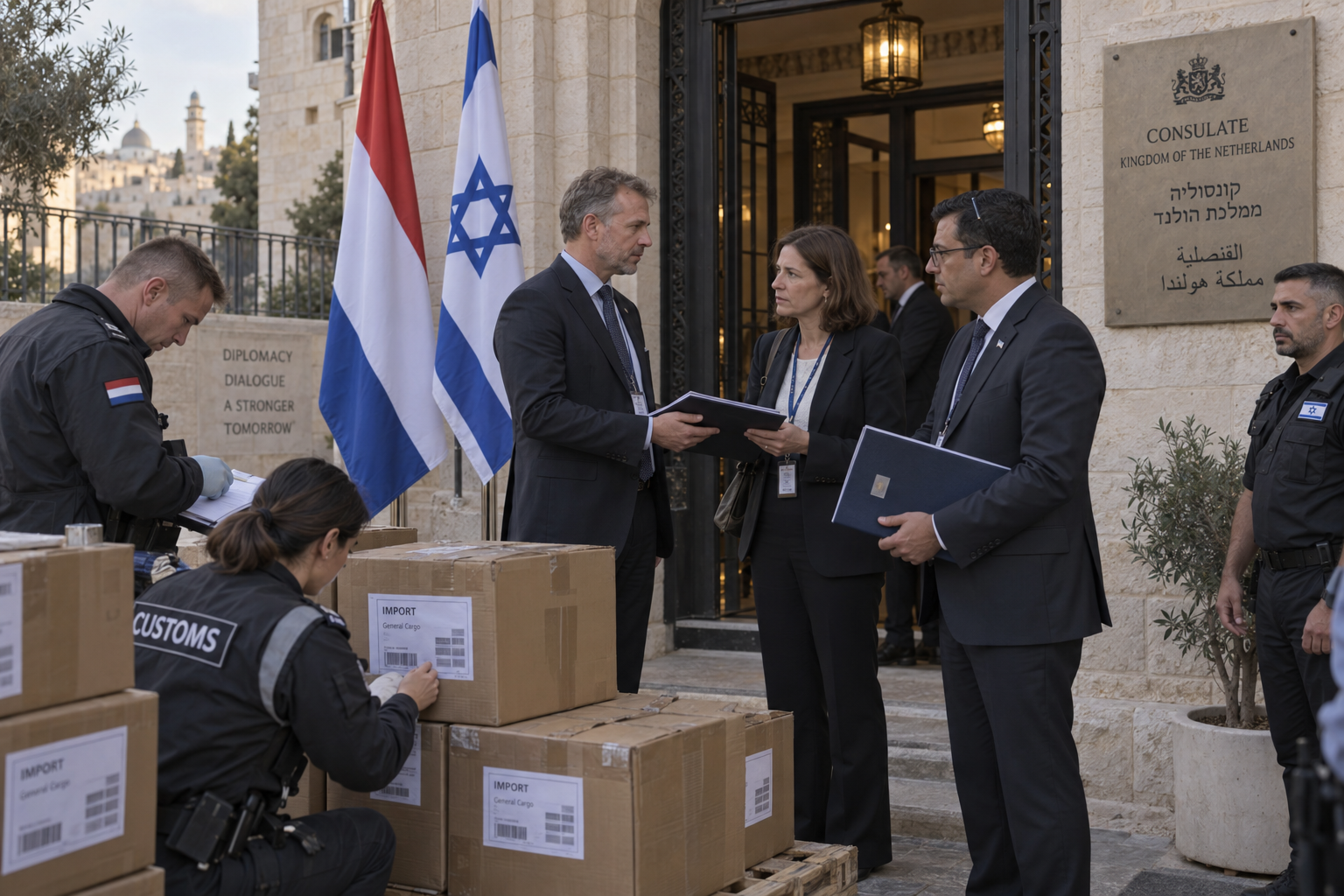
Israel has revoked the diplomatic status of Dutch diplomats representing the Netherlands to the Palestinian Authority in Ramallah, escalating a dispute over Dutch restrictions on goods from Israeli settlements in the occupied West Bank. Israeli Foreign Minister Gideon Saar said the decision was a response to Dutch sanctions and stated that Israel would not ignore measures intended to harm it. He ordered the diplomats to return their Israeli-issued diplomatic documentation within seven days; after that, their privileges and immunities granted by Israel will expire.
Dutch Foreign Minister Tom Berendsen called Israel’s decision unnecessary and said the Dutch import suspension was not directed against Israel. The Netherlands announced the ban earlier in September, and it took effect on September 22. It covers settlement goods carried by individuals as well as commercial shipments. Dutch and Israeli media have reported that passengers arriving from Israel at Amsterdam’s Schiphol airport have had their luggage searched for prohibited goods.
The article places the Dutch action in the context of similar measures by other European countries. Israel ordered the closure of the British Consulate in East Jerusalem after the United Kingdom announced comparable sanctions against imports from settlements. Saar warned that countries acting in what he called a hostile and unilateral manner would lose influence and relevance in the region. France and Canada have also announced bans on settlement goods, though Israel has not taken action against them. In August, Israel barred Dutch diplomats from a US-led coordination center for Gaza, also citing what Saar described as anti-Israel measures.
Entities: Israel, The Netherlands, Gideon Saar, Tom Berendsen, Palestinian Authority • Tone: neutral • Sentiment: neutral • Intent: inform
28-09-2026
Israel’s relations with European allies are worsening as governments take steps against Israeli settlements in occupied territory. The latest dispute followed the Netherlands’ ban on importing goods from Israeli businesses operating in the West Bank, East Jerusalem and the Golan Heights. Israeli Foreign Minister Gideon Saar responded by giving Dutch diplomats working in Ramallah seven days to surrender their Israeli diplomatic credentials, a move that could restrict their ability to conduct diplomacy with Palestinians. Dutch customs officers had reportedly searched luggage arriving on El Al flights for settlement goods, and deliberate violations of the import ban could carry prison sentences. A kosher supermarket in Amsterdam has also told customers it will stop selling some products from settlements.
The article places the dispute within a broader deterioration in relations, linking European measures to the expansion of Israeli settlements, increased settler violence against Palestinians and criticism of Israel’s conduct in the Gaza war. Israel had recently closed the British Consulate in Jerusalem after the UK announced sanctions targeting settlements, with 11 other Western countries making similar announcements. The measures create uncertainty for diplomats, including whether they should leave or continue working with reduced protection. That uncertainty is compounded by conflicting positions over Jerusalem: much of the international community considers East Jerusalem occupied Palestinian territory, while Israel claims all of Jerusalem as its capital.
US Ambassador Mike Huckabee criticized the Dutch policy, using a Bethlehem nativity set as an example, although Bethlehem is not an Israeli settlement and goods bought there would not be covered by the ban. Former Israeli ambassador Michael Oren accused the Netherlands of antisemitism and urged Israel to expel its ambassador. Opposition leader Yair Lapid described the episode as a major diplomatic failure and cited other recent setbacks, including a reported denial of landing permission in Mauritius and a walkout during Benjamin Netanyahu’s UN speech. Lapid argued that better diplomacy could reverse Israel’s international isolation, but said that would require a change of government.
Entities: Israel, Netherlands, West Bank, East Jerusalem, Golan Heights • Tone: analytical • Sentiment: negative • Intent: inform
28-09-2026
UK Foreign Secretary Ed Miliband said the British government would take a tougher stance on Israel, building on sanctions announced earlier in September against exports from illegal settlements. Speaking at the Labour Party’s annual conference in Liverpool, he condemned the Israeli government’s actions in Gaza, saying there was increasing evidence that war crimes had been committed. He also accused Israeli settlers of carrying out ethnic cleansing in parts of the occupied West Bank and criticized Israeli officials for supporting the forced displacement of Palestinians.
Miliband said the new Labour leadership had heard public demands for a change in policy. He referred to Prime Minister Andy Burnham’s assessment that the previous government’s approach under Keir Starmer had been wrong, and said the government had reset its position. Miliband invoked his parents’ experience as Jewish refugees during the Second World War, describing a “survivor’s responsibility” not to remain a bystander to injustice. He also said efforts to undermine the two-state solution would not succeed.
Other Labour ministers echoed the shift in tone. Middle East minister Stephen Doughty said ethics, values and international law would guide foreign policy, adding that the government intended to take action rather than merely make statements. Development minister Kirsty McNeill said those working to address atrocities had allies in the ministerial team. Labour backbencher Richard Burgon credited pro-Palestinian activism with contributing to political change, including the recognition of Palestine and sanctions on settlements, and argued that the government should go further. The article presents the government’s revised approach as a response both to concerns about the war and to pressure from Labour supporters and activists.
Entities: Ed Miliband, Andy Burnham, Keir Starmer, Benjamin Netanyahu, Stephen Doughty • Tone: analytical • Sentiment: negative • Intent: inform