28-09-2026
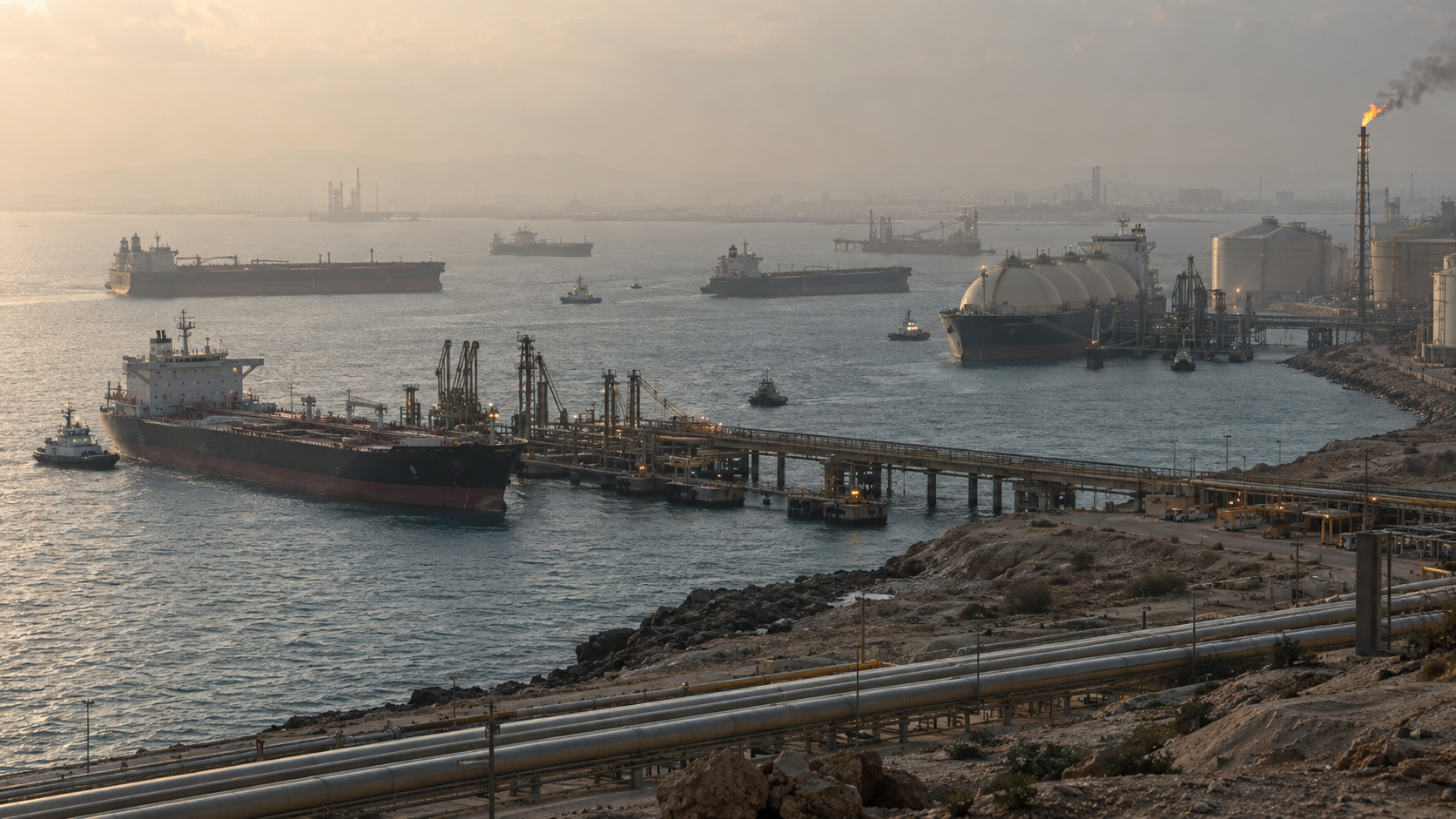
Iraq is seeking ways to maintain oil exports after the US-Iran war and the effective closure of the Strait of Hormuz disrupted the country’s principal route to market. The article reports that Iraq has been unable to export about 90 percent of its oil through the Gulf and has lost an estimated $60bn in oil revenue since the conflict began. Because oil provides roughly 90 percent of the federal budget, the shortfall is undermining the government’s ability to pay salaries, prompting protests and forcing officials to consider unpopular austerity measures.
Prime Minister Ali al-Zaidi has proposed increasing production and diversifying export routes, including expanding the Iraq–Turkiye Pipeline (ITP) and considering routes through Jordan or Syria. However, analysts say these alternatives cannot quickly replace Hormuz. Iraq has used ship-to-ship transfers from southern ports under US military protection, but attacks on vessels, intense competition and steep discounts have made exports difficult. Iraq’s oil marketing organization reported that average exports in September were 2.5 million barrels, below both the stated export capacity of 4.2 million barrels and the pre-crisis level of 3.5 million barrels per day.
Iraq is also moving oil by road from southern fields to storage in Kirkuk and has agreed with Turkiye to export at least 750,000 barrels per day through the ITP to the Mediterranean port of Ceyhan. Yet industry experts argue that pipeline and land-route plans are not a practical substitute for the volumes Iraq needs. With the strait’s safety uncertain and the war unresolved, officials warn that even current export levels may not last. The article presents diversification as an important long-term goal, but emphasizes that Iraq’s finances remain acutely dependent on reopening and securing Hormuz.
Entities: Iraq, Strait of Hormuz, Ali al-Zaidi, United States–Iran war, Iraq–Turkiye Pipeline (ITP) • Tone: analytical • Sentiment: negative • Intent: analyze
28-09-2026
QatarEnergy has extended force majeure on liquefied natural gas (LNG) shipments to customers in Asia and Europe, with cancellations now expected to continue through November and into early December. Buyers affected include Pakistan and Bangladesh, at least one Indian customer, and Italy’s Edison. The company has been issuing notices and cancelling scheduled deliveries approximately monthly since the Iran war began. QatarEnergy did not immediately respond to a request for comment.
The extensions come amid continuing disruption to shipping through the Strait of Hormuz. Although Qatar has increased shipments through the waterway this month, flows remain well below prewar levels. Iran has said it will not soften its conditions for reopening the strait, while US President Donald Trump has sent mixed signals about the prospects for a deal. A peace agreement between the US and Iran remains elusive, leaving the route’s future uncertain. The strait carried about one-fifth of global LNG supply last year, making the disruption significant for international energy markets.
LNG prices in Europe and Asia have risen to roughly their highest levels since late 2022. The article warns that sustained constraints could make utility bills more expensive during the Northern Hemisphere winter. Qatar’s Ras Laffan export facility, which was attacked and damaged in March, is operating at reduced capacity. It is being kept ready to increase output rapidly if the Strait of Hormuz reopens. The extension of delivery cancellations therefore underscores the risk that continuing maritime disruption and limited export capacity could constrain supplies during a period of heightened seasonal demand.
Entities: QatarEnergy, Qatar, Strait of Hormuz, Ras Laffan LNG export facility, Pakistan • Tone: analytical • Sentiment: negative • Intent: inform
28-09-2026
The European Union is approaching winter with gas storage levels well below those seen in 2022, raising concerns about higher energy costs even though officials say there is no immediate threat to supply. Hot, dry summer weather increased gas use for electricity, limiting the amount available to refill reserves. The global supply picture has also worsened: the US-Israeli war against Iran has sharply reduced liquefied natural gas flows through the Strait of Hormuz, while Qatar has extended its suspension of LNG shipments, with deliveries to Europe expected to resume in December.
EU rules normally require member states to fill storage to 90% by 1 November. In response to high prices, the European Commission has allowed more flexibility, including a lower target of 75% to 80%, to reduce pressure from countries buying gas at the same time. Storage is currently averaging about 70%, with Latvia, the Netherlands and Germany among the countries reporting especially low levels. Some EU members have no storage facilities and must rely on solidarity arrangements with other states.
Officials distinguish the current situation from the 2022 energy shock, when the EU cut Russian gas imports, and say shortages are not currently expected. Germany also anticipates no winter shortage. However, analysts caution that low reserves leave Europe exposed to external supply disruptions, and the forthcoming ENTSO-G winter outlook will provide a further assessment.
The Dutch TTF benchmark has risen from roughly €30–31 per megawatt-hour before the Middle East escalation to around €72–74, after briefly exceeding €80. A severe cold winter alongside continued disruption in the Strait of Hormuz could push LNG prices much higher and intensify competition with Asian buyers. Since gas-fired plants often set electricity prices, a gas shortage could also raise power bills and strain electricity systems, especially if cold weather coincides with low wind generation. The article notes possible policy responses, including coordinated EU gas purchasing, while the Netherlands questions whether mandatory storage targets should continue after 2027.
Entities: European Union, Dan Jørgensen, European Commission, Strait of Hormuz, Liquefied natural gas (LNG) • Tone: analytical • Sentiment: negative • Intent: inform