28-09-2026
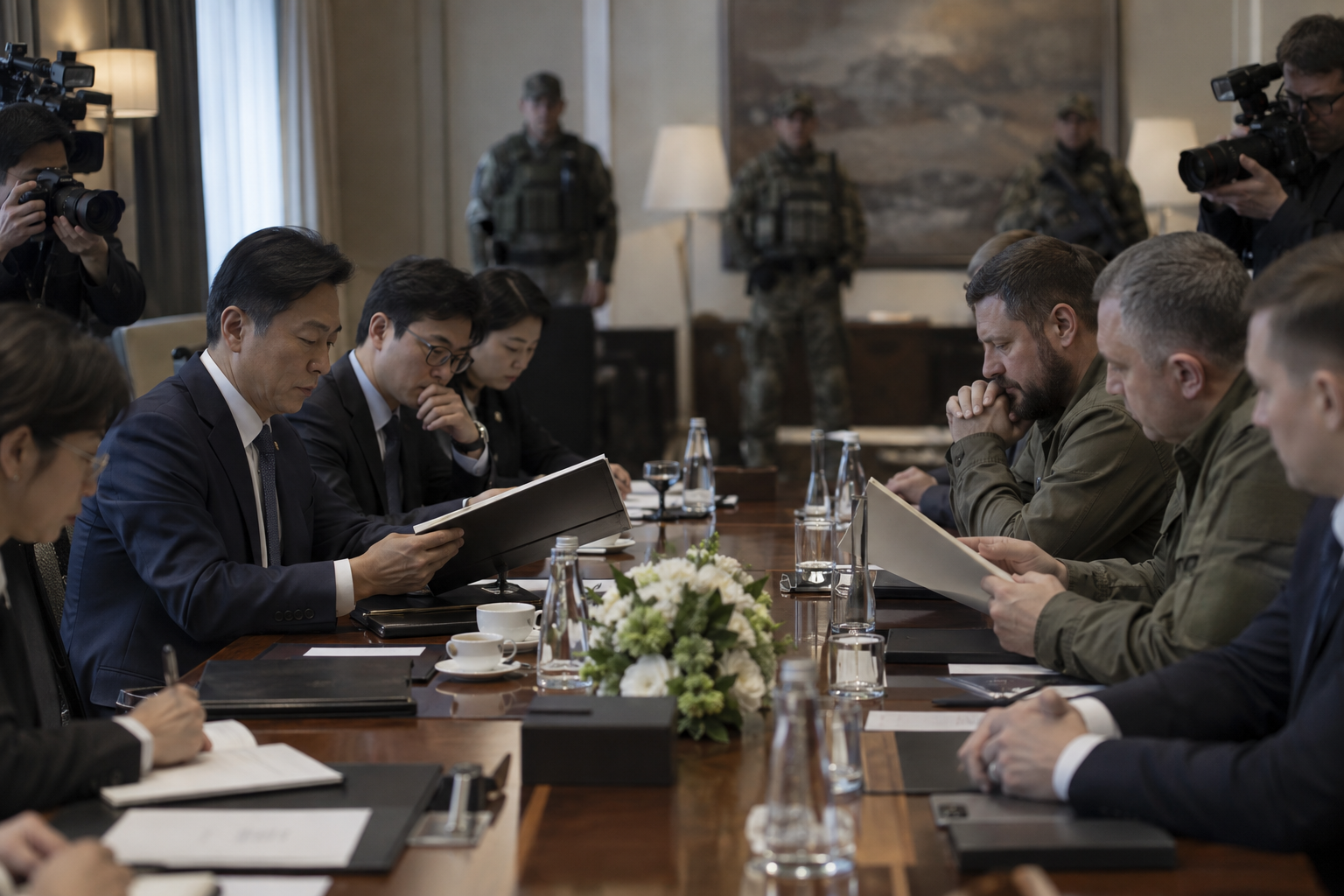
South Korea is demanding an apology and explanation from Ukraine after President Volodymyr Zelenskyy publicly announced that Kyiv had transferred two captured North Korean soldiers to Seoul. The soldiers were captured in January 2025 while fighting for Russia in the Kursk region. South Korean officials say Ukraine had discussed the transfer with Seoul and requested that it remain confidential; Kyiv has denied that a non-disclosure agreement existed. Seoul says the disclosure was made without sufficient consultation and has damaged trust between the governments.
The announcement also put South Korea’s own decision to keep the soldiers’ arrival secret under scrutiny. President Lee Jae Myung called the matter highly sensitive, citing its potential effects on relations between the two Koreas, the prisoners’ safety, and national interests. Opposition politician Ahn Cheol-soo criticized Lee’s government for not informing the public and questioned whether it had considered returning the soldiers to North Korea. South Korea had previously withheld confirmation partly because the prisoners’ family members remained in North Korea.
Zelenskyy said he had considered handing the soldiers over to North Korean leader Kim Jong Un in exchange for Ukrainians held by Russia, while human rights groups urged Ukraine to send them to South Korea because of the risks the soldiers might face if returned. The soldiers reportedly wanted to defect to Seoul. Their cases will be reviewed under South Korean law, including the North Korean Defectors Protection and Settlement Support Act; they are expected to undergo questioning and security screening before any protection or resettlement decision.
The article places the dispute in the context of North Korea’s military support for Russia. Ukrainian and South Korean estimates put the number of North Korean troops deployed at about 14,000 to 15,000, mostly in the Kursk region. Pyongyang has also supplied Moscow with weapons. South and North Korea remain technically at war because their 1950–1953 conflict ended in an armistice rather than a peace treaty.
Entities: South Korea, Ukraine, North Korea, Volodymyr Zelenskyy, Lee Jae Myung • Tone: analytical • Sentiment: neutral • Intent: inform
28-09-2026
South Korea has demanded an official explanation and apology from Ukraine, accusing Kyiv of violating a confidentiality agreement over the planned transfer of two North Korean prisoners of war to Seoul. Ukrainian President Volodymyr Zelenskyy publicly announced the transfer during an address to the United Nations General Assembly in New York. South Korean President Lee Jae Myung responded that Ukraine had broken the agreement and called the disclosure “very disappointing.” Senior presidential secretary Seong Ghi-hong later said Seoul strongly regretted both Ukraine’s disclosure and its reported claim that no non-disclosure agreement existed. He said the episode seriously undermined trust and damaged friendly relations, and that South Korea was considering possible further measures.
The two soldiers were captured by Ukrainian forces in Russia’s Kursk region in January 2025. They were among an estimated 14,000 North Korean troops deployed to support Russian forces after Ukraine’s incursion into the region. Ukrainian intelligence estimates that about 3,000 North Korean troops were killed and 1,500 injured, while others remain in Russia. Ukraine has reported that some North Korean soldiers chose suicide rather than surrender; only two were captured. No North Korean troops are believed to have operated on Ukrainian territory.
The dispute also reflects a complicated policy context for Seoul. Under South Korea’s constitution, North Koreans are considered South Korean citizens and may live in the South, but President Lee has sought to improve relations with Pyongyang, and Seoul has appeared hesitant to take custody of the prisoners. South Korea is an ally of Ukraine, though its assistance so far has been non-lethal. Kyiv has pressed Seoul for advanced air-defense systems, while Zelenskyy has warned that as many as 50,000 additional North Korean troops could be sent to Russia.
Entities: Ukraine, South Korea, North Korea, Volodymyr Zelenskyy, Lee Jae Myung • Tone: analytical • Sentiment: negative • Intent: inform
28-09-2026
South Korea’s presidential office has demanded an official explanation and apology from Ukraine after President Volodymyr Zelenskyy publicly disclosed that two North Korean prisoners of war had been transferred from Ukraine to South Korea. Seoul says the transfer was covered by a confidentiality agreement and called Ukraine’s disclosure—and a subsequent claim that no such agreement existed—a serious breach of trust that could damage relations between the governments. President Lee Jae-myung said he was disappointed by Ukraine’s decision to make the matter public. Zelenskyy aide Dmytro Lytvyn defended the disclosure, saying the president had only confirmed the soldiers’ transfer and that secretly handing them over would be unusual for Ukraine, which he described as an open country. The dispute concerns two North Korean soldiers captured while fighting alongside Russian forces. One had said he was conscripted at 17 and served in a reconnaissance unit, though he had not been trained to use Russian military equipment. A South Korean lawmaker previously said the men wanted to live a normal life in South Korea. Analysts warn that publicity around their return could intensify hostility from North Korea, which has used deployed soldiers in its regime propaganda. The disagreement could also complicate Ukraine’s efforts to secure military support from Seoul. South Korea has not supplied lethal weapons to Ukraine, citing a domestic ban on military aid to countries at war, but it has considered requests for defensive weapons, particularly since North Korea sent troops to support Russia.
Entities: Lee Jae-myung, Volodymyr Zelenskyy, Dmytro Lytvyn, Seong Ghi-hong, Park Won-gon • Tone: analytical • Sentiment: negative • Intent: inform
28-09-2026
South Korea is seeking an apology from Ukraine after President Volodymyr Zelensky publicly described the capture and transfer of two North Korean soldiers. In his September 23 address to the United Nations General Assembly, Zelensky said Ukraine had transferred the prisoners to South Korea in January 2025. Seoul said Ukraine disclosed the matter unilaterally and disputed Ukraine’s subsequent claim that no confidentiality agreement had existed. South Korean officials called the disclosure deeply regrettable, arguing that the prisoners’ repatriation is a sensitive issue affecting diplomacy, national security, and conditions on the Korean Peninsula.
South Korean President Lee Jae-myung also criticized Zelensky for publicizing the transfer, saying it was done without regard for inter-Korean relations. Seoul had urged Ukraine not to send the North Koreans back to their home country, where they could face severe persecution for having been captured alive. The article notes that Lee is pursuing an agreement with North Korea involving the abandonment of its nuclear weapons program in exchange for sanctions relief.
Zelensky said North Korean soldiers can be difficult to capture alive, recounting that one attempted suicide rather than be taken prisoner. He condemned North Korean leader Kim Jong Un for sending troops to fight in Russia’s war against Ukraine, suggesting that North Korea receives economic and humanitarian aid from Moscow in return. The article estimates that 15,000 to 20,000 North Korean troops have been sent to assist Russian forces, and reports Zelensky’s claim that Russia wants another 30,000. It also notes that North Korean troops have been credited with helping Russia retake Kursk and that more than 34,000 North Koreans have defected to South Korea since the 1953 armistice that halted the Korean War.
Entities: Volodymyr Zelensky, Lee Jae-myung, Seong Ghi-hong, Kim Jong Un, South Korea • Tone: analytical • Sentiment: negative • Intent: inform
28-09-2026
South Korea’s dispute with Ukraine over the disclosure of North Korean prisoners of war is raising concerns about the future of relations between Seoul and Kyiv, as well as South Korean support for Ukraine. The controversy followed Ukrainian President Volodymyr Zelensky’s remarks about the POWs at the previous week’s United Nations General Assembly. Seoul objected to what it called a “unilateral disclosure” and, late on Sunday, a presidential official demanded that Ukraine provide an official explanation and apology.
South Korea also said it was reviewing additional measures in response. Analysts cited in the article say those measures could include suspending some forms of support for Ukraine, potentially putting future assistance and ties at risk. However, the article makes clear that no such suspension had been confirmed at the time of publication. It describes the possible consequences as analysts’ assessments, not as a decision already made by the South Korean government.
The disclosure is also creating a domestic political complication for Seoul: according to the article, it gives fresh ammunition to South Korea’s political opposition. The report does not specify what form that opposition’s criticism may take. Meanwhile, the South China Morning Post says it contacted the Ukrainian embassy in Seoul for comment, but the provided text contains no response. Overall, the article focuses on the diplomatic fallout from the POW disclosure, Seoul’s demand for an explanation and apology, and the uncertain prospect that the dispute could affect South Korean aid to Ukraine.
Entities: South Korea, Ukraine, North Korea, Seoul, Kyiv • Tone: analytical • Sentiment: negative • Intent: analyze