24-09-2026
The article examines how Ethiopia’s multinational federal system, designed to grant autonomy to the country’s diverse communities, can also intensify disputes over territory, political representation and state authority. Renewed fighting involving Tigrayan forces has shattered the relative calm established by the November 2022 Pretoria agreement and revived concerns about a wider conflict. Both Tigrayan and federal authorities blame the other for the escalation.
The 1995 constitution created regional states based partly on settlement patterns, language and identity, and gives recognized communities rights to self-determination, self-government and cultural expression. The article argues that this arrangement does not inherently cause conflict, but can make territorial control politically consequential. The Tigray conflict illustrates the tension: disputes over elections and the federal government’s authority escalated into a two-year war, while the peace agreement left difficult issues unresolved. Western Tigray, also known as Welkait, remains contested, with the status of the territory and the return and representation of displaced people among the outstanding questions.
The article also places Tigray within wider conflicts in Amhara and Oromia. In Amhara, clashes followed the government’s 2023 plan to dismantle regional special forces, and fighting continues between federal forces and varied Fano groups. In Oromia, the Oromo Liberation Army’s conflict with government forces is linked to grievances over representation, land, language and political power, alongside other local and security factors. The killing of musician Hachalu Hundessa in 2020 became a flashpoint for violence that killed at least 178 people, according to Human Rights Watch. Overall, the article presents Ethiopia’s central challenge as finding a workable balance between regional autonomy and federal authority, while unresolved political and territorial disputes continue to fuel insecurity.
Entities: Ethiopia, Tigray, Afar, Amhara, Oromia • Tone: analytical • Sentiment: negative • Intent: analyze
24-09-2026
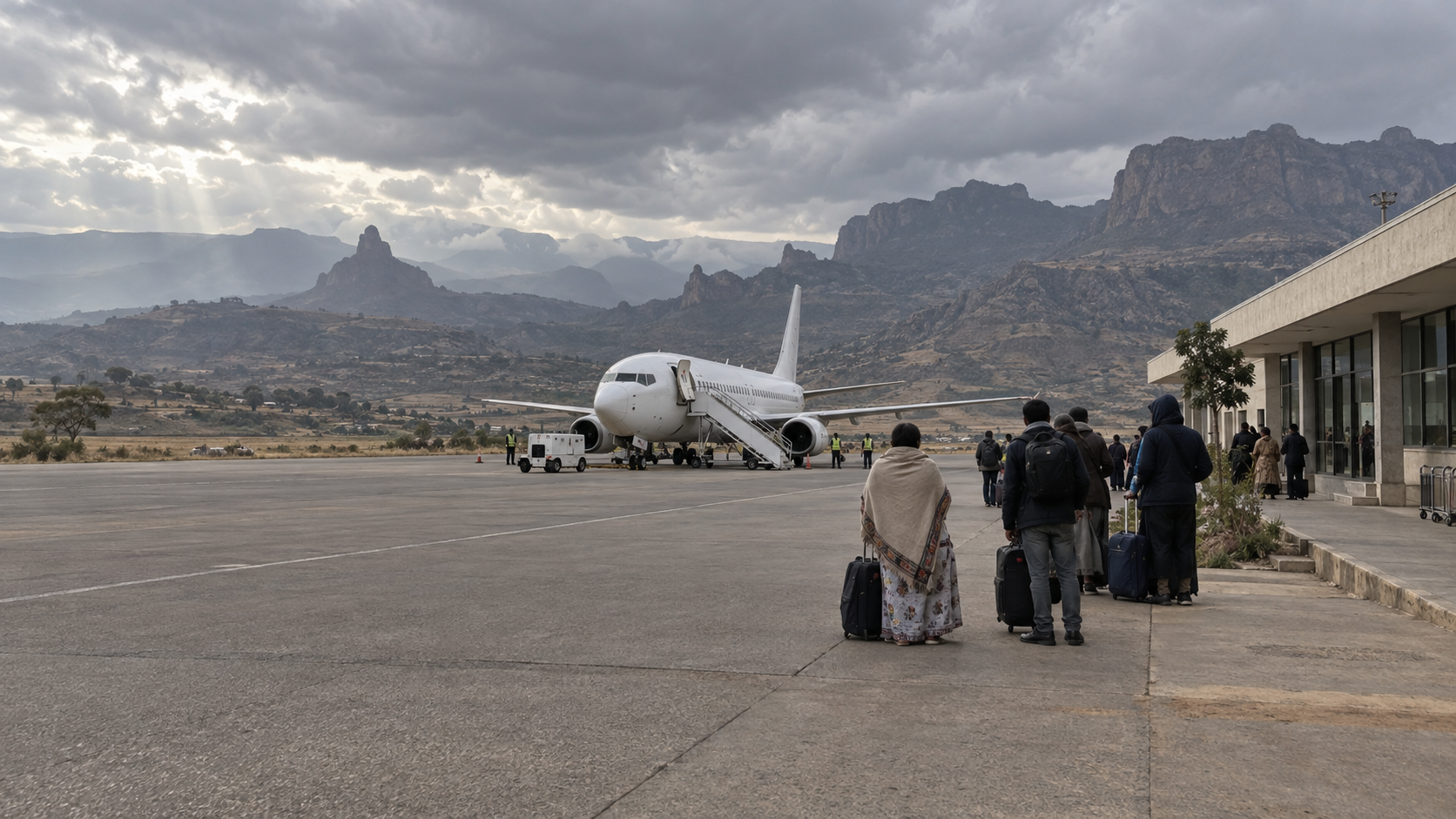
Tensions are rising in Ethiopia’s northern Tigray region, reviving concerns that the fragile peace established after the 2020–2022 war could collapse. Residents told the BBC that Tigrayan forces had taken Mekelle’s airport from federal police. Ethiopian Airlines has suspended flights to Mekelle, Shire and Axum, citing the current situation.
The reported seizure comes amid a series of drone strikes in Tigray. Regional authorities say a strike on Alamata on Tuesday killed at least 14 people and injured 22. The town’s mayor accused federal forces of targeting schools. The BBC has not independently verified the allegations, and Ethiopia’s federal government has not publicly commented.
The Tigray People’s Liberation Front has also announced an alliance with six armed groups, saying they intend to remove the government in Addis Ababa. These developments follow a war that ended in November 2022 with an African Union-mediated peace agreement. However, key provisions of the agreement remain unresolved. The conflict was among the deadliest in the world in recent years, with an African Union mediator estimating that around 600,000 people died.
The reported military activity, accusations and new alliance have heightened fears of renewed conflict. The article presents the claims with attribution and notes that some allegations remain unverified, while emphasizing the risks posed by unresolved issues from the peace process.
Entities: Tigray, Ethiopia, Mekelle, Shire, Axum • Tone: analytical • Sentiment: negative • Intent: inform
24-09-2026
Fighting that began in southern Tigray has escalated into a wider confrontation involving federal forces and multiple armed groups, with clashes reported in Tigray and neighbouring Afar and Amhara. The Tigray Army says the government launched a full-scale offensive using ground units and drones, while Getachew Reda, an adviser to Prime Minister Abiy Ahmed, accuses the TPLF of starting the fighting. Tigrayan forces reportedly seized airports, prompting Ethiopian Airlines to suspend flights across Tigray, and local reports said they had captured Abala in Afar.
The escalation followed the announcement that seven armed movements had formed the Ethiopian Peoples’ Forces Alliance for Survival, whose stated goal is to remove Abiy’s government. Its members include the TPLF, Amhara Fano National Movement and Oromo Liberation Army, as well as movements associated with other regions. The alliance joins groups with distinct political aims and histories of conflict, and the article describes it as a major realignment shaped by the breakdown of earlier political arrangements.
The 2022 Pretoria agreement ended the two-year Tigray war but left Eritrea and Amhara forces outside the settlement and contributed to fractures among Abiy’s former allies and within the TPLF. Subsequent disputes over regional forces, Eritrean relations and the terms of the peace deal helped produce new conflicts and shifting alliances. TPLF official Abdisalam Balema says the party joined the coalition to avoid isolation, while acknowledging unresolved disagreements, including over western Tigray. Analysts caution that these differences could test the alliance later.
The coalition also includes movements linked to Oromo and Somali autonomy and self-determination. Their relationships with the government and participation in the alliance differ, and some claims about membership are disputed. IGAD has called for an end to hostilities and renewed dialogue; the UN has voiced concern about the coalition and reports of drone attacks. The article warns of the risk of a broader conflict amid substantial existing displacement in Tigray.
Entities: Abdisalam Balema, Abiy Ahmed, Tigray, Mekelle, Afar • Tone: analytical • Sentiment: negative • Intent: analyze
24-09-2026
Ethiopia’s federal government and Tigray’s regional authorities have accused one another of initiating military action, raising fears that the conflict that ended in 2022 could resume. Federal adviser Getachew Reda said Tigrayan forces seized federally administered airports and attacked positions in the neighbouring Afar and Amhara regions. Tigray’s authorities said their forces had entered a defensive war after reported drone strikes. Residents told the BBC that local forces took control of Mekelle’s airport, prompting Ethiopian Airlines to cancel flights to Tigray.
The renewed tensions follow months of mutual accusations over breaches of the Pretoria Agreement, the African Union-brokered deal that formally ended the two-year war. In recent developments, the TPLF announced an alliance with six other armed groups seeking to remove the government in Addis Ababa. Ethiopia’s president said the country had shown restraint, while the African Union Commission chair and the United States called for de-escalation, investigation of reported attacks, and dialogue. The US ambassador condemned what he described as a TPLF offensive.
The article also reports allegations of deadly strikes in Tigray. Tigrayan authorities said a Tuesday strike in Alamata killed at least 14 people and injured 22. The town’s mayor alleged that drones and a fighter jet struck two secondary schools, killing and injuring civilians. The BBC could not independently verify the claims, and the federal government had not commented. The US State Department separately condemned a reported drone strike on a convoy of Catholic vehicles carrying food aid.
The dispute is unfolding amid unresolved provisions of the peace agreement, political changes in Tigray, and reports of forced recruitment. The previous war killed an estimated 600,000 people, according to the African Union’s mediator, and pushed the region close to famine, deepening concern about the consequences of renewed fighting.
Entities: Ethiopia, Tigray, Getachew Reda, Prime Minister Abiy Ahmed, Taye Astike Selassie • Tone: urgent • Sentiment: negative • Intent: inform
24-09-2026
Ethiopia’s army says it has repelled attacks by Tigrayan forces and their allies in the north, marking its first public statement since renewed fighting began on Wednesday. The military says hostilities started in an area of Amhara near the Tigray border, and claims its troops inflicted heavy casualties and seized weapons. The Tigray People’s Liberation Front (TPLF) has not responded, and the BBC says it cannot independently verify the army’s account or report from Tigray and nearby areas. Unconfirmed reports describe TPLF attacks in Afar and Amhara. A humanitarian source told AFP that Tigrayan forces used heavy artillery while trying to take Yallo, near the Tigray border. TPLF vice-president Amanuel Assefa described the situation as “full-blown war.”
The escalation follows months of growing tension between Prime Minister Abiy Ahmed’s federal government and Tigray’s authorities. The sides fought a devastating war from 2020 to 2022, which ended with an African Union-brokered peace agreement. Both have since accused the other of violating the deal. An AU mediator estimated that about 600,000 people died in the conflict, which brought the region close to famine. The TPLF recently announced an alliance with six other armed groups to oust the government. After TPLF forces seized three airports from federal police, Ethiopian Airlines cancelled flights to Tigray.
Mekelle residents told the BBC that local forces took control of the city’s airport from national police, but that the city itself remained calm, with fighting reported elsewhere. One resident, identified as Fitsum for safety, said people were distressed and limiting their movements. He described economic hardship, including insufficient cash, months of withheld budgets for civil servants, and banks running out of money. Residents have relied on mobile banking, but Fitsum warned that a communications shutdown could leave them in grave danger. The city was unusually quiet, he said, “like a curfew has been placed.”
Entities: Ethiopian National Defense Force, Tigray People's Liberation Front (TPLF), Ethiopia, Tigray, Amhara • Tone: analytical • Sentiment: negative • Intent: inform
24-09-2026
Renewed fighting in Ethiopia’s Tigray region threatens the fragile peace established by the 2022 Pretoria agreement and could interact with conflicts and rivalries elsewhere in the Horn of Africa and the Red Sea. Tigrayan forces launched an offensive on September 23, with clashes also reported in Afar and Amhara. The African Union has called for restraint, renewed talks and diplomatic efforts led by its Horn of Africa representative, Olusegun Obasanjo.
The article describes how the TPLF has joined six other armed groups seeking to remove Prime Minister Abiy Ahmed’s government, including the Amhara Fano movement, a former adversary. The alliance is not a unified force, but it could leave the government fighting on several fronts. Violence in Afar could also threaten Ethiopia’s key trade route to Djibouti.
A wider escalation could draw in Eritrea, whose relations with Ethiopia have worsened since the two countries fought together against the TPLF. Ethiopia’s pursuit of Red Sea access has added to Eritrean security concerns, although the extent of any direct Eritrean involvement remains uncertain. Sudan’s civil war presents another potential point of connection: journalist Martin Plaut says Ethiopia and Eritrea are indirectly involved on opposing sides, though a claim about an Ethiopian base supporting the RSF has not been independently verified by DW. The article also notes allegations involving the UAE and the RSF, which the UAE denies.
The strategic stakes extend to the Red Sea and the Bab el-Mandeb Strait, a major shipping chokepoint. Still, the article emphasizes that regional war is not inevitable: armed groups and states have different interests, and there is no single alliance linking all the conflicts. The unresolved issues behind the Tigray war, however, and the possibility of conflicts reinforcing one another raise serious humanitarian concerns.
Entities: Tigray conflict, Tigray People’s Liberation Front (TPLF), Pretoria peace agreement, Ethiopia, Eritrea • Tone: analytical • Sentiment: negative • Intent: analyze
24-09-2026
Ethiopia may be nearing a renewed large-scale conflict in its northern Tigray region, four years after a peace agreement ended a devastating two-year war. Tigrayan forces have seized airports in the region, and fighting has reportedly spread into neighboring Afar and Amhara. Ethiopian Airlines has suspended flights to Tigray. The federal government and Tigrayan authorities blame each other for the escalation: Prime Minister Abiy Ahmed’s adviser Getachew Reda says Tigrayan forces launched an all-out offensive, while Tigrayan officials say their forces acted defensively against federal attacks.
The latest violence follows months of disputes over territory, political authority and the implementation of the 2022 peace agreement. ACLED reports that Ethiopian forces have conducted drone strikes against Tigrayan forces and TPLF officials, including in Mekelle and southern Tigray. The TPLF, which governs the region, recently formed an alliance with six other groups seeking to remove Abiy’s government and establish a transitional government. In May, the party reasserted control of Tigray’s regional administration, replacing the interim arrangement established under the peace deal.
The previous war was among the deadliest recent conflicts, with some estimates placing its death toll at about 600,000. Analysts warn the federal government’s response could determine whether the current escalation is contained or becomes a full-scale war. The conflict could also draw in Eritrea, which is described as backing the TPLF, and heighten instability in a region already affected by Sudan’s war and fighting within Ethiopia’s Amhara and Oromia regions. African Union Commission Chair Mahmoud Ali Youssouf has urged immediate de-escalation and renewed talks. U.S. Ambassador Ervin J. Massinga condemned the TPLF’s decision to launch an offensive and called it unwinnable.
Entities: Ethiopia, Tigray, Tigray People's Liberation Front (TPLF), Abiy Ahmed, Getachew Reda • Tone: analytical • Sentiment: negative • Intent: inform
24-09-2026
Residents in Ethiopia’s Tigray region are buying food, cash and other essentials amid fears that renewed fighting could escalate into a full-scale war. The latest escalation includes Tigrayan forces seizing three local airports and carrying out attacks in Afar and Amhara, the most serious flare-up since the devastating 2020–22 conflict. The Ethiopian government accuses the Tigray People’s Liberation Front (TPLF) of launching an offensive; TPLF leaders say their actions are defensive and respond to attacks by federal forces using drones, artillery and ground troops.
Residents in Mekelle and Adigrat describe panic-buying, empty shops, worsening shortages of food and medicines, and fears that the region could again face siege-like conditions. They also report that young people are being forced to join the fighting. The article recalls that during the previous war, Tigray was largely cut off, with severe restrictions on food, cash and medicine that contributed to famine-like conditions. Power outages and cash withdrawals were also reported in Lalibela, in Amhara.
The renewed conflict risks worsening instability across the Horn of Africa, where tensions already include strained Ethiopia-Eritrea relations, Sudan’s civil war and disputes over Red Sea access. Political divisions within the TPLF, its alliance with six other armed groups seeking to overthrow Prime Minister Abiy Ahmed, and allegations of Eritrean financial support add to the tensions. Eritrea denies the allegations. The United Nations and European Union have urged restraint and a return to dialogue and the African Union-brokered peace process. Ethiopia’s government says dialogue remains possible for groups that lay down their arms.
Entities: Tigray, Mekelle, Adigrat, Lalibela, Afar • Tone: urgent • Sentiment: negative • Intent: inform
24-09-2026
Fighting between Tigrayan forces and Ethiopia’s federal government has intensified, prompting fears that the country could return to civil war. The Tigray People’s Liberation Front (TPLF) has attacked neighbouring Afar and Amhara, seized control of three airports from federal police, and joined six other armed groups in a new alliance seeking to overthrow Prime Minister Abiy Ahmed’s government. The TPLF’s vice-president, Amanuel Assefa, described the situation as “full-blown war.”
The renewed violence follows a 2020–2022 conflict that killed about 600,000 people and ended with the 2022 Pretoria Agreement. The article says that agreement had maintained an uneasy calm until clashes resumed late last year. The federal army claims it killed 272 TPLF fighters in Amhara, but the figure has not been independently verified, and casualty figures for government forces and civilians were not provided. Reports also describe attacks near Yallo and fighting around Weldiya, a town on one of the few routes to Addis Ababa. Ethiopian Airlines has suspended flights to the region.
Regional involvement is a concern. Analysts say Eritrea may support the TPLF, amid tensions over Ethiopia’s possible efforts to gain Red Sea access. The TPLF says it has no information about Eritrea’s plans and has not requested its intervention. Ethiopia’s government has accused Eritrea of backing the new alliance, an allegation Eritrea has repeatedly denied. The article notes that Eritrea and Fano, now part of the alliance, fought alongside the Ethiopian government during the earlier war.
The escalation raises the prospect of a wider regional conflict, with neighbouring Sudan already at war and Red Sea tensions adding to instability. The African Union and European Union have called for restraint, de-escalation, and renewed commitment to the Pretoria Agreement.
Entities: Tigray People’s Liberation Front (TPLF), Ethiopia, Afar, Amhara, Abiy Ahmed • Tone: analytical • Sentiment: negative • Intent: inform
24-09-2026
The supplied material reports a renewed escalation of violence in Ethiopia. According to the excerpt, Tigray fighters attacked government positions in northern Ethiopia and took control of three airports. These actions occurred days after the fighters pledged to overthrow the government, linking the attacks to an explicit challenge to the national authorities. The report says the developments have stoked fears that Ethiopia has slid back into civil war.
The excerpt identifies the actors, the broad location, the reported targets, the airport seizures, and the concern these events have raised. It does not provide further details about when or where the individual attacks occurred, which airports were taken, the scale of casualties or damage, the government’s response, or the views of other parties. Nor does the supplied text establish whether the feared return to civil war has occurred; it describes this as a concern prompted by the reported events.
This summary is necessarily limited to the short text provided, which appears to contain a headline, a byline, and a brief article lead rather than the full Washington Post article. The page slogan and promotional prompt for the publication’s AI service are not part of the news report and are excluded from the cleaned text. No additional context or claims can be reliably extracted from the supplied material.
Entities: Rael Ombuor, The Washington Post, Tigray fighters, Tigray, Ethiopia • Tone: urgent • Sentiment: negative • Intent: inform