24-09-2026
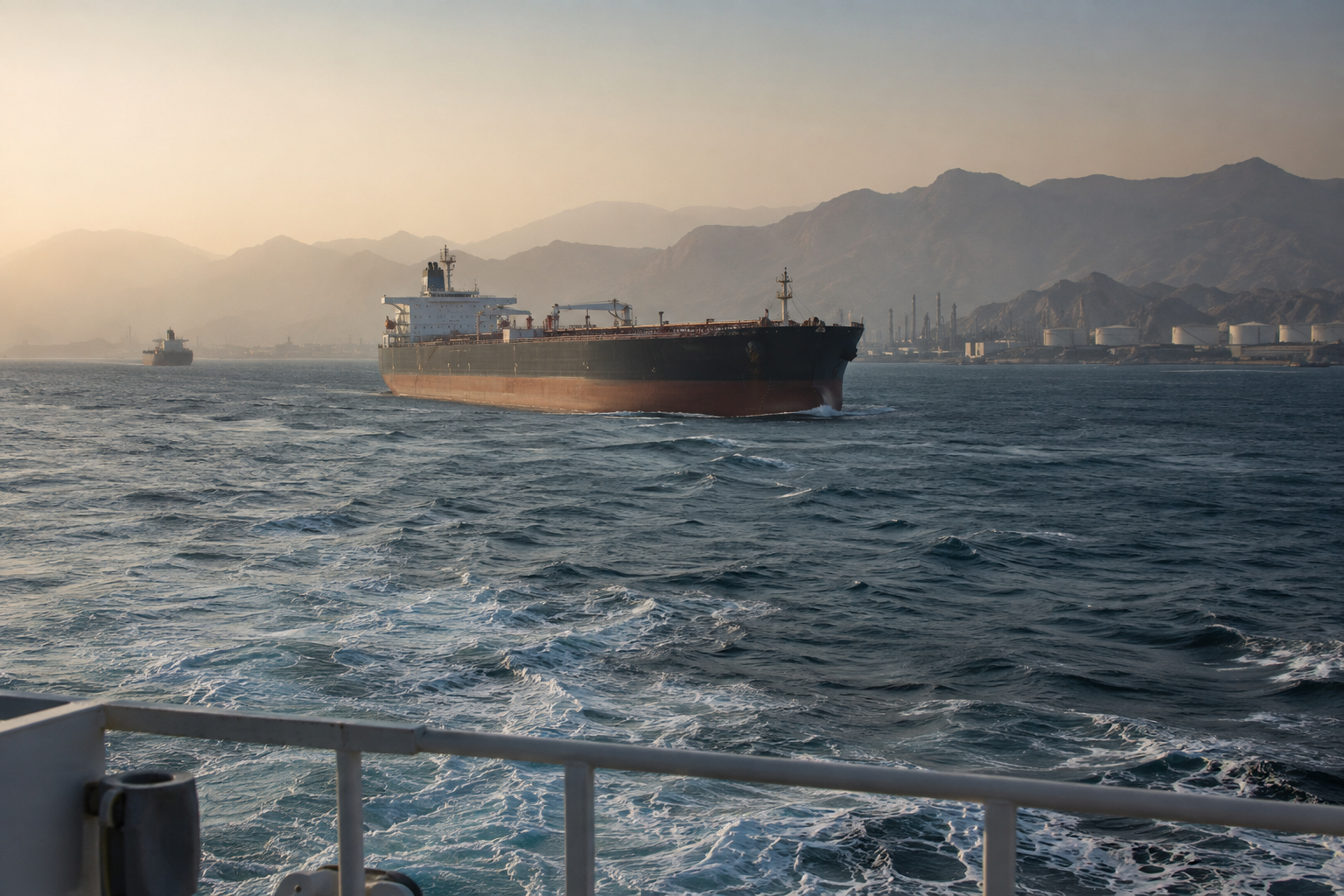
The live report describes a sharp escalation in the seven-month Iran war, with no clear progress toward a peace deal at the United Nations General Assembly and Brent crude trading above $105 a barrel. Iran’s senior military adviser Yahya Safavi said Iran would retain control of the Strait of Hormuz indefinitely unless the United States accepted its conditions. He said Iran had reached a vessel-transit mechanism with Oman, would allow some countries’ ships to pass, and would block vessels it considered hostile. Shipping through the strategic waterway has slowed dramatically amid attacks; an assault on the Antigua and Barbuda-flagged cargo ship Cape Dao killed one crew member and led to the evacuation of 27 others, according to Oman. Iran’s Islamic Revolutionary Guard Corps posted video it said showed the aftermath of the strike.
The report also details growing Houthi activity in and around Saudi Arabia. Saudi Civil Defense issued temporary warnings for Mecca and several other regions, while the Saudi-led coalition said it intercepted six Houthi ballistic missiles aimed at western Saudi cities. The alerts came amid a renewed conflict between the Houthis and the Saudi-backed Yemeni government, and after recent Houthi attacks and territorial gains near strategic waterways.
At the U.N., Iranian President Masoud Pezeshkian said President Donald Trump’s threats to “annihilate” Iran caused him to replace his prepared speech. Pezeshkian condemned the U.S. remarks, asserted that Iran could not be destroyed, and said Iran remained open to dialogue and negotiations but would not accept coercion. Overall, the updates depict rising military threats, danger to commercial shipping, and expanding regional risks alongside stalled diplomacy.
Entities: Iran war, Strait of Hormuz, Brent crude, Yahya Safavi, Masoud Pezeshkian • Tone: analytical • Sentiment: negative • Intent: inform
24-09-2026
Oil prices climbed Thursday as traders saw little sign of progress in diplomatic talks between the United States and Iran. In the article’s key figures, Brent crude futures for November delivery rose 3.05% to $106.22 a barrel, while U.S. West Texas Intermediate (WTI) futures gained 2.56% to $94.52. The article’s opening market update separately reported Brent up 1.9% at $105.02 and WTI up 1.7% at $93.72, reflecting a different point in the trading session.
Tensions remained elevated after Iranian President Masoud Pezeshkian accused the United States and Israel of fueling global instability. Speaking at the United Nations General Assembly, Pezeshkian said the U.S. president had called Iran “terrorists,” while asserting that Iran had itself been a victim of terrorism. He also said Iran would continue to fight back “until our last breath.”
Traders were also weighing signs of strong regional demand. Reuters, citing data compiled by commodity analysts Kpler, reported that Asia was on track to import 23.96 million barrels of crude per day in September. That would exceed August’s 23.38 million barrels per day and mark the highest level since February, as well as the highest since the start of the Iran war, according to the article. The combination of uncertainty over diplomacy, ongoing conflict, and robust Asian imports formed the backdrop to the rise in oil prices.
Entities: Brent crude, West Texas Intermediate (WTI), United States, Iran, Masoud Pezeshkian • Tone: analytical • Sentiment: negative • Intent: inform
24-09-2026
The article reports that Gulf oil exporters have so far managed to keep global oil supplies from collapsing after Iran shut the Strait of Hormuz at the start of the war. The closure disrupted a sea route carrying about 15 million barrels of oil per day and initially raised fears of a severe price shock and damage to the world economy. Nearly seven months later, oil is still expensive, but prices have not reached the levels many feared, and analysts say available supply is sufficient to meet current global needs.
The article attributes this resilience to Saudi Arabia and other Gulf producers, which redirected exports through alternative routes and made use of spare pipeline capacity. When Iran and allied militant groups attacked some of these arrangements, exporters—with assistance from the US military—developed further workarounds. The article characterizes this as a clandestine, ongoing effort to counter attacks and preserve oil flows.
Oil is now trading at around US$100 per barrel: above its pre-war level, but below the worst-case expectations described in the article. The disruption has also had political consequences, including higher prices that pose problems for US President Donald Trump and others. Meanwhile, the article says Iran has less leverage than it might have had from controlling the chokepoint, as a US naval blockade and tightened sanctions are putting pressure on Iran’s own economy. The article’s central caution is that the improvised routes and other measures sustaining supply may not be sustainable over time.
Entities: Strait of Hormuz, Iran, Saudi Arabia, Gulf oil producers, United States • Tone: analytical • Sentiment: neutral • Intent: inform
24-09-2026
Al Jazeera reports that an Indian cargo vessel, the MV Cape Dao, was attacked off the coast of Oman while travelling toward India. The ship was struck twice by a projectile, and the impacts set it on fire. One crew member was killed. The report identifies the vessel and its route, gives the location of the attack in broad terms, and states the immediate consequences: a fire aboard the ship and a fatality among the crew.
The brief item does not provide further details about when the attack occurred beyond its publication date of 24 September 2026. It does not identify who launched the projectile, explain a possible motive, say whether other crew members were injured, or describe the extent of damage to the vessel or what happened to it afterward. No response by authorities or shipping organizations is included. Accordingly, the report establishes that a deadly attack took place but leaves its perpetrators, circumstances, and wider implications unaddressed. Its focus is the incident itself rather than analysis or attribution.
Entities: MV Cape Dao, India, Oman, Indian cargo vessel, cargo ship attack • Tone: neutral • Sentiment: negative • Intent: inform